Technical sheet
Read moreRead less- Location
- Gent
- date
- 2018 - 2023
- client
- private
- Surface
- 130 m² net, 175 m² brut
- Sustainability
- EPB < E-16 (passive house)
- Partners
- Kurt Laeremans (stability), 2BSafe (EPB, VC en ventilation report)
- executors
- Nico Braekman (ruwbouw), Durieux (roofing works), Solemé (exterior carpentry), Royaux (polychape), builder (techniques, finitions, insulation,...)
- Status
- executed
- Photos
- Melanie Boeckxstaens
Soberrijk
A compact semi-detached sustainable-house in an urban environment, putting all cards on very-low-budget, very-low-energy, but very-high-effort.
The garden is already on the sheet of paper that will become the drawing.
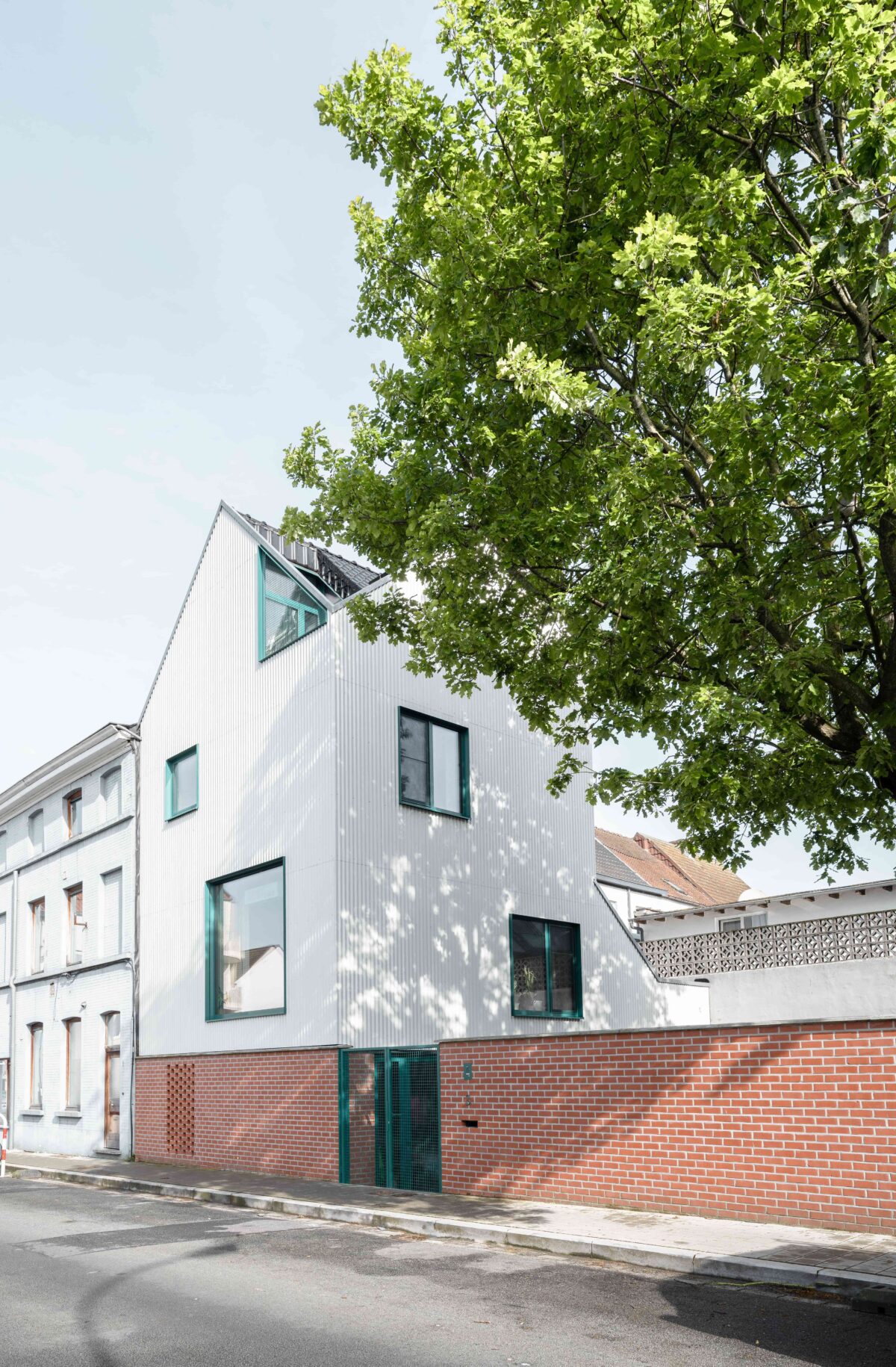
High grasses, two shrubs and an oak. Somewhere in the 1970s, a row of dilapidated workers' houses had to be demolished here. Nothing remained of it and nothing was put in its place. The current green seems to have originated accidentally. An accidental green area due to the absence of buildings, not laid out, not functional. Recently the city decided to divide the perk into parts again, and to complete the building block again. A rare piece of building land was suddenly on the market in the Muide, near the ring of Ghent. There are three solid masonry buttresses against the wall of the neighbour. They are being demolished and the new house is to replace them. Six meters wide are allowed to be built, on the ground floor ten meters deep, on the floors only six meters deep. It will be a very compact house like the former workers' houses here undoubtedly were. Beside the house a mandatory garden, the bushes are pruned, the tree can stay.
Next to the garden there is now a house being designed.
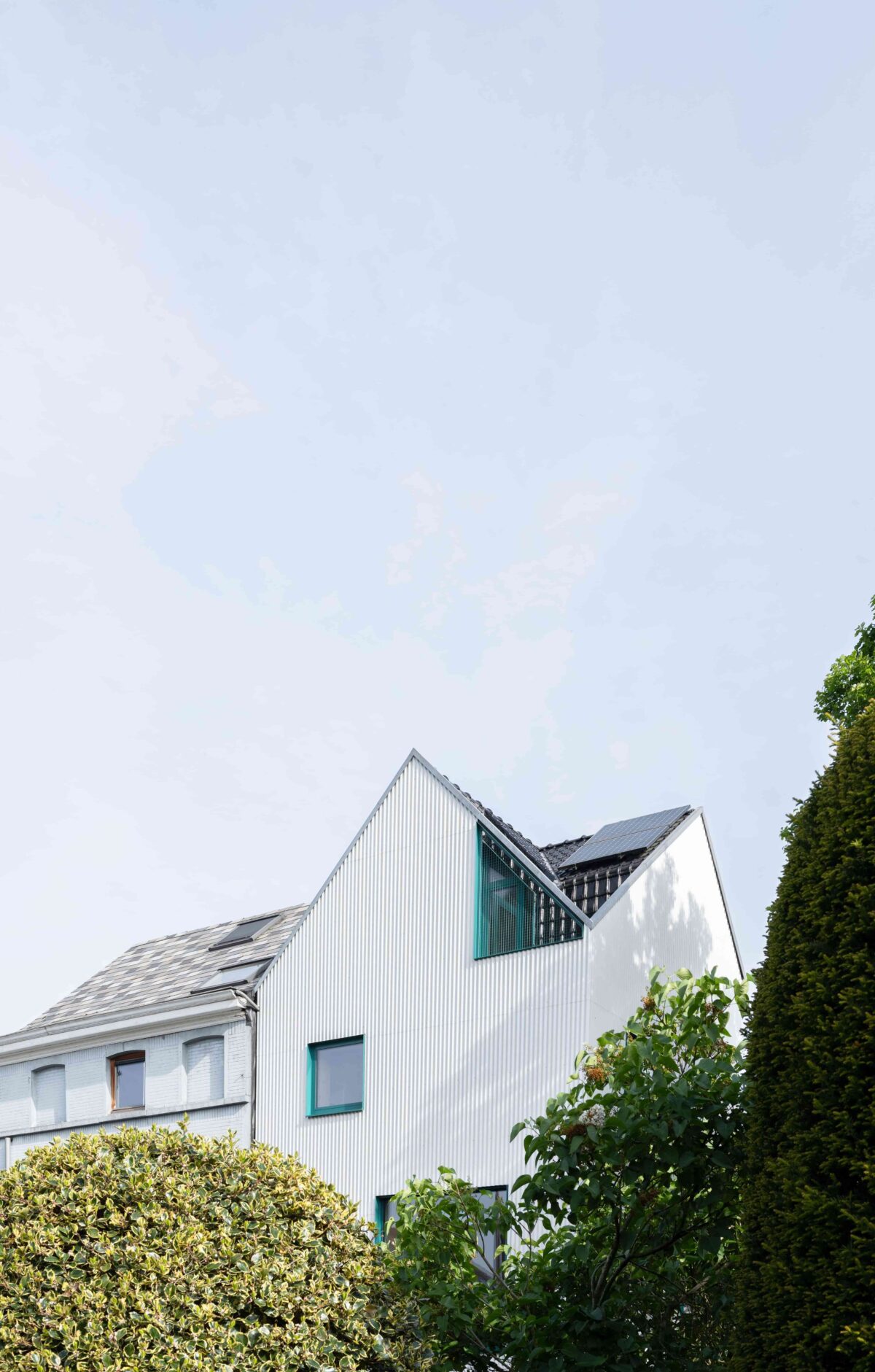
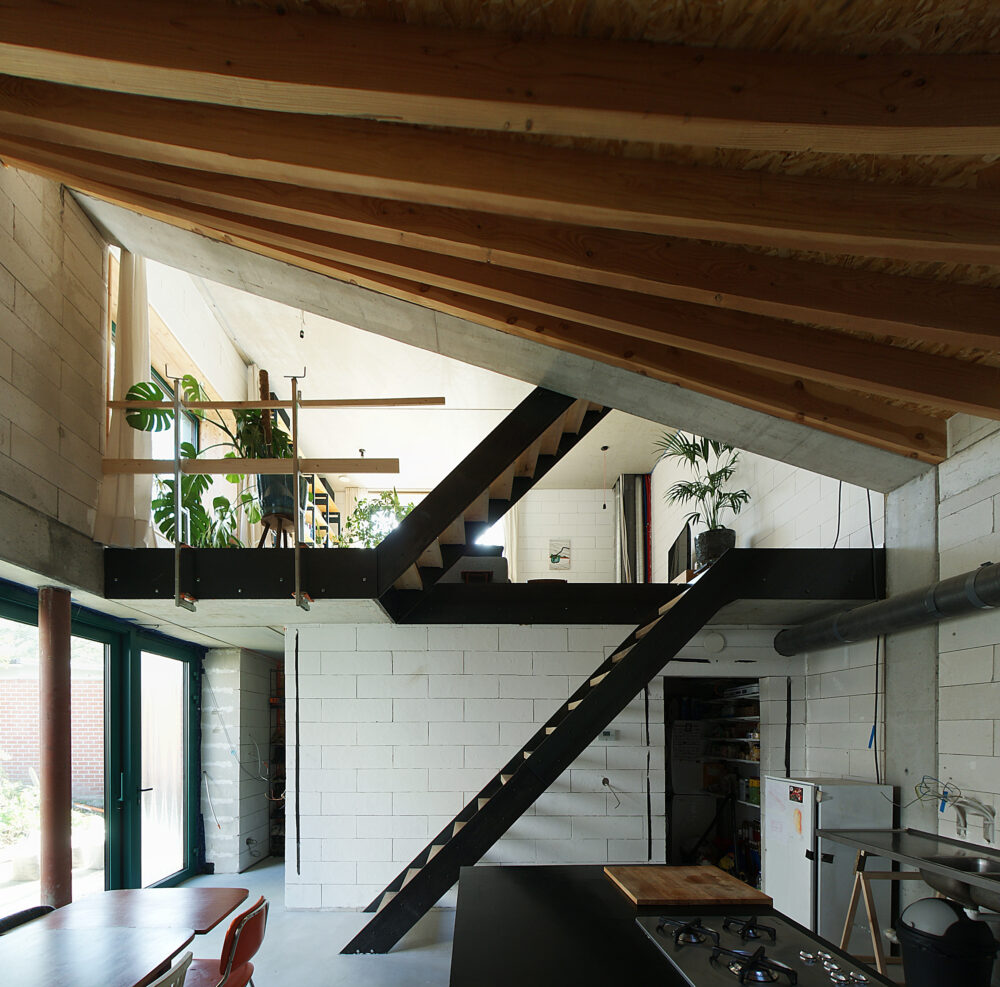
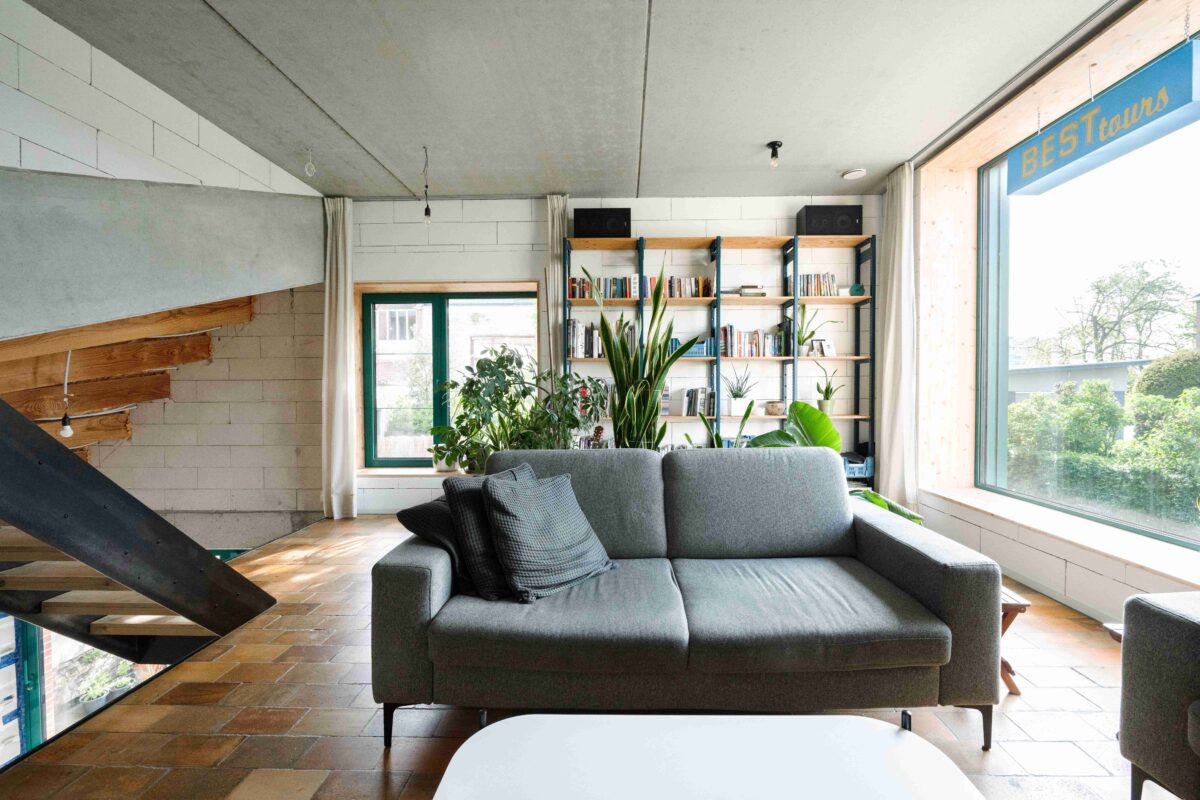
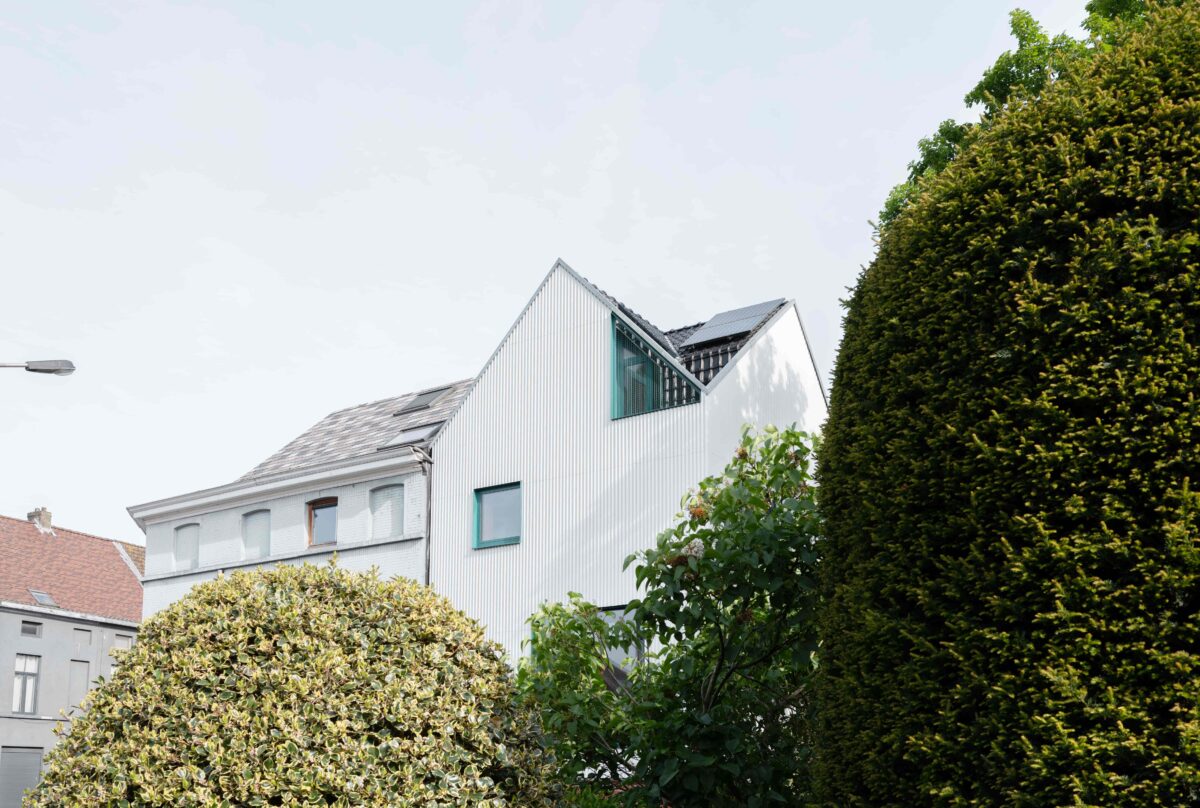
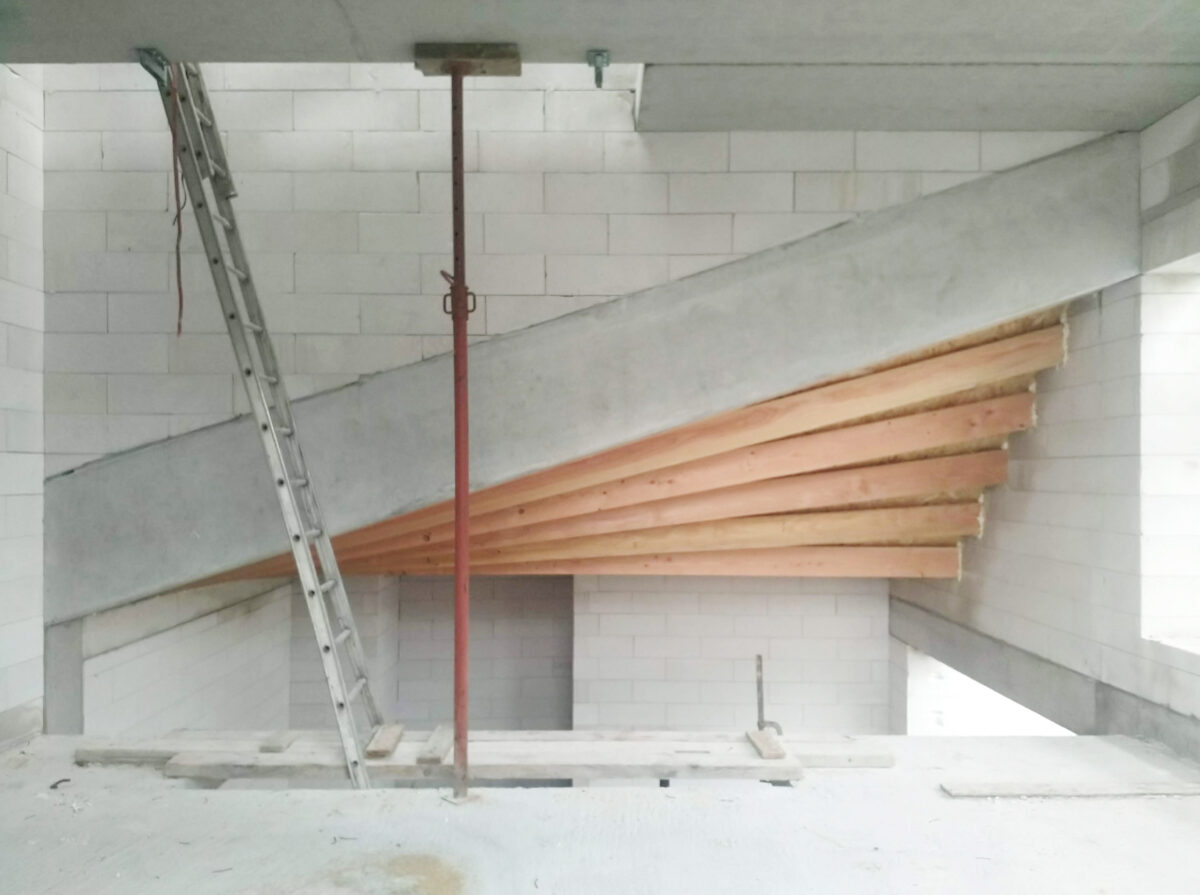
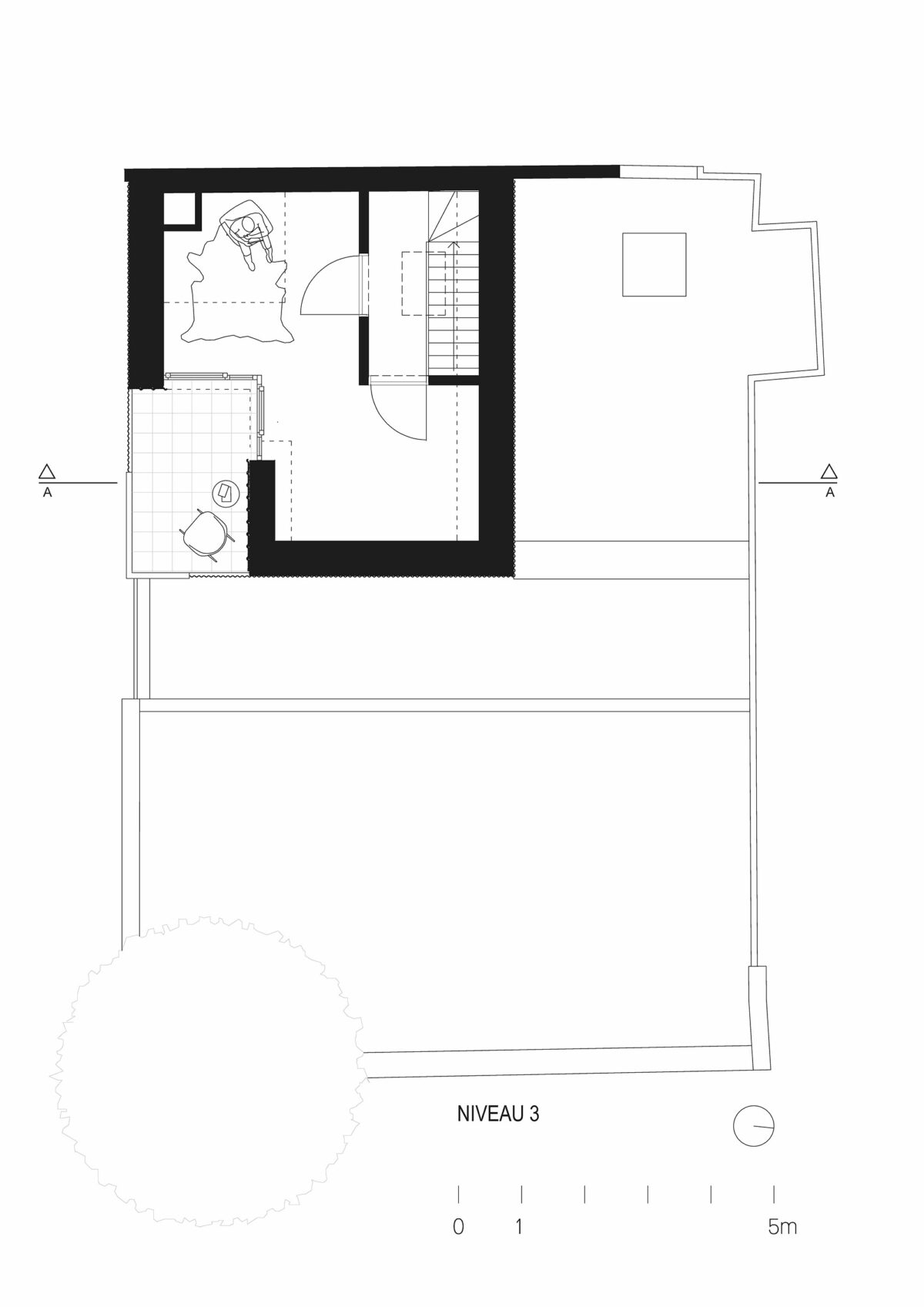
There is a small budget but a lot of ambition. The house will be a very low-budget, very-low-energy, but very-high-effort house that gets the most out of the few resources that are available. A sober design is imminent, some strategic interventions bring spatial luxury into the otherwise compact house. The roof of the kitchen folds upwards along a sloping beam to make a person-like connection between the kitchen downstairs and the living space above. From the mezzanine, people are greeted by the people who come home, and in the kitchen they welcome the southerly sun that falls into the back of the plot in autumn and spring, through the large sitting window at the façade, through the person wide opening. The roof of the main volume is provided with two gable fronts, one at the front and one at the side. In the corner between the two, volume is cut away, an indoor terrace that provides light and view from the top office floor.
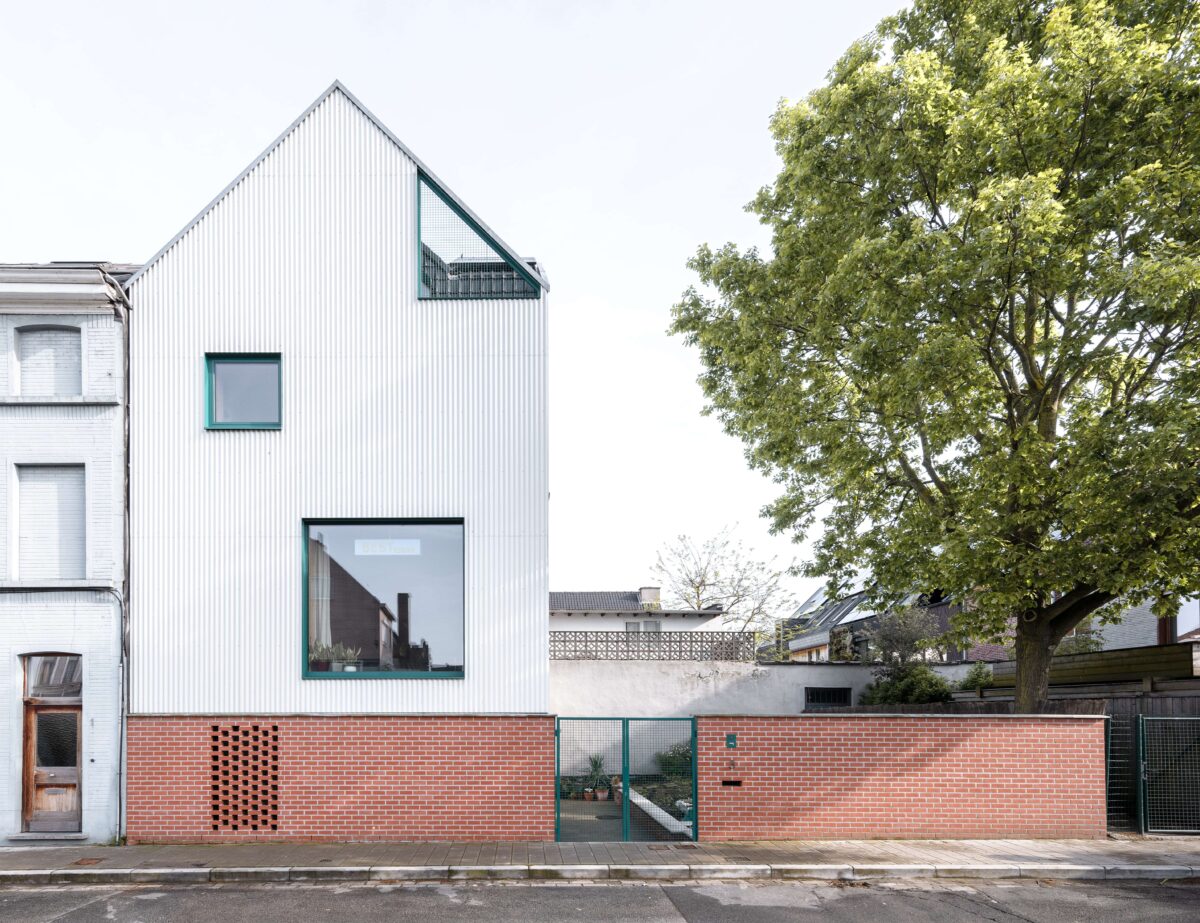
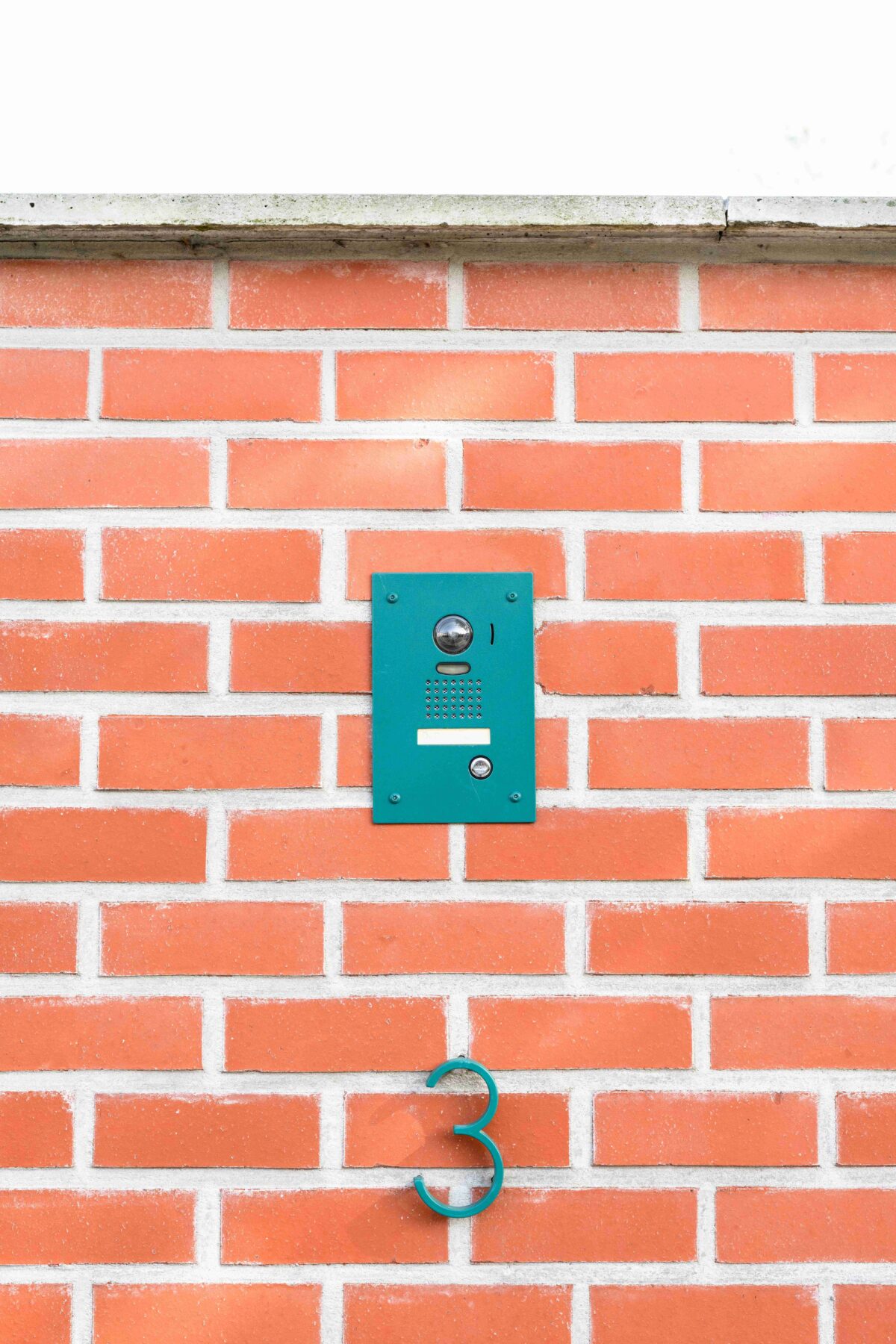
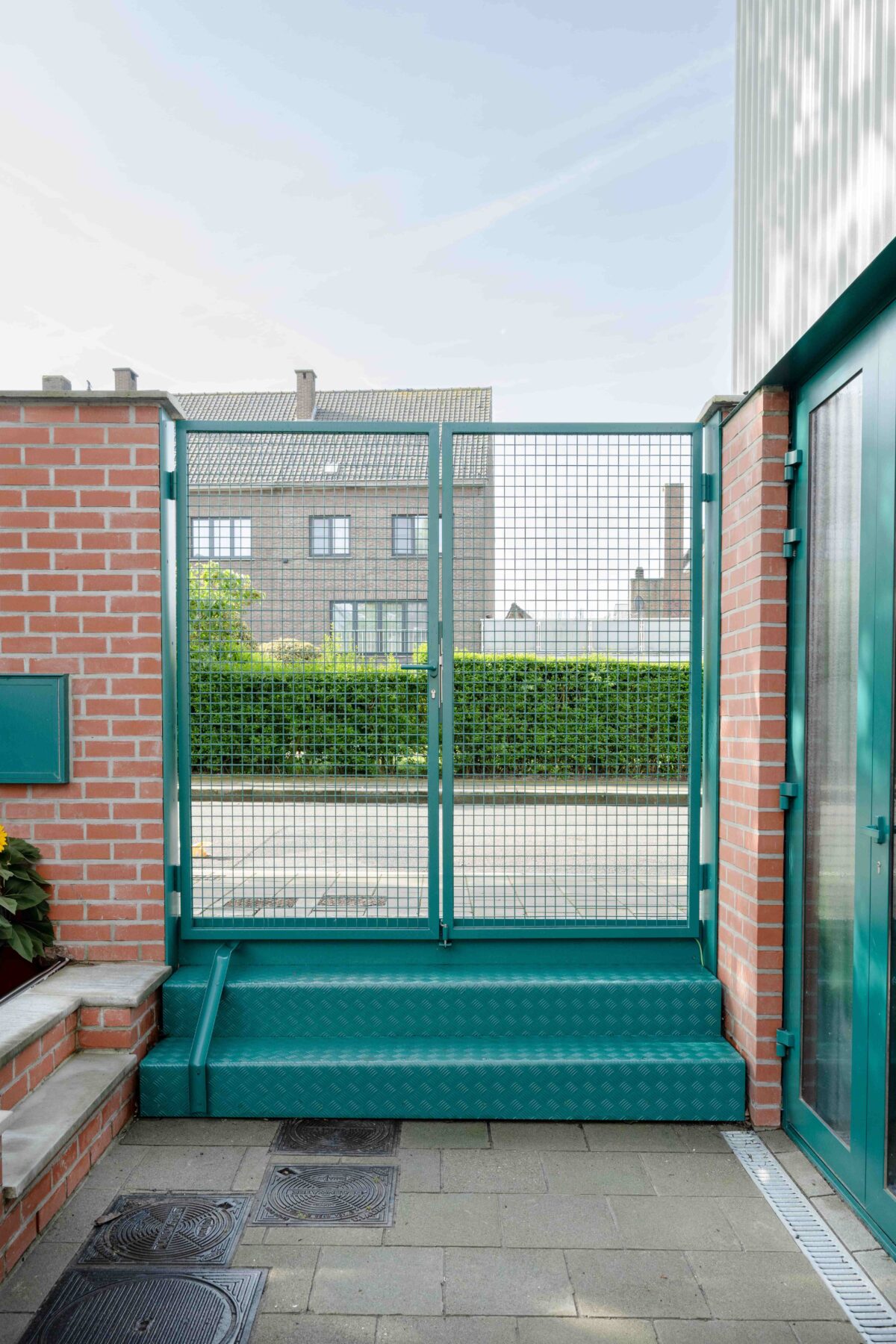
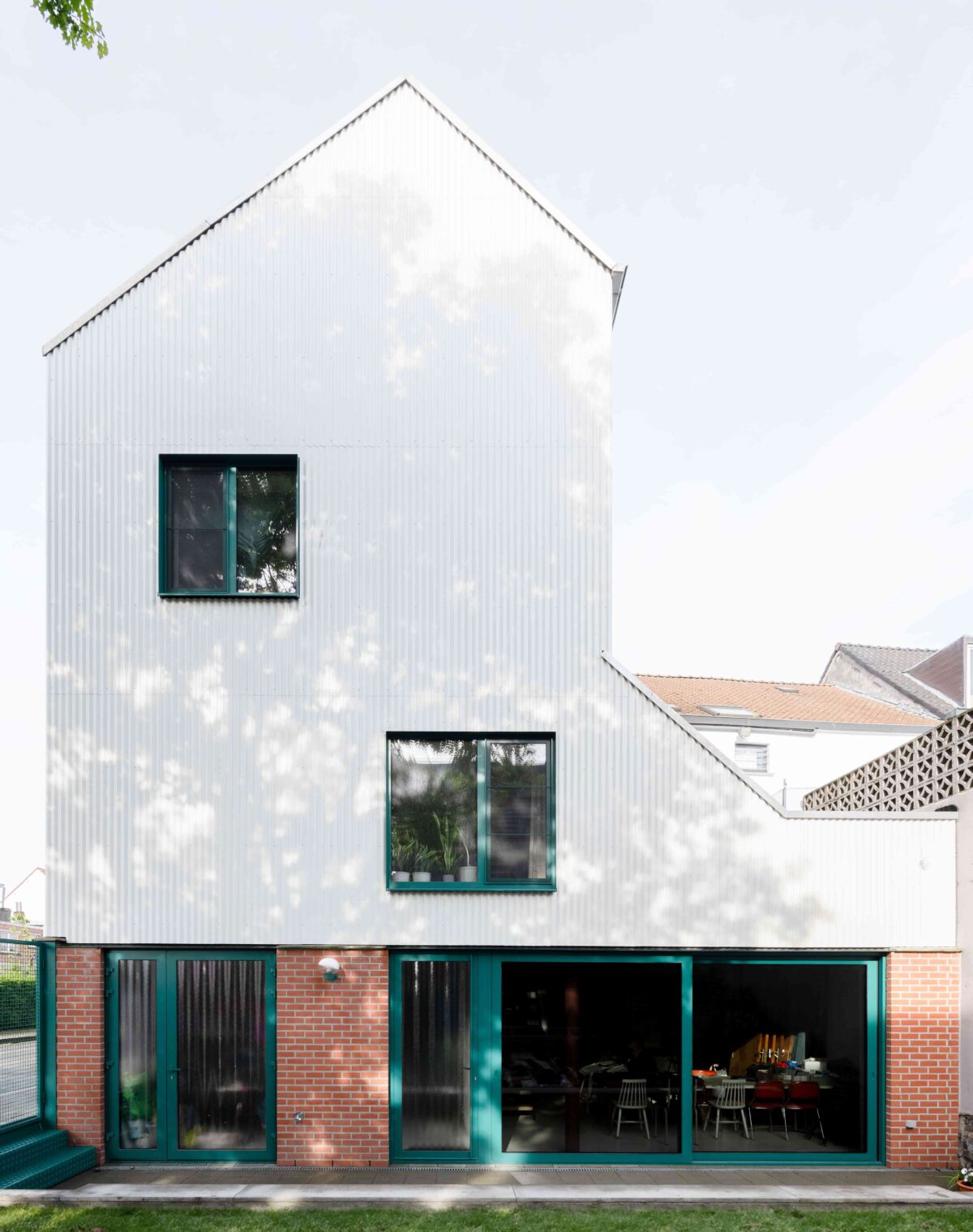
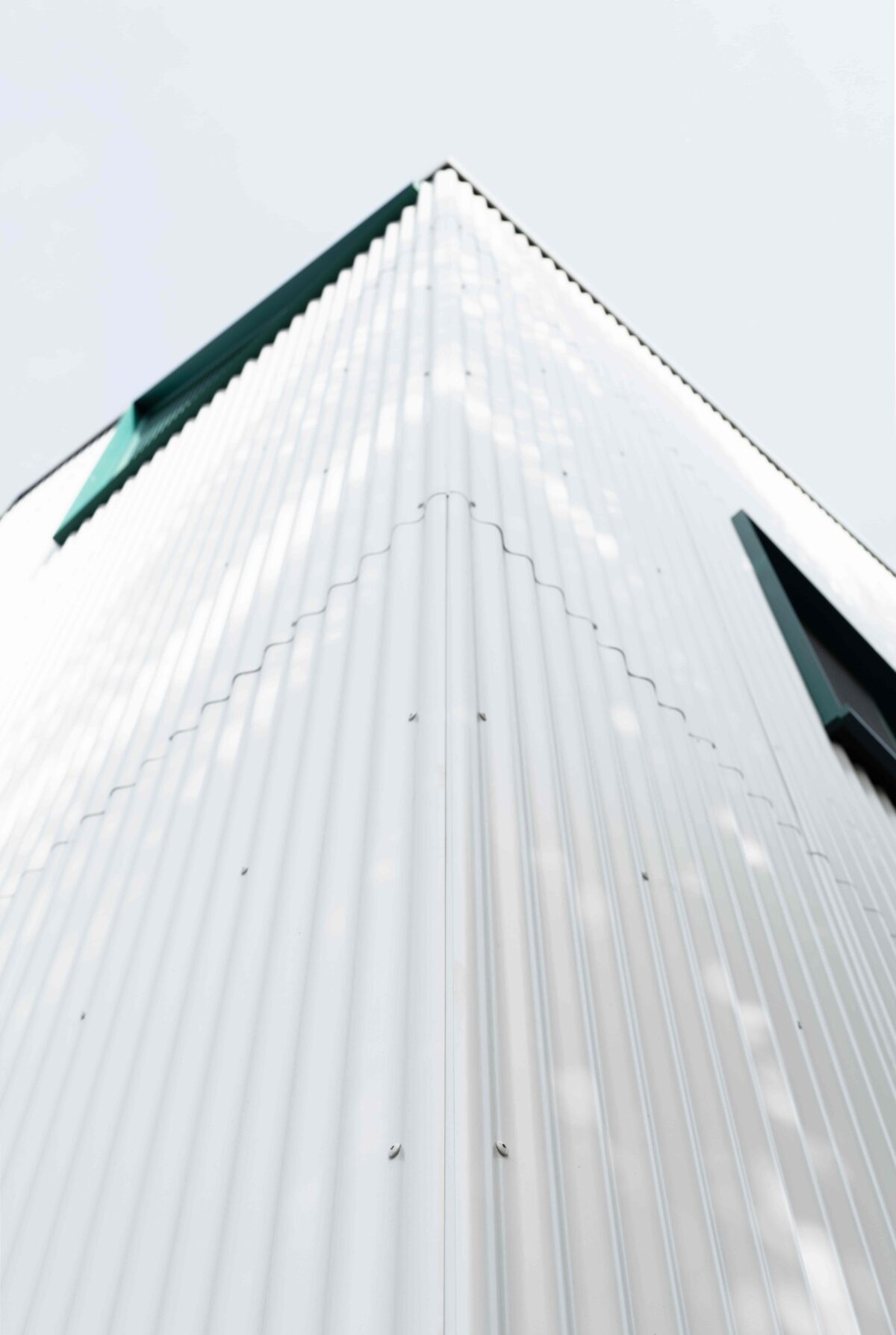
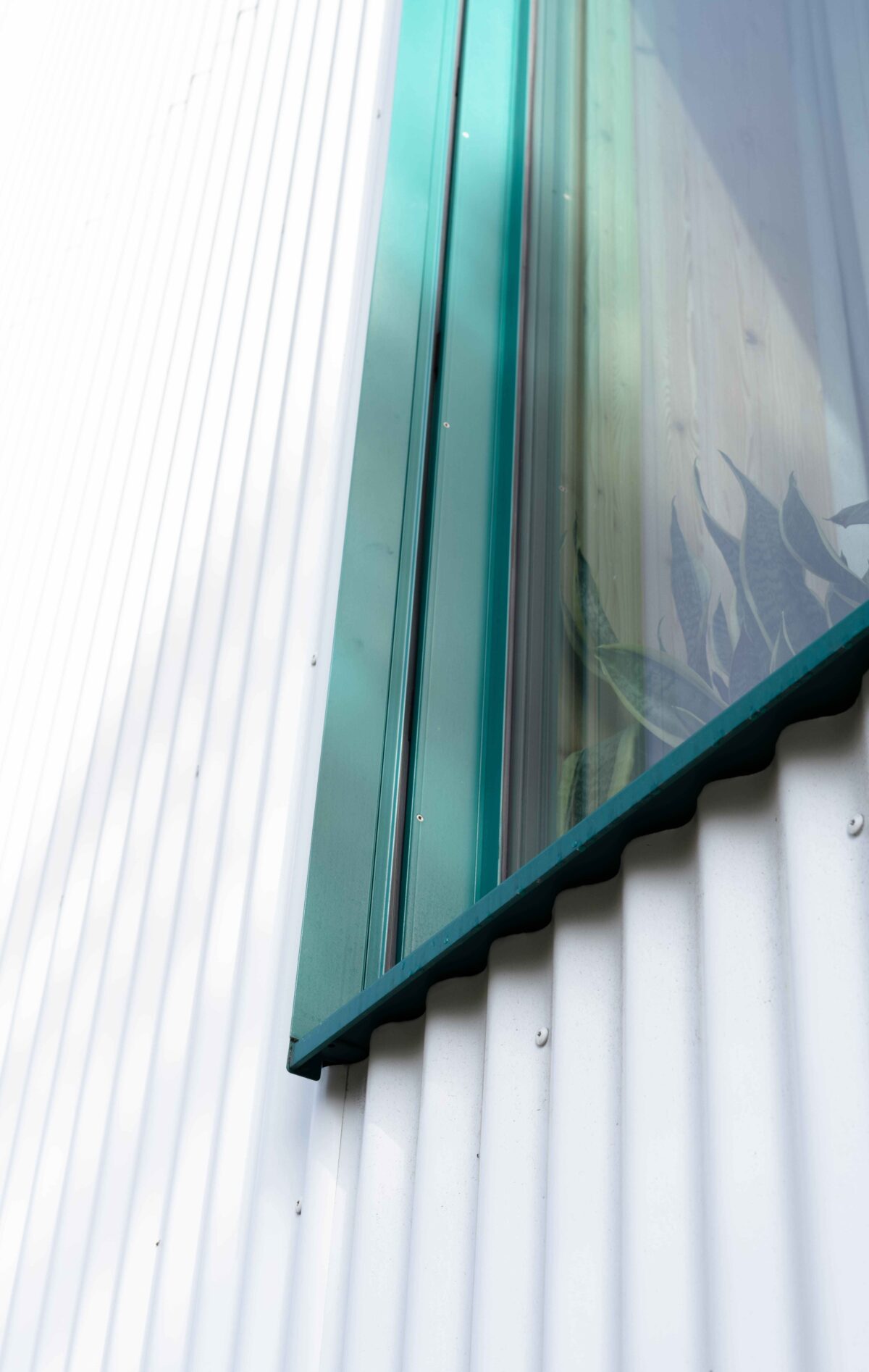
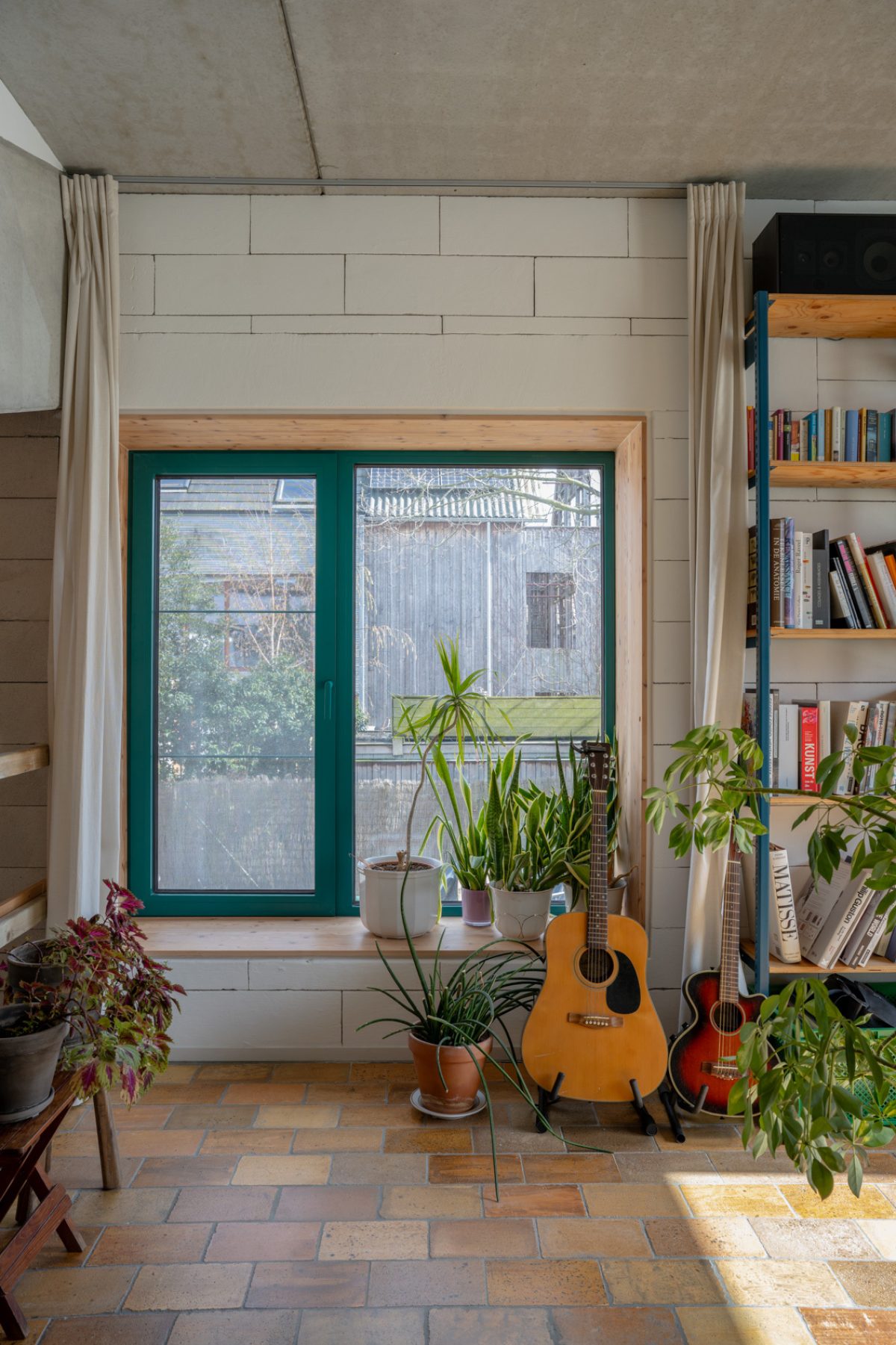
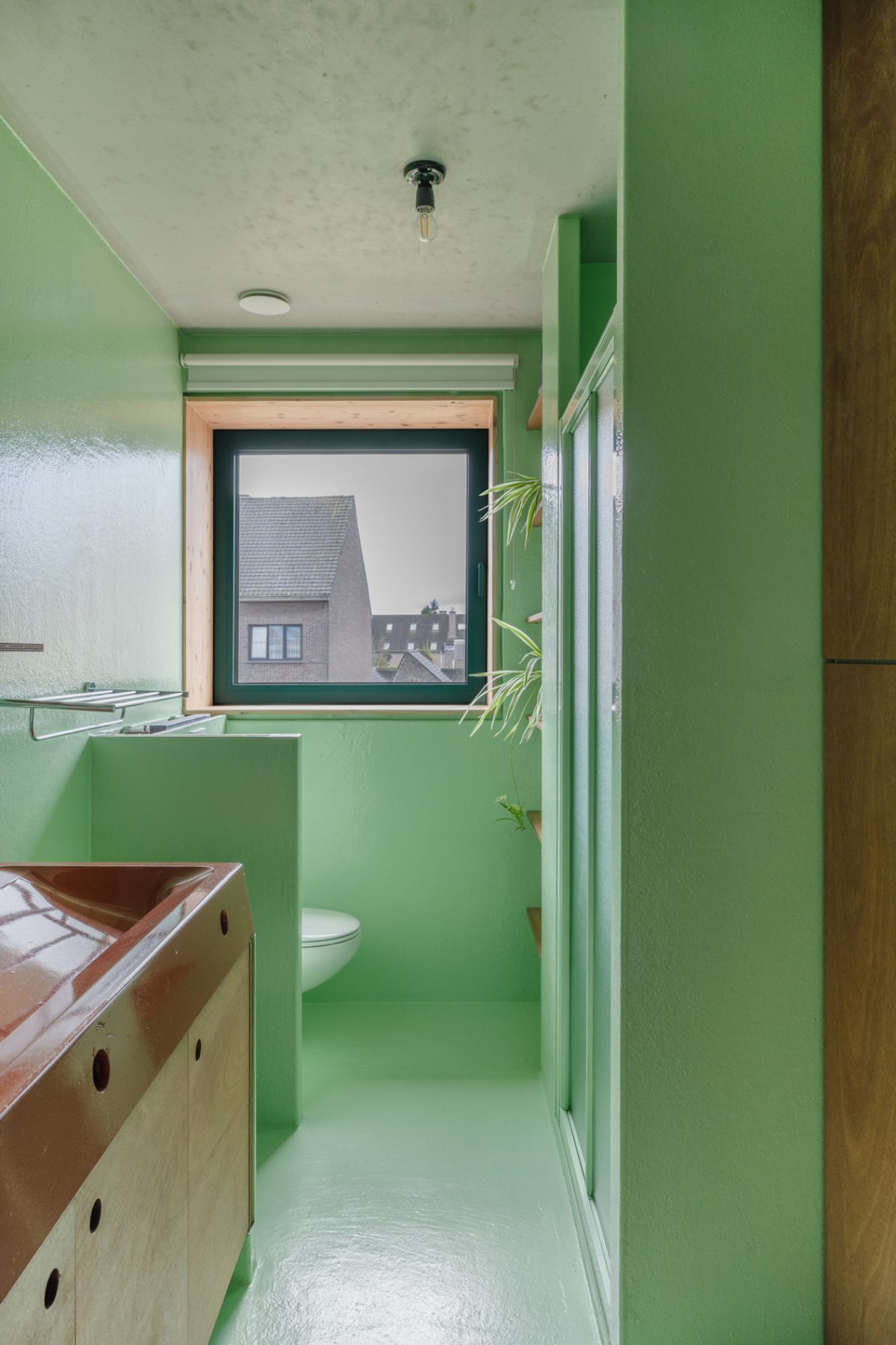
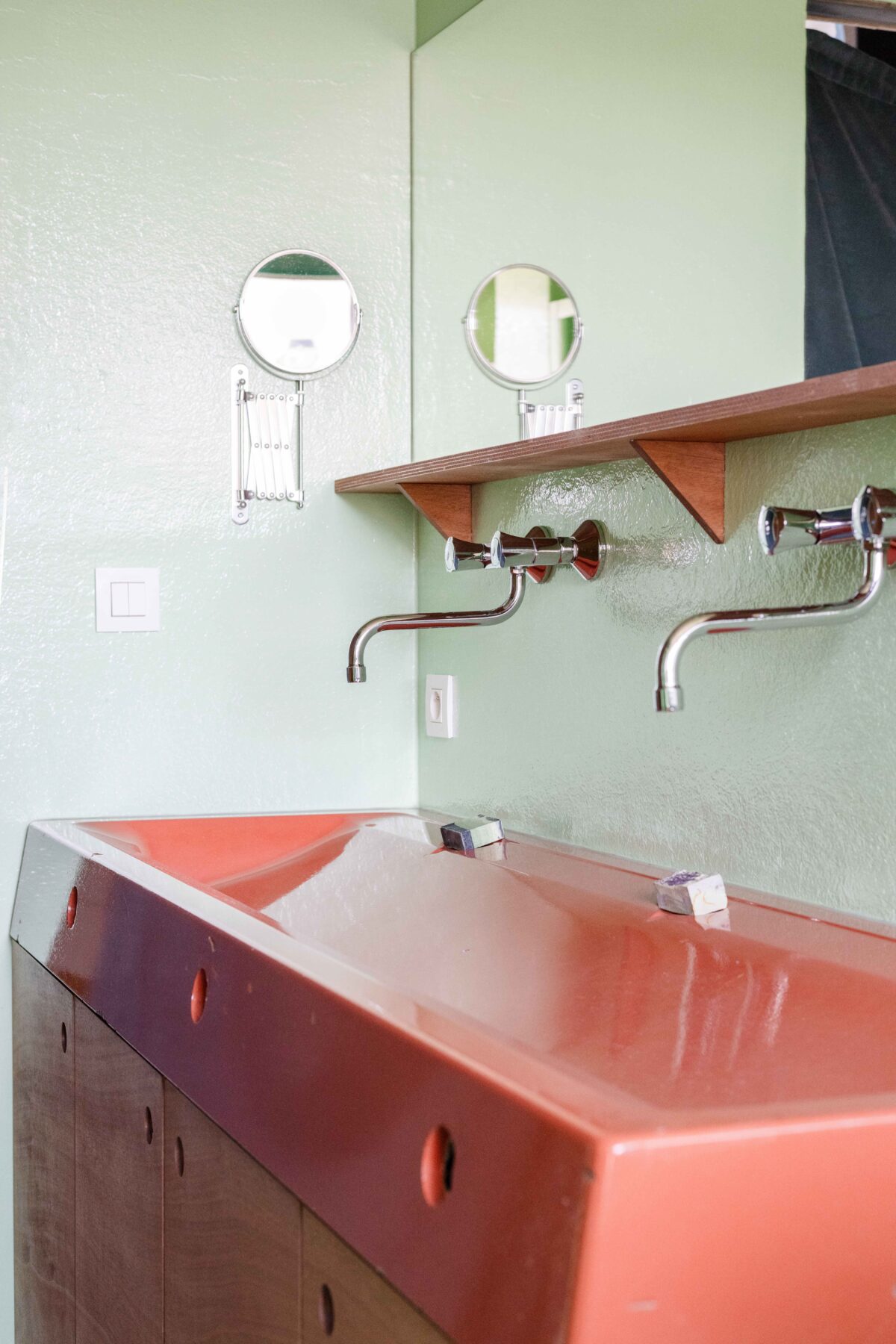
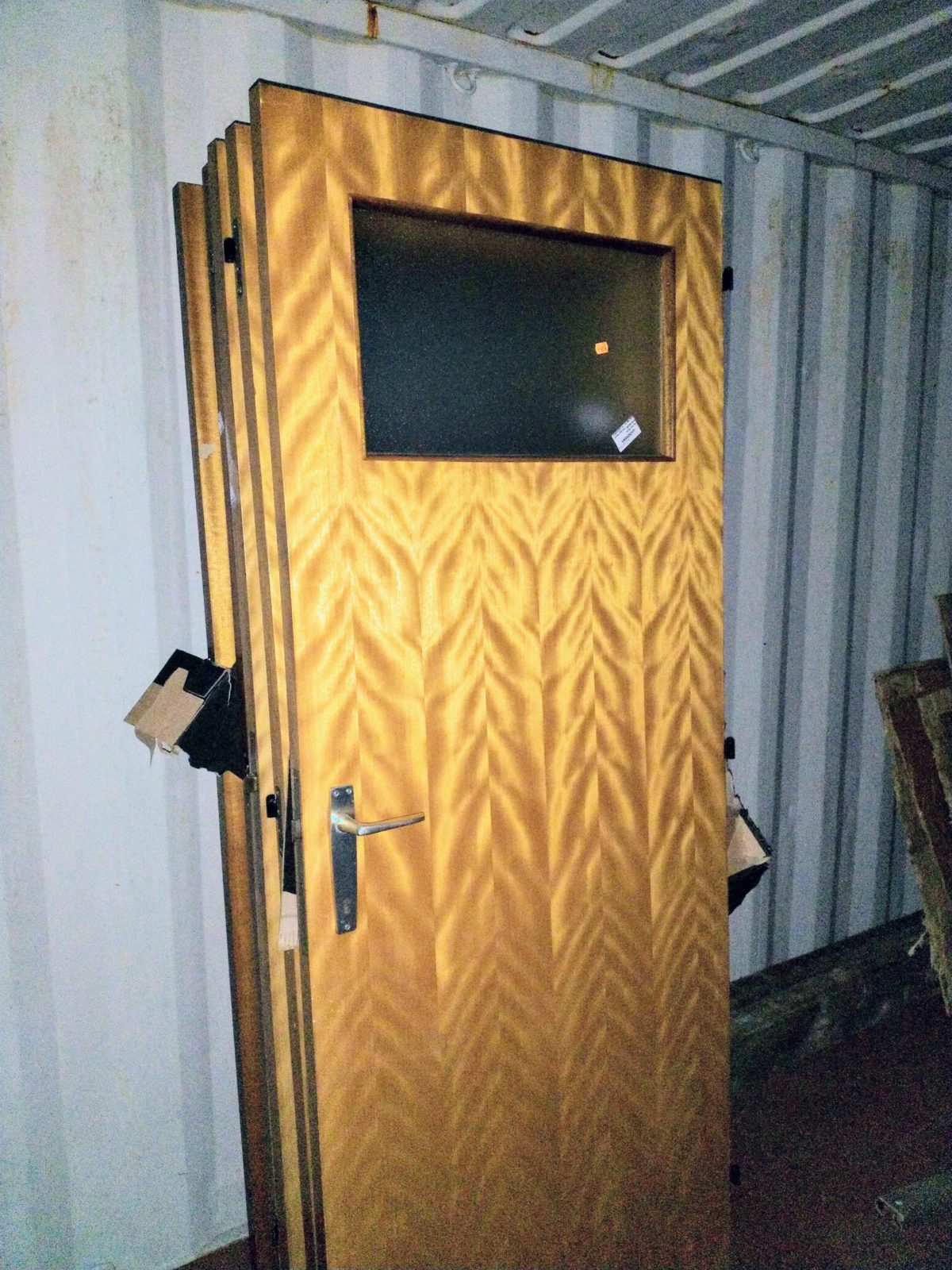
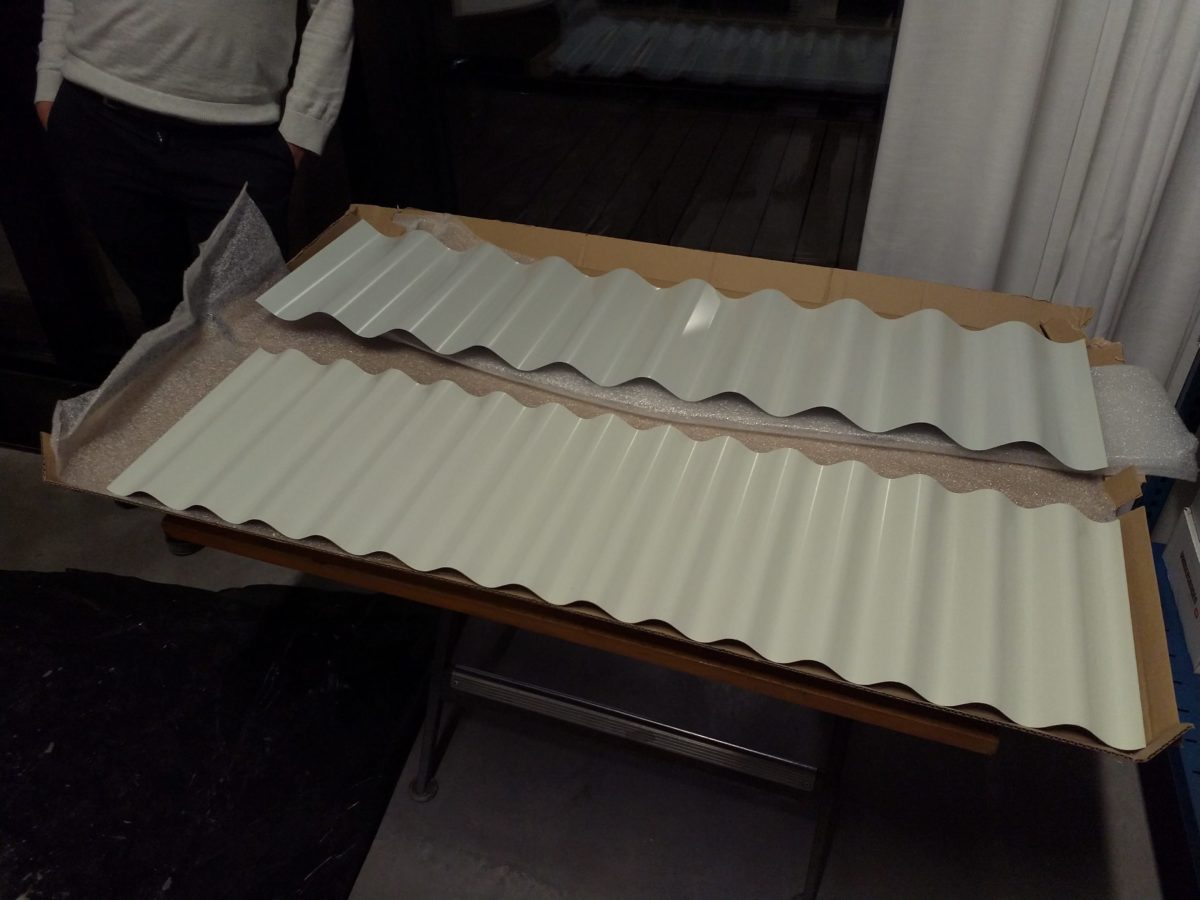
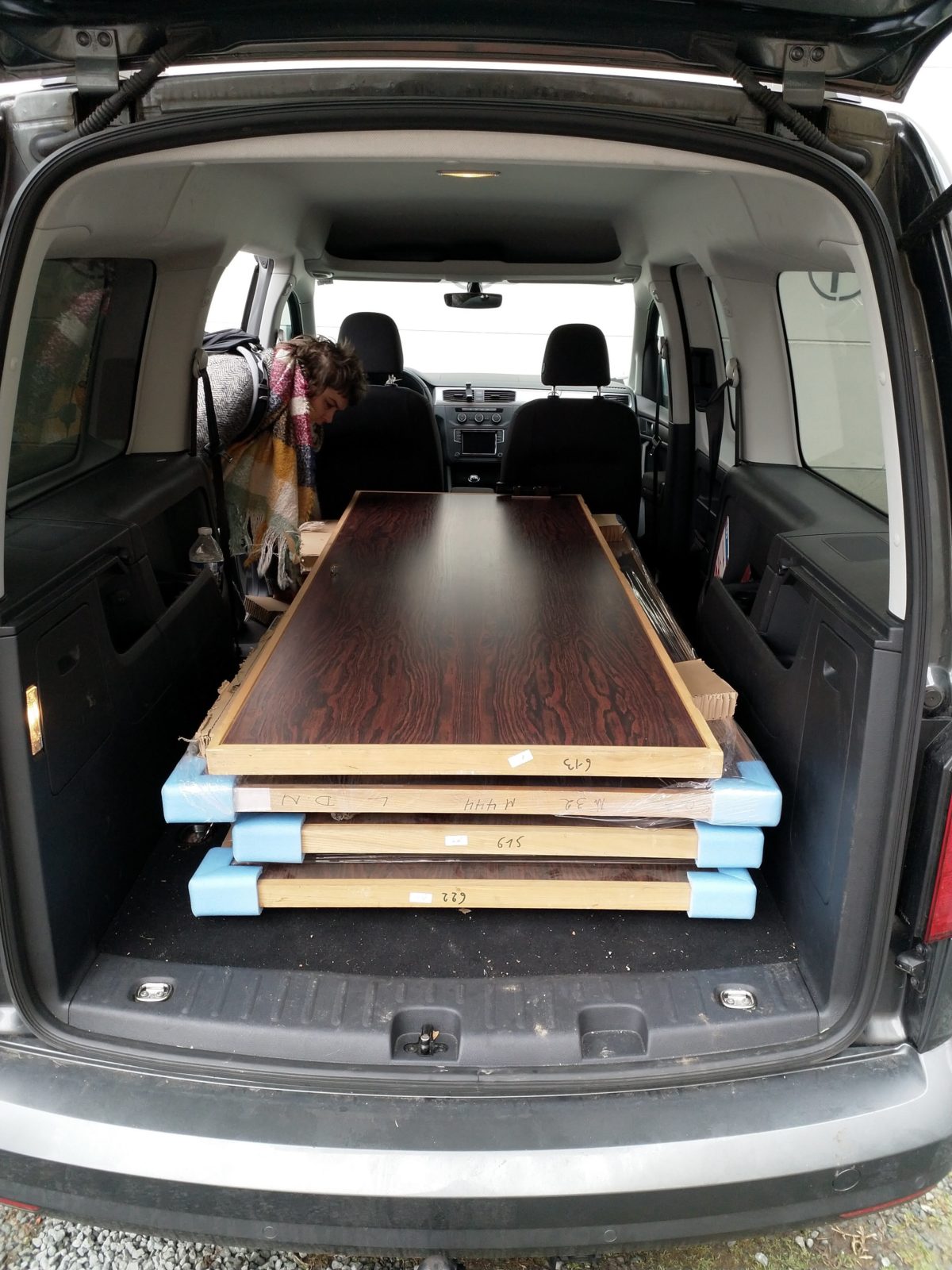
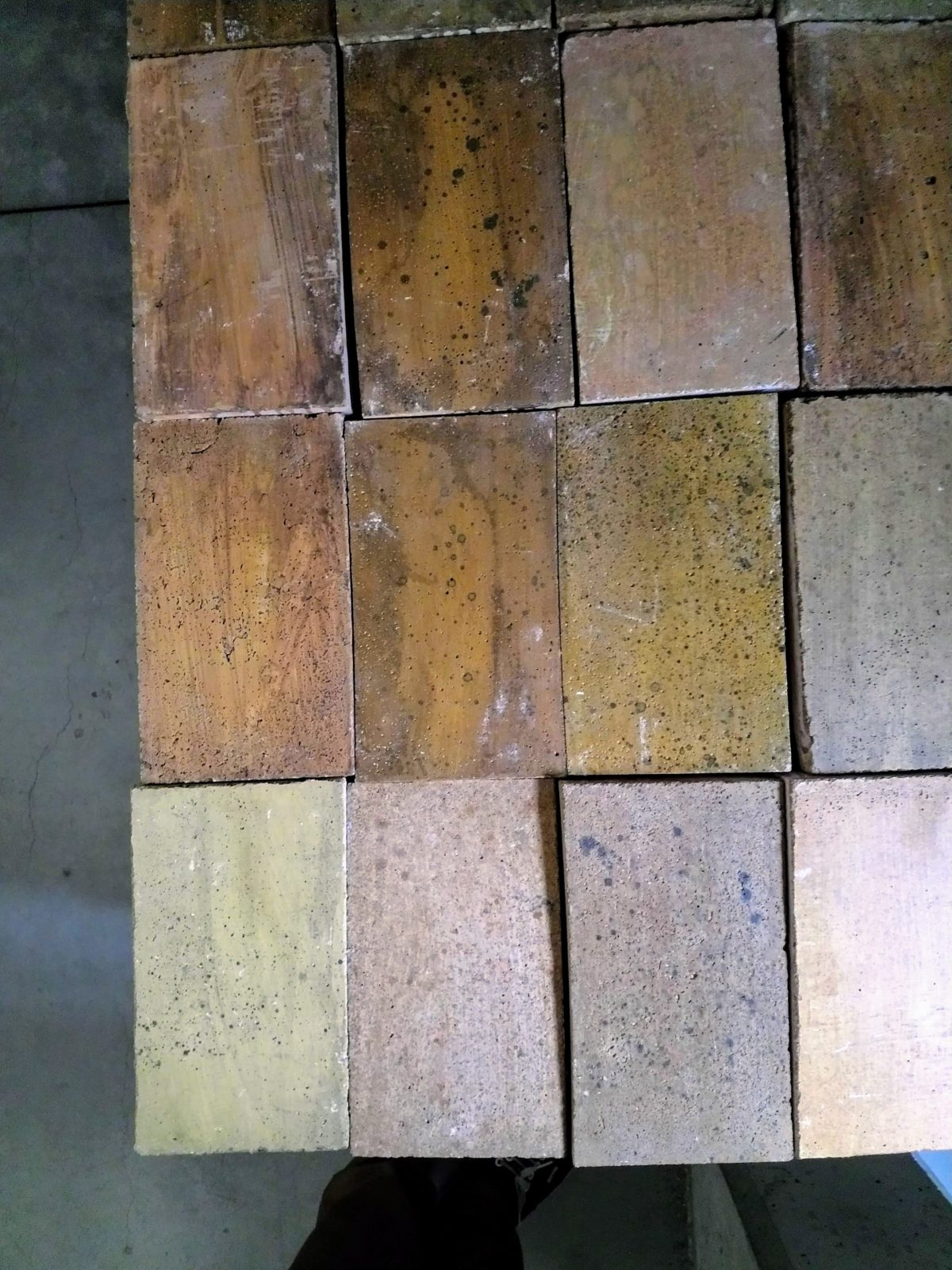
The house is simple inside and outside. Visible wooden beams in the kitchen, visible concrete sediments on the other floors, visible insulating stones of 50 cm thick form the massive outer walls. The future residents love beautiful old things. Just like many of their own coats and belongings, we are looking for recuperation stuff for the house. Stones of the chipped buttresses are used for the plinth of the house and 'overstock' metal corrugated sheets for everything above it. Doors from a Brussels bank, hand-painted tiles from an artist, a pink sink from a factory: sanitary appliances and furniture give colour to the austere architecture.
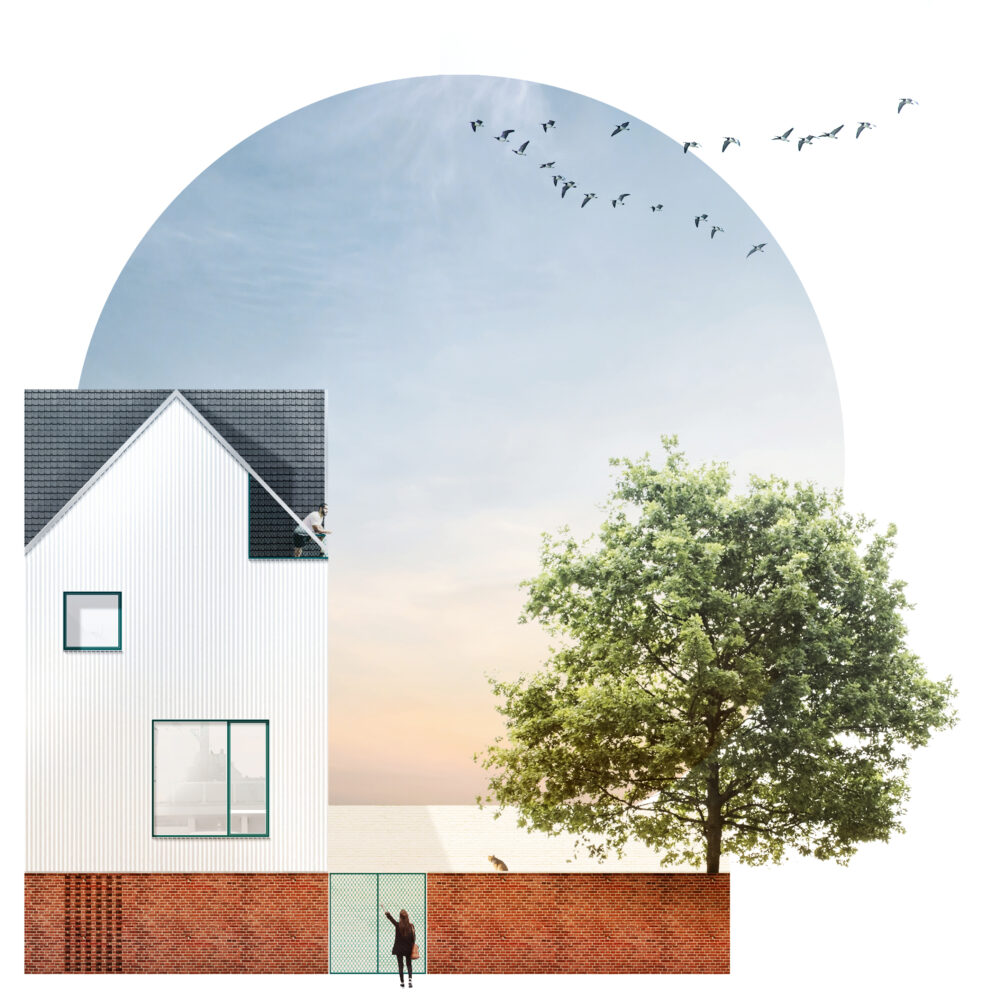
The garden was there before, and the house is there now too. As in a children's drawing, the house stands with its pointy roof, ad hoc windows and red brick next to a large green tree. Someone calls from the terrace to the garden, wondering if the barbecue is hot already. The coal is not yet white. The sun is gradually turning towards the evening. The façade vibrates in the low warm light and looks like a tranquil sea.
A new construction with a renovation budget
A young couple accidently bumps into a piece of land in Ghent during their search for a house to renovate. They ask us whether it would be possible to realize a new construction on this lot, albeit with a renovation budget. The feasibility study shows it is possible, with some ambition and courage to differ from the usual way of doing things. Thanks to good budget control, a sober design, a lot of recuperation and DIY a new construction is realized in the end, costing less than the purchase of an old house plus renovation.
A child’s drawing
A house like a child would be able to draw: a tree, a garden wall, a façade with seemingly random windows and a silly little roof. The house however is far from child’s play when it comes to far-reaching sustainability on a tight budget. The house is built with typical, affordable building methods but gains special qualities thanks to the atypical use of these techniques.
The design is built on three ‘pillars’: buildability, compactness and sustainability (both for the use of energy as for the use of materials). All these factors together assure a strict control of the building budget.
Compact
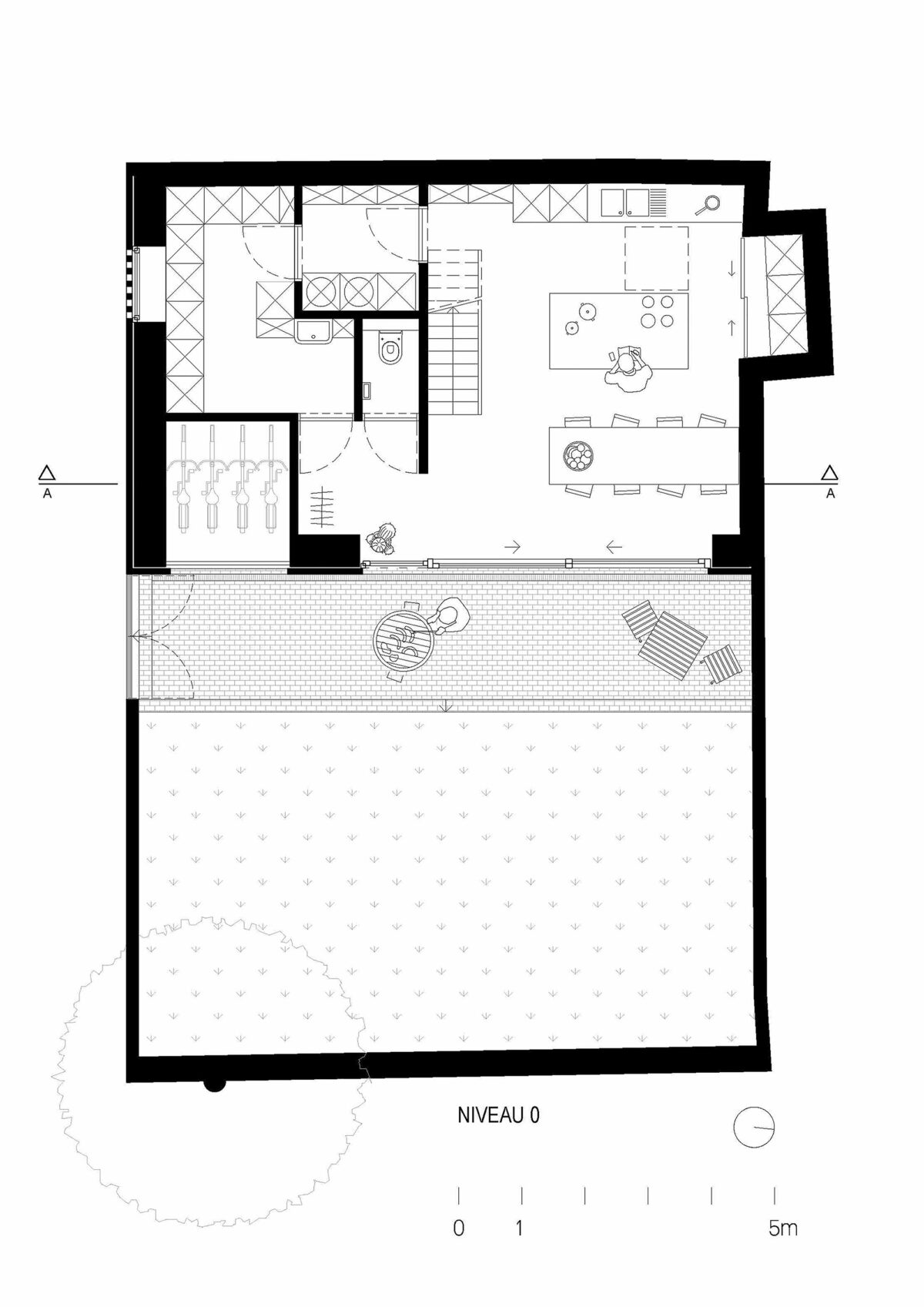
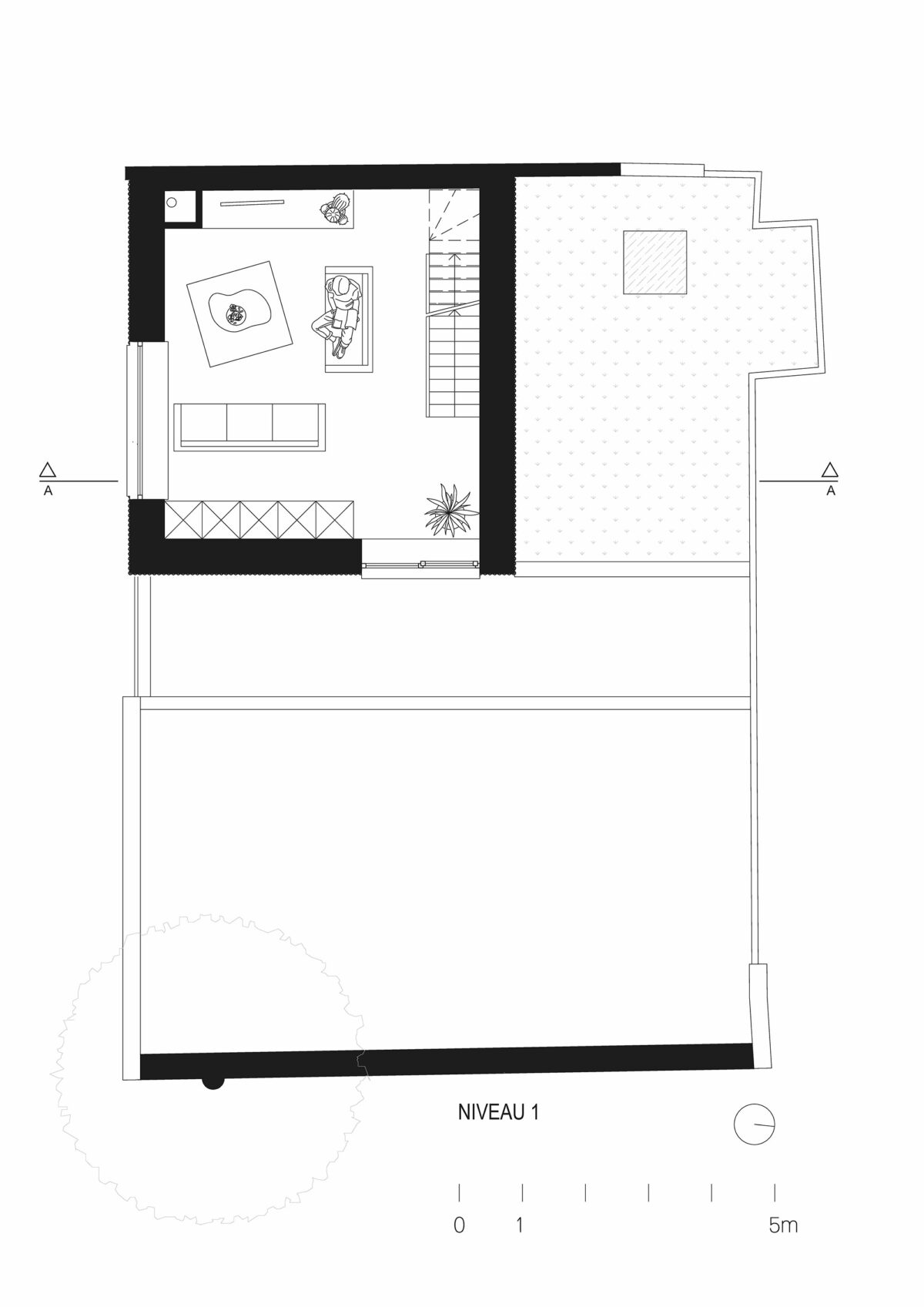
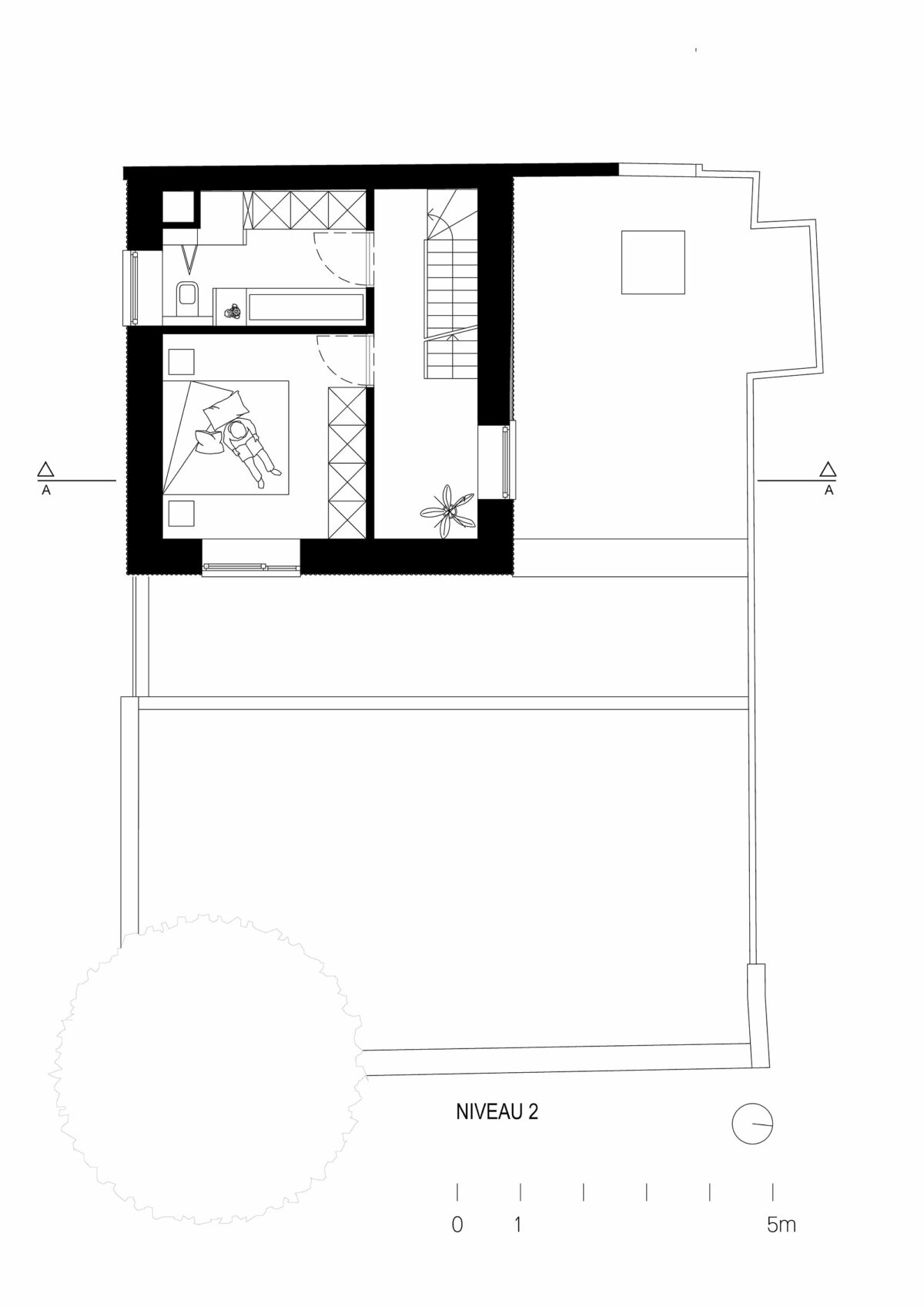
The lot and urban planning regulations have strict constraints. The long side of the lot borders on the street. Because of that the garden comes next to the house and only on 6 of the total 14 meters width the house can be built. The living spaces are favoured with respect to the night side. The living rooms are extra high so the daylight can enter deep into the house. The bedroom, bathroom and storage rooms are built according to the norm: 2,5 meters high. The night side is more pragmatic. The day rooms get all the attention.
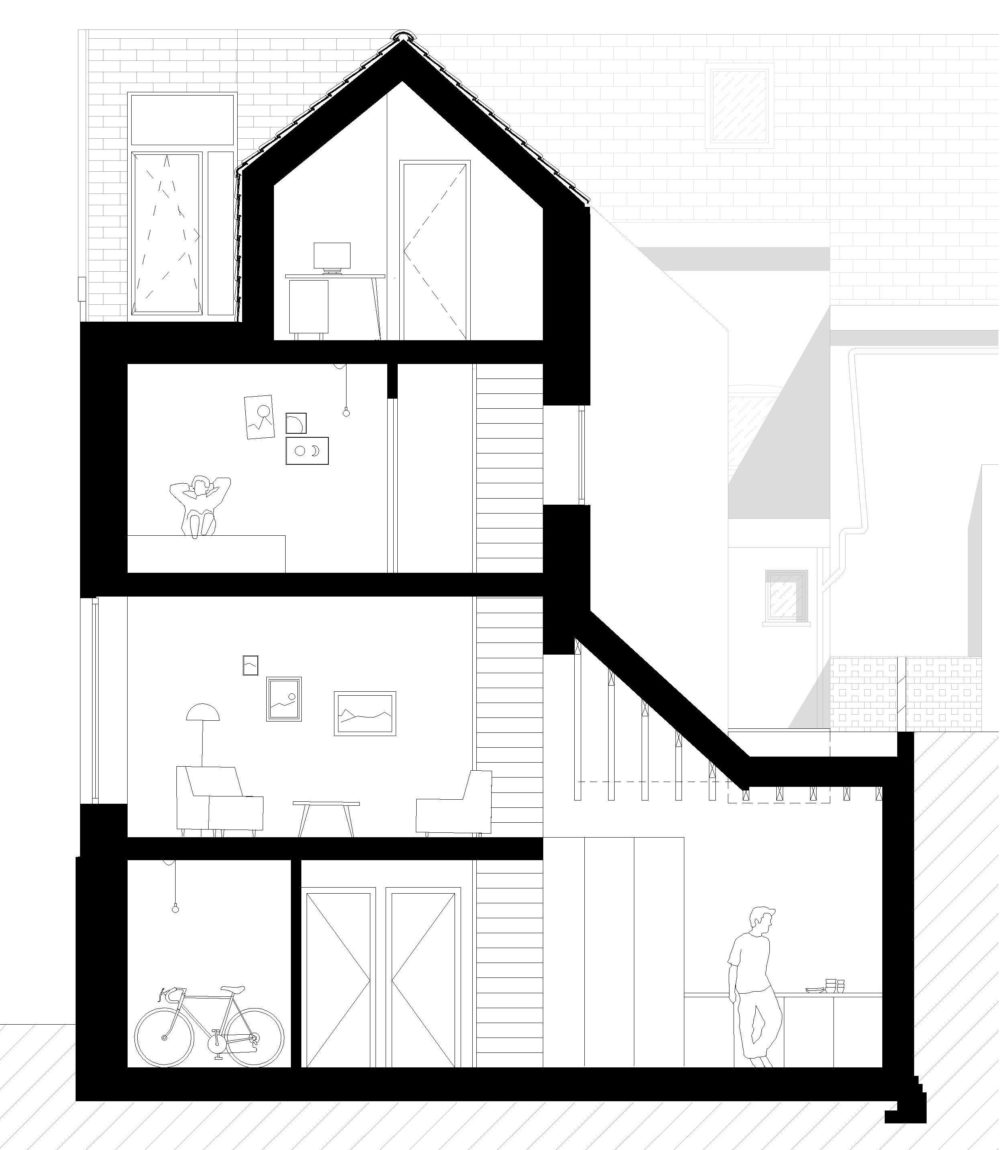
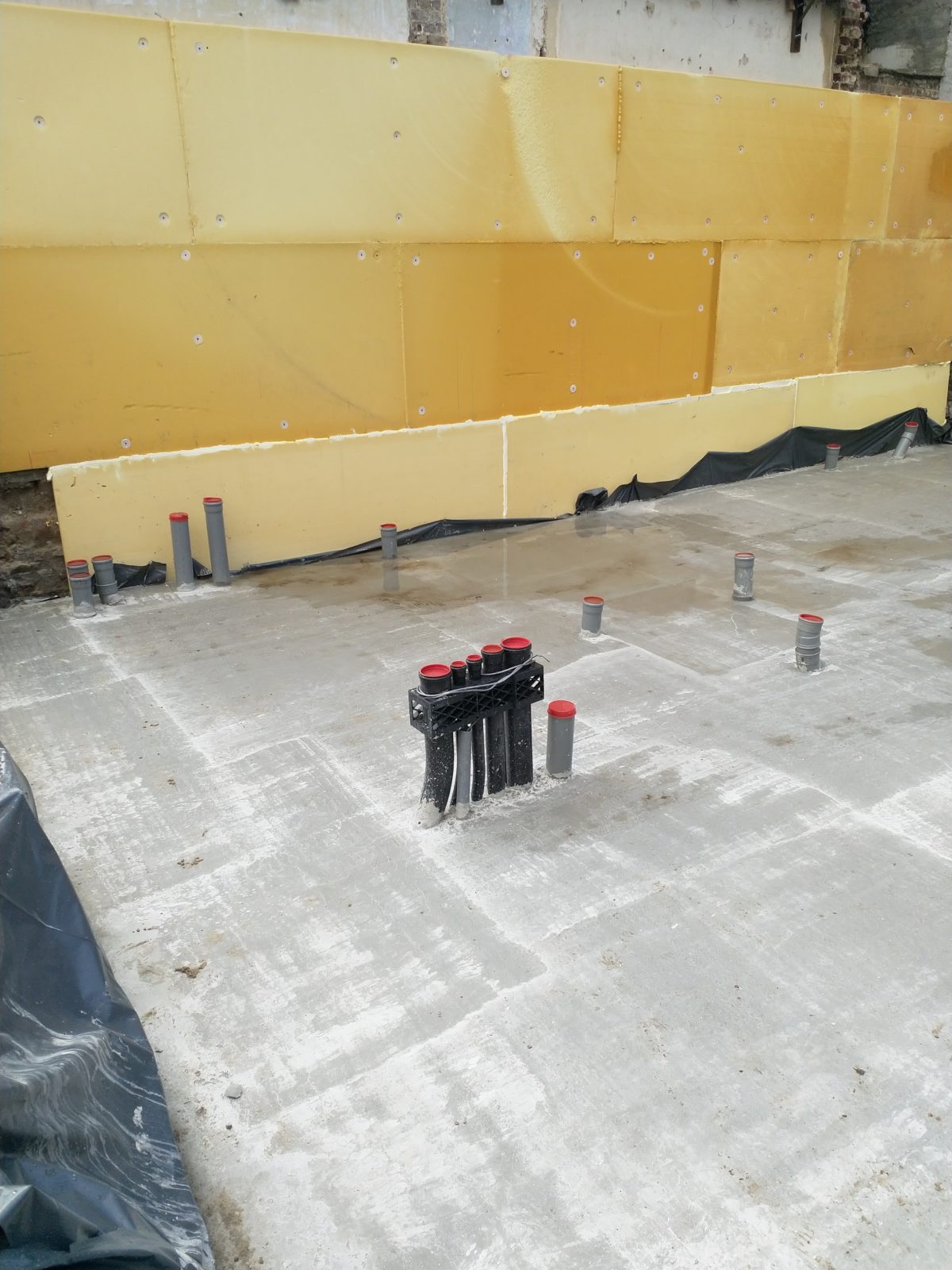
Moreover, the whole house goes half a meter deep into the ground. This way, the full program (1 master bedroom, 2 office spaces (or children’s bedrooms), a bathroom, a separate guest toilet, a spacious living room and kitchen, a laundry room, a technical space and a separate bicycle storage) gets a place in the house.
Buildable
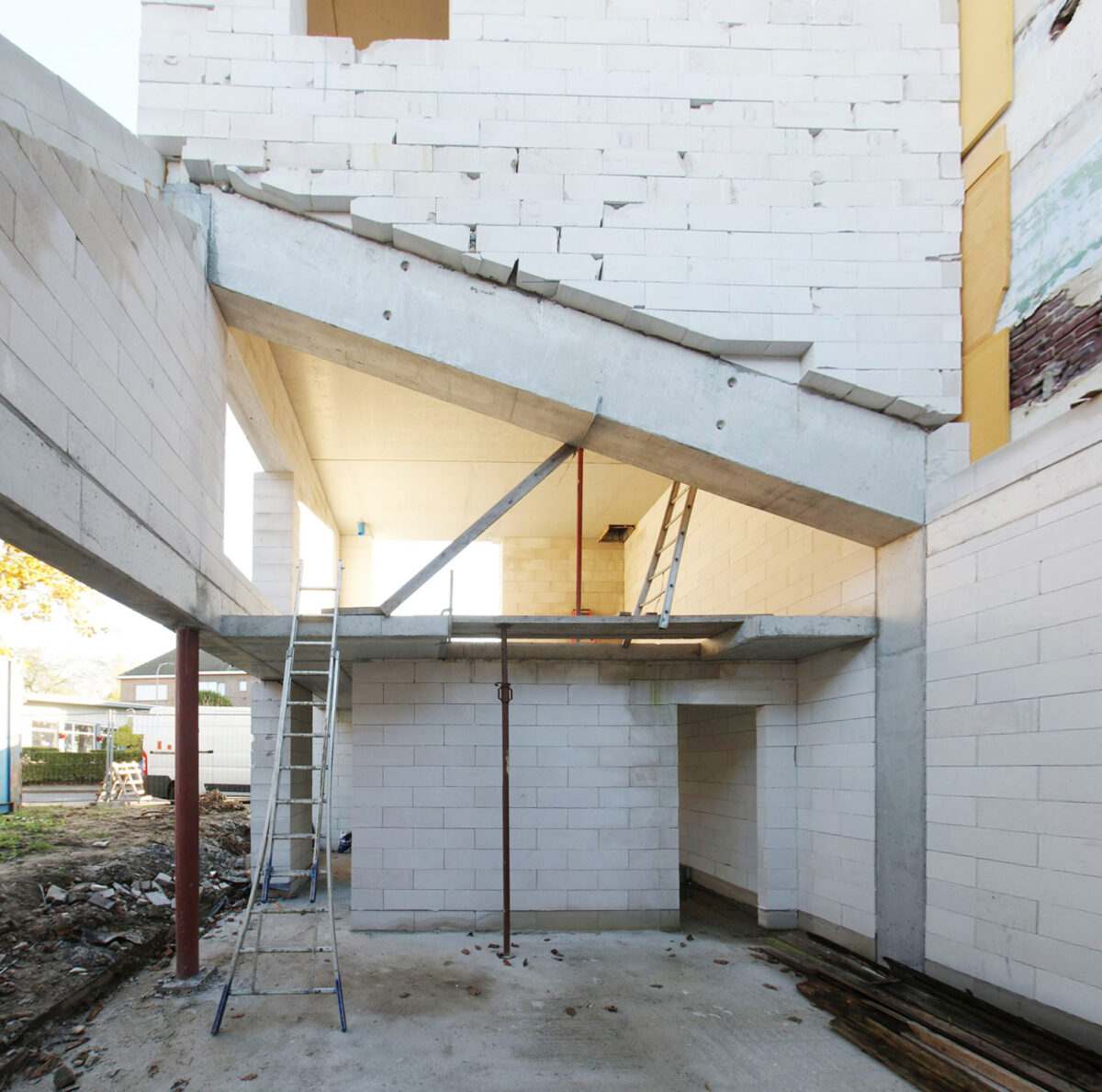
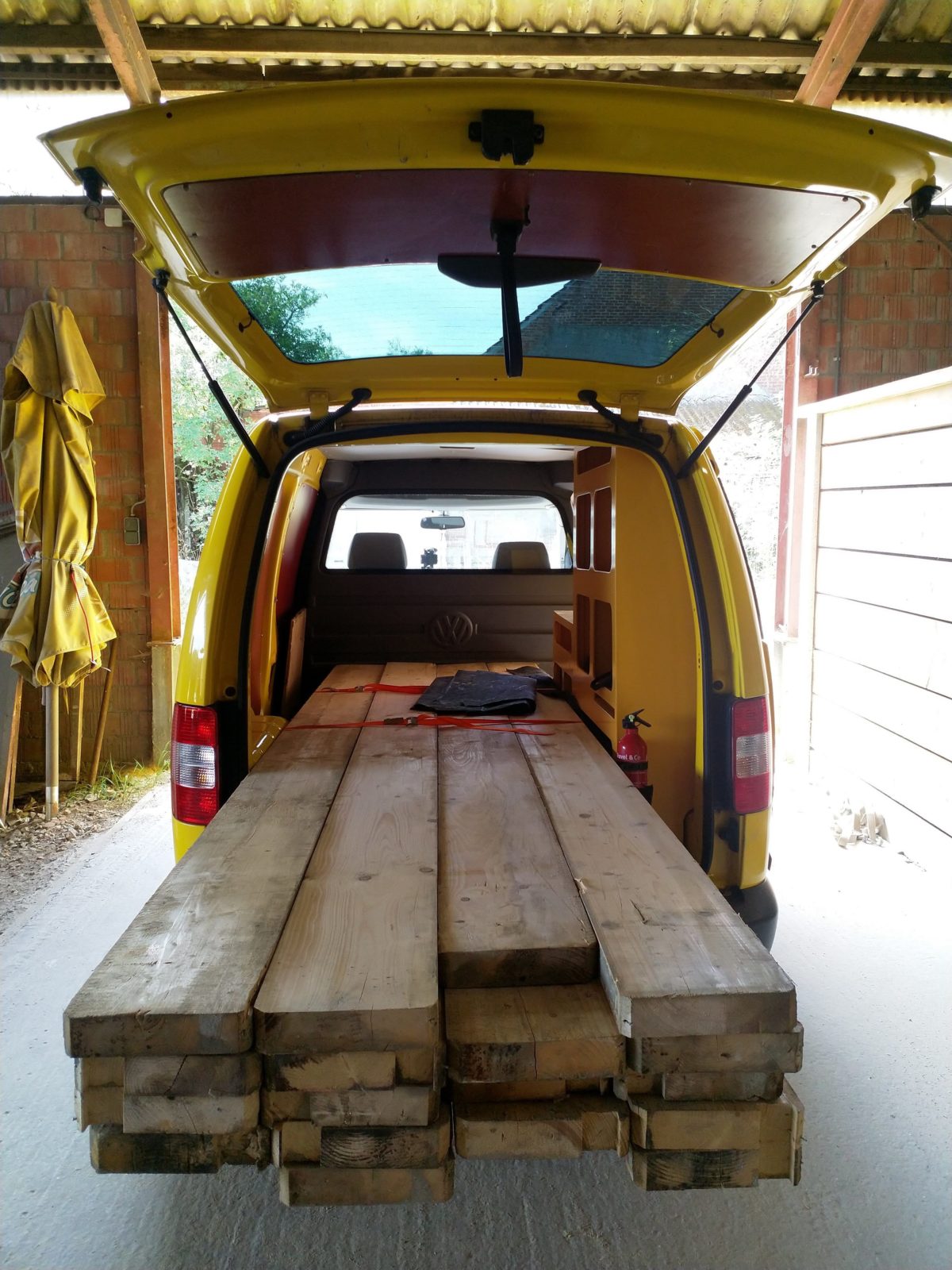
The house will be built with normal means. No high end stuff. Normal wooden beams. Concrete for the larger spans. A normal pitched roof. Yet all these elements are abused by using them a bit differently than is usually the case. A big beam is tilted and pulls the rear façade up. The living space overlooks the kitchen.
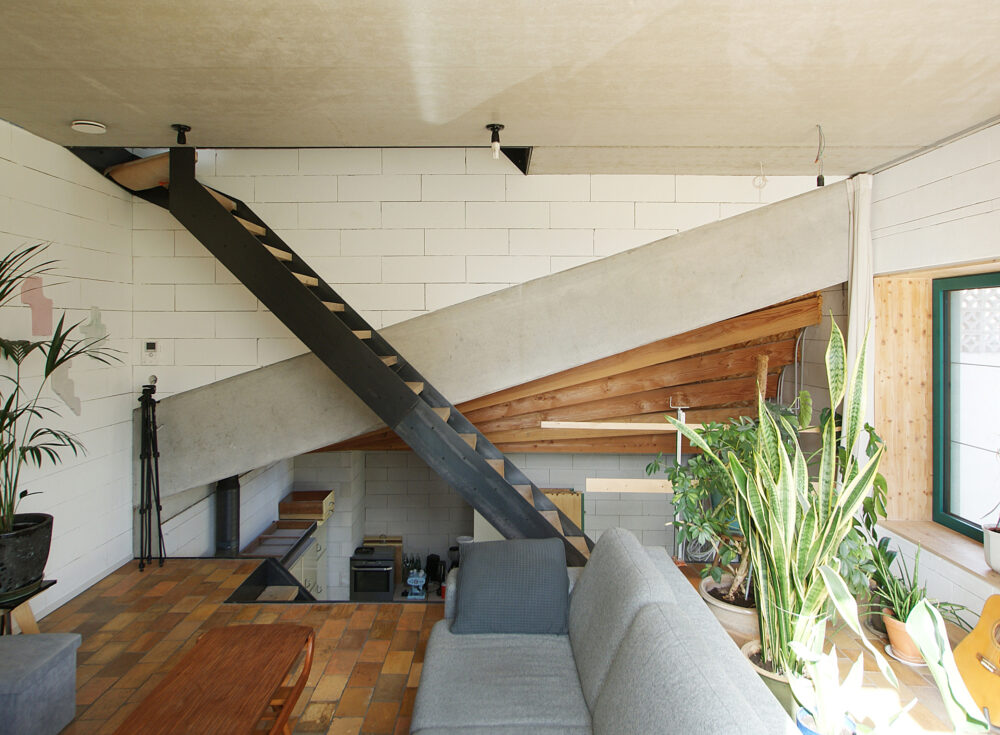
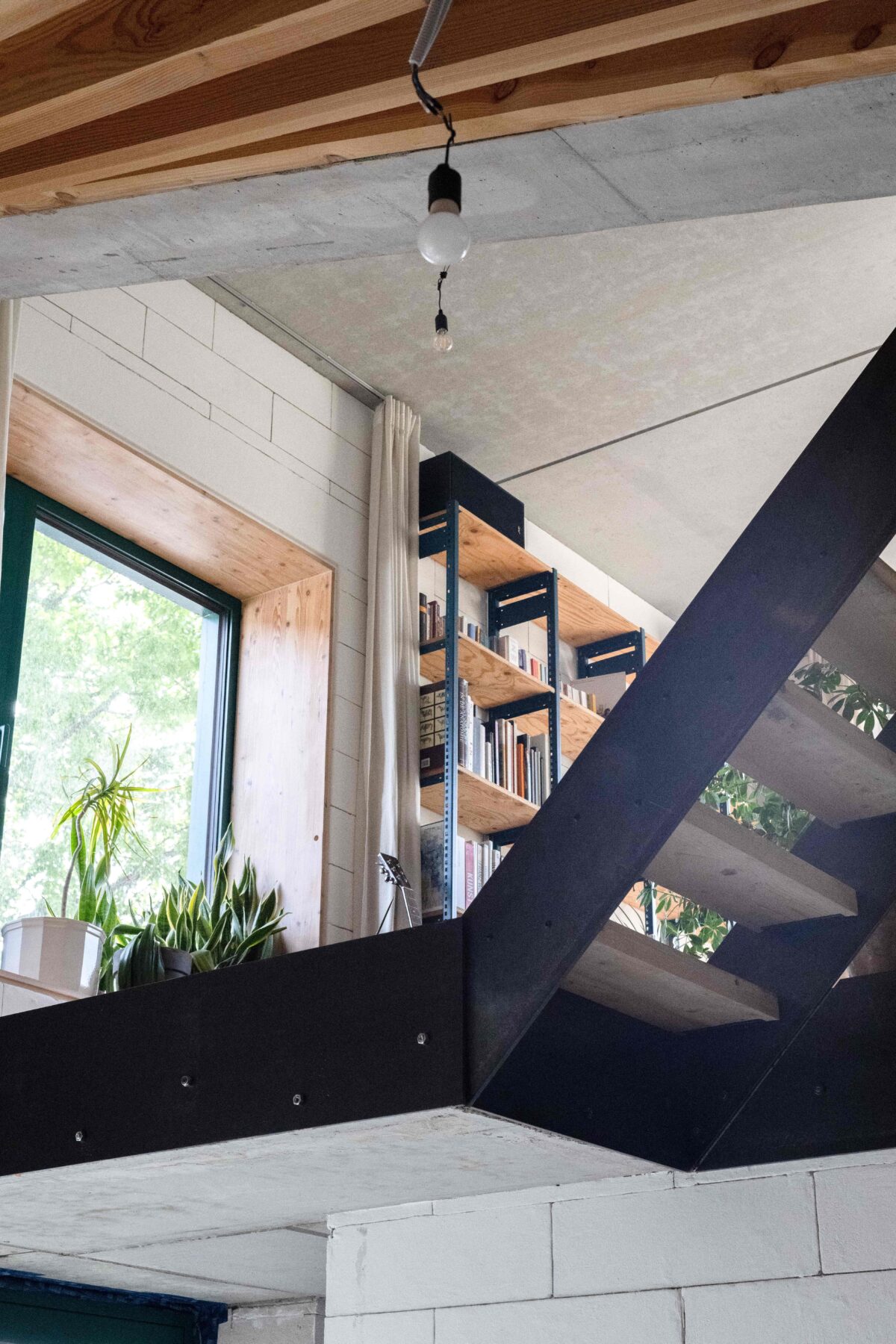
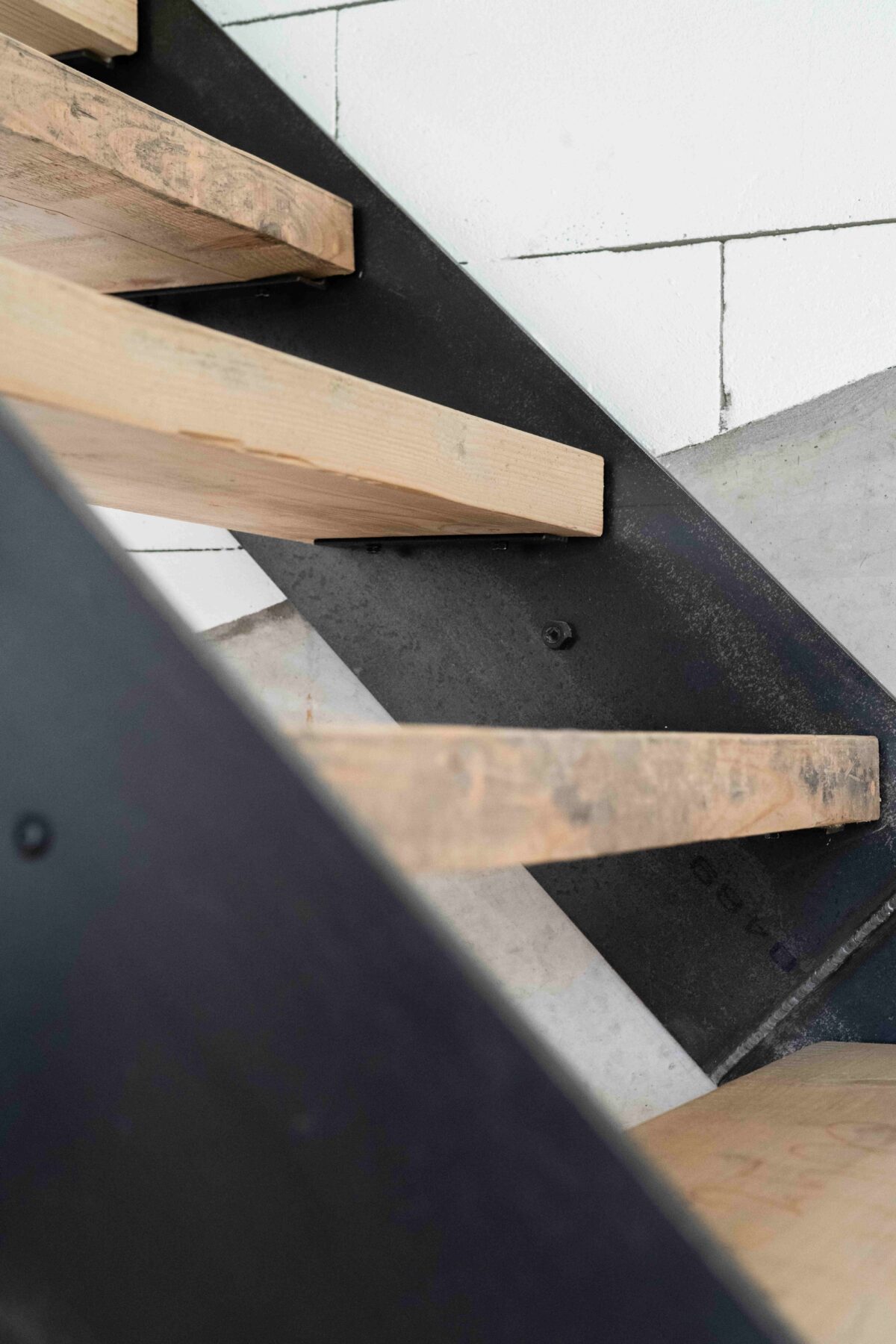
A mezzanine overlap between the floors arises. The space is double high for a moment. Not only an important movement in space, it also allows the light to enter from the front of the house into the full depth of the house during spring and autumn. The wooden beams form an organised surface. A ruled surface, using regular straight beams.
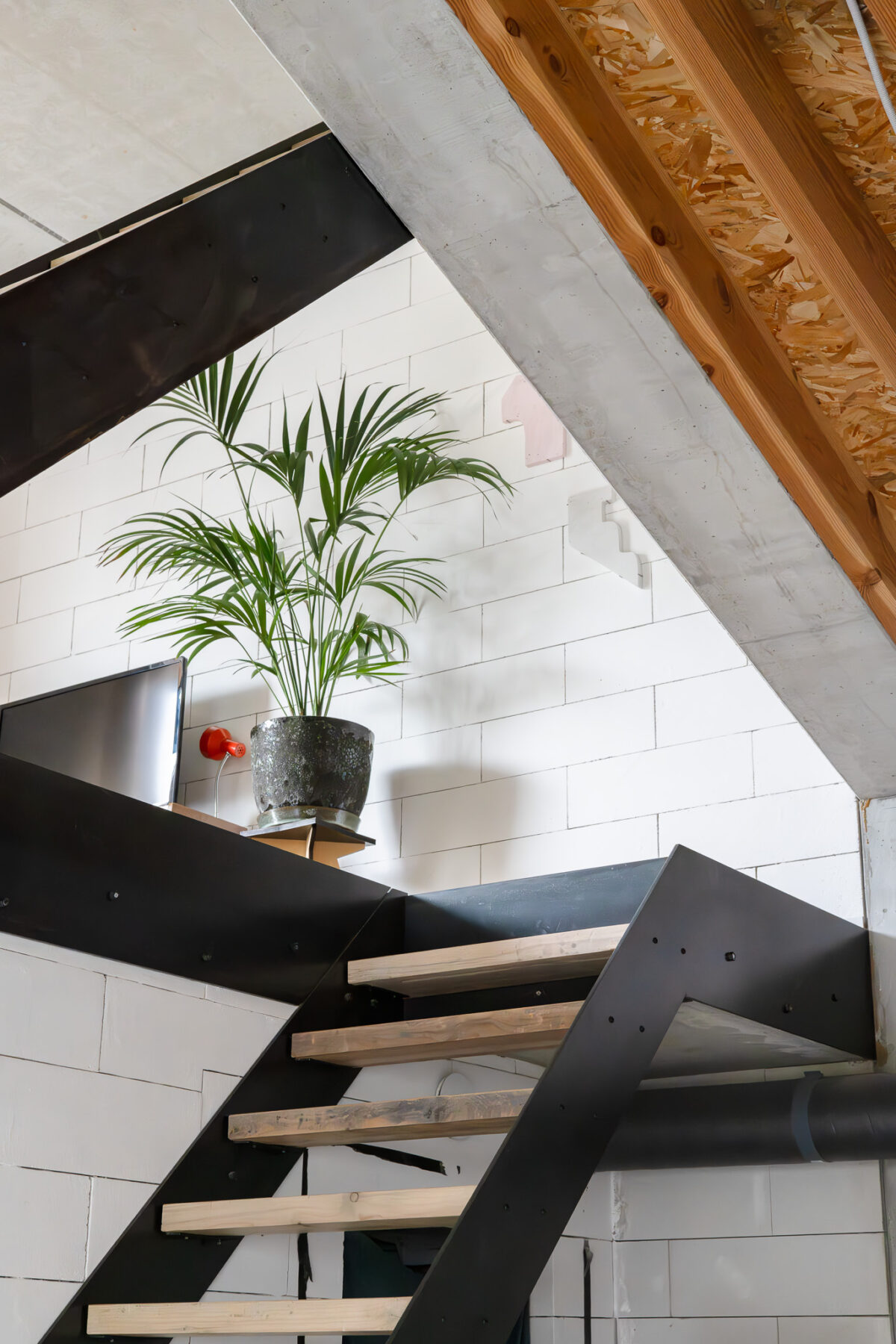
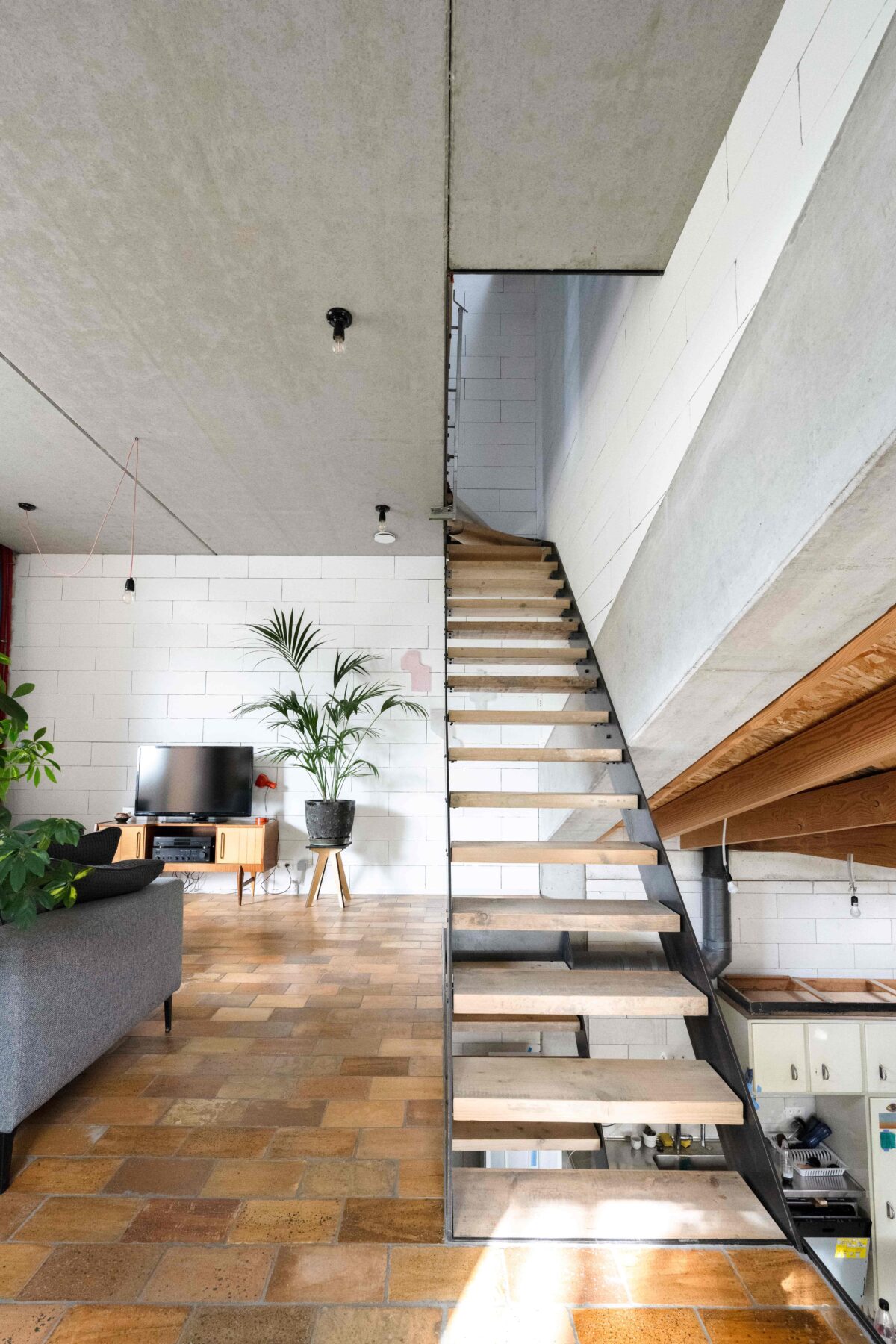
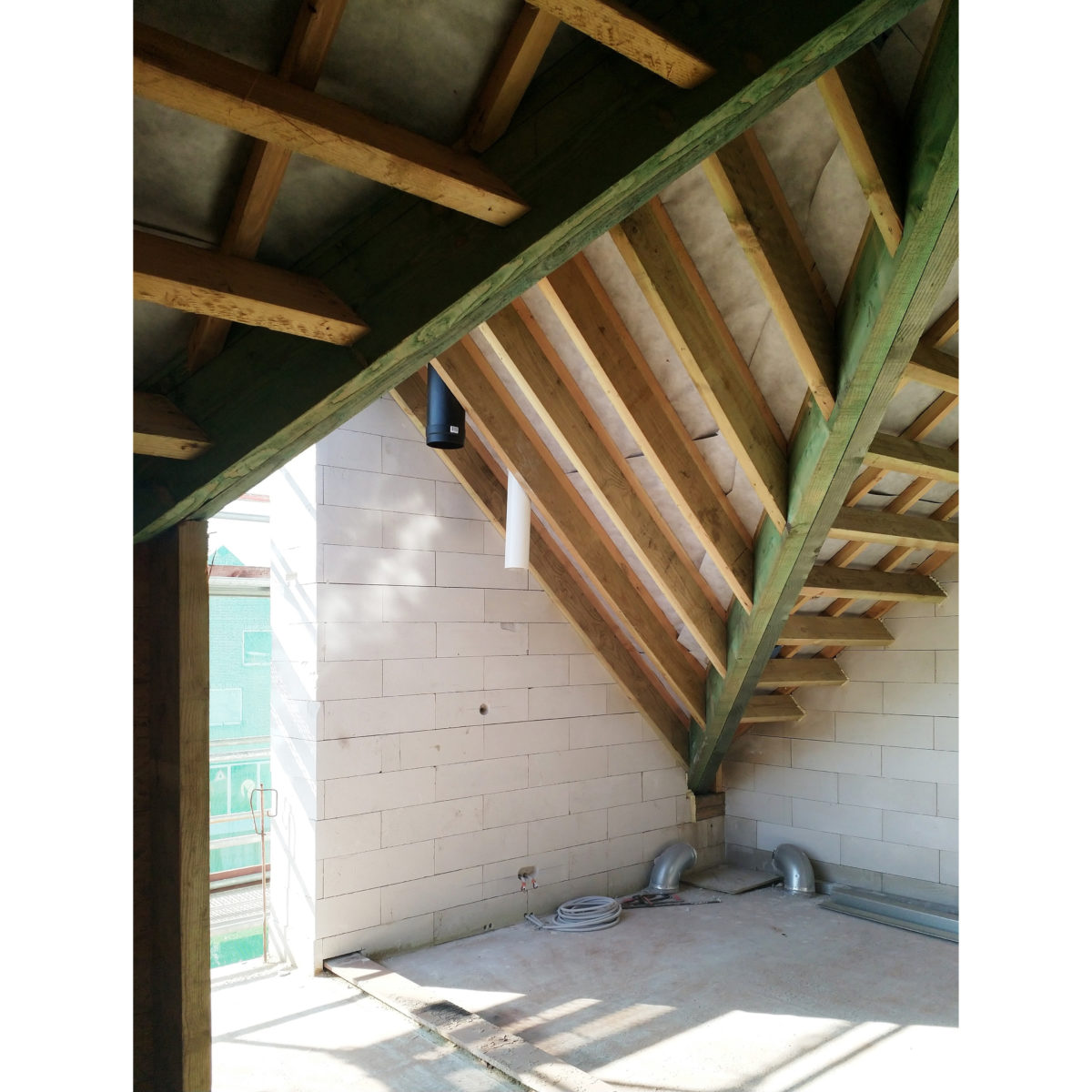
The pitched roof behaves oddly as well. Since it folds inwards sooner than expected an indoor terrace is formed. It gives light and a view to the rooms located along. The terrace overviews the adjacent park and absorbs the morning sun. Despite the shape, the roof is built with normal means and with a normal pitched roof structure.
Sustainable
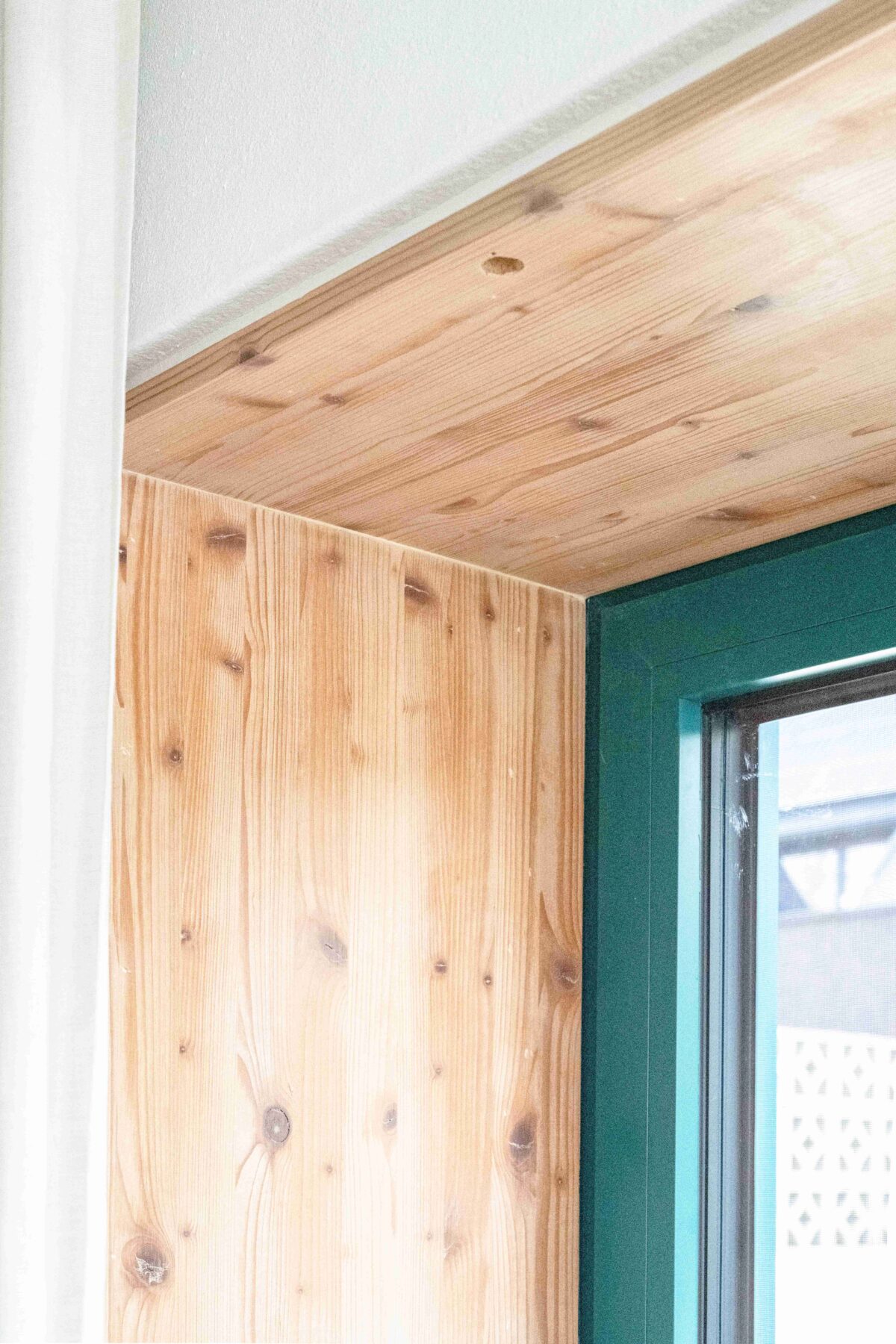
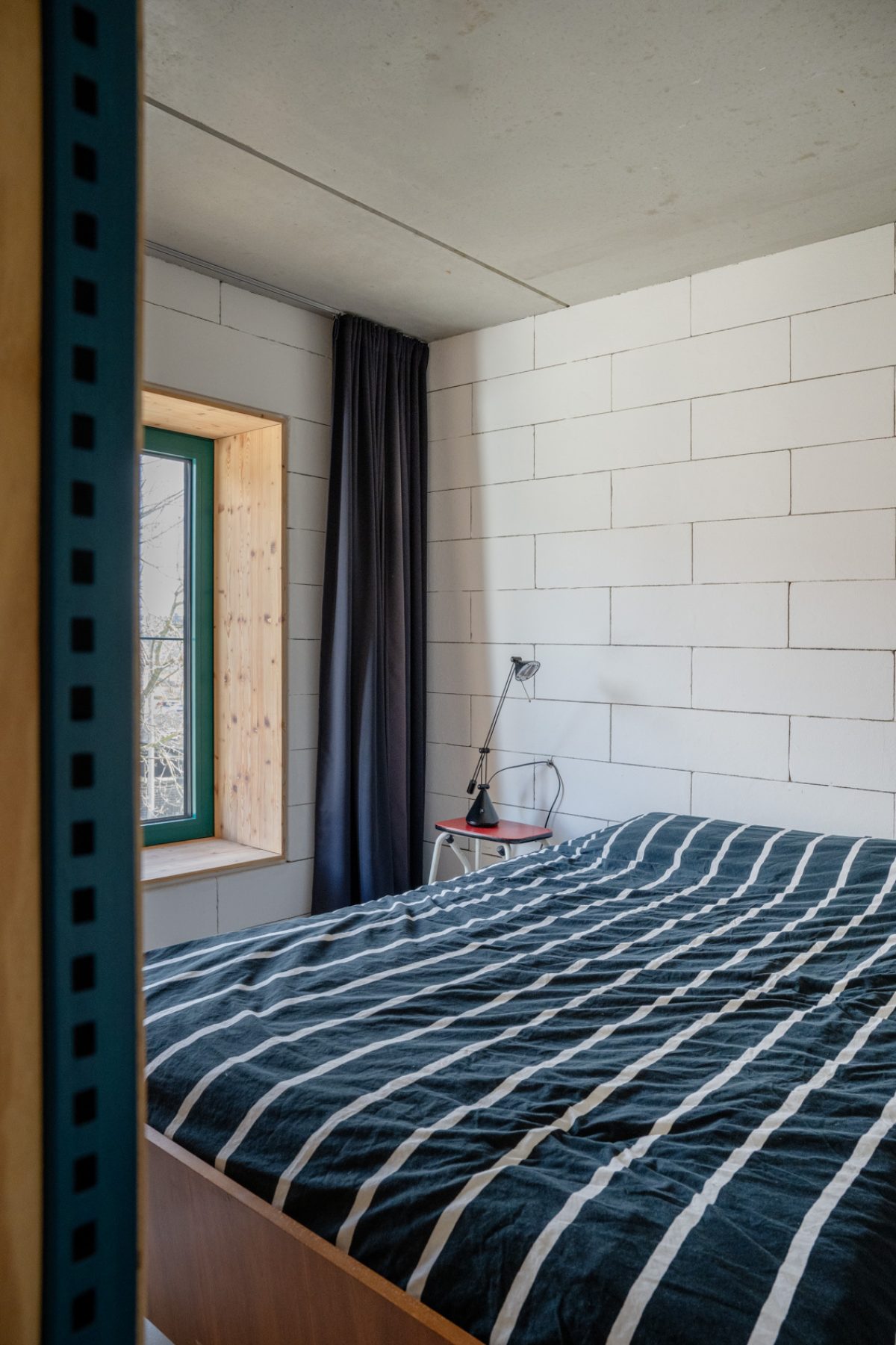
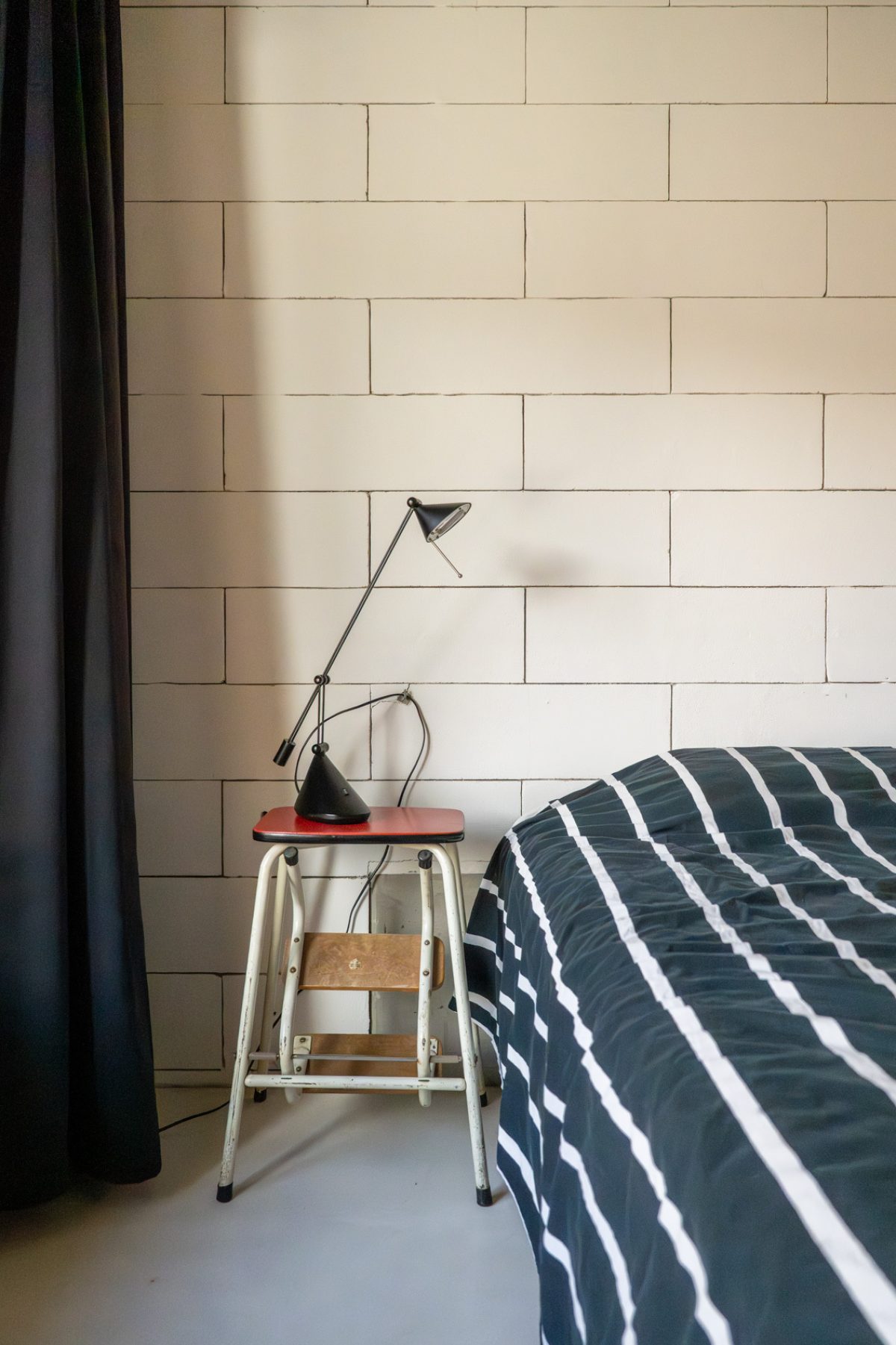
The aim is to reach the ‘BEN-norm’ (‘Bijna Energie Neutraal’, almost energetically neutral), a few years before it automatically becomes standard. The BEN house is built with massive walls of aerated concrete with a thickness of 50cm. These walls bear and isolate at the same time with one material. There’s no supplementary insultation needed. The walls are left bare on the inside, both a first and a budget choice. The walls are treated by the client himself with a special cementation for scratch resistance, but the joints remain in sight.
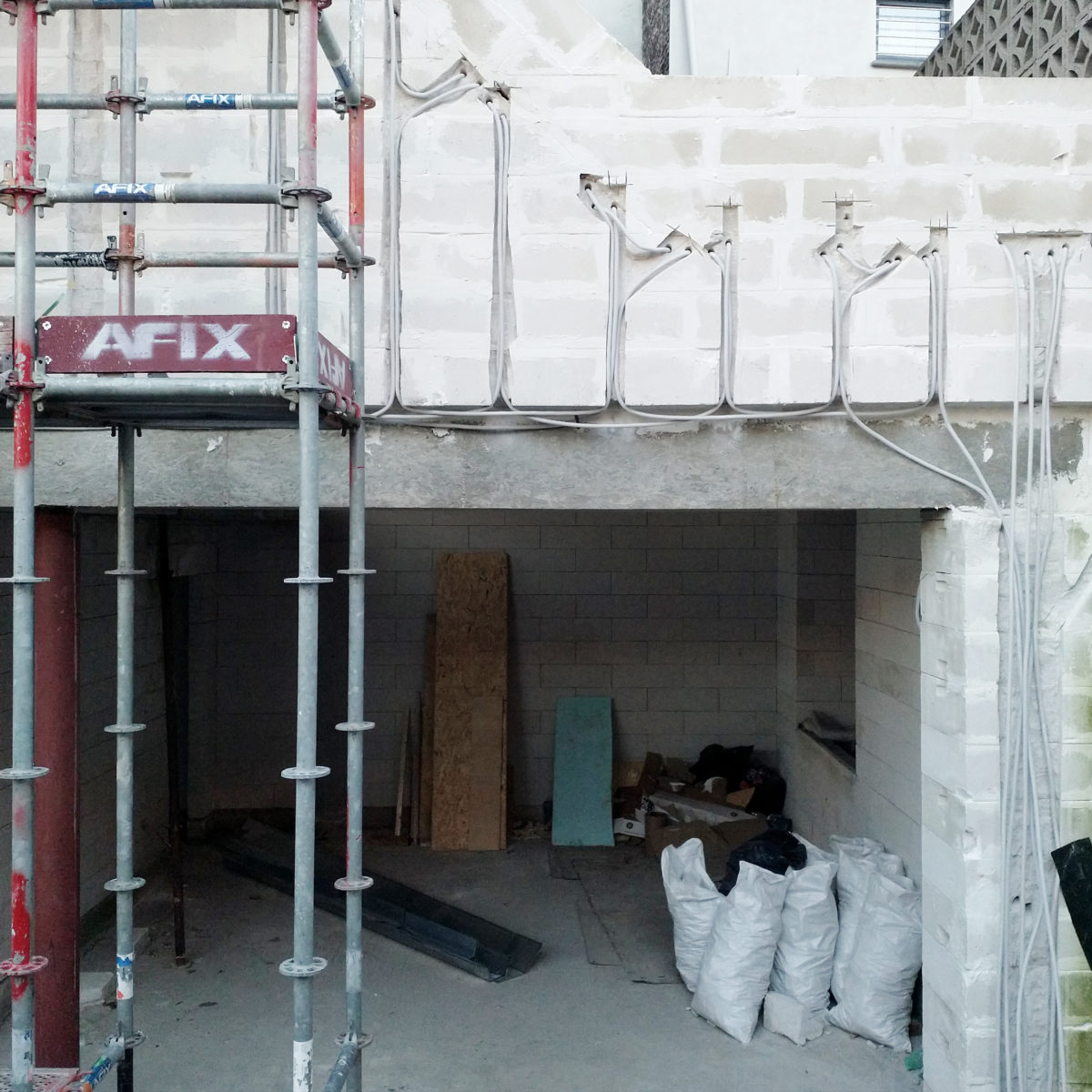
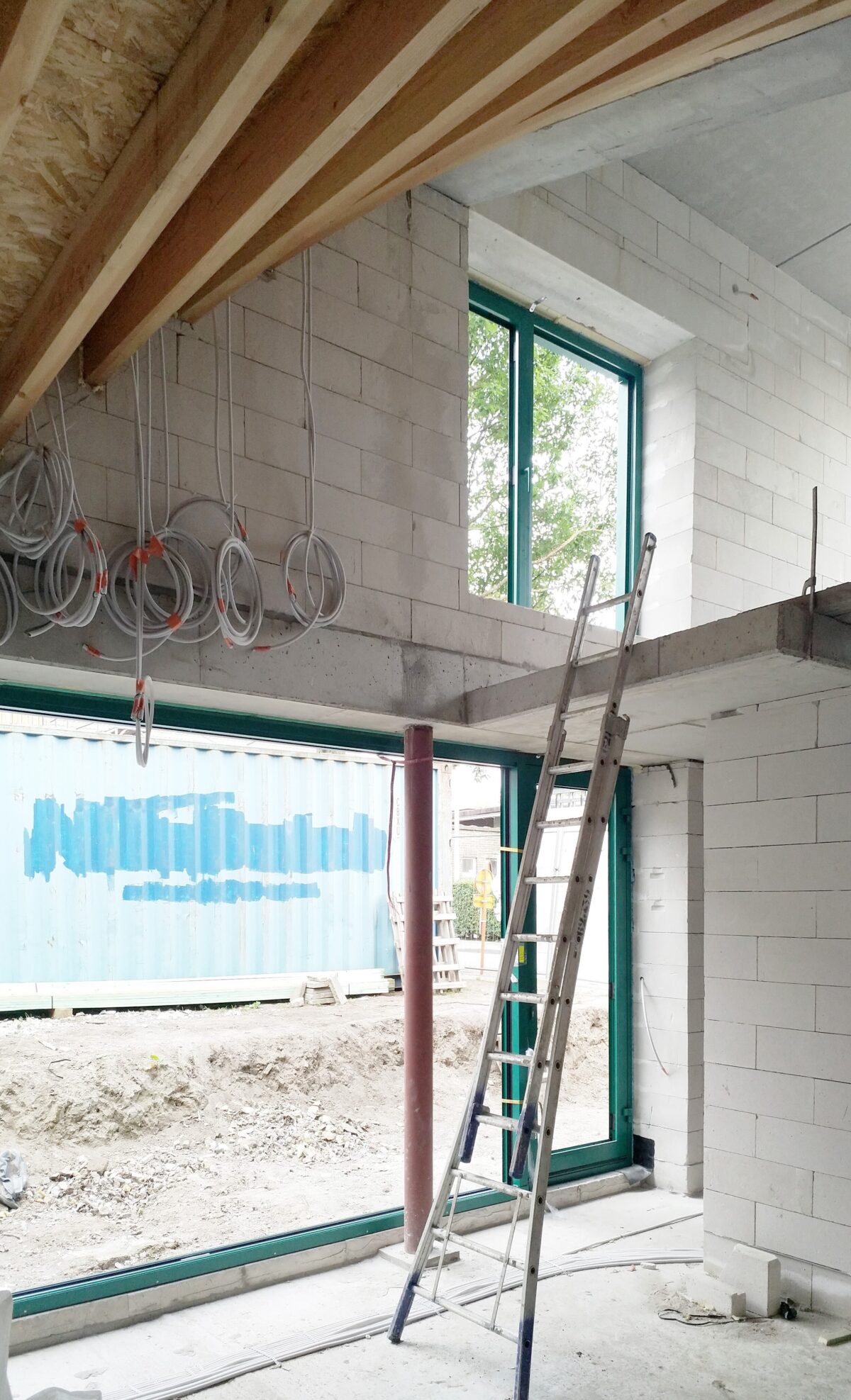
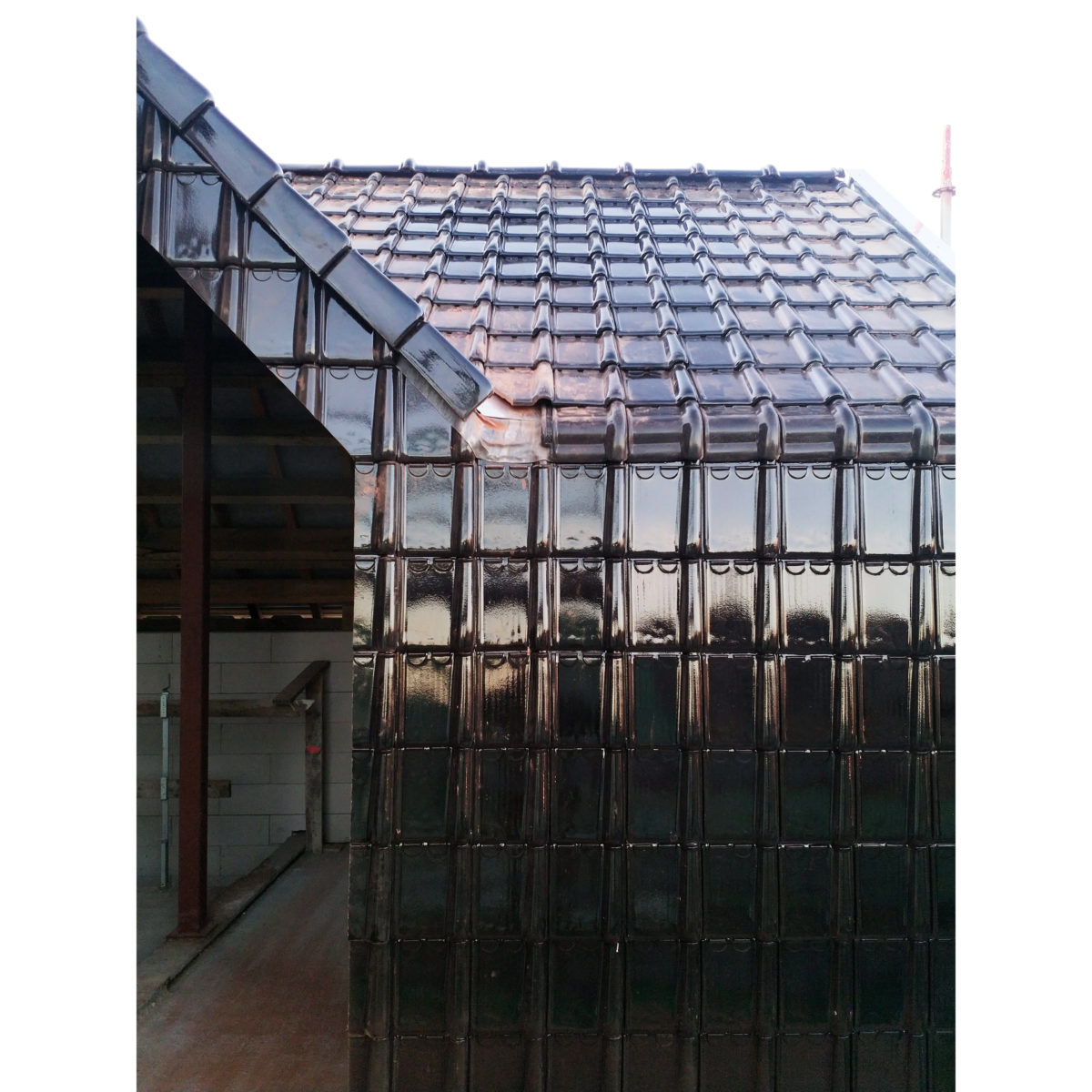
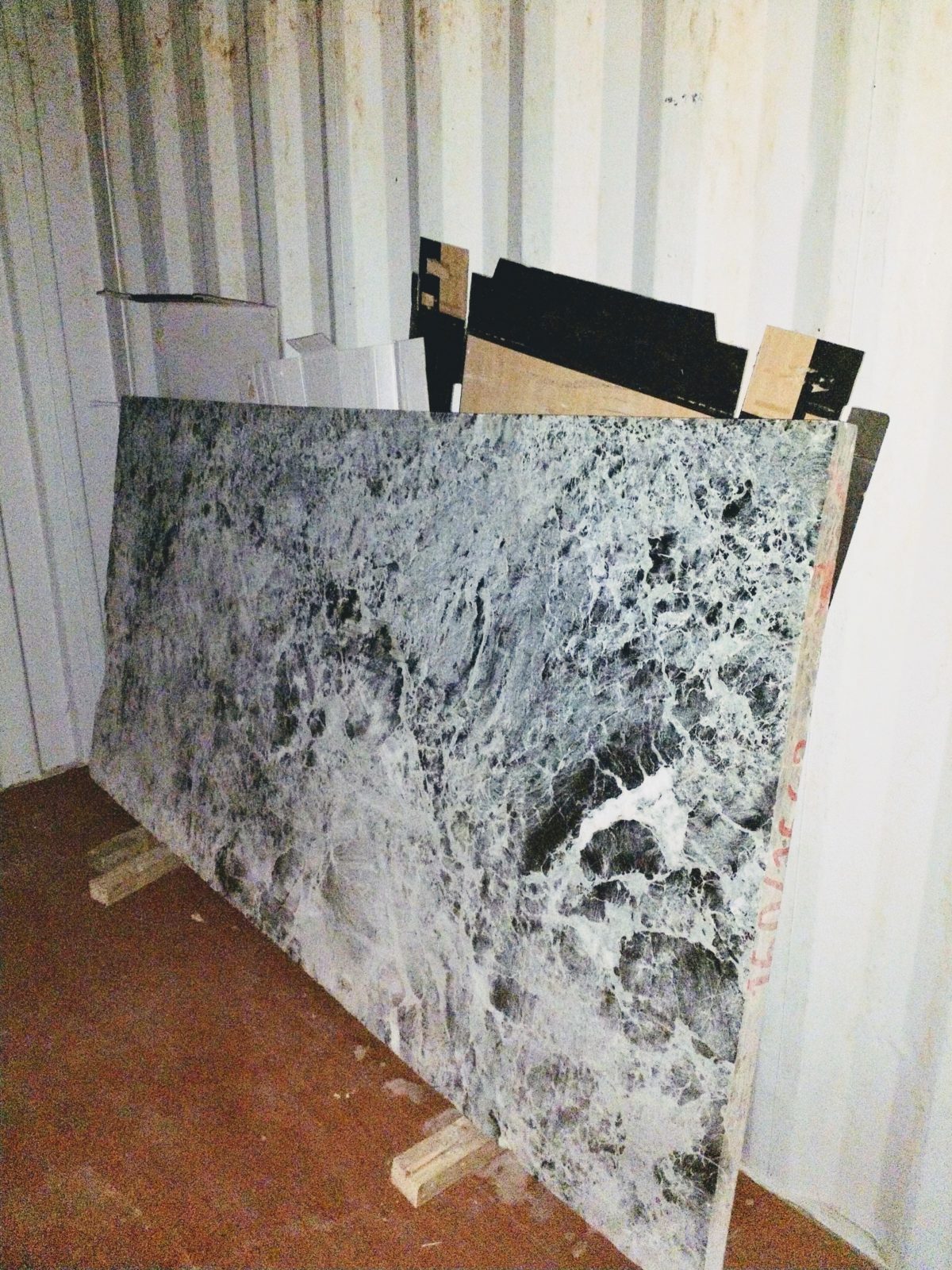
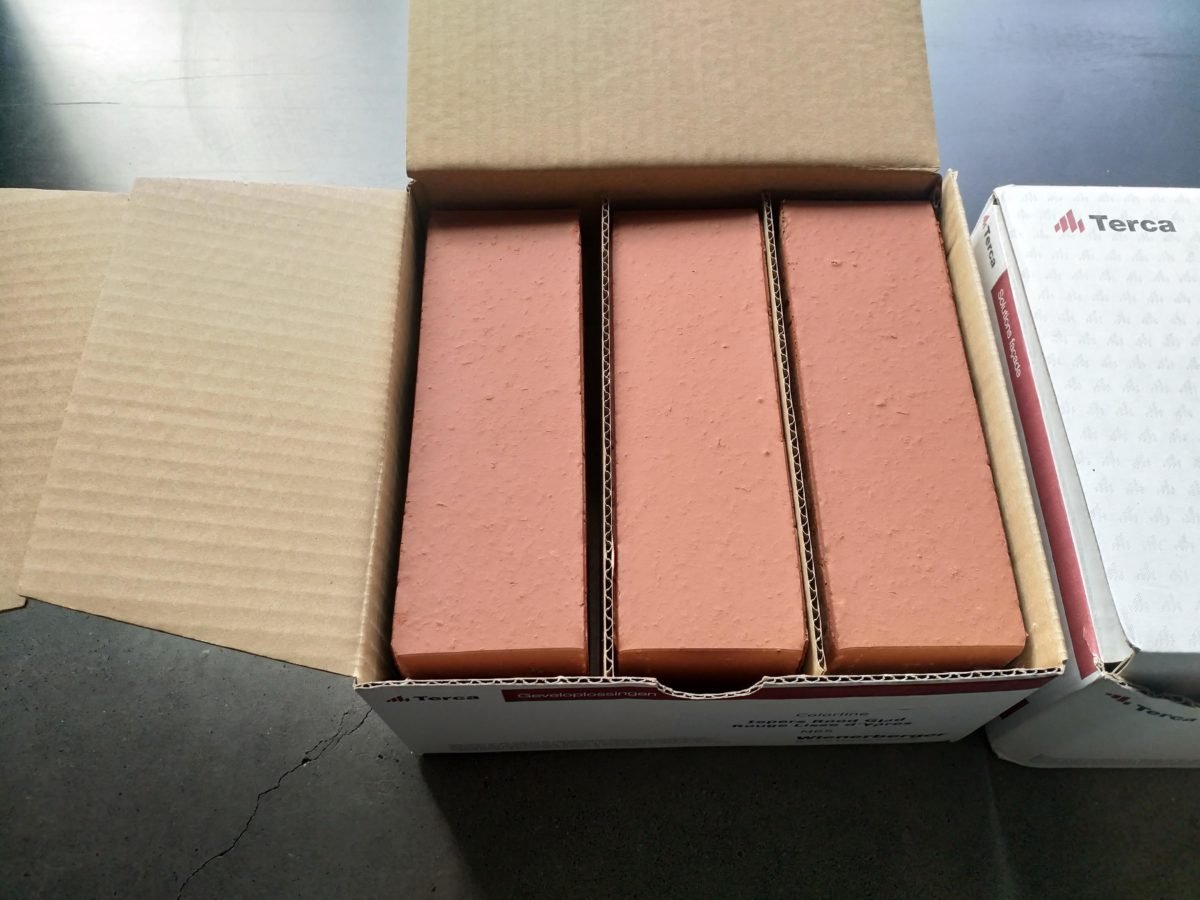
Sustainability however is much larger than meet ‘EPB’ standards (‘Energieprestatie en Binnenklimaat’), standards for energy performances and indoor climate. Sustainability also covers circularity, soberly use of raw materials, doing much with little. The client is a fan of second hand materials and starts collecting, even before the construction phase starts. Together with the client an inventory is made up of useful materials that fit the whole and are of good quality. The project uses among other recovery materials like the leftover production tiles of an art installation, an uncut marble top for the kitchen, doors, an old Cubex kitchen and a big industrial sink. End sequence, B choice and overstock materials are applied: these are materials showing slight deviations after production and often go to waste. The facing bricks, insulation and siding were saved for a good price.
Meer van dat?
Zie ook project Voltooid verleden | Onvoltooide toekomst