Technical sheet
Read moreRead less- Client
- Private
- Heritage
- Listed as architectural heritage
- Budget
- High budget
- Location
- Mechelen
Vliet
The repurposing and renovation of a historic warehouse cluster in Mechelen.
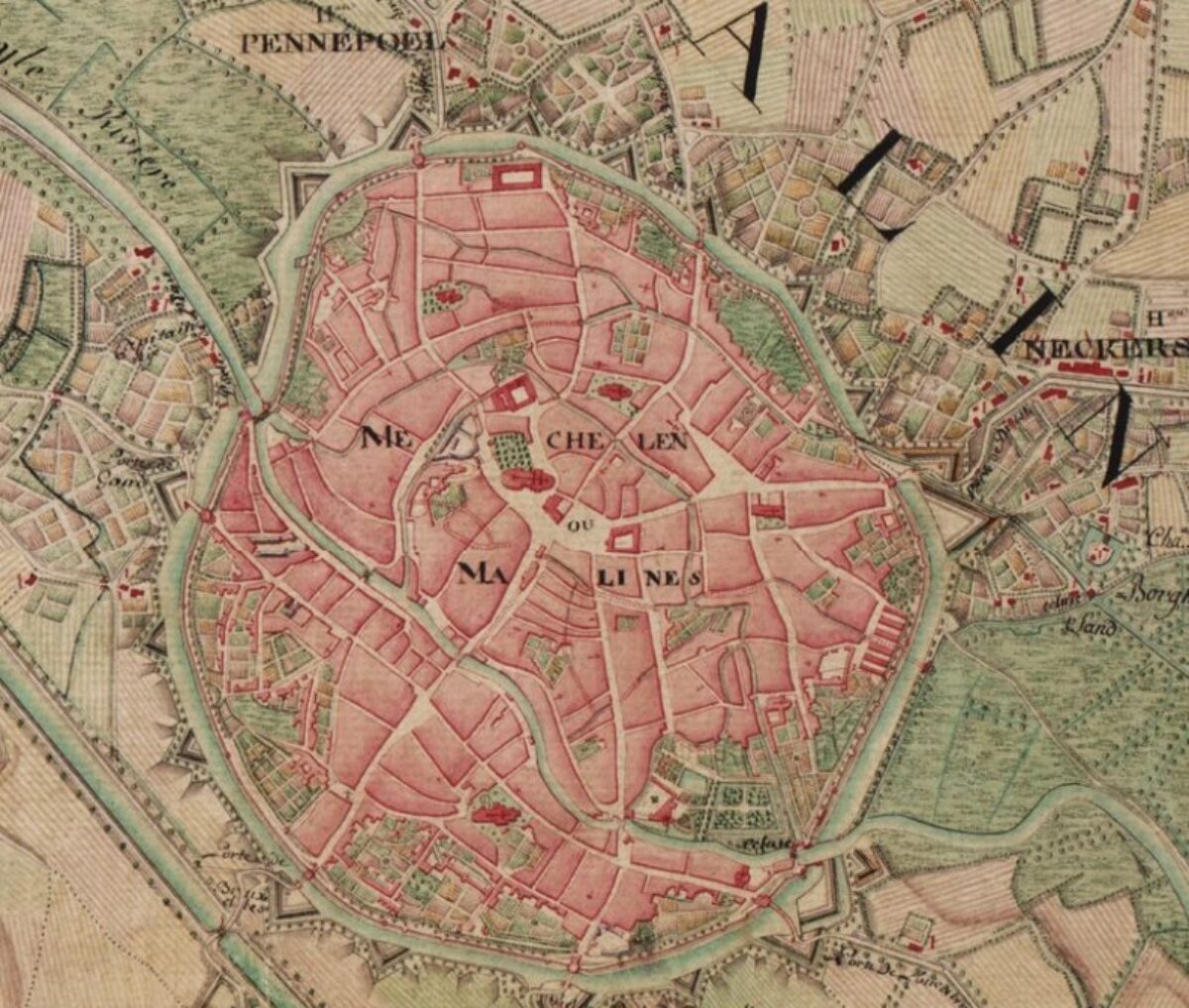
Things tend to accumulate along the banks of waterways. Without human intervention, it’s often silt. With people, it becomes buildings. The river bends. On the outer curve, the bank erodes; on the inner curve, it silts up. Like many of our marshy cities, Mechelen has a long history of canals and streams. The city was once laced with a blue network that served countless functions. The ‘Brouwerij Sint-Michiel’ site still bears witness to that past: a disorderly cluster of warehouses from various periods, its layered history now officially recognised as built heritage.
Three of the buildings belong to a single property. Three naves, three construction phases, trailing behind each other like train carriages from street to water. The cluster is a miniature reflection of its urban surroundings: a pragmatic, often opportunistic juxtaposition of functions and spaces. That brings both charm and challenges. On the one hand, the great variety of spaces and sequences offers potential for fascinating reuse and flexible programming. On the other, circulation is tangled and dysfunctional, and due to high density, many rooms suffer from poor daylight. As a result, numerous spaces remain unused or underused. A missed opportunity, especially given the current demand for studios, offices, and homes.
The project embraces a dual approach. On the one hand, a masterplan is being developed for the entire building, to be implemented in phases. On the other hand, two smaller interventions are already underway; partly out of urgency, partly as strategic catalysts for the broader plan. This hybrid strategy allows for a layered process, in which building and thinking evolve in tandem over time. Budget, timeline, and liveability can be carefully staggered across the site.
The first intervention is a staircase. It sits in the elbow between several floor levels and construction phases. A problematic mass is carved away and replaced by space. The staircase unfurls in a helical motion, a spiral you can step off at intervals. Like the tide, filling and emptying rooms in rhythm.
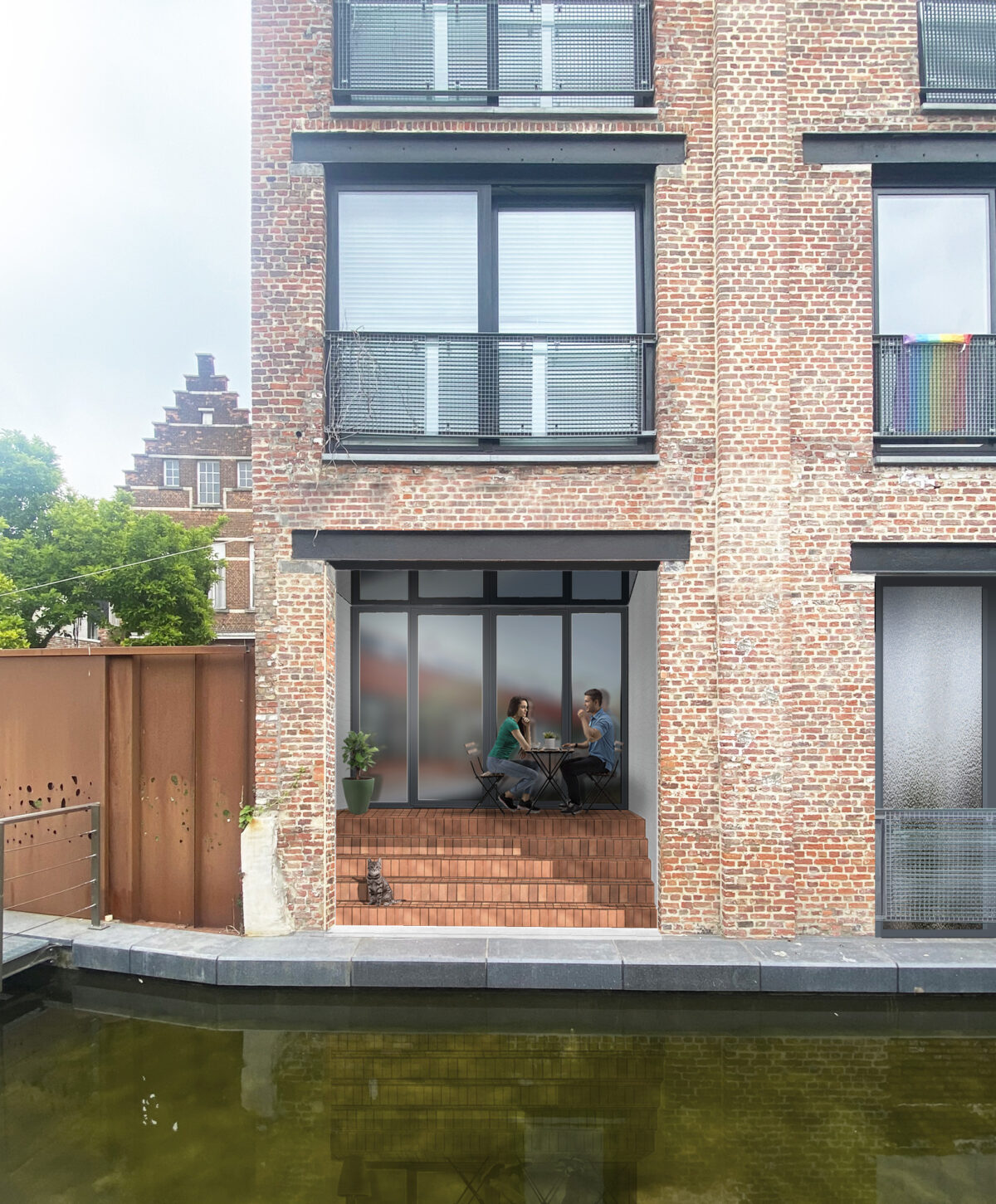
The second intervention restores dignity to the water-facing façade. Incoherent additions that disrupted the rhythm are removed. Windows are re-deepened, beams realigned. Yet we don’t return entirely to the past. One opening remains unfilled, a small loggia facing the water. A space to sit and watch the current, and the way things pile up. On the clay bank. A tiled stairway, caught between two mirrors.