Technical sheet
Read moreRead less- Location
- Antwerp
- Date
- 2018-2019
- Client
- Government
- Partner
- on the instructions of Origin Architecture and Engineering. Origin (heritage), FPC risk (fire safety), Daidalos (acoustics, building physics)
- Protection
- Listed monument
- Status
- Executed
Vleeshuis Antwerpen
Feasibility study for the future of the old Vleeshuis in Antwerp, a 500-year-old monument
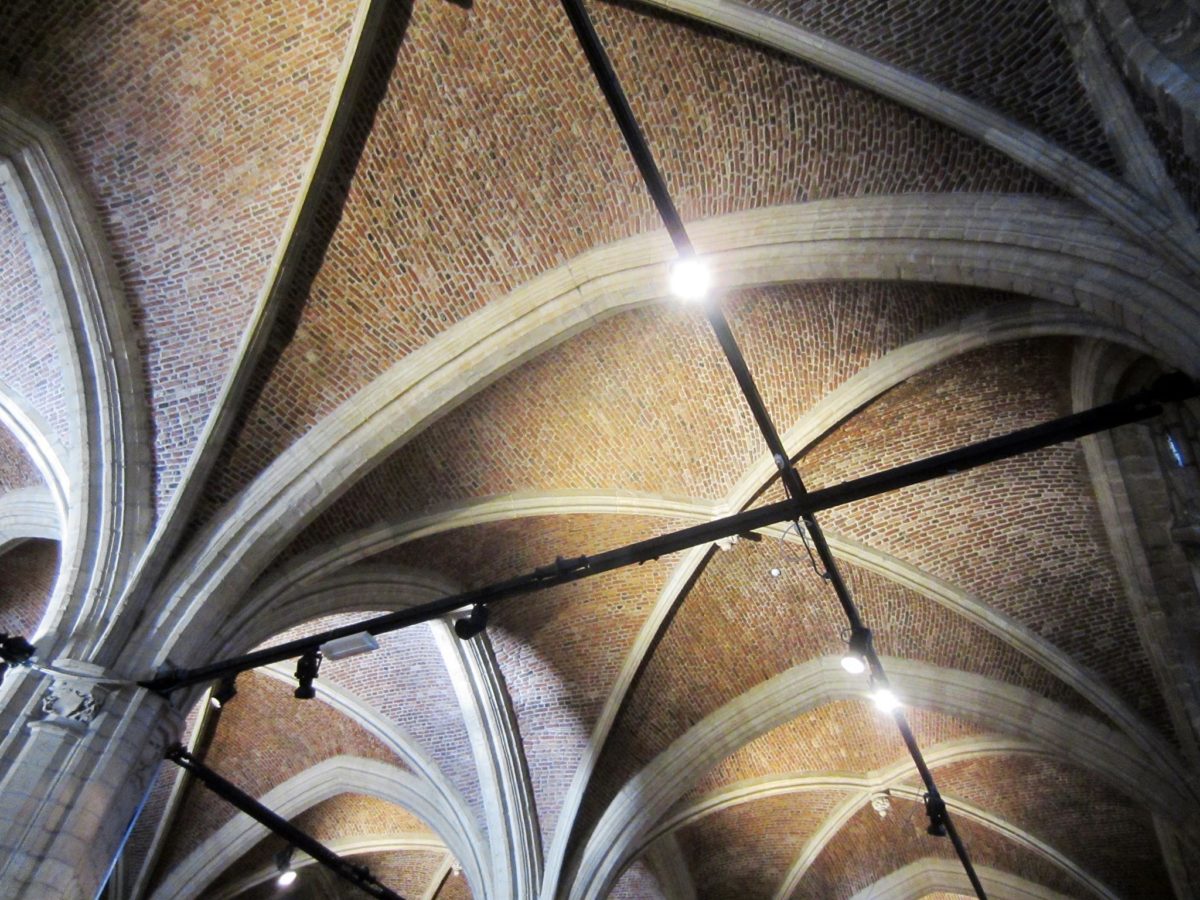
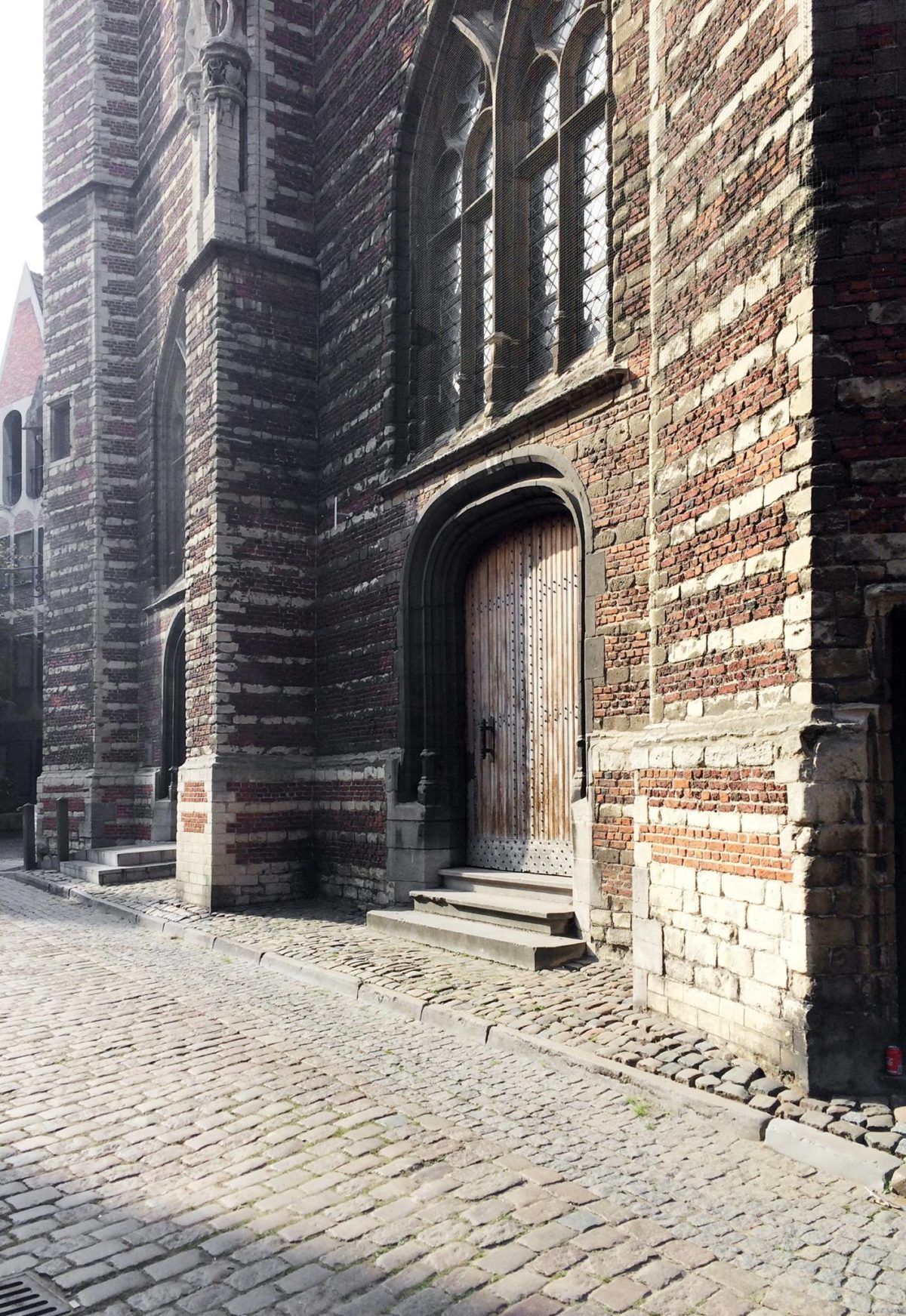
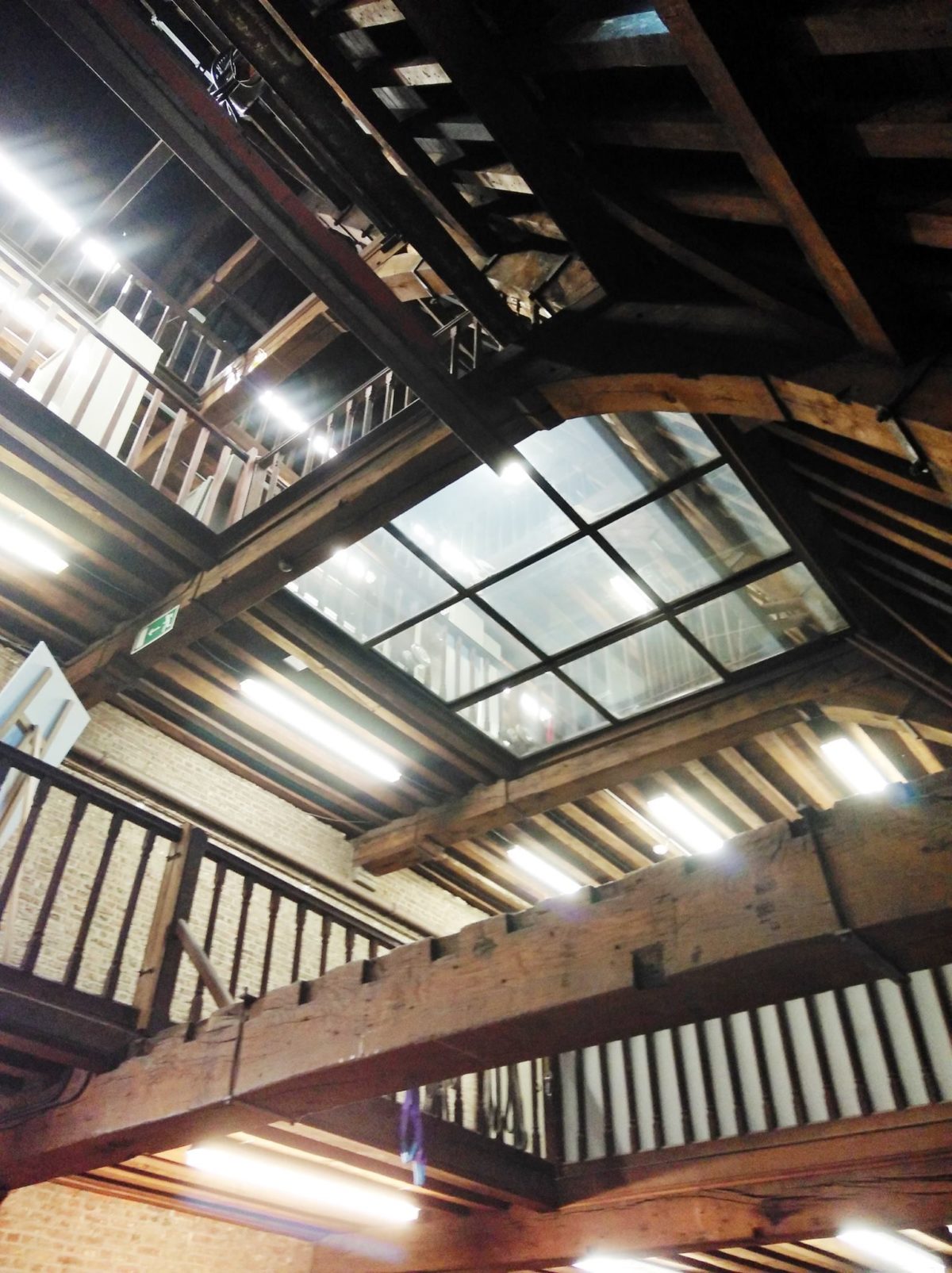
A massive stone presence, dissolving into the urban fabric. Museum Vleeshuis in Antwerp, with its tall, expansive halls, is enormous. Bound on most sides by dense development, its true scale only becomes apparent when one stands directly in front of it. Vleeshuis is also old, very old. At over 500 years, it is one of Antwerp’s oldest secular (i.e. non-religious) monuments. A vast house, where rooms are stacked halls, and the dramatic roof volume houses up to four full storeys. Where once sausages and chops were traded, it is now about strings and bows. For some time now, the Museum of Sound (Het Museum van Klank), a museum dedicated to rare musical instruments, has been housed here. But building and museum have yet to fully align. Accessibility is particularly problematic: a claustrophobic lift and narrow spiral staircases are the only means to reach the upper floors. In terms of climate control, the medieval mastodon, with its familiar fluctuations in temperature and humidity, offers a poor environment for delicate wooden harpsichords.
Marge, together with Origin, carried out a feasibility study. Not to change the building’s function, but to explore how the current use and the building might better meet each other. The study remained at a general, exploratory level. It is complete, but its results are not to be considered definitive. Rather a springboard for more detailed design research.
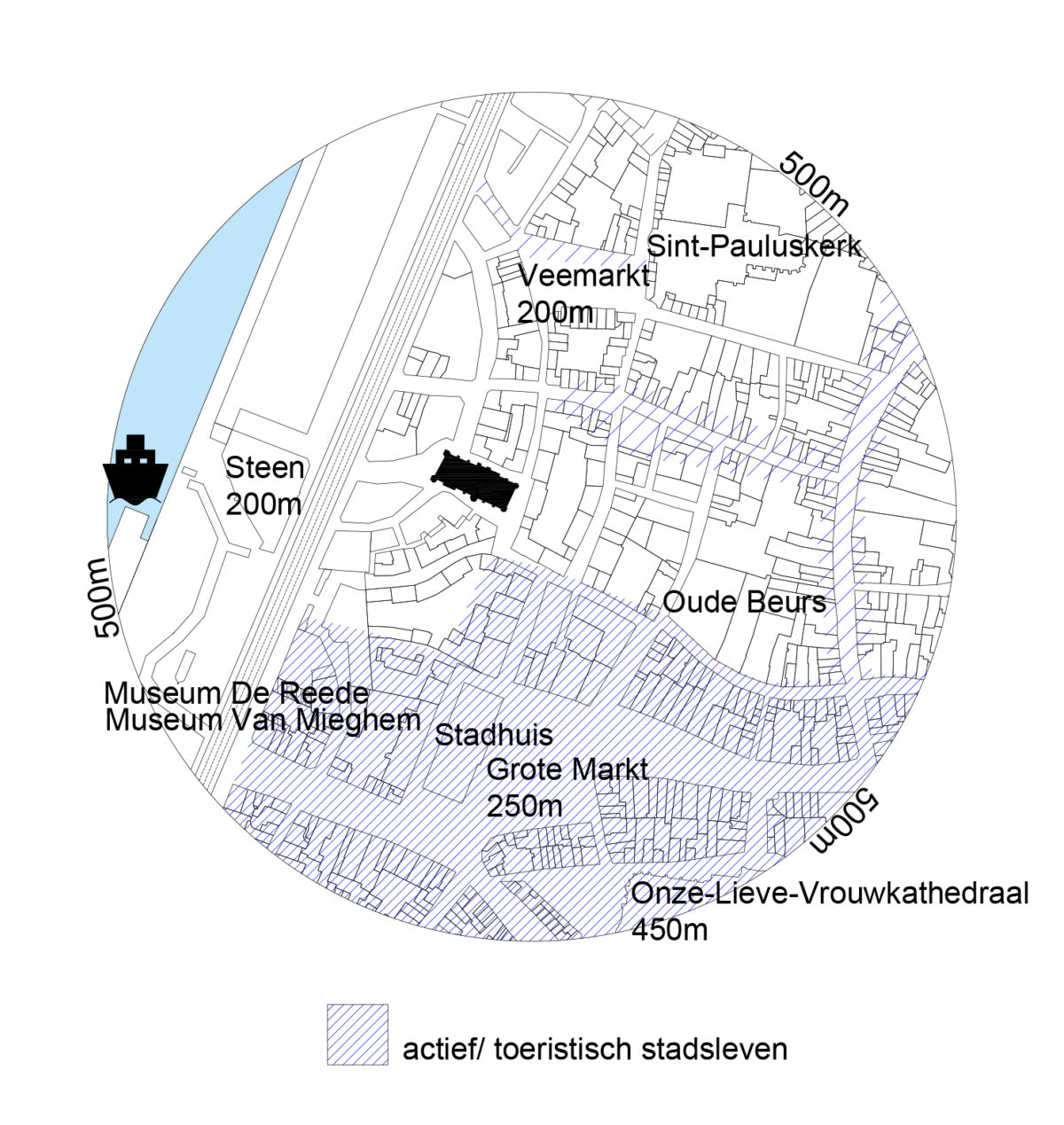
As always, the study began with analysis. We sought to understand Vleeshuis in its context, and several striking observations emerged. The building lies within short walking distance of both the Town Hall (a UNESCO World Heritage site) and Het Steen, yet it is relatively unknown and unseen.
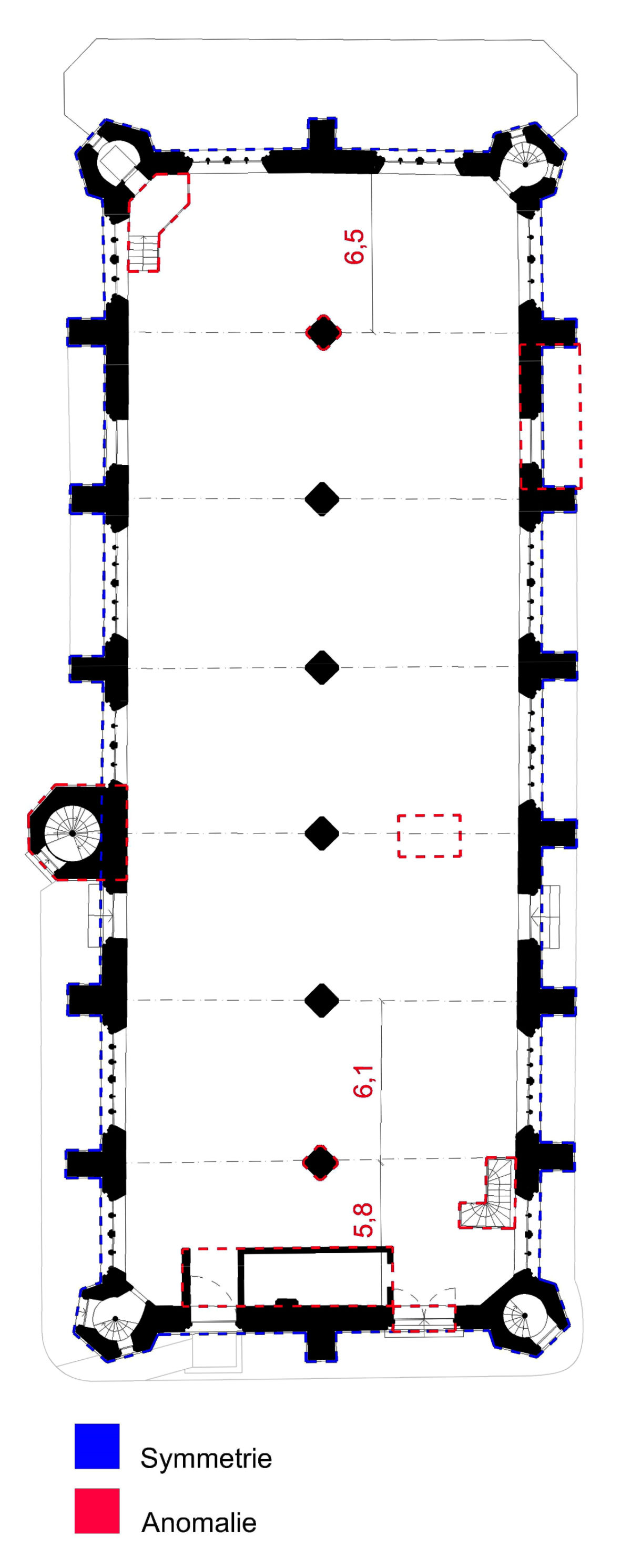
It sits within a low-traffic pedestrian zone, but is surrounded by such monofunctional fabric that few pass by spontaneously. Architectural characteristics come into focus too. Although the building seems symmetrical along its length, it contains several tactical asymmetries, mostly pragmatic. For instance, one side features a later-added staircase tower that links the street directly to the upper meeting room, bypassing the main sales hall on the ground floor.
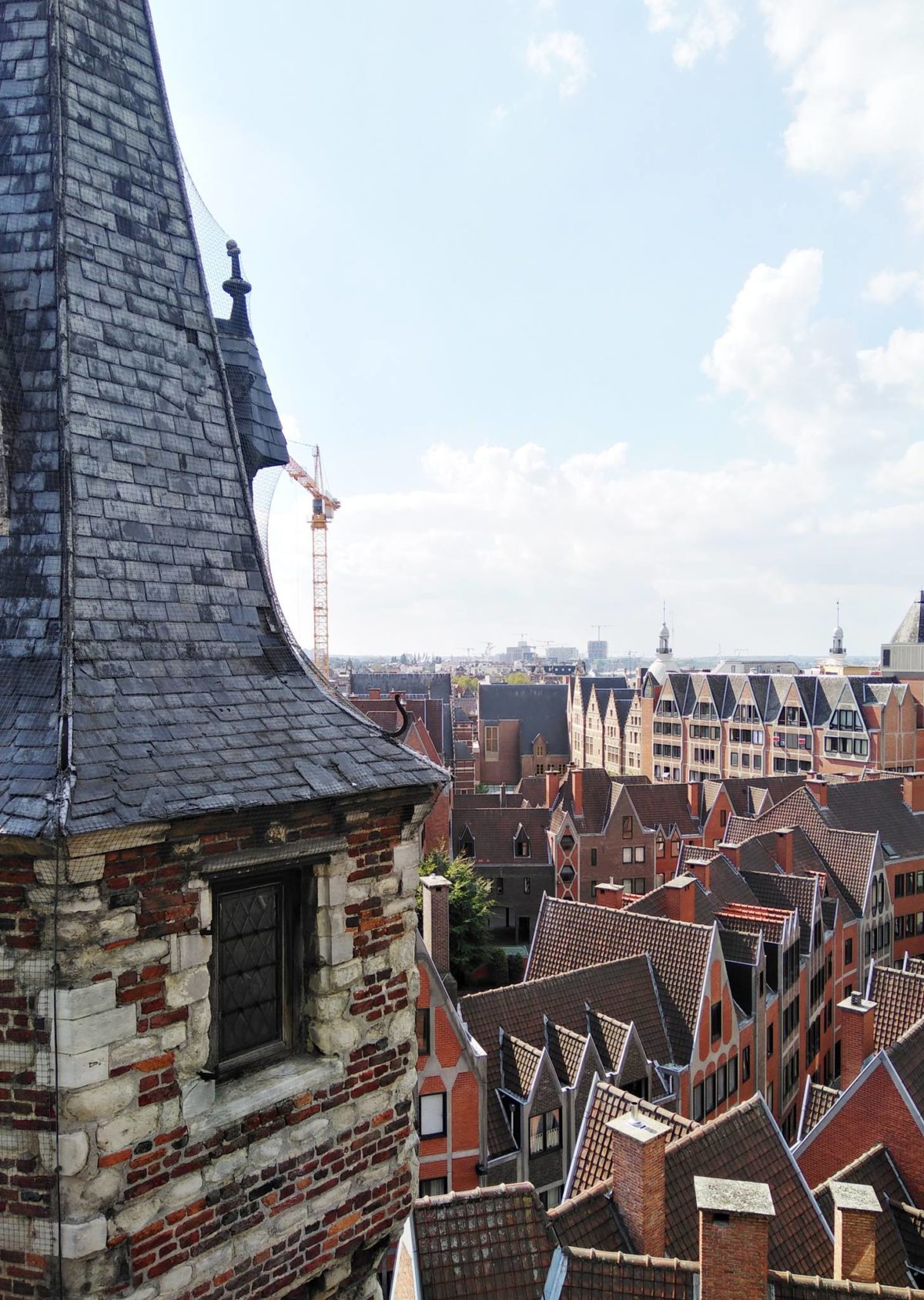
A wide range of scenarios was investigated. Each offers different responses to the same core issues: accessibility, spatial organisation, climate control, fire safety. All options were documented and visualised, and then assessed against a set of evaluation criteria. One scenario outperformed the rest: relocating the main entrance to the vaulted underpass and adding a lift tower outside the monument. This solution requires minimal interventions to the valuable interior or exterior, while enabling smooth vertical circulation from bottom to top. It also creates new opportunities: many of the existing staircases and doors could be repurposed as functional escape routes or primary circulation. The underpass, once flanking a small stream, is transformed from a passageway into an urban outdoor room. The lift tower follows the building’s own logic, adding value through its additions, much like the idiosyncratic fifth corner turret or the historic dormers added in later phases.
This is a scenario that requires further study and will undoubtedly face challenges.
But it is also a promising one. Its strength lies in the integrated nature of its answer, adding value to every part of the brief. A promising way, both literally and metaphorically, to unlock the future of this monument.
Architectural analysis
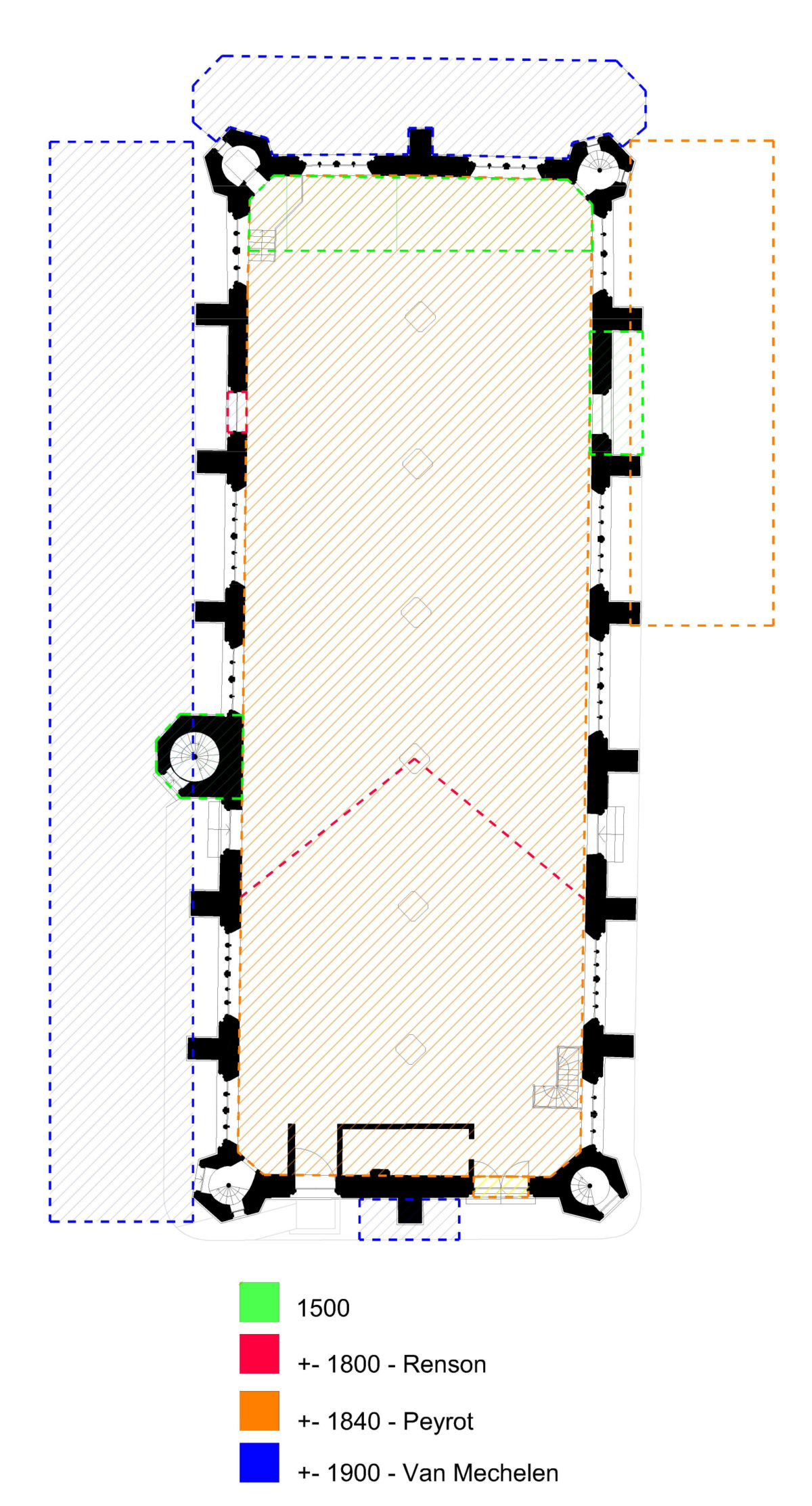
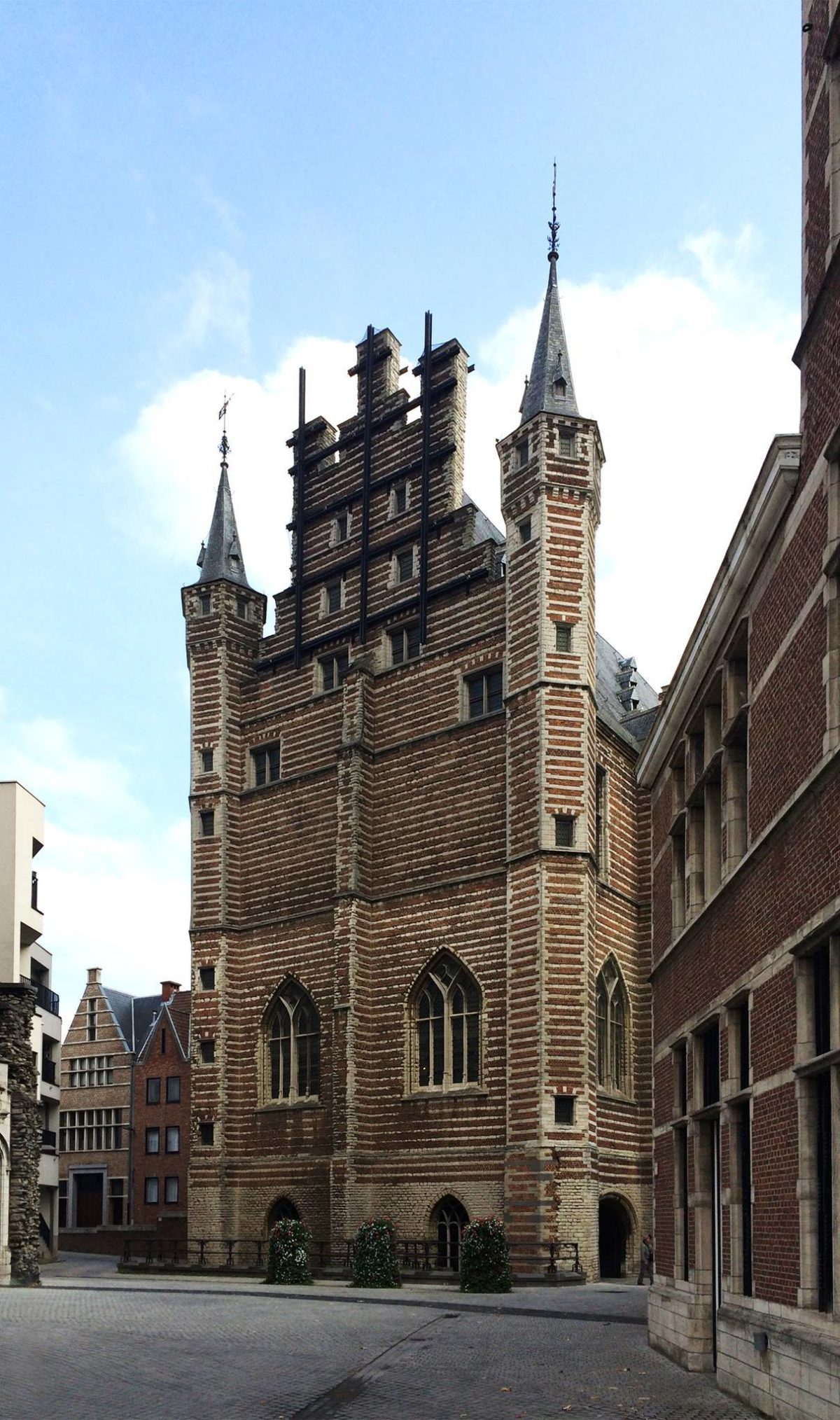
At first glance, the building seems symmetrical. But closer inspection reveals a number of pragmatic deviations: a fifth turret, a floating gate, an irregular bay rhythm. A building-historical analysis shows a significant initial construction phase, later followed by a series of adaptations. These changes were often tied to shifts in the building’s function, and some of them have since disappeared again.