Technical sheet
Read moreRead less- client
- private
- location
- Gentbrugge, Ghent
- partners
- LIME (stability), 2BSafe (EPB en VC)
- Executors
- Con-struct (everything but fixed furniture), Peter Hillen Interieur (fixed furniture)
- Photos
- Johnny Umans
- date
- 2016 - 2019
- budget
- middle segment
- Status
- Executed
Tafelkamer
Renovation of a rowhouse creating an extension that maximizes the façade and negotiates the roof-edge
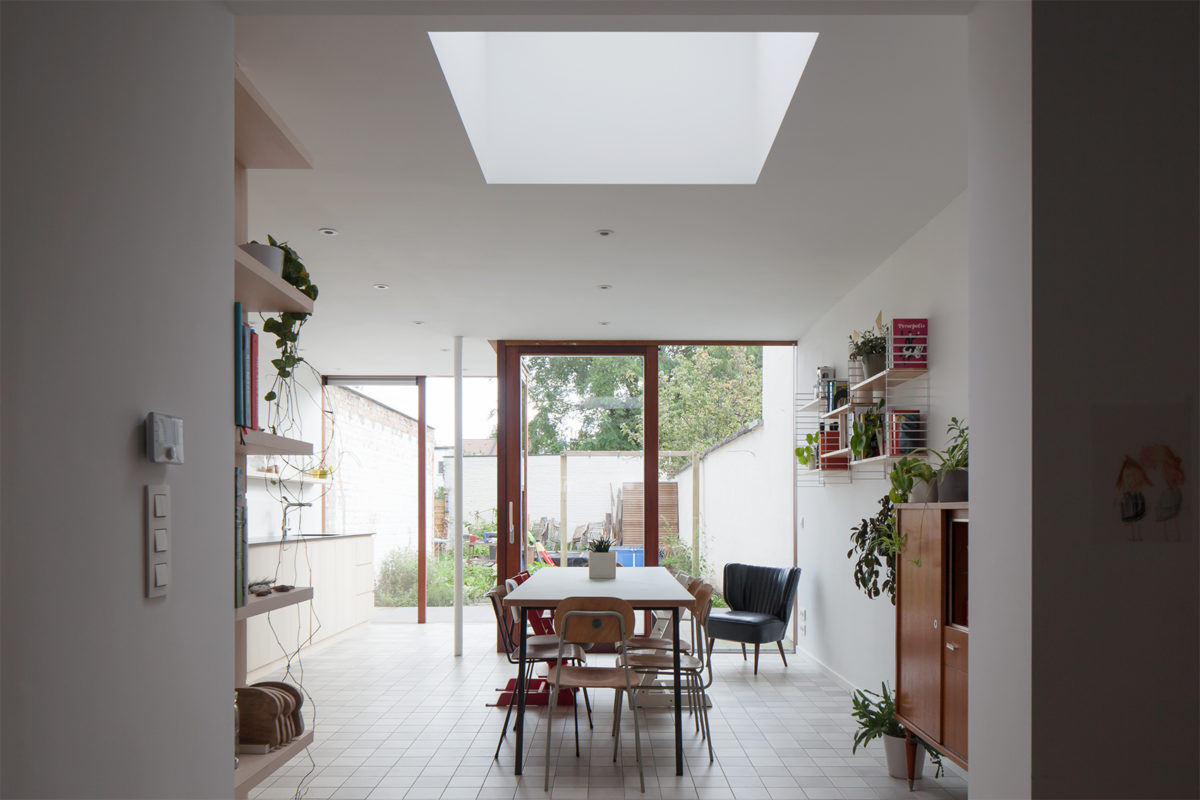
One could state that in the house an important part of life is not being lived in the house. It is to say, it’s being lived in the extension, that treasured annex in-between house and garden. Here, in this specific house and household, it’s mainly the place of the kitchen and even more so of the table. Cooking, playing, homework, eating, guests, parties: the table is what the hearth used to be, family life revolves around it and concentrates here.
There is a big window reaching out for a connection with the garden, but the view is cut off sideways by more building. Not that nice and not that handy. The garden seems to be really far away, and actually, it kind of is. There are some other lacks, some technical, some more like a gnarly feeling. The table is supposed to end up at the exact same spot after construction, but with a new little house wrapped around it.
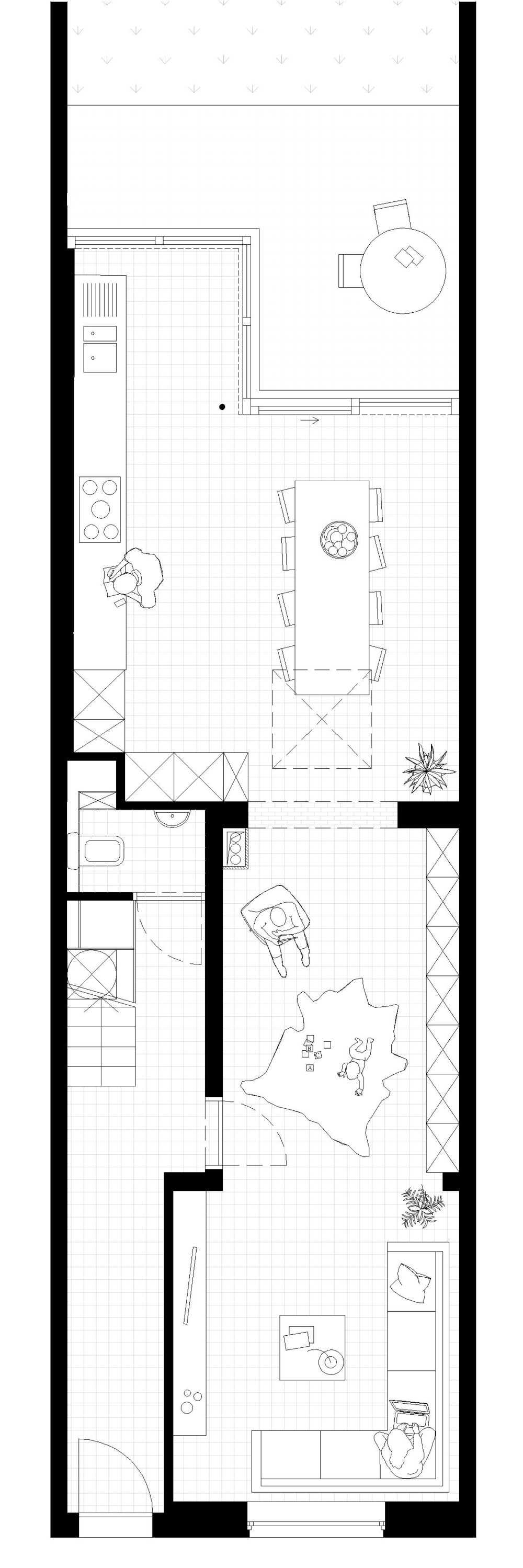
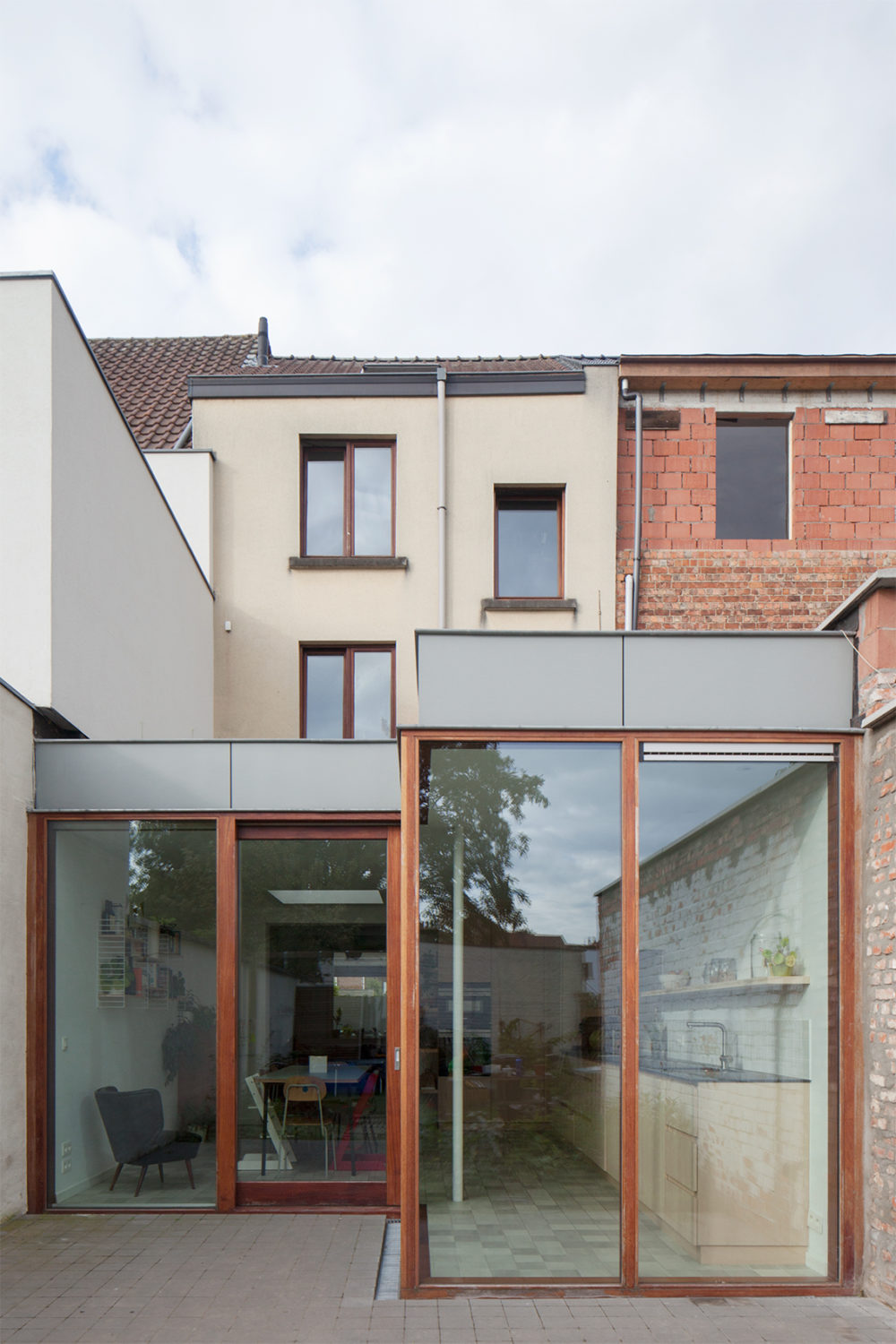
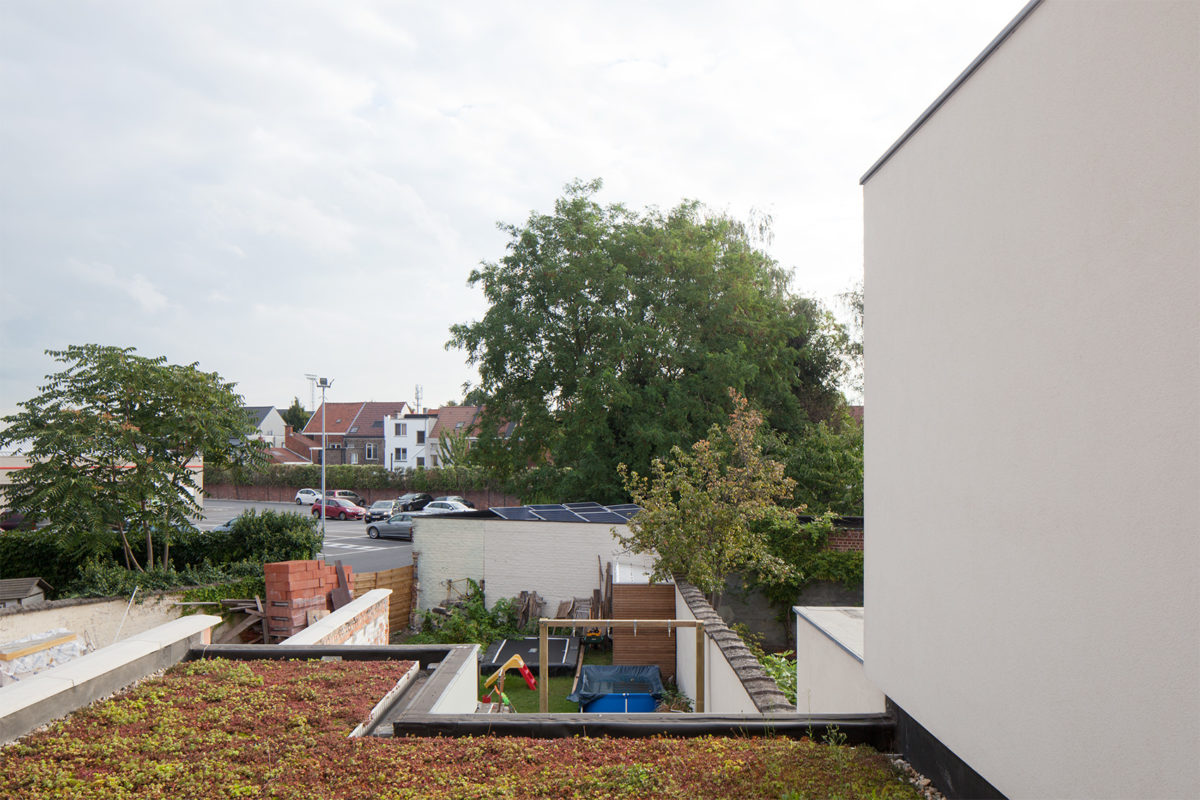
The new in-between-house basically takes up any space it needs, which is a bit more on one side, than the other. The calibrated ridge wraps itself without compromise around the table and kitchen and produces a more complex rear facade that ends up right away suggesting a more intimate zone of the terrace. The in-between-house exists out of a facade and a roof. The façade makes up the wood and glass metronome exercising control over the alignment and the rhythm. The roof is flat, with a skylight and a green roof. Façade and roof meet in the roof-edge. The roof-edge is not ashamed of itself and considers itself a true crown. The crown recedes a bit, scaling up the façade and friendly giving priority to the wooden façade. It listens to the same order as the facade, but mainly materializes itself in panels and zinc trims. Façade and roof shake hands. The facade and the roof for the table, which stands in-between house and garden. The window has been open the entire day, wet footprints on the terrace stones; and even now, as the sky starts turning red, the room still escapes outwards, to where a second table is standing and even beyond that the city garden and the dusk are luring.
Nothing but Window
An existing terraced house, like so many others, is technically habitable but long overdue for renovation. Sooner or later something has to change; and living here now is far from ideal. So why not now? Today, there’s barely any connection with the rear garden, as a bathroom and storage room sit between the dining space and the outdoor area. The desire is clear: more daylight, and a stronger link to the garden. As in many homes, the first reflex is to install a large window, wall-to-wall, to maximize light and view.
But this plot is slightly different, due to its orientation. The rear volume faces north, receiving plenty of direct sunlight from the east in the morning, and then falling into the shadow of the main house for the rest of the day. So we still build “nothing but window”, but we direct it towards the sun.
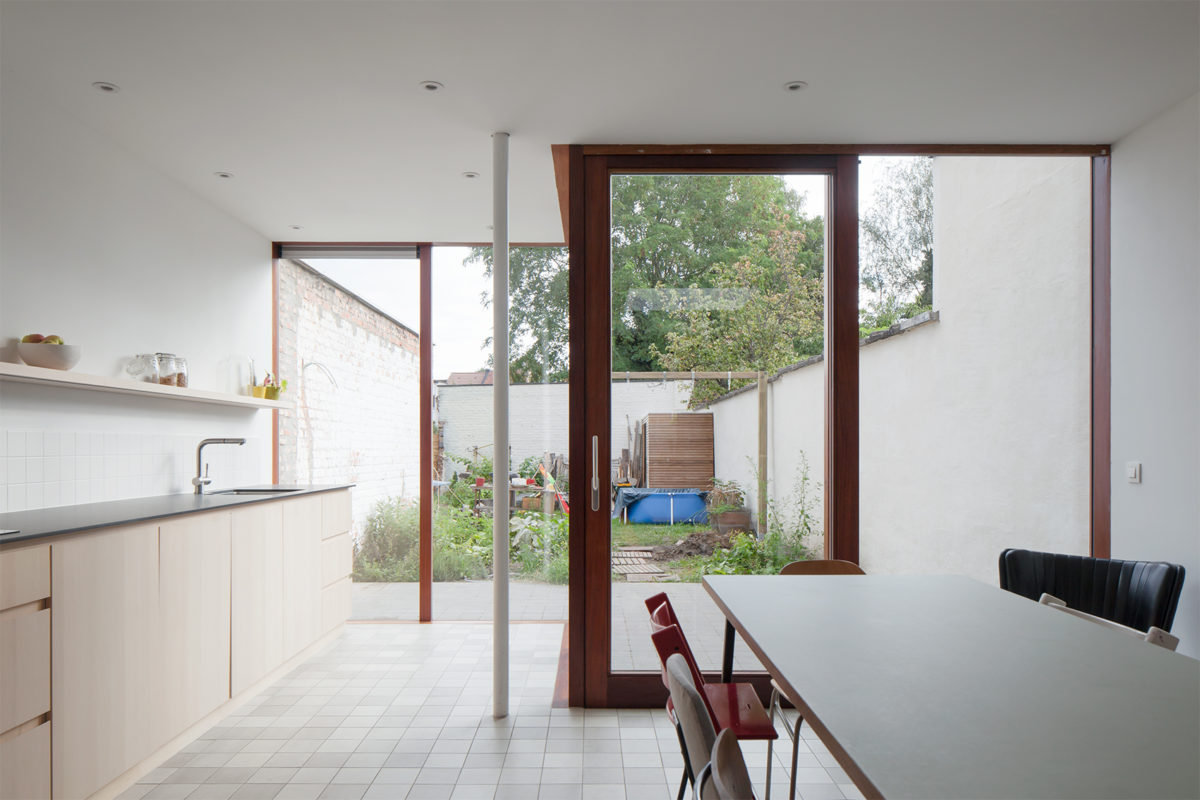
The result is a serrated façade, oriented both towards the garden and the sun. A side-facing pane of glass encloses a small terrace beside a sliding window. (Photo: Johnny Umans)
Nothing but Eaves
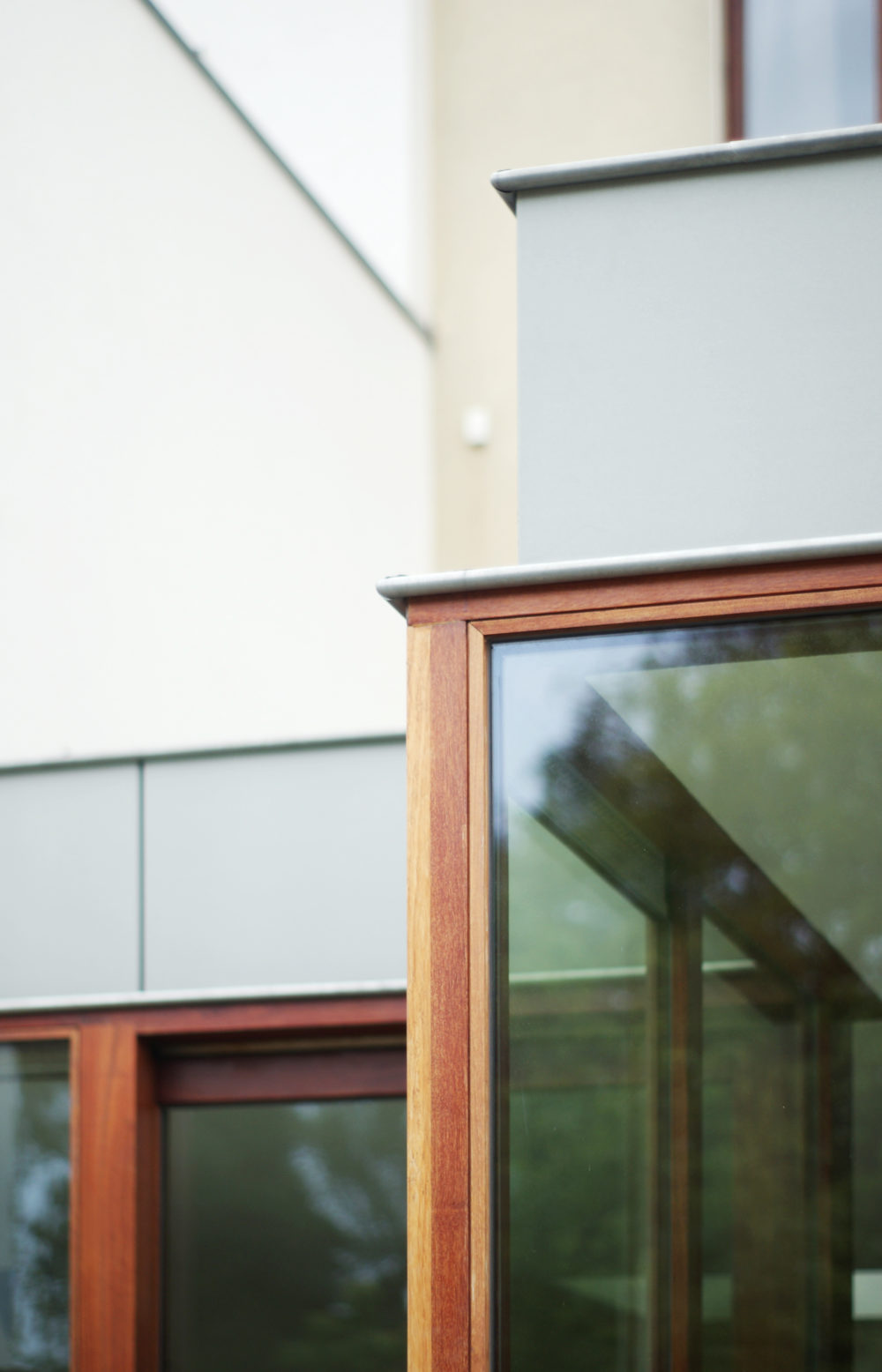
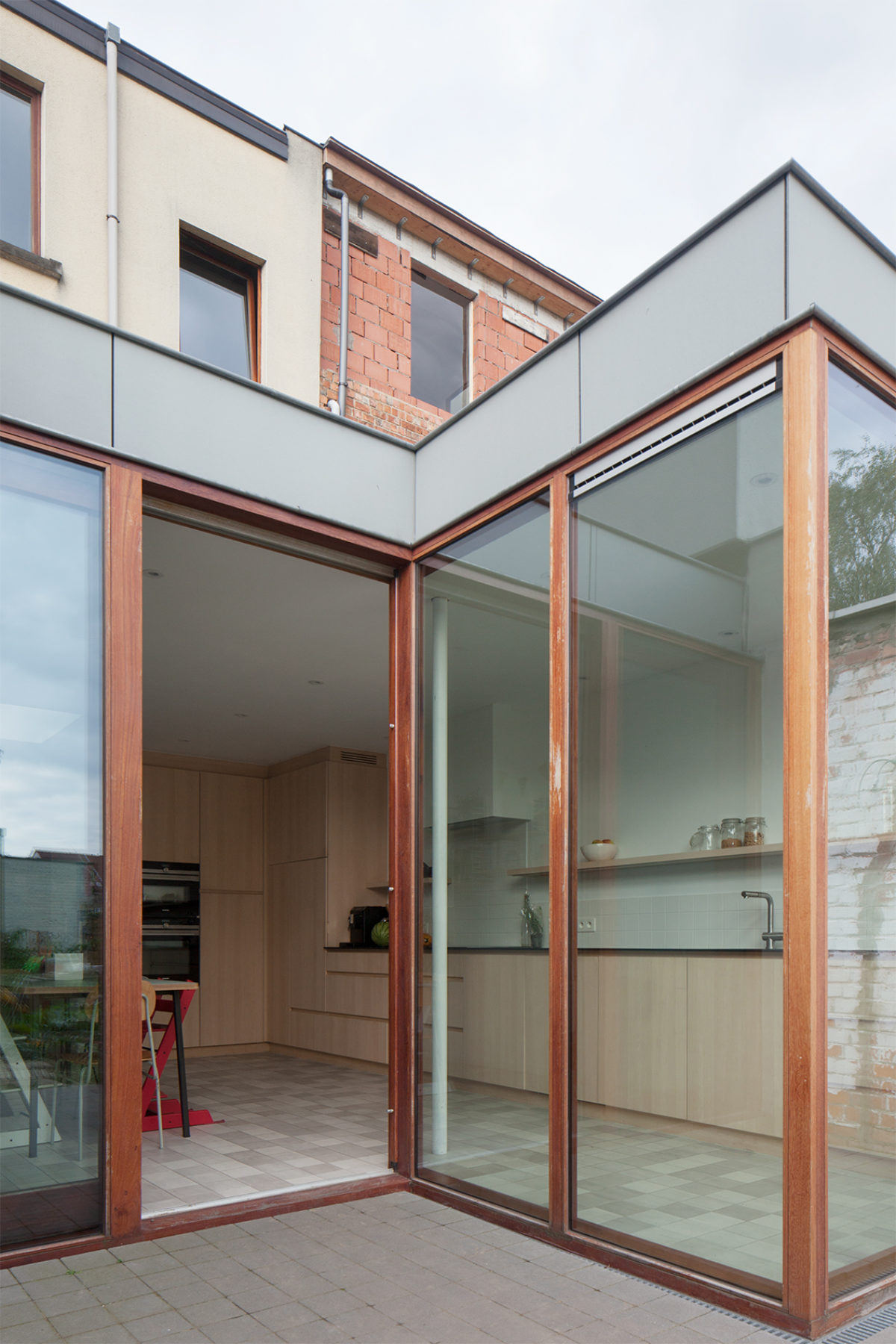
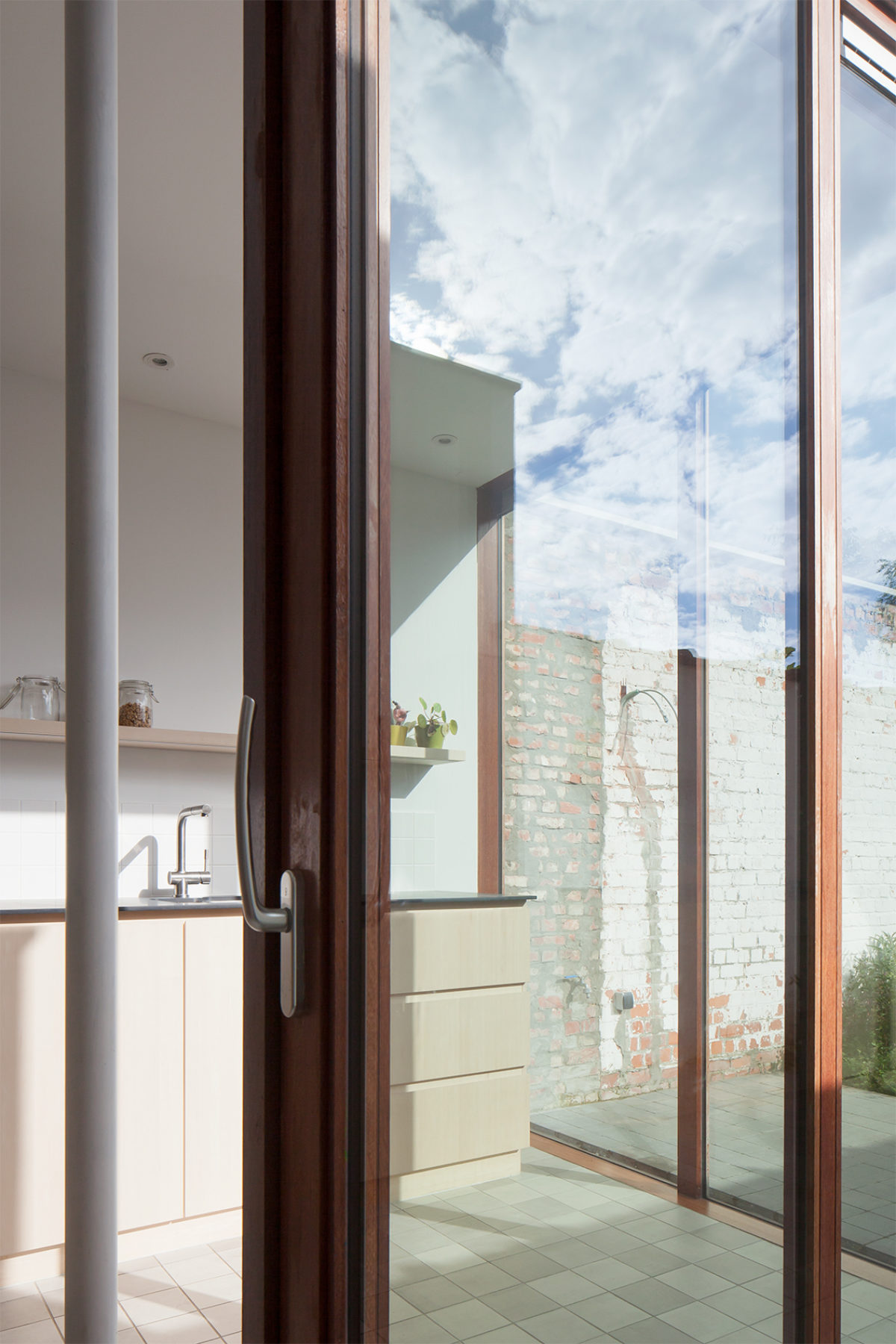
From the inside, all you see is glass. From the outside, only the eaves that crown the window remain visible. The façade is window and eaves, nothing more. Since modern roof build-ups tend to be quite thick, we implemented several subtle interventions to visually slim down the eaves. First, the window is aligned with the ceiling, so that part of the frame disappears into the roof structure. Then, the eaves are slightly recessed from the glazing, so they recede visually. Finally, a concealed drainage gutter is integrated into the roof build-up, minimizing the height of the parapet above.
Quiet Cabinetry
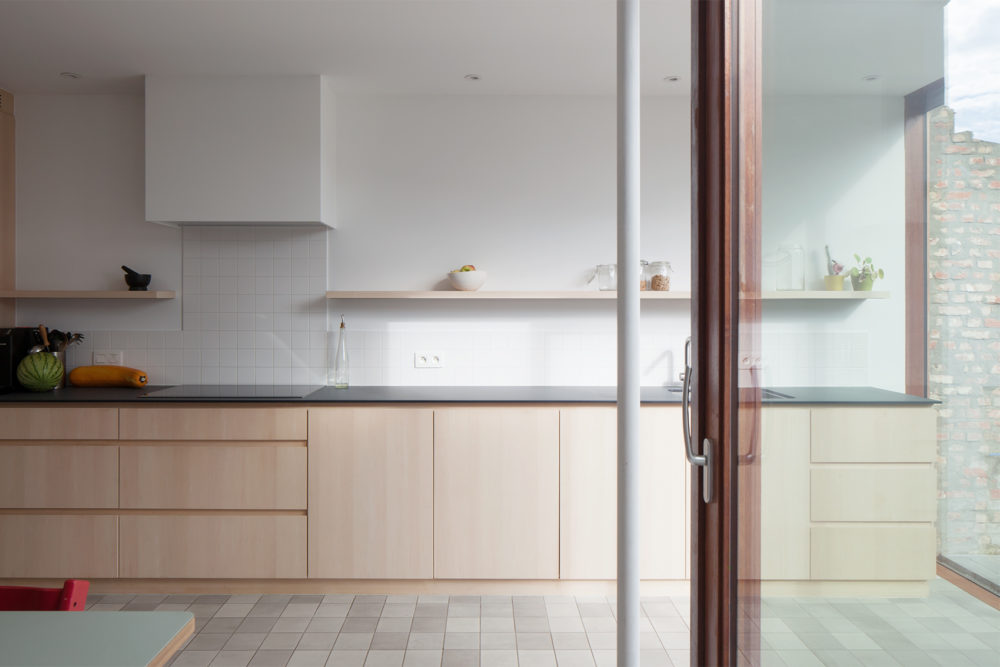
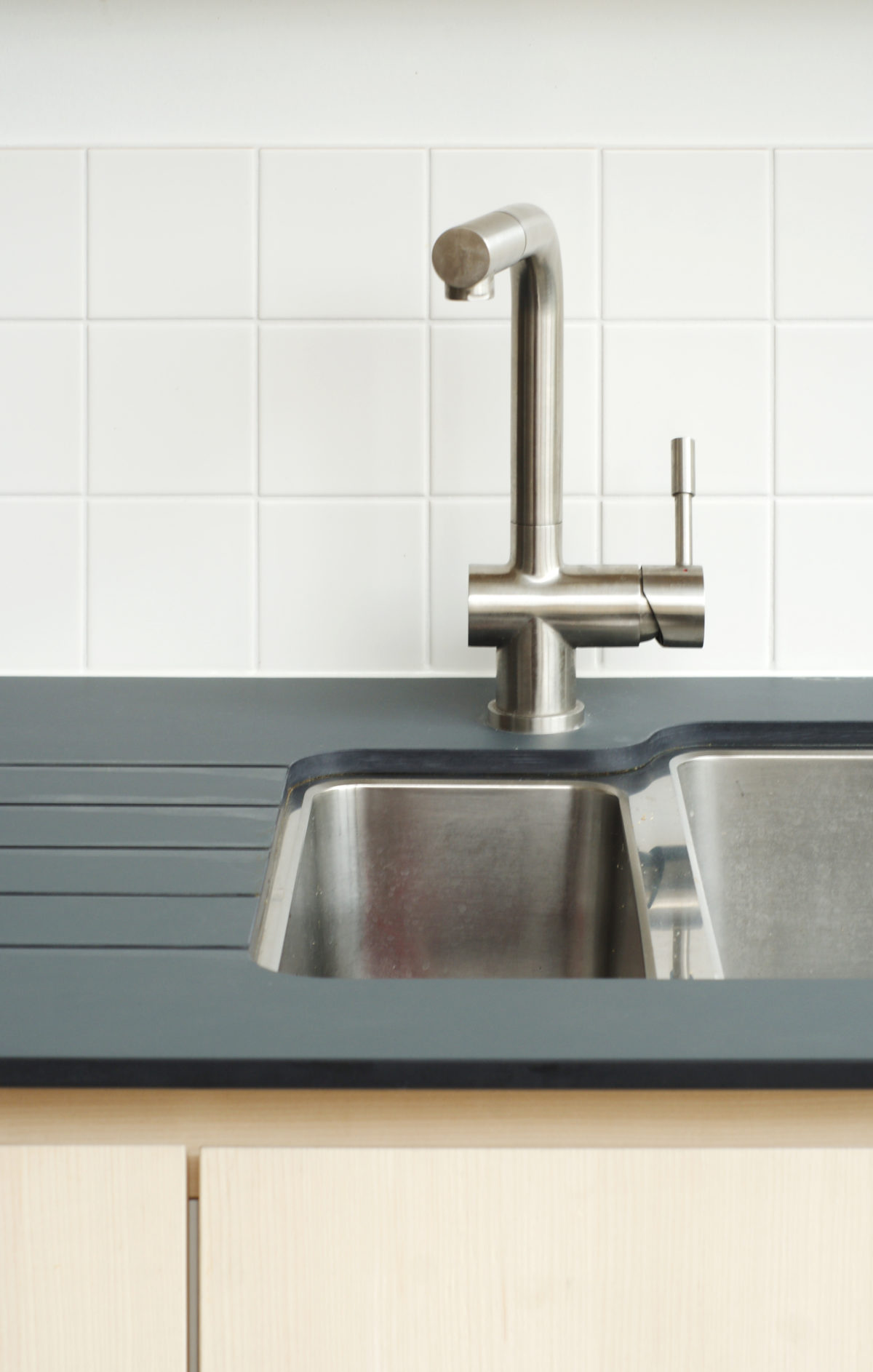
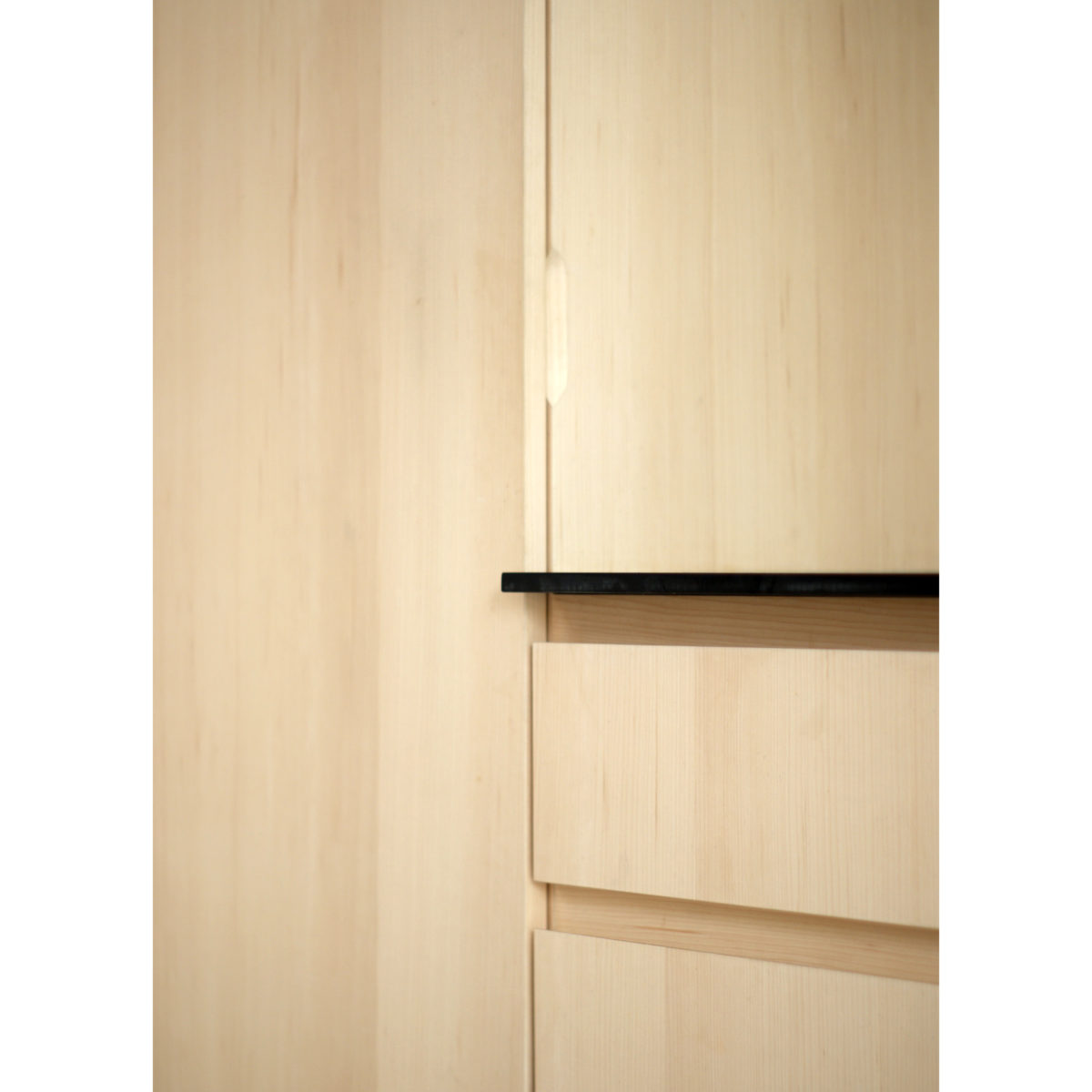
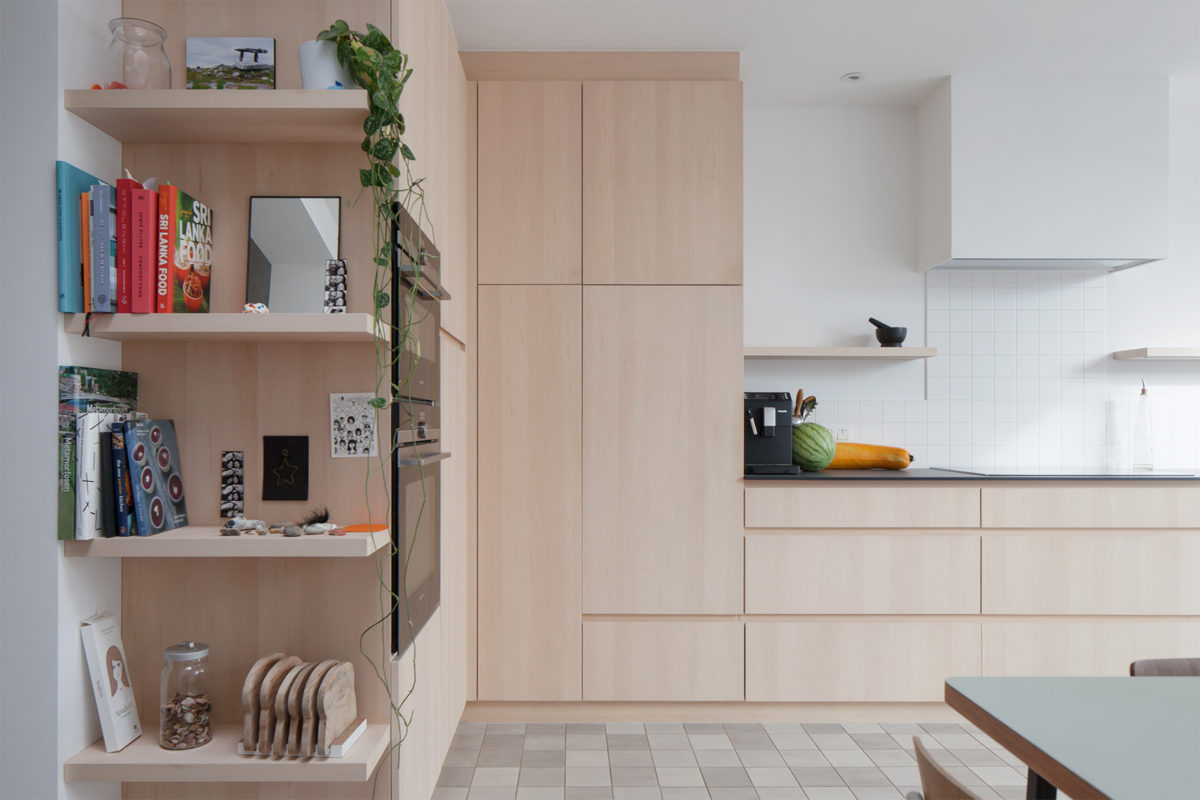
The façade is modest yet finely detailed. The same goes for the interior joinery. A custom-built kitchen is finished entirely in maple veneer, including recessed handles. Each drawer and cabinet is carefully considered, down to its future contents. Every unit can be opened with a subtle grip at the top. A thin composite worktop wraps around the sink, with milled drainage lines ensuring proper water flow.