Technical sheet
Read moreRead less- Location
- Pittem
- Date
- 2023 - ...
- Client
- Government
- Phase
- In study
- Executor restauration mill
- Peussens
Plaatsmolen Pittem en Picknick Plek
The restoration of the mill Plaatsmolen in Pittem and the transformation of a garden ruin into a picnic spot
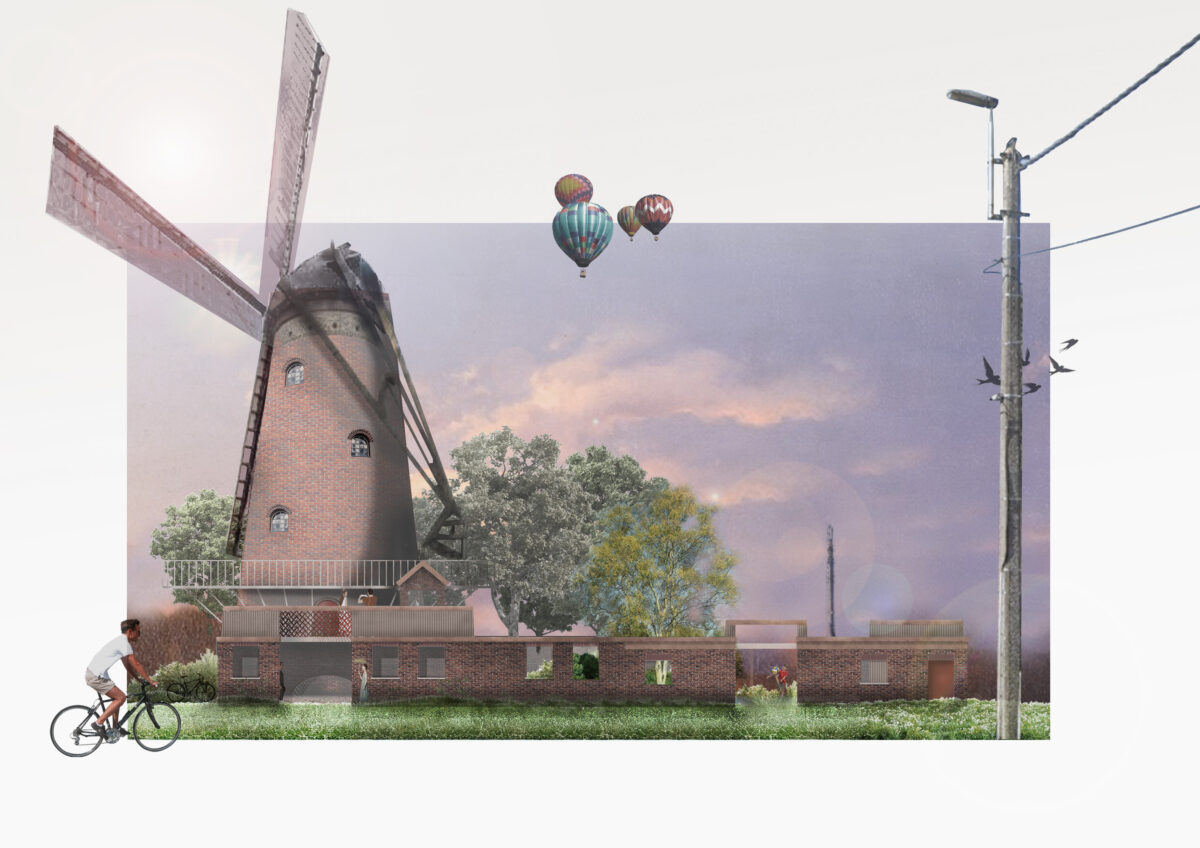
Perched high on its mound, the Plaatsmolen of Pittem towers above the landscape. Tucked into a bend in the road, between a residential area and a recreational one (and right along a major cycling route), it has long served as a local landmark.
The necessary restoration of the windmill became an opportunity to make the site accessible, tangible, and inviting. An adjacent bivouac hut opened up new possibilities.
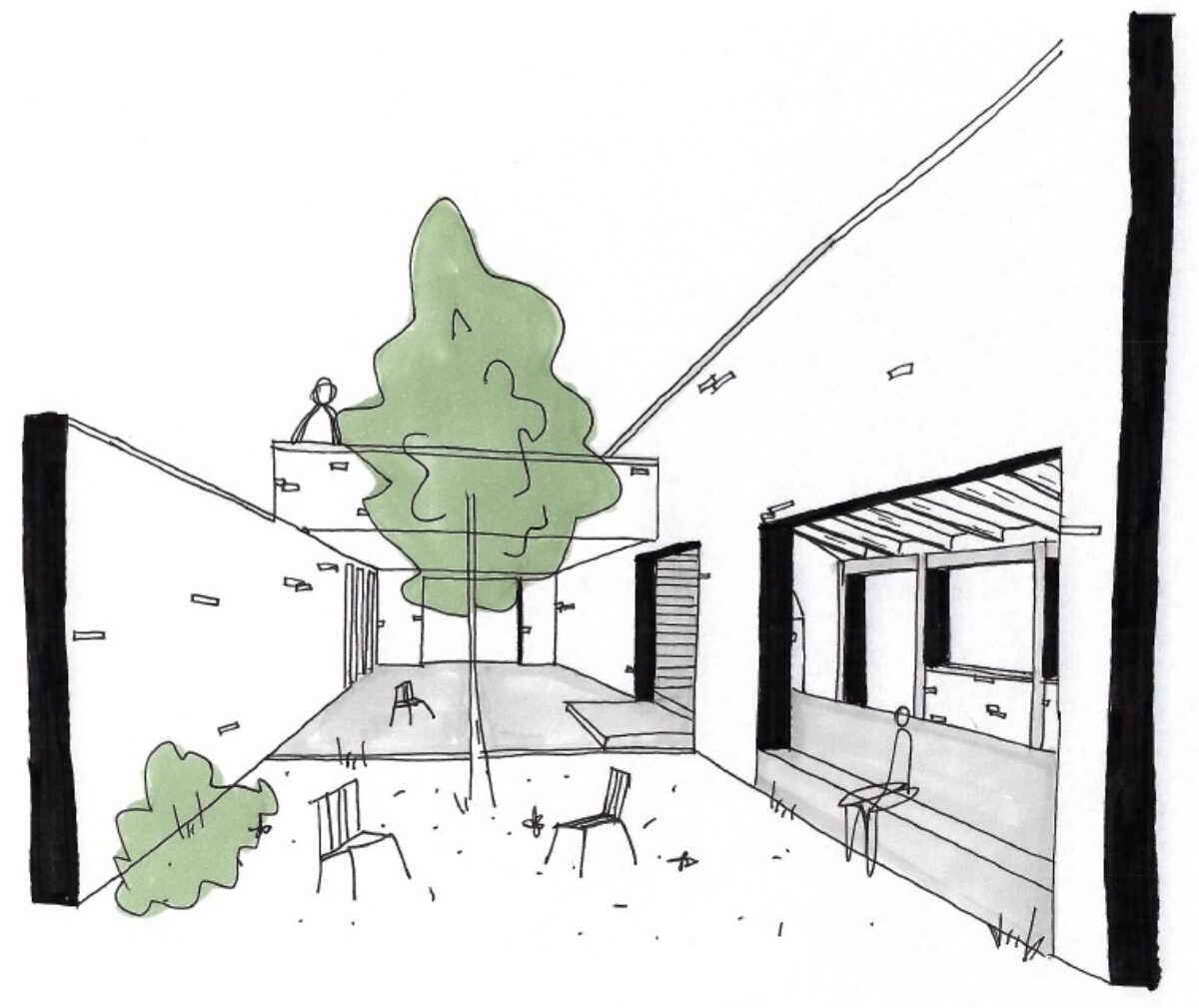
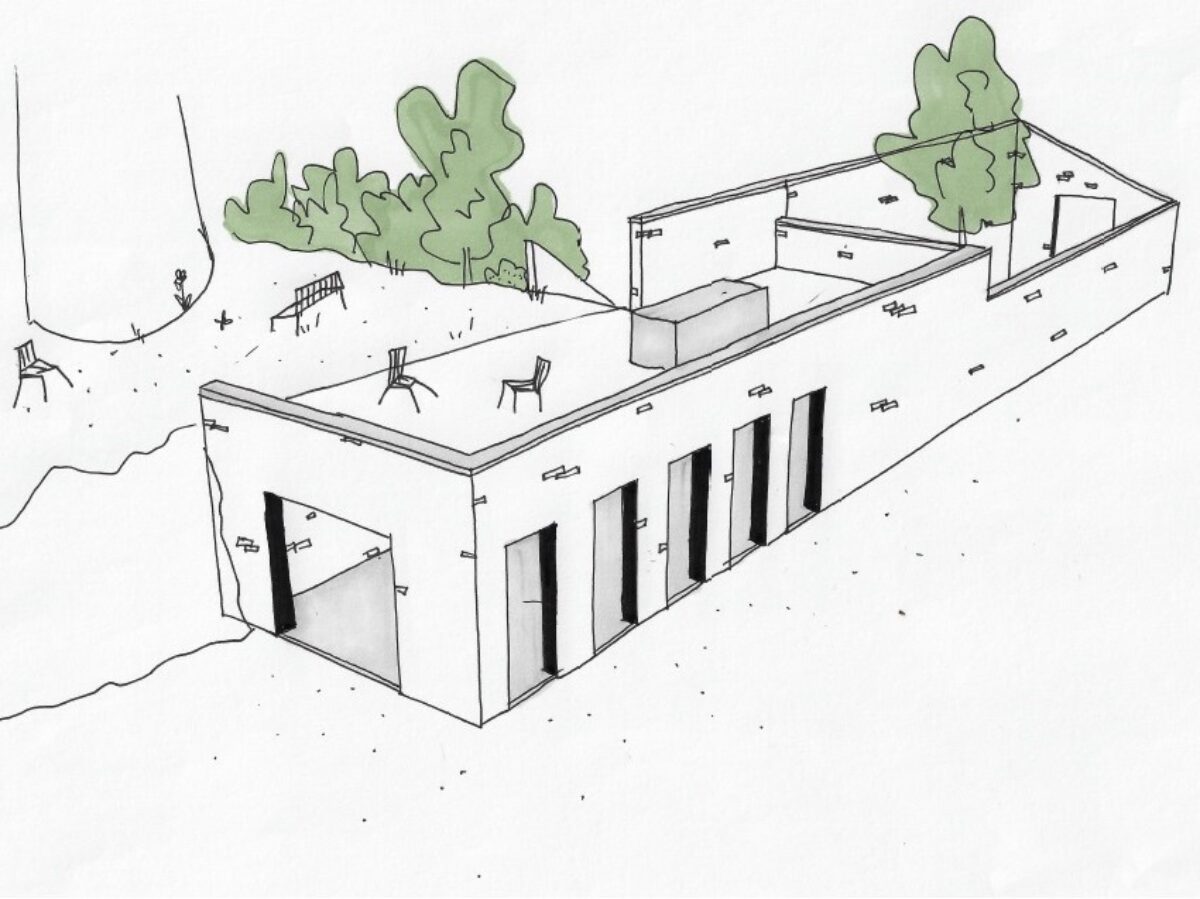
The presence of passing cyclists and the site’s green surroundings led us to imagine a picnic spot. The bivouac hut is deliberately dismantled, becoming an open garden ruin. A series of outdoor rooms, each offering a different experience and a different dialogue with the natural elements. Together, they lead visitors slowly uphill, toward the windmill.
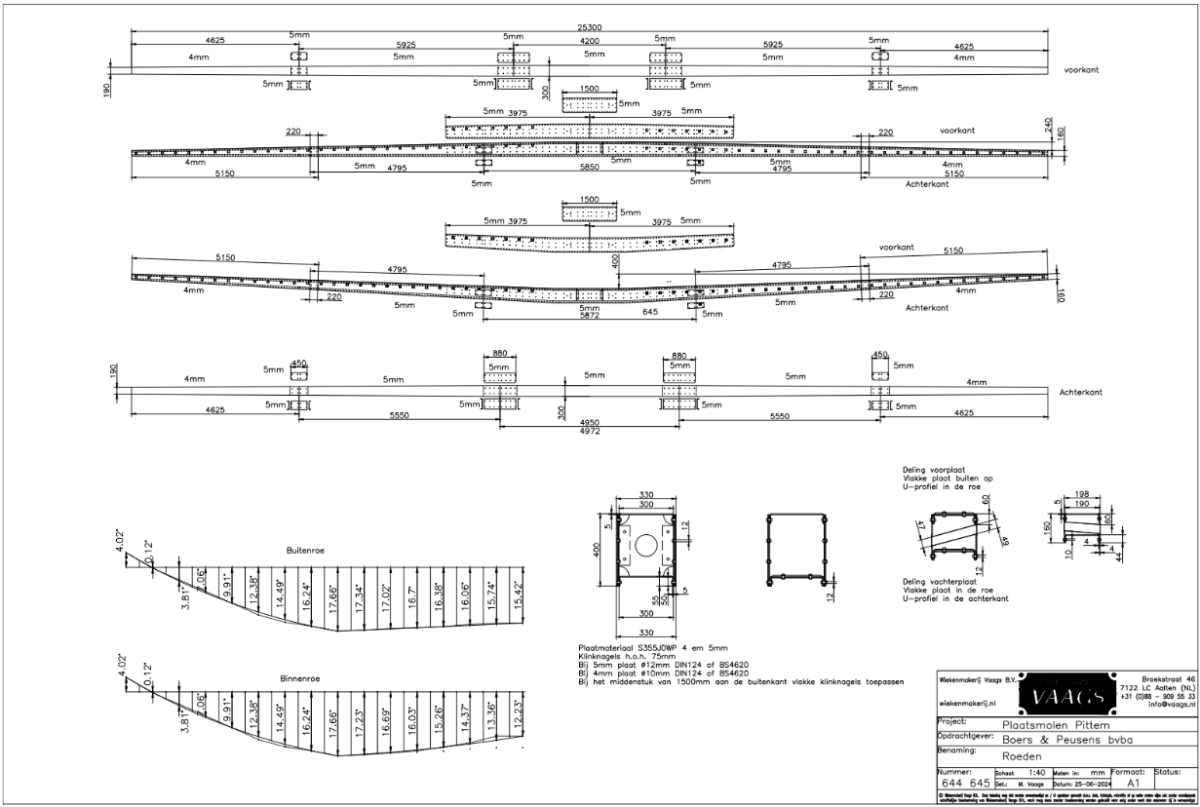
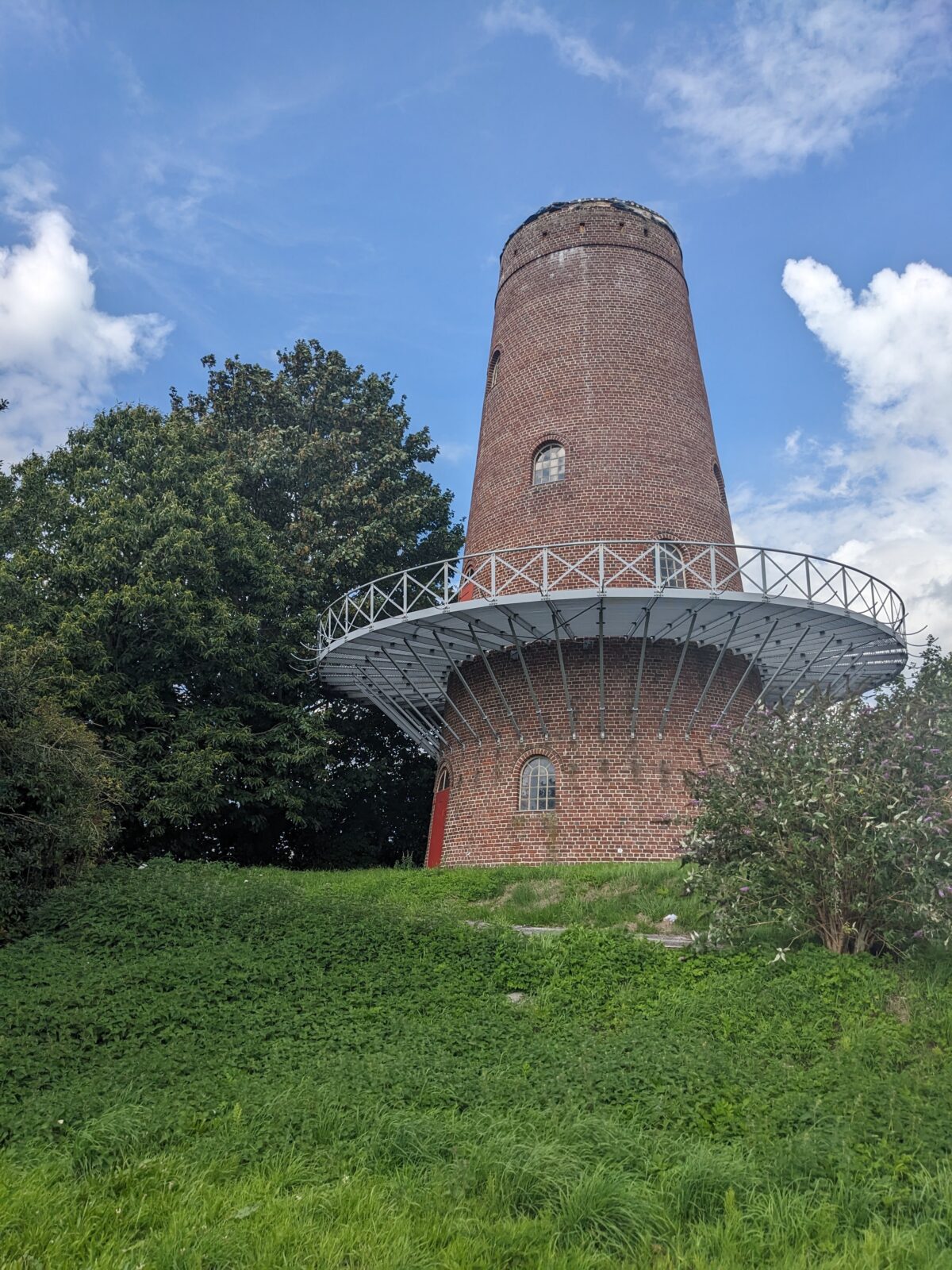
The mill itself is being fully restored. The architectural works have already been completed: the red coral doors and fully renewed balcony now wrap around the drum like a bright ribbon. The technical restoration is ongoing. Soon, the gears will turn again, and the mill will grind flour as it once did.
After a picnic on site, a stroll among butterflies, and a visit to the mill's inner floors, visitors make their way back to their bicycles along a circular path that gently descends; a final turn around the mill, as if you yourself were a blade in motion.
A hinge
The mill Plaatsmolen of Pittem is a compelling example of how heritage can be re-inscribed into contemporary society. The site consists of two main elements: the protected Plaatsmolen and a banal, vacant bivouac hut nestled against its slope. Around them lies neglected greenery. In the wider context, the site forms a hinge in the municipality of Pittem; situated precisely where residential fabric, agricultural land, and the recreational cluster (sports fields, a dog park, and interregional cycling routes) meet.


Inclusive
The site’s circulation is entirely reimagined, with a focus on openness, accessibility, social visibility (to reduce vandalism), and low-tech, low-cost solutions. The design consists of a series of open zones, a sequence of green rooms, allowing visitors to wander in multiple directions. Long sightlines connect the various parts of the site. Most of the hard paving is removed, and the rest is put to practical use, focused on accessibility. A path wraps around all the functions and gently climbs the slope. A slow-rising incline ensures access for wheelchair users as well. What was once an obstacle becomes a promenade architecturale. Of course, the sanitation facilities are also fully accessible.


Community
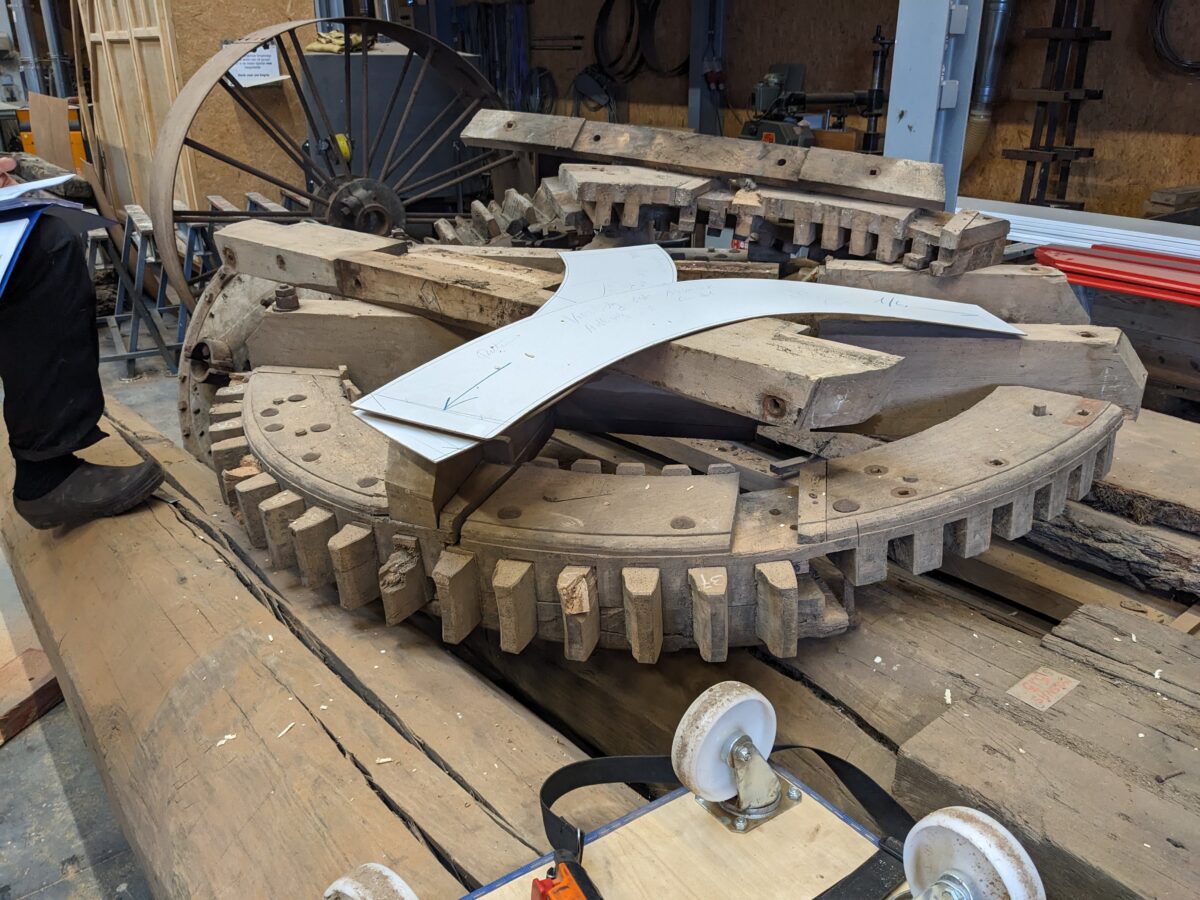
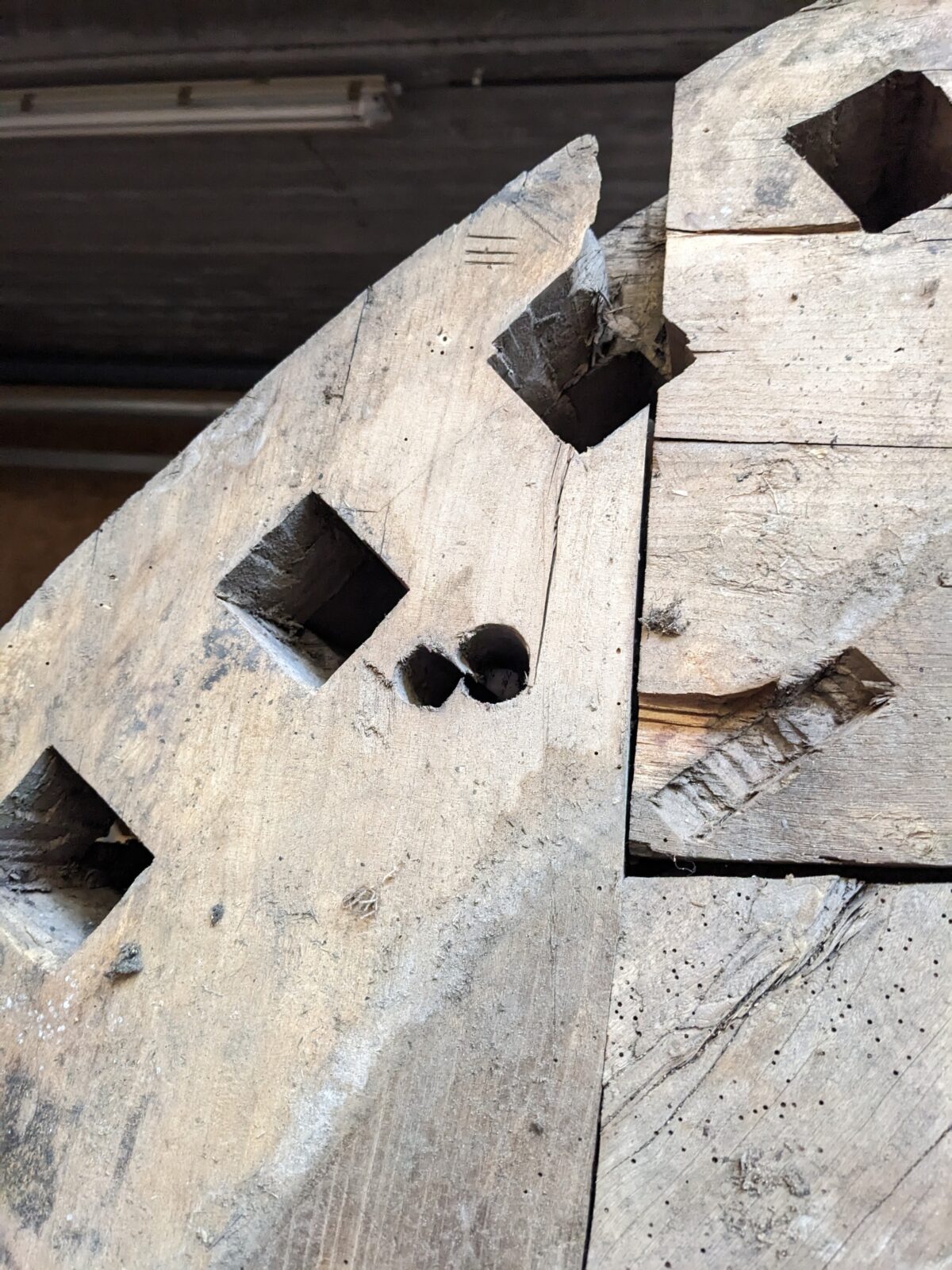
We chose a dual approach, in keeping with the site’s potential and the identities of its two buildings: the mill and the bivouac hut. On the one hand, there is the windmill, a protected monument in need of thorough restoration. We are now entering the final phase of that effort. The structural repairs are complete, and the restoration of the mill’s technical workings is well underway. By the end of 2025, for the first time in decades, the Plaatsmolen will turn and grind again. On the other hand, there is the bivouac hut, an unremarkable and even obstructive structure, which now helps unlock the potential of the heritage. It is dismantled and reborn as an open walled garden, a ruin-room. A range of low-tech facilities encourage multiple uses: shelter from the rain, a bicycle repair stand and drinking fountain, bike parking, biodiversity-friendly planting, a public BBQ, sun terrace, children’s play area, and public toilet. The activities that take place, like "a picnic beside the windmill", reaffirm the value of the heritage. And in turn, the heritage confirms its value as a gathering place for the community.


Structure
Though we speak of dismantling, this is not without structural implications. The building was never designed to function as an open garden room. Its walls now need bracing and stabilization, especially without the roof. New openings are created. A concrete platform ties the garden ruin into the mill mound. A sculpted groove channels rainwater to a theatrical spout. A few structural additions also hover over or wrap around an existing high-voltage cabin, which is preserved.