Technical sheet
Read moreRead less- location
- Brussels
- date
- 2017-...
- Partner
- on the instructions of Origin architecture & engineering
- Client
- Professional
- Protection
- Inventoried
- budget
- Higher segment
- study partners
- Origin (stability), 2BSafe (energy en safety), ATS (acoustics)
- executors
- Intramuros
Hôtel Particulier
Realisation of an apart-hotel through the tactical restoration, renovation, and internal densification of a historic townhouse.
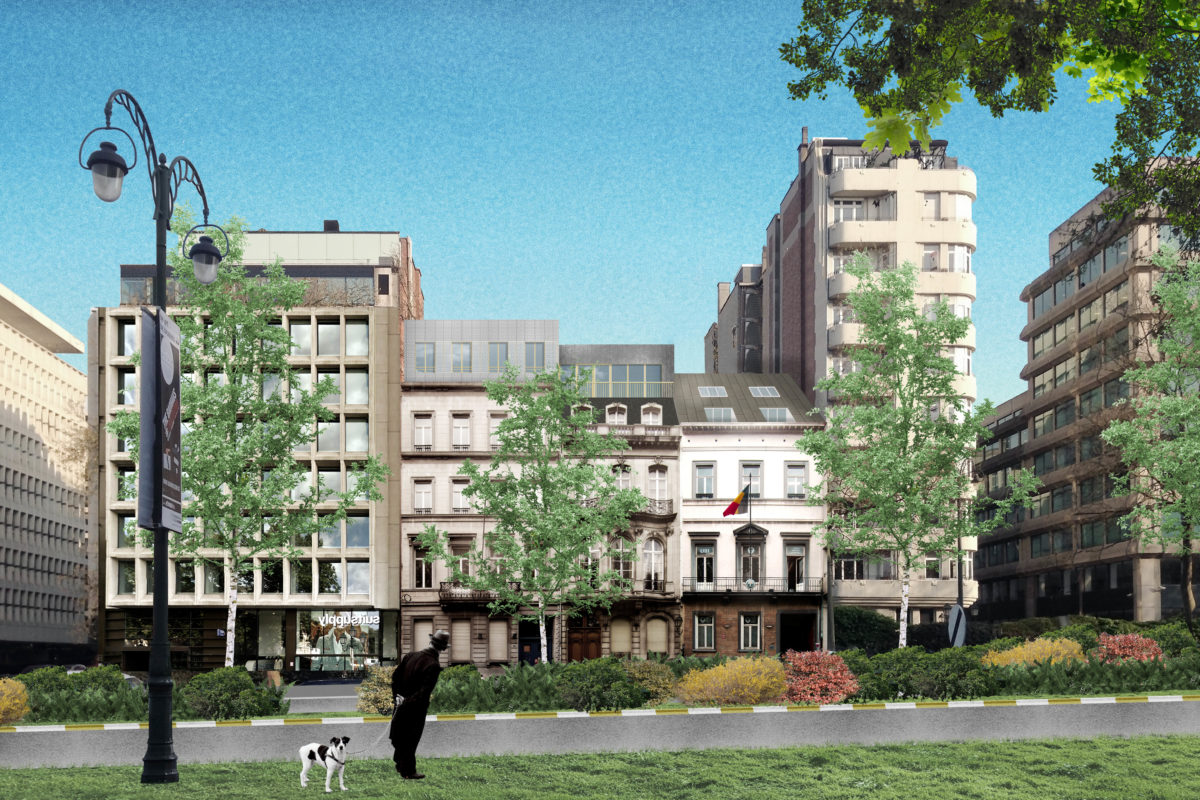
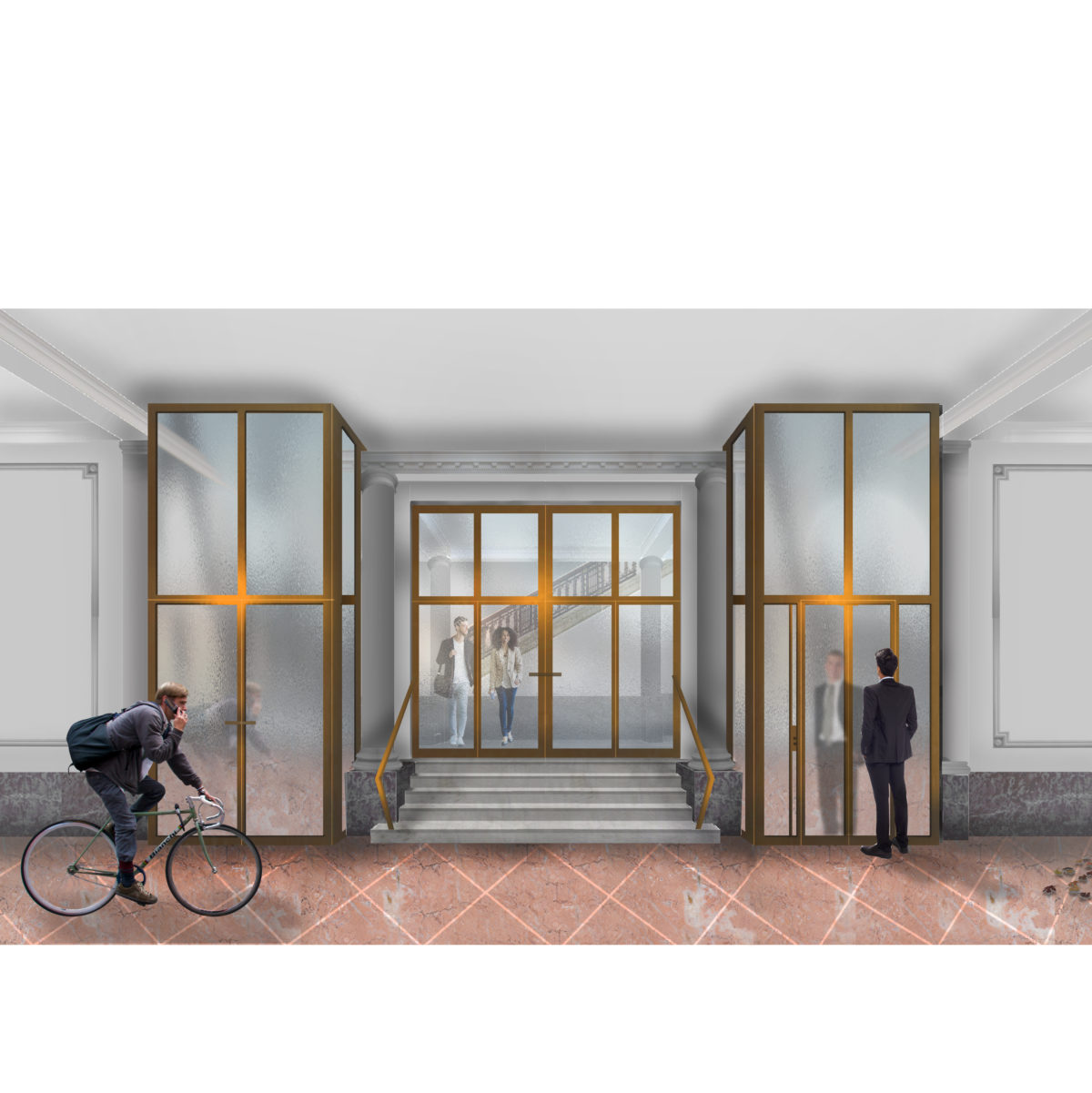
Dwarfs among giants. The city ring at this location is characterised by large volumes clad in repetitive grids of precast concrete. Occasionally, one catches a glimpse of what the ring once was a century ago: a true boulevard of stately mansions and hôtels particuliers. Ornate façades with balconies, bay windows, and carriage entrances. They are the last witnesses of large-scale erasure operations from the past.
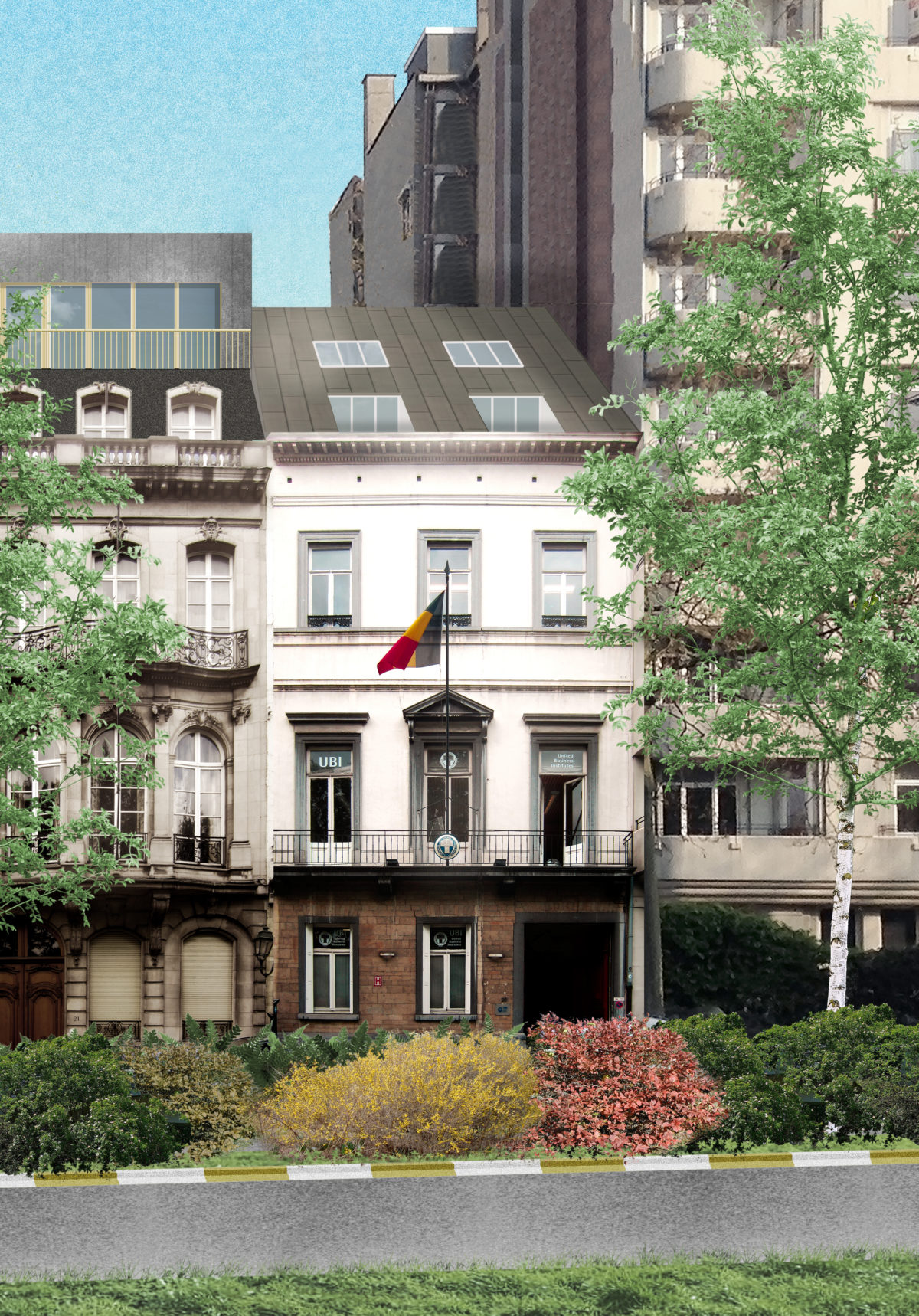
Three adjoining buildings form the ensemble; the central one is a listed monument, the flanking ones act as buffers to their tall blind neighbours. The client wishes to develop a hotel function: two buildings are to operate together as a luxury boutique hotel, while the third will function as an apart-hotel. A typology comprising apartments and studios that also benefit from the services and amenities of the adjacent hotel. This third building is the subject of the study.
The process begins with a feasibility study that examines a range of scenarios. From full restoration of the existing building, to vertical extension, to demolition and new construction. Following detailed investigation and dialogue with the relevant authorities, it becomes clear that neither new-build nor upward extension are viable options. At the same time, a purely restoration-led approach is no longer possible either, as many original elements have been lost and disruptive interventions have taken place. What emerges is a layered and tactical project; one of restoration, renovation, and extension through internal densification.
A detailed mapping identifies the valuable elements of the building: the front façade, several well-preserved salons, and two decorated stairwells. Other parts are important in spirit but materially compromised: former salons, light wells, the original roof structure. And some parts are simply disruptive, like the garage on the ground floor, which fills the entire site to a height of five metres.
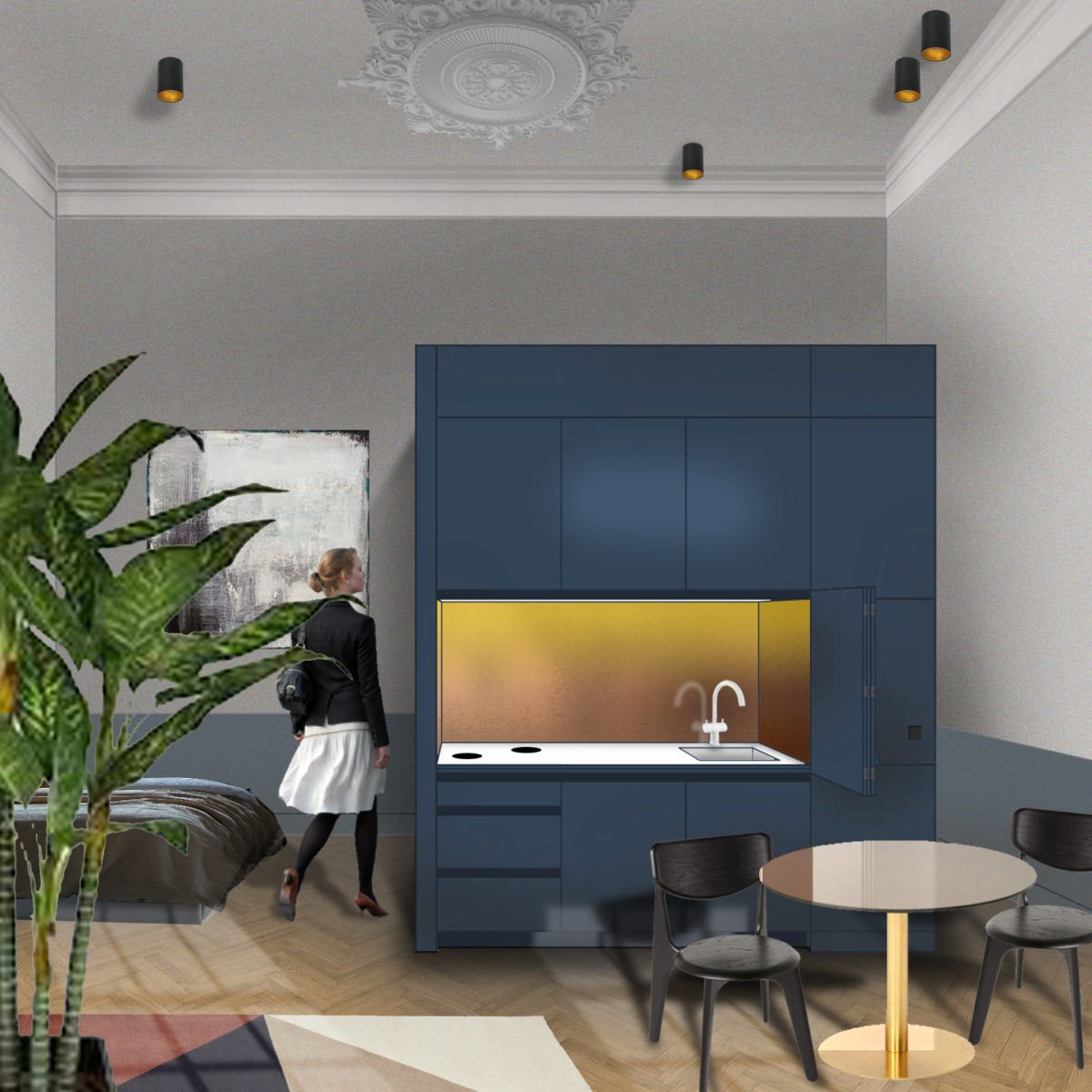
The design evolves out of this mapping. A lift is positioned so that it passes only through secondary spaces. The two staircases are organically connected, allowing a coherent response to both heritage and fire safety. Some salons are restored, with new elements such as built-in furniture and kitchen fittings, introduced with great precision. Other salons are renovated, keeping the essence of the original design legible while allowing new interpretations.
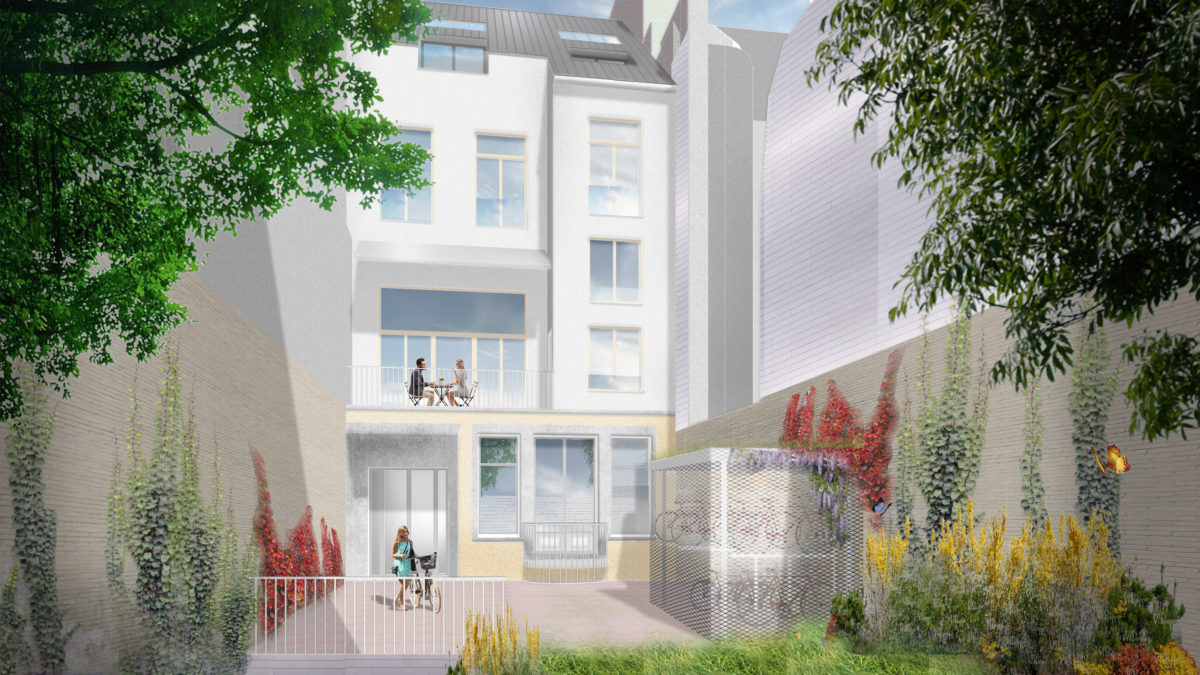
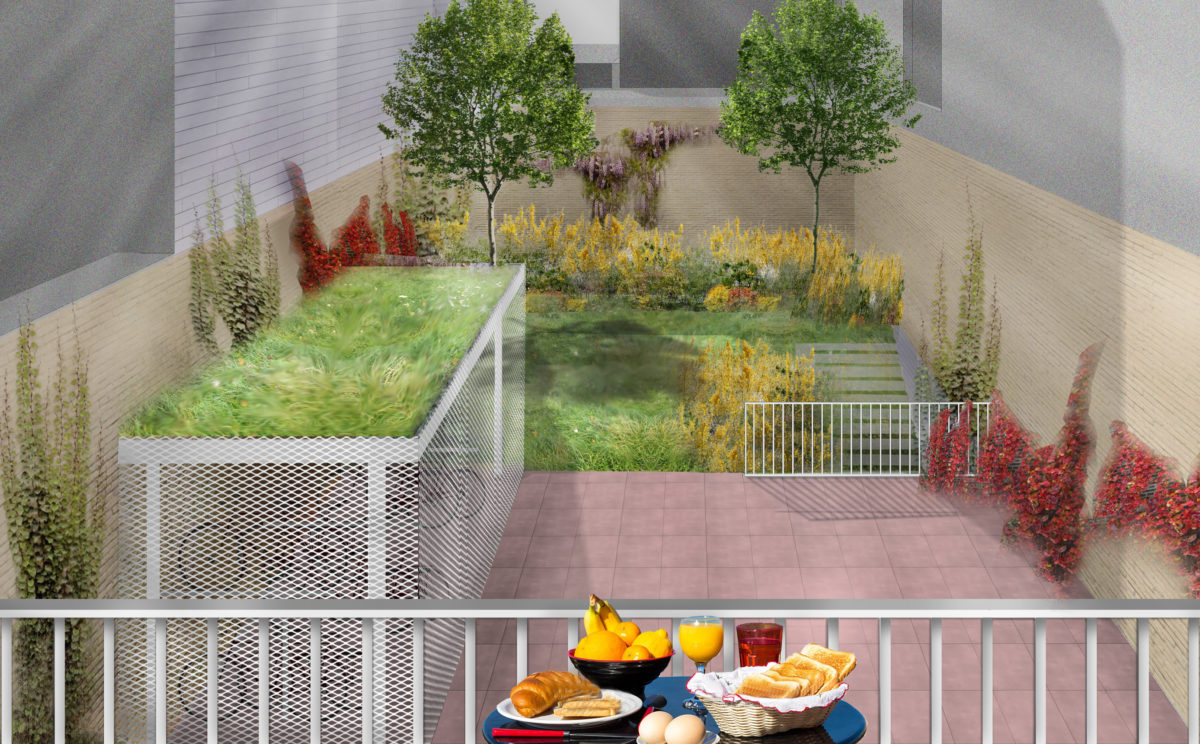
The non-historic rear volume is entirely de-massed. In its place comes a modest basement level and a generous garden. It is technically an extension, yet spatially an internal densification. Dwarfs in size, giants in intent.