Werk - 038

Langerbrugge Power Plant

Feasibility study for the reuse of the boiler room, machine hall, and chimney of the former Langerbrugge power plant (listed monument)


Read moreRead less

Where wind now blows, there used to be smoke. Before the wind turbines, the port of Ghent was primarily a landscape of chimneys. Between water and village still stands one of the tallest (the tallest) connected to massive buildings. The majestic Langerbrugge power plant supplied electricity to the Ghent region and its harbour for decades. Progressive and pioneering, at both a European and global scale, the complex bears witness to the evolution of energy production. The listed monument lost its original function over a decade ago and has since been partially restored and repurposed. But the boiler house, the machine hall, and the chimney remain empty shells. A motor without a spark.

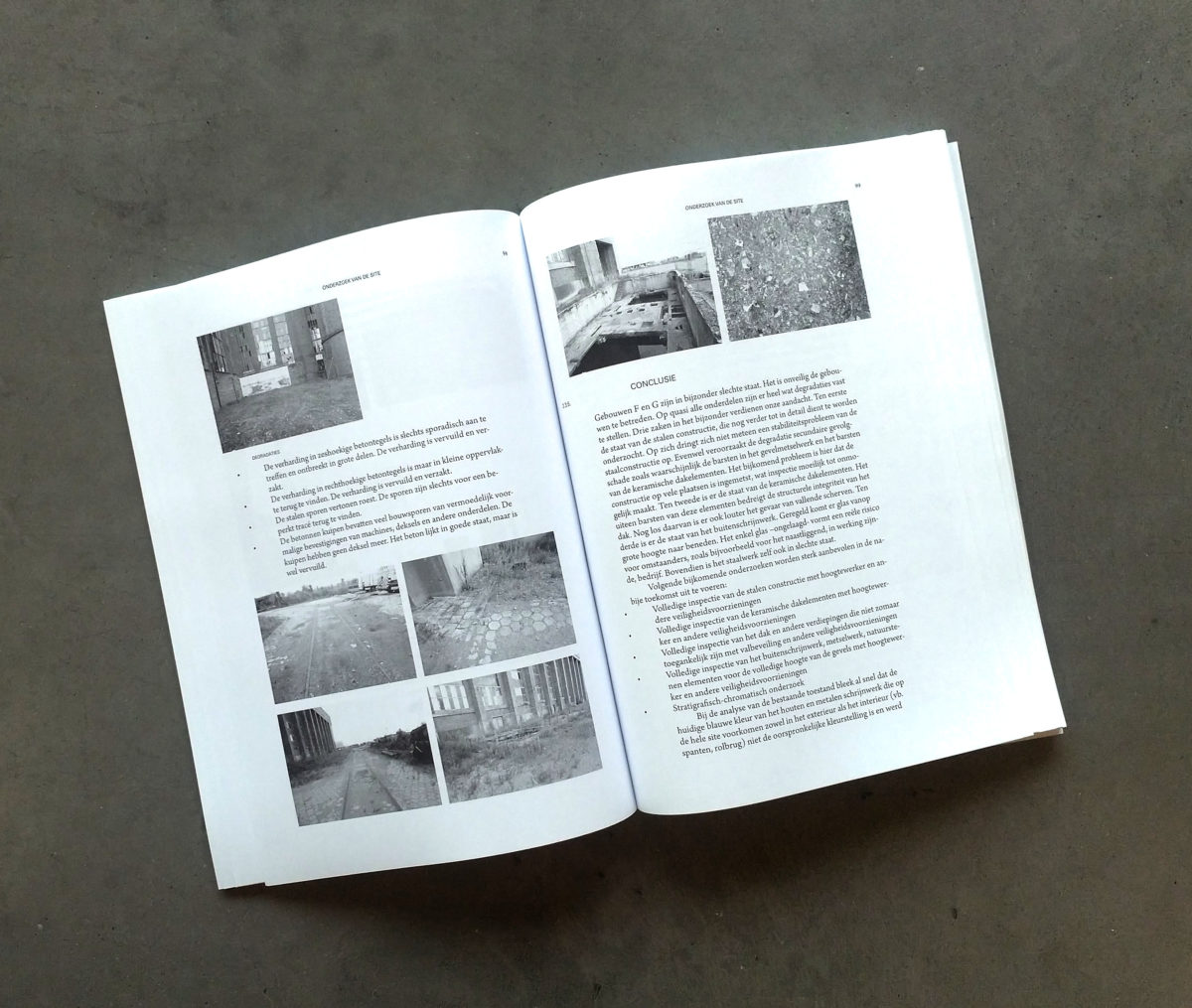
Before looking ahead, the buildings and their context are thoroughly dissected; spatially and historically, in both abstract and practical terms. Investigated: the site's construction history, heritage values, technical condition, architectural and landscape qualities, legal framework, and financial feasibility. A melting pot of information.

From this, three research pathways emerge. A vertical warehouse and distribution centre: a carefully considered maximization of floor space, designed in dialogue with the heritage. A parking facility with SME units above: combining programs to fill the immense buildings with layered uses. A maritime museum: a public function with a more complex and diverse funding model, actively seeking to connect with its surroundings. Each has its strengths and weaknesses, its opportunities and risks.

Majestic, imposing, immense. But also in need of restoration and surrounded by complexity. These are three potential paths forward. Three sparks for reactivation, three visions for the future of the buildings around Ghent’s tallest chimney.
Werk - 038
038 ECLB SO foto bestaande toestand 8
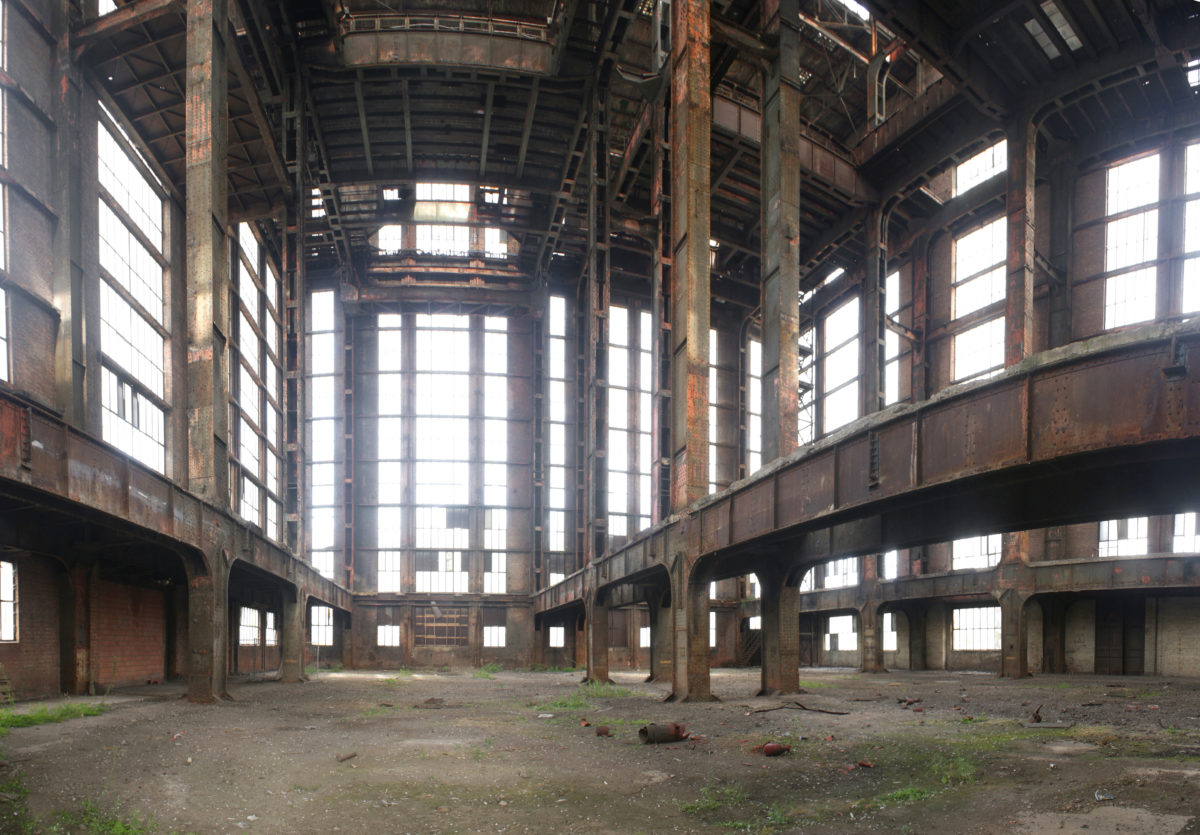
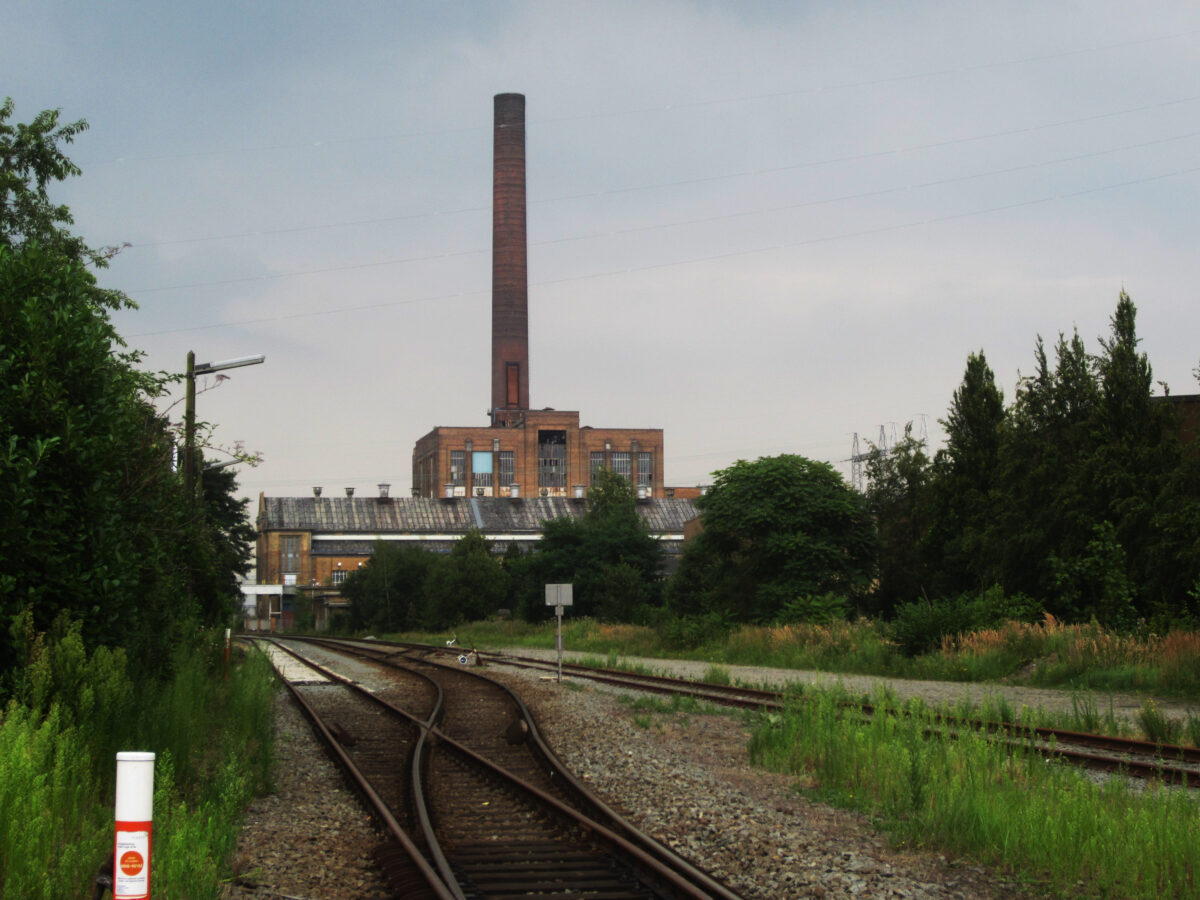
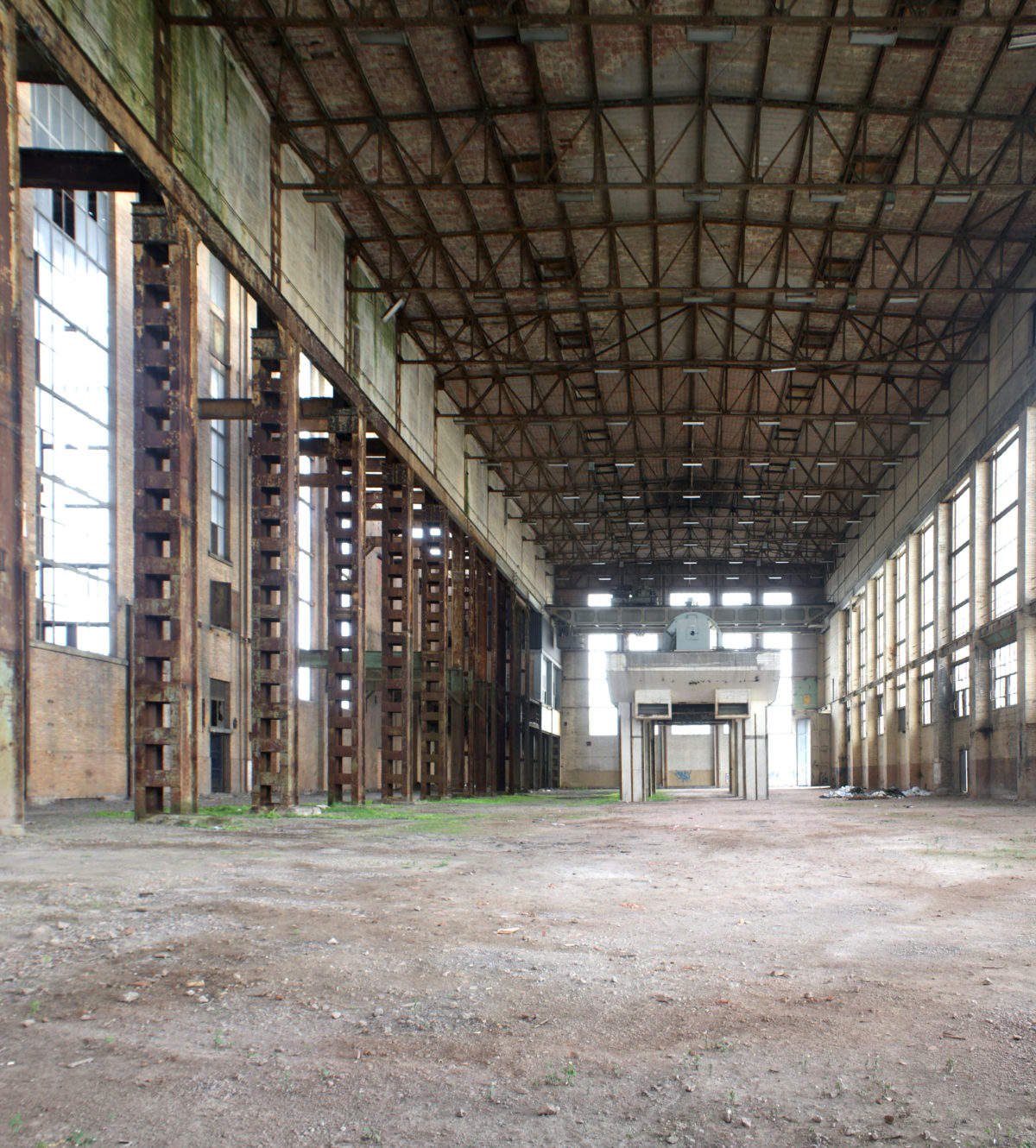
The tallest chimney in Ghent is visible from afar. At its base lie the machine hall and boiler house of the former Langerbrugge power plant. Two vast halls, now empty, once packed to the rafters with machinery that powered the city. The monumentality of the complex lies not only in its scale, but also in its architectural expression: richly detailed façades and window sections tens of meters tall, bringing daylight in from all sides.
038 ECLB SO foto bestaande toestand 1
038 ECLB SO foto bestaande toestand 5
038 ECLB 20160823 landschap historisch 1950 01
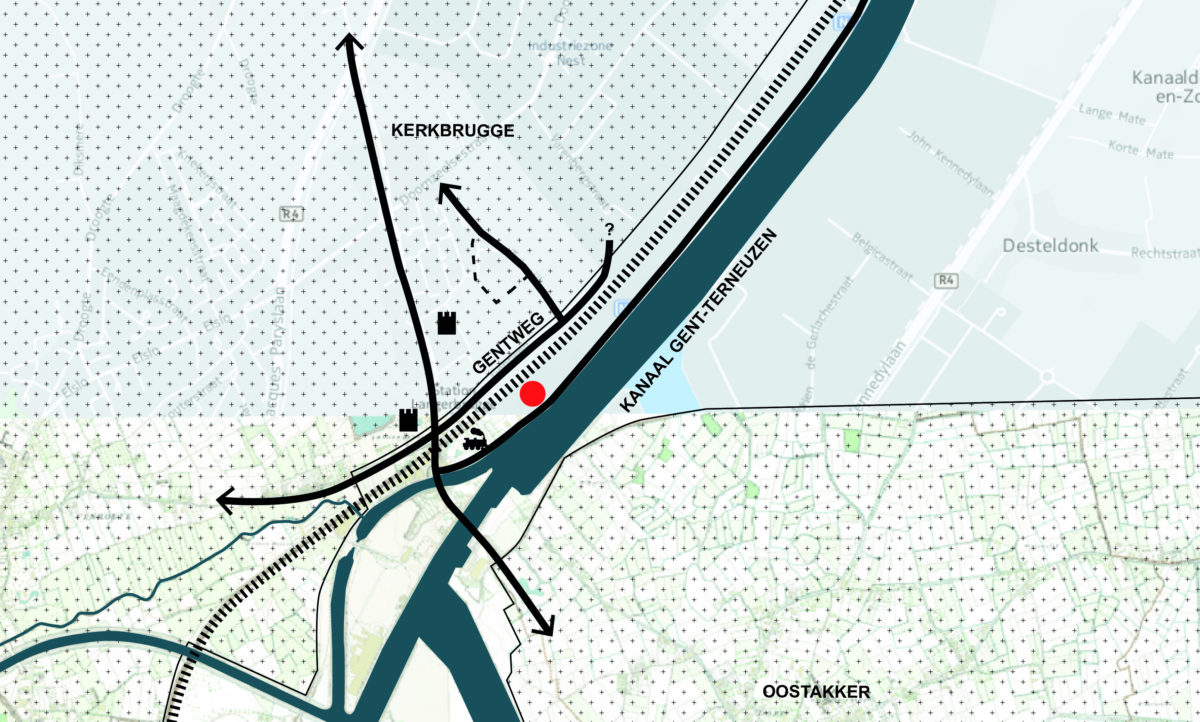
Every such study begins with analysis. One study reveals that much of the current circulation network has existed for centuries. While the landscape has changed dramatically, many underlying structures remain clearly legible.
038 ECLB 20160823 erfgoedkaart 01
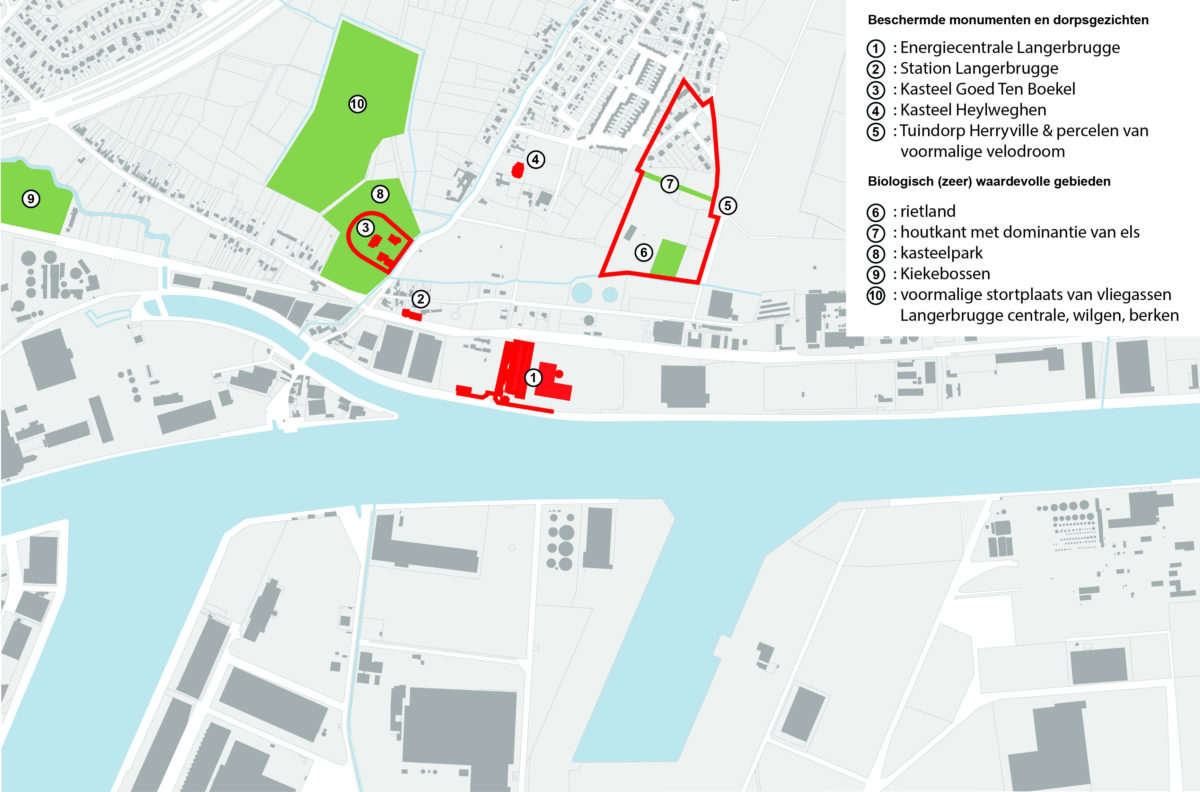
Though the plant sits in an active industrial zone, one wouldn't immediately expect to find recreational functions nearby. Yet it lies close to the border of Evergem, where town and port meet. Two very different worlds. Further analysis reveals a surprising amount of valuable heritage and greenery in the vicinity.
038 ECLB 20160907 analyse benadering 1
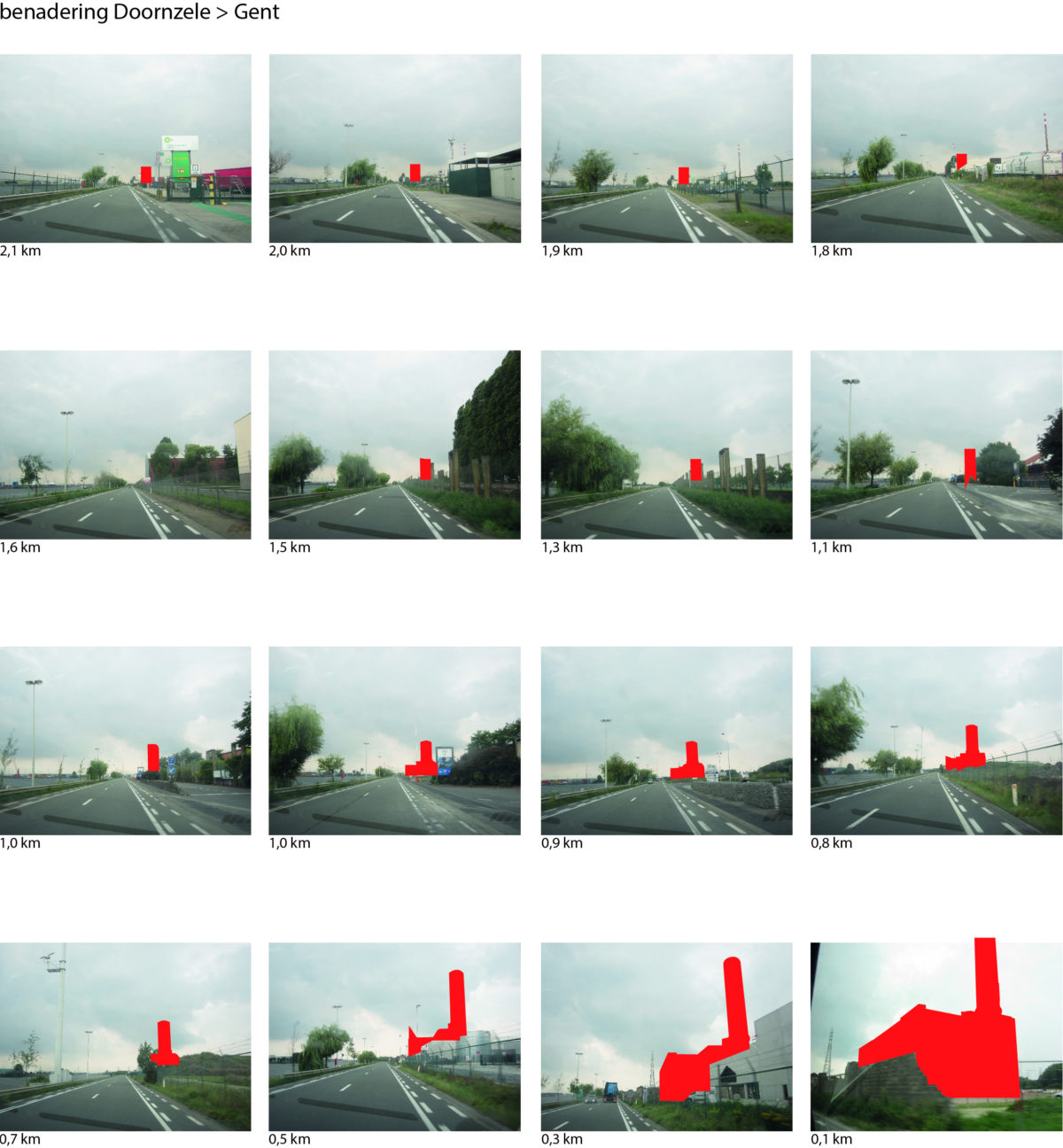
A visual study examines how the monument is perceived from various approaches. This visibility may later influence repurposing strategies. One striking insight: contrary to expectations, the plant appears quite late when approached along the main road, but becomes highly prominent from transverse landscape views. This offers opportunities to reconnect the plant to key peripheral zones.
038 ECLB 20160829 visie 6 01
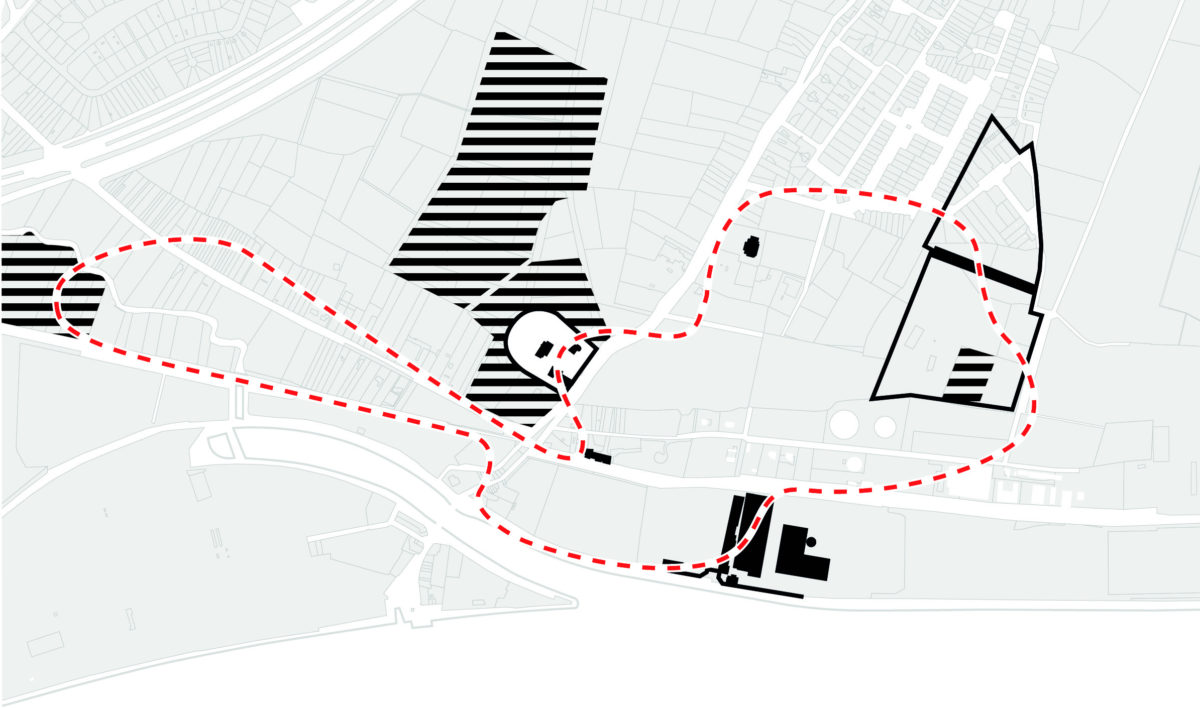
Following the analysis, ambitions begin to take shape. These are not yet designs, but directional markers that will guide future proposals. One of the key ambitions set out in the report is to re-anchor Langerbrugge within its environment. To link it to surrounding assets through a walking network substantial enough to become a destination in itself. This not only enhances Langerbrugge, but also tells a broader story about the area.
038 ECLB SO photoshop 1
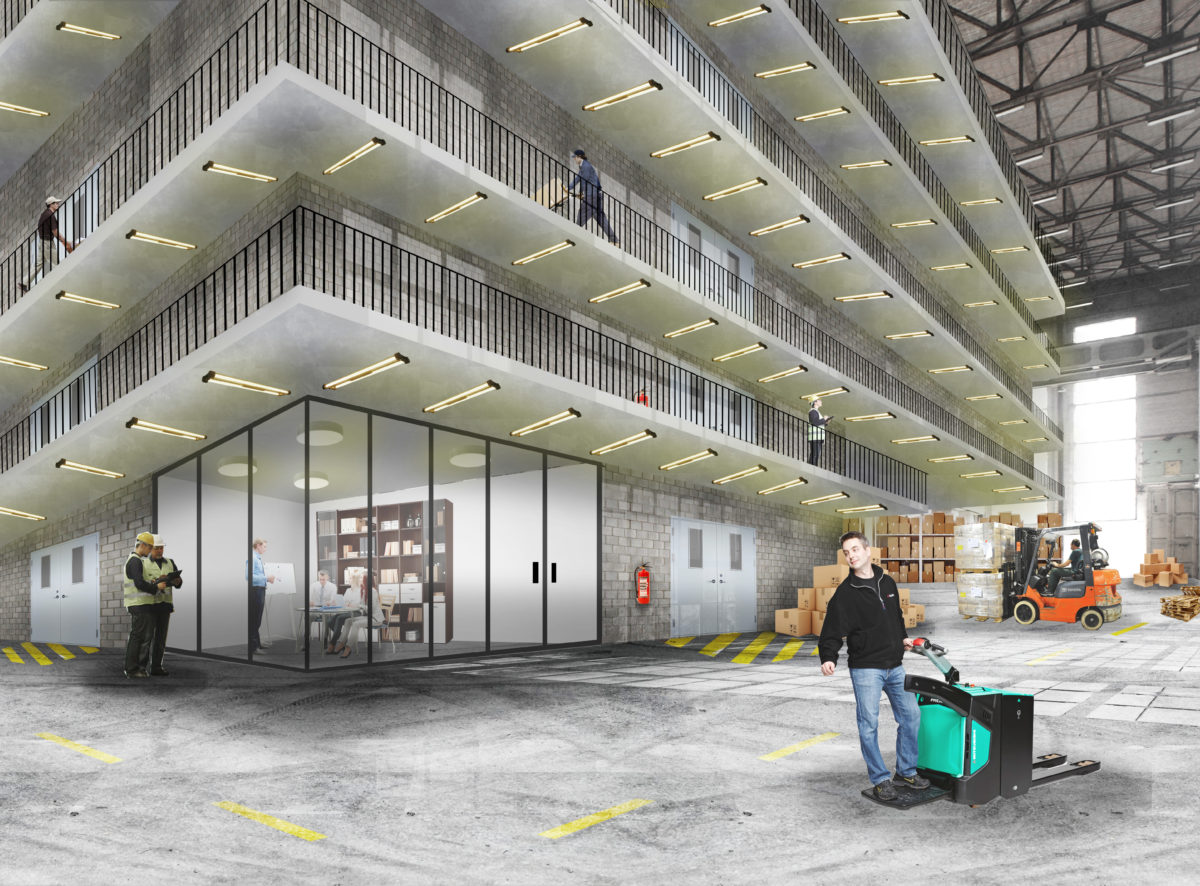
One of the most promising reuse options is not surprising: a transhipment or storage facility. This programme scores highly across several criteria: the site’s location in the port, its proximity to a Seveso-classified facility, and its sheer surface area all make it a natural fit. Importantly, this reuse could also benefit the building itself. The proposal suggests installing massive storage platforms along the rear façades, the less historically significant ones. The more ornate façades, which feature the highest concentration of joinery, would remain untouched. This approach creates a building-high internal void between the outer and inner façades. It preserves a large part of the original architectural experience while making reuse technically and economically viable.
038 ECLB SO photoshop 2
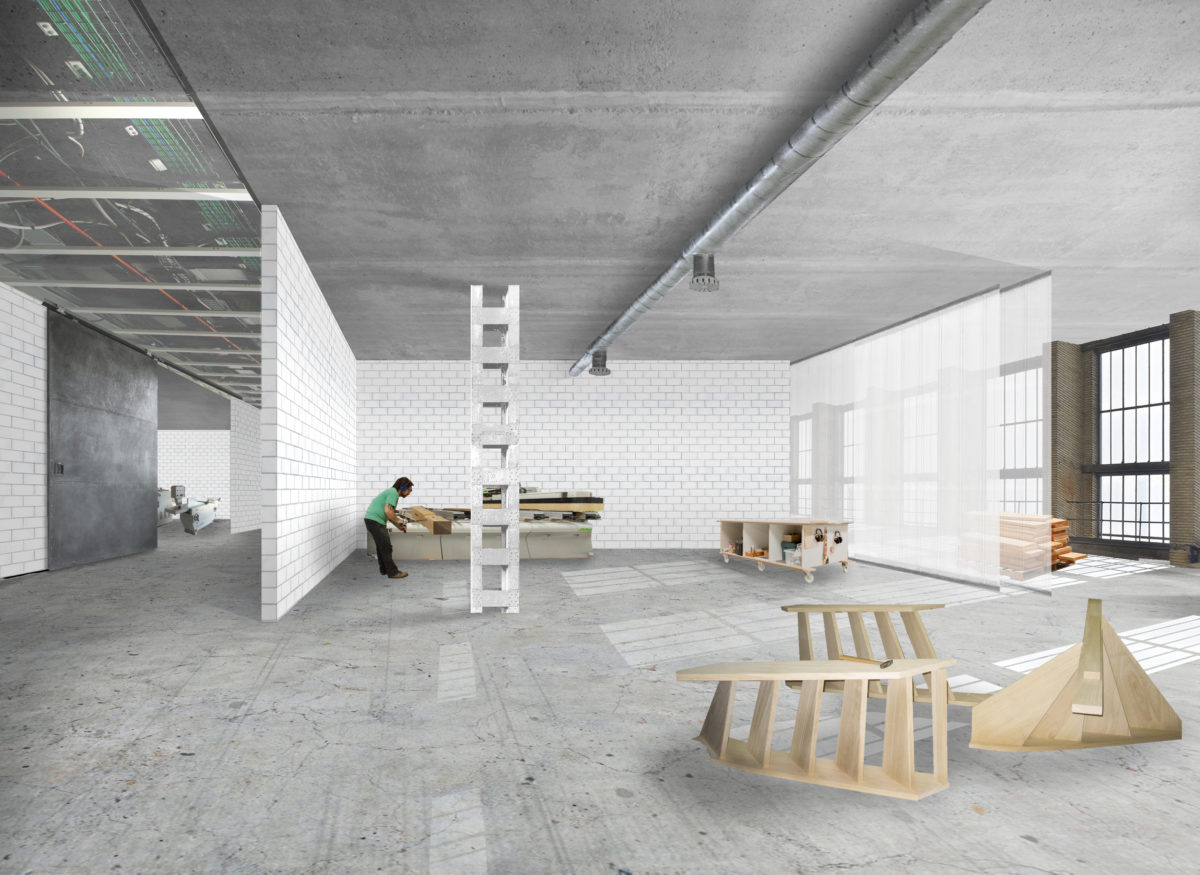
The second scenario proposes a small business centre focused on crafts. In Ghent, there is a well-known shortage of adequate studio spaces for artisan trades. The industrial hall, with its generous glazing, high ceilings, and excellent location, is exceptionally well suited to this use. The design introduces new intermediate floors, while maintaining generous floor-to-ceiling heights. These new levels are subtly legible in the façade, where some of the existing horizontal light strips would be rendered opaque. To improve energy performance while respecting the historic envelope, a box-in-box strategy is proposed. The interstitial space between the inner and outer façades functions as storage or secondary climate buffer. The inner box offers simple, broad circulation and accommodates large studio units.
038 ECLB SO photoshop 3
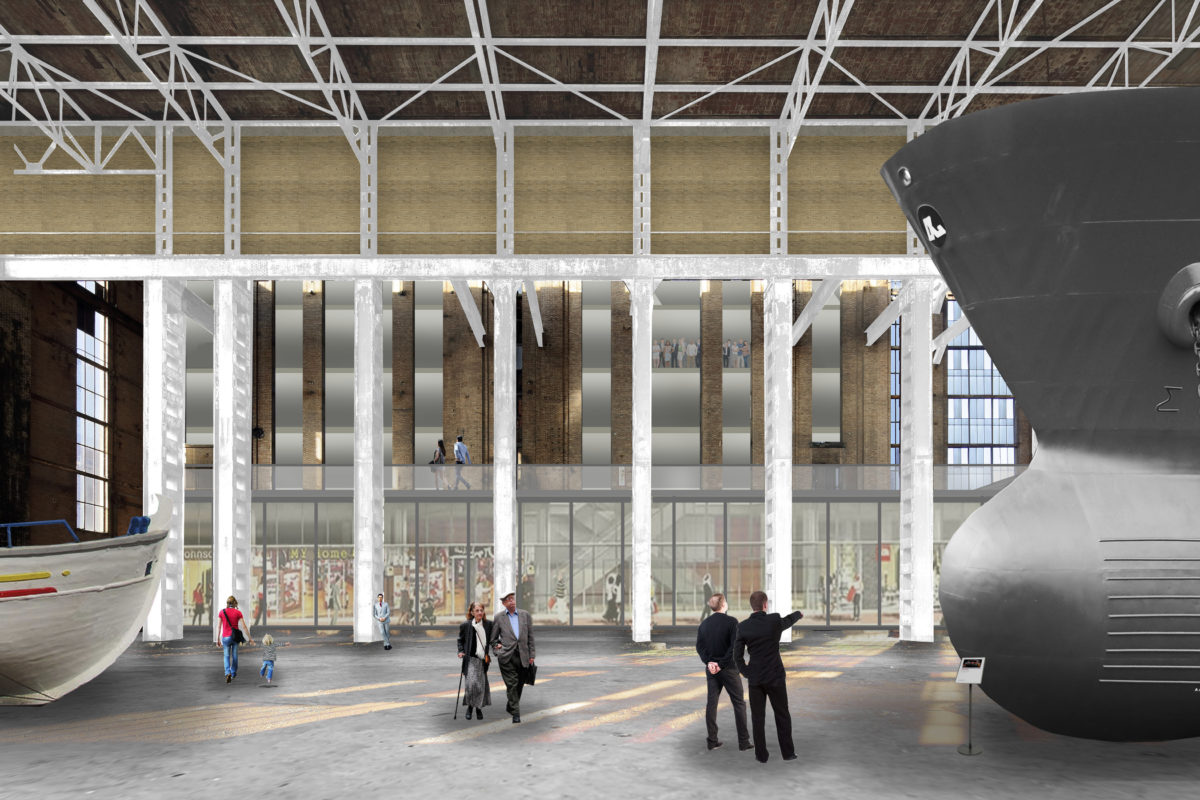
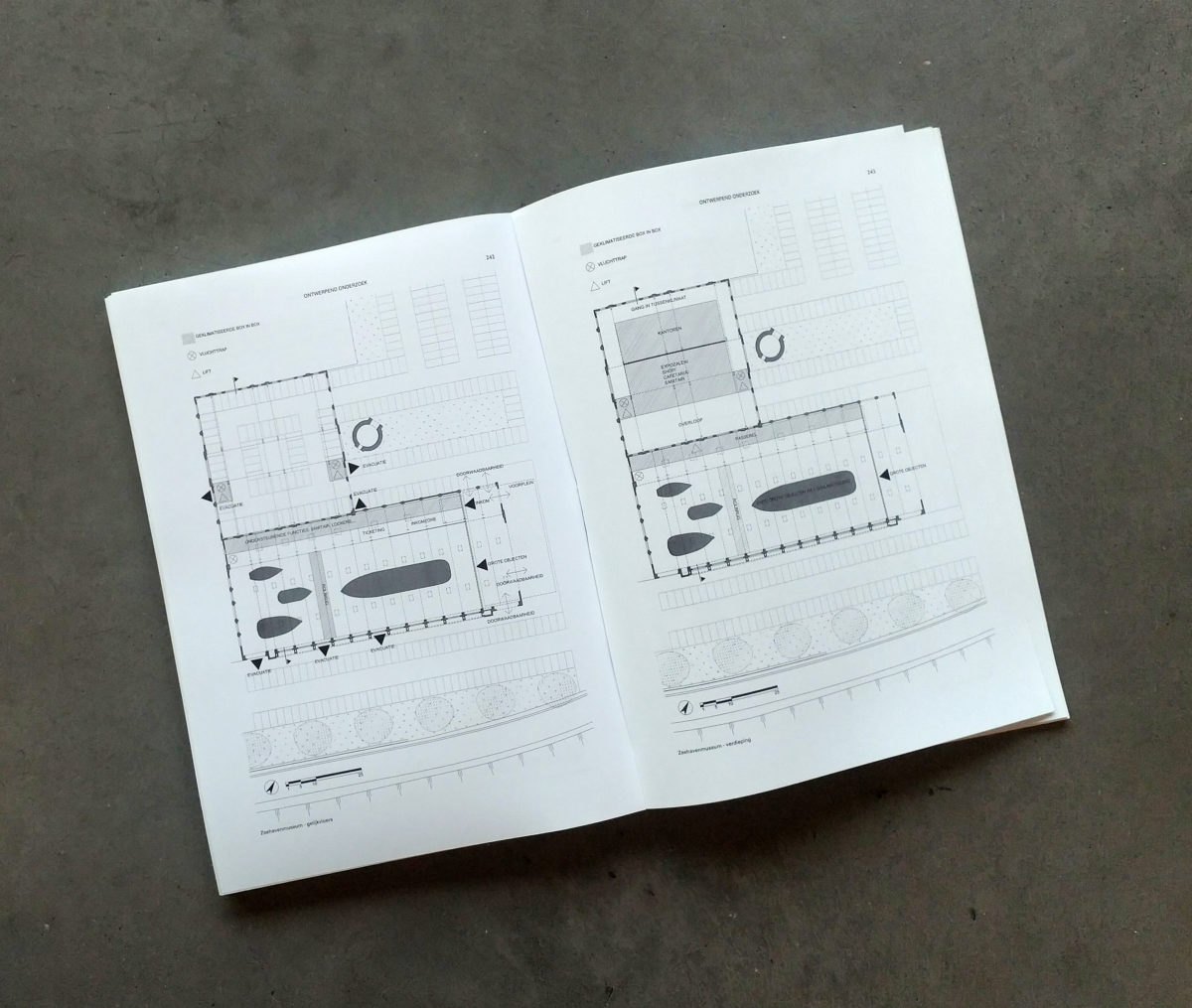
The third scenario explores a cultural function; one with a low occupancy rate, compatible with current Seveso legislation. The concept centres on a maritime museum. The surrounding site could be used for parking, blending into the adjacent green zone of the future Langerbrugge Park. The long hall offers the perfect setting for the display of large vessels in an open exhibition format. In the boiler house tower, a box-in-box concept could accommodate smaller exhibition spaces and support functions.
ECLB rapport 1
ECLB rapport 2