Technical sheet
Read moreRead less- Location
- Gent
- Date
- 2016-2018
- client
- private
- budget
- small budget
- Renovation surface
- 160 m2
- partners
- Less Is More Engineering (stability), 2B-safe (energy and safety consultant)
- executors
- Con-struct (general construction), Peter Hillen (carpentry), Bouwheer (afbraak, diverse afwerkingen)
- Status
- Executed
- As seen in
- De Standaard, AVS, Gent Cement,...
- Photos
- Marge
Décollage
Renovation of a historic row-house reorganising functions and building parts
In the street there’s a house with a beautiful façade. However, the house keeps stumbling over itself. The house finds this to be an annoying matter. Then again, there’s a lot of stuff in the way and it’s sort of gloomy inside. The stairway clumsily takes up most of the hallway, a bit too close to the front door. An underused hallway cuts up the plot in small rooms. The long extension behind the house pushes the garden all up against the back wall of the plot. The plot has been ‘room-ed-up’. They are thinking about the house and mention: more practical, more open, more light. They are thinking about the house and there’s conversation: about life, about places, about situations. An important remark is made about the bathroom on the first floor, it has to be kept as it’s already finished.
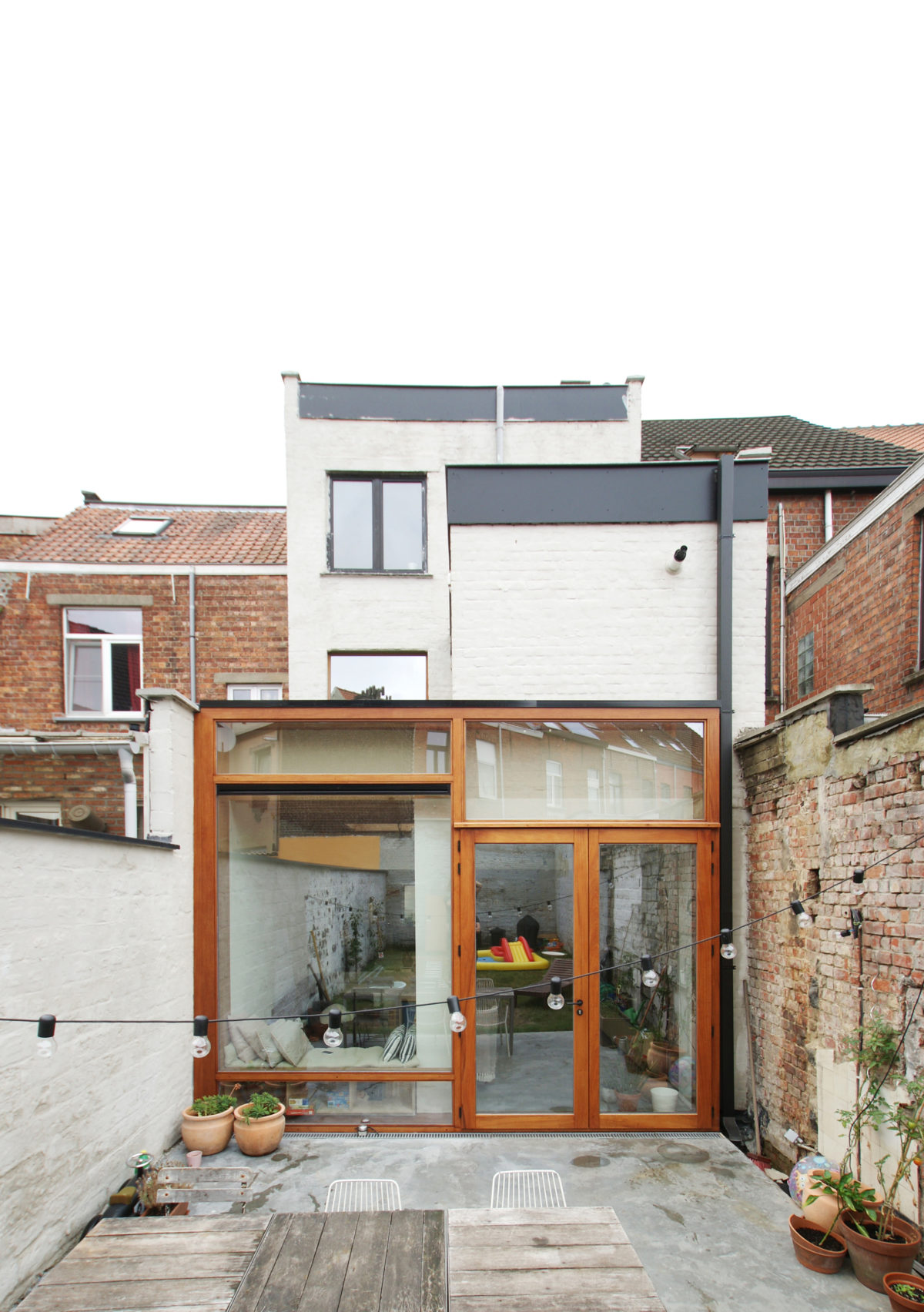
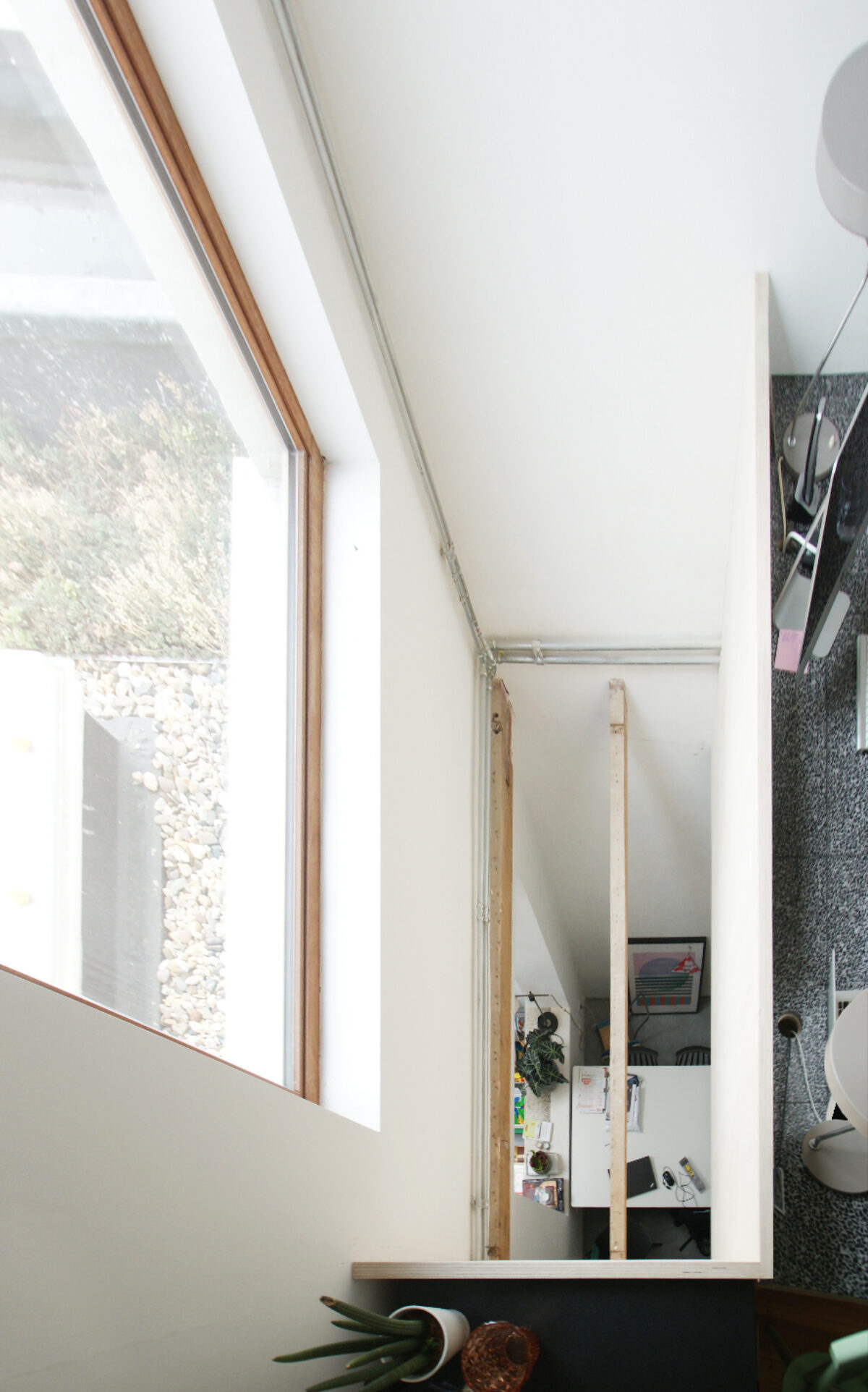
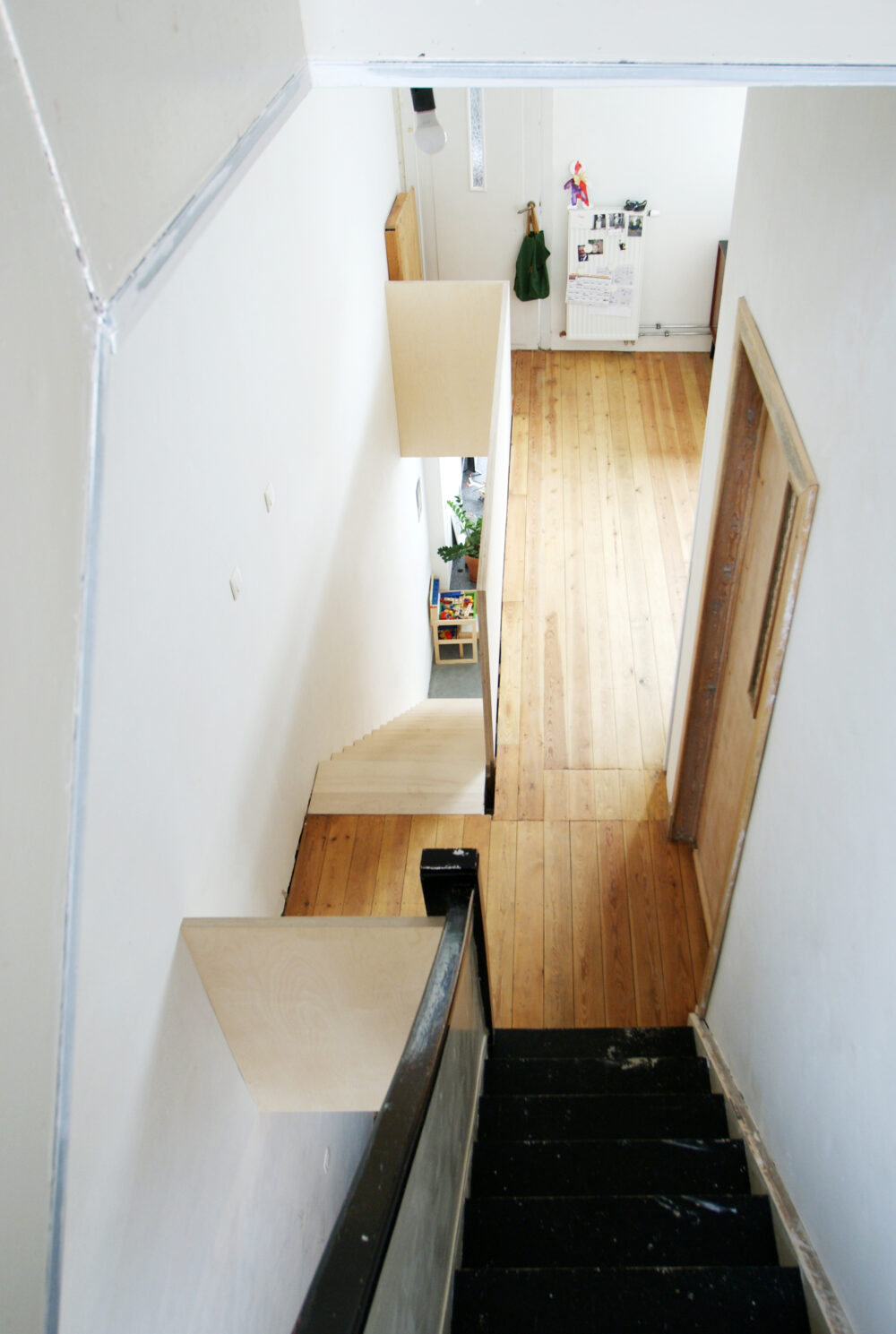
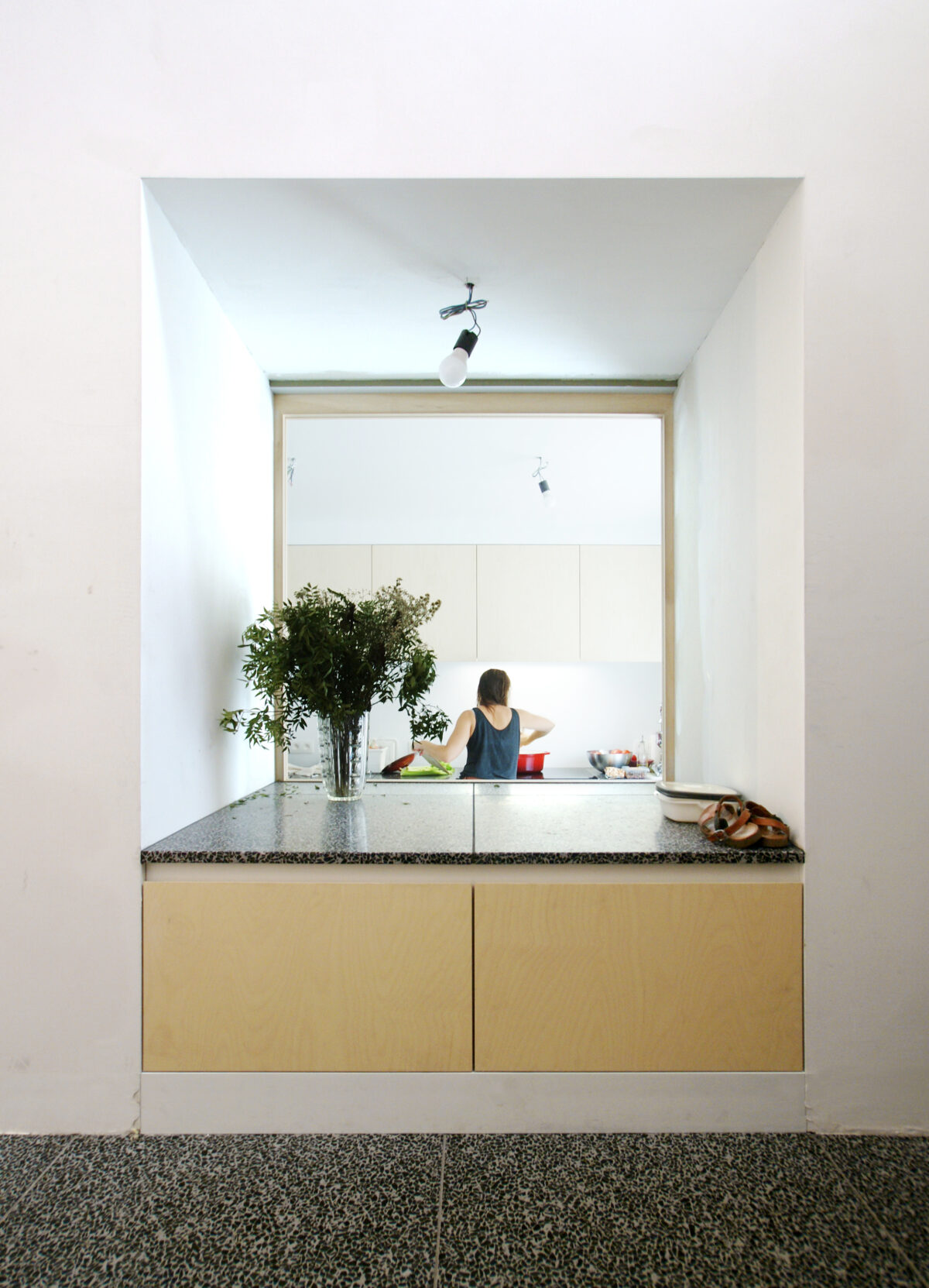
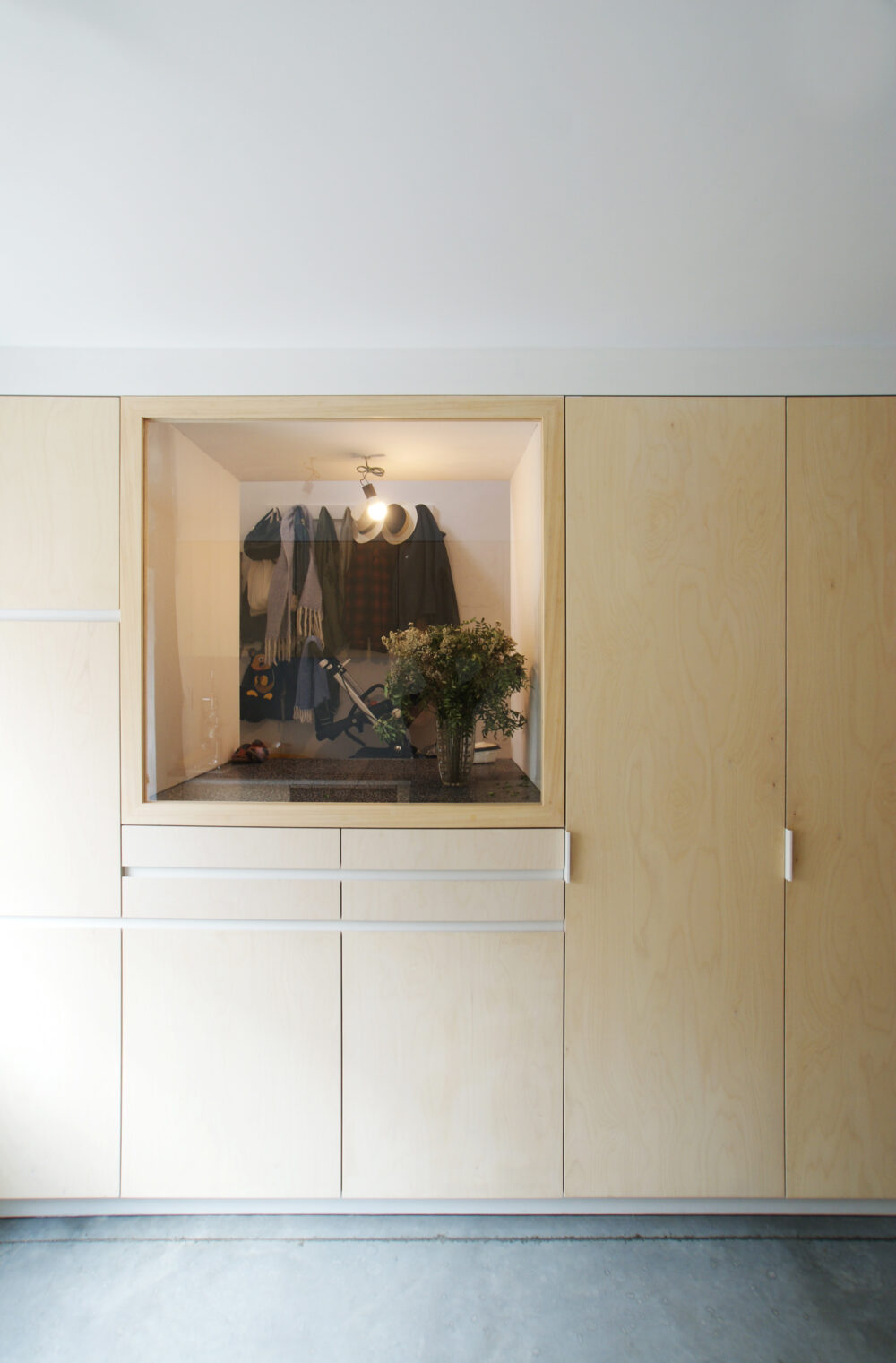
Rearranging begins with picking up something and putting it down a bit further. Removing something undesirable or adding something else. Cutting and pasting till the collage is just right. Or till the décollage is just right. The stairway gets a new spot a bit further down the house. The new entry hall is spacious, with an internal window for waving to folks in the kitchen, for tying shoelaces. The kitchen is located at the street side. Further up in the house: the dining room with new stairway and vide. The parapet of the vide is a desk is a cabinet. The old rear facade ends up inside the house, with a small and a large opening: for looking and walking. Past the facade another facade. The new back facade is a glass bell encompassing everything, whether it’s massive or not. The windowsill is a cabinet is a frame. There’s a richness hiding in complexity, in ambiguity, in the double. The house does no longer stumble over itself. And the bathroom is kept where it was.
Freeing a Historical Row House
Over the years, a historical row house has become clogged up—internally with small rooms and stale materials, and at the rear with one extension after another. The house is now being renovated to meet modern technical building standards and suit contemporary living. The bathroom on the first floor, located in one of the extensions, has recently been renovated and must be preserved. The existing staircase near the front door is also in the way. The project explores how to free up the house again: by removing, moving, or rearranging elements.
A New Extension Under a Floating Bathroom
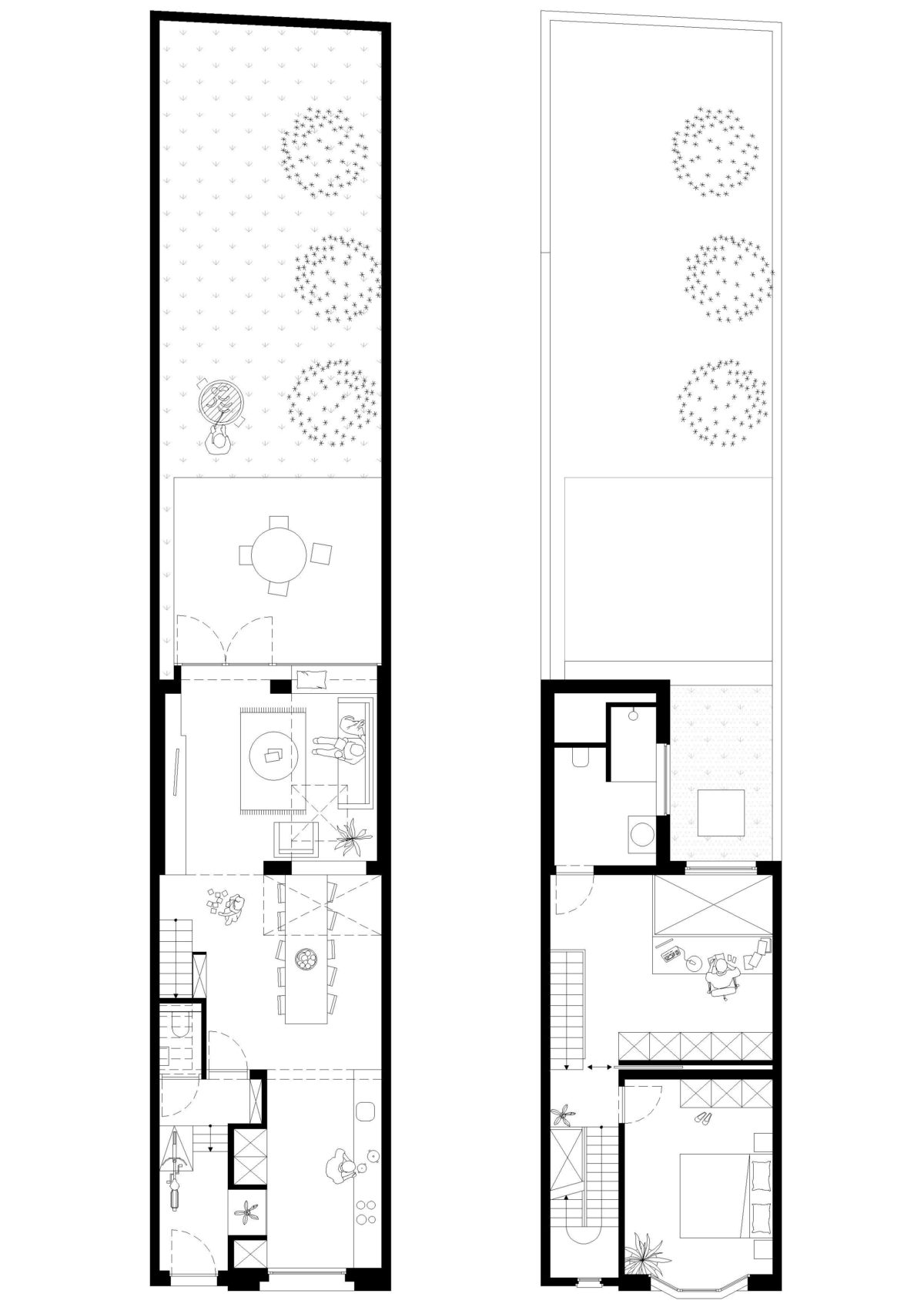
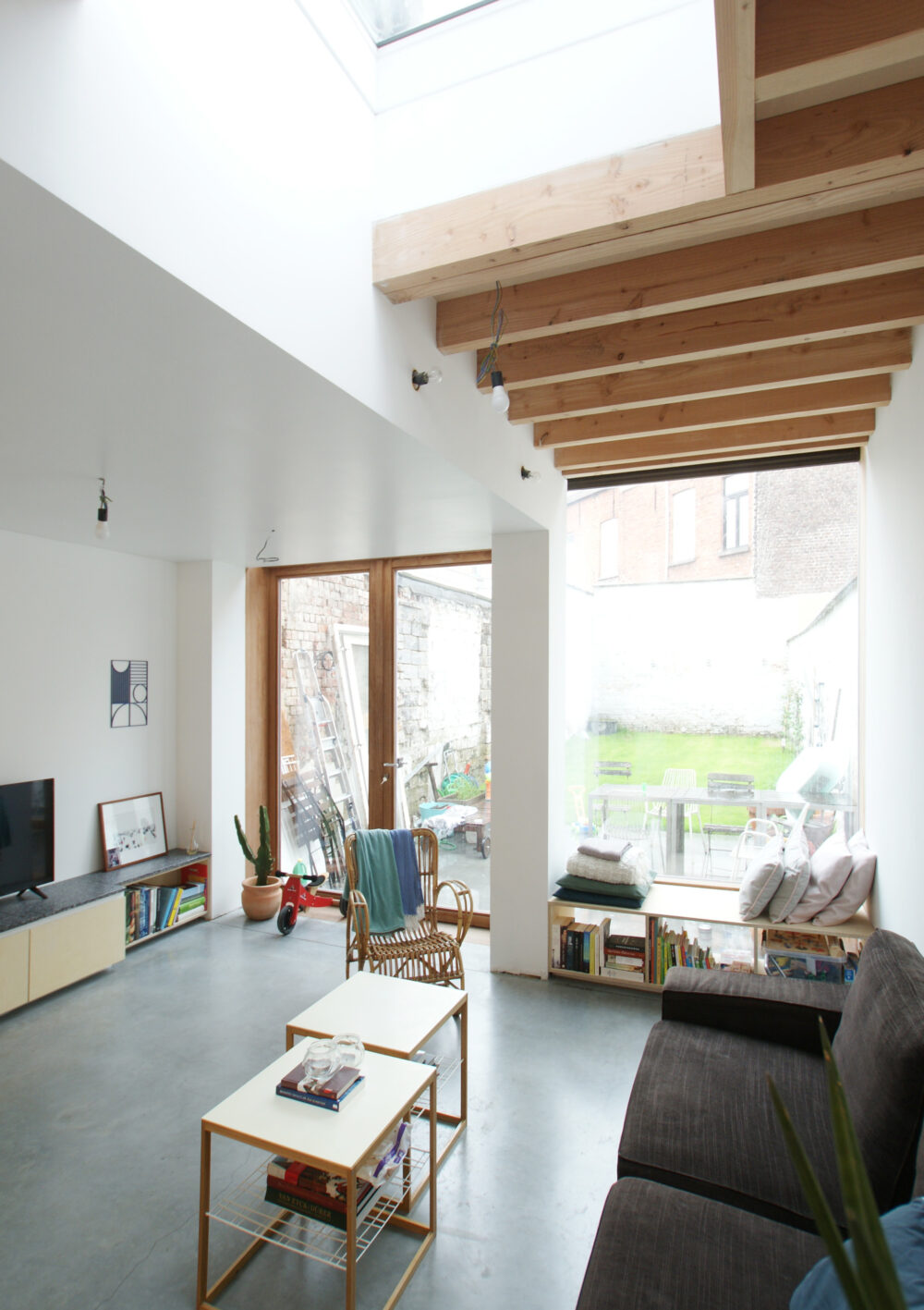
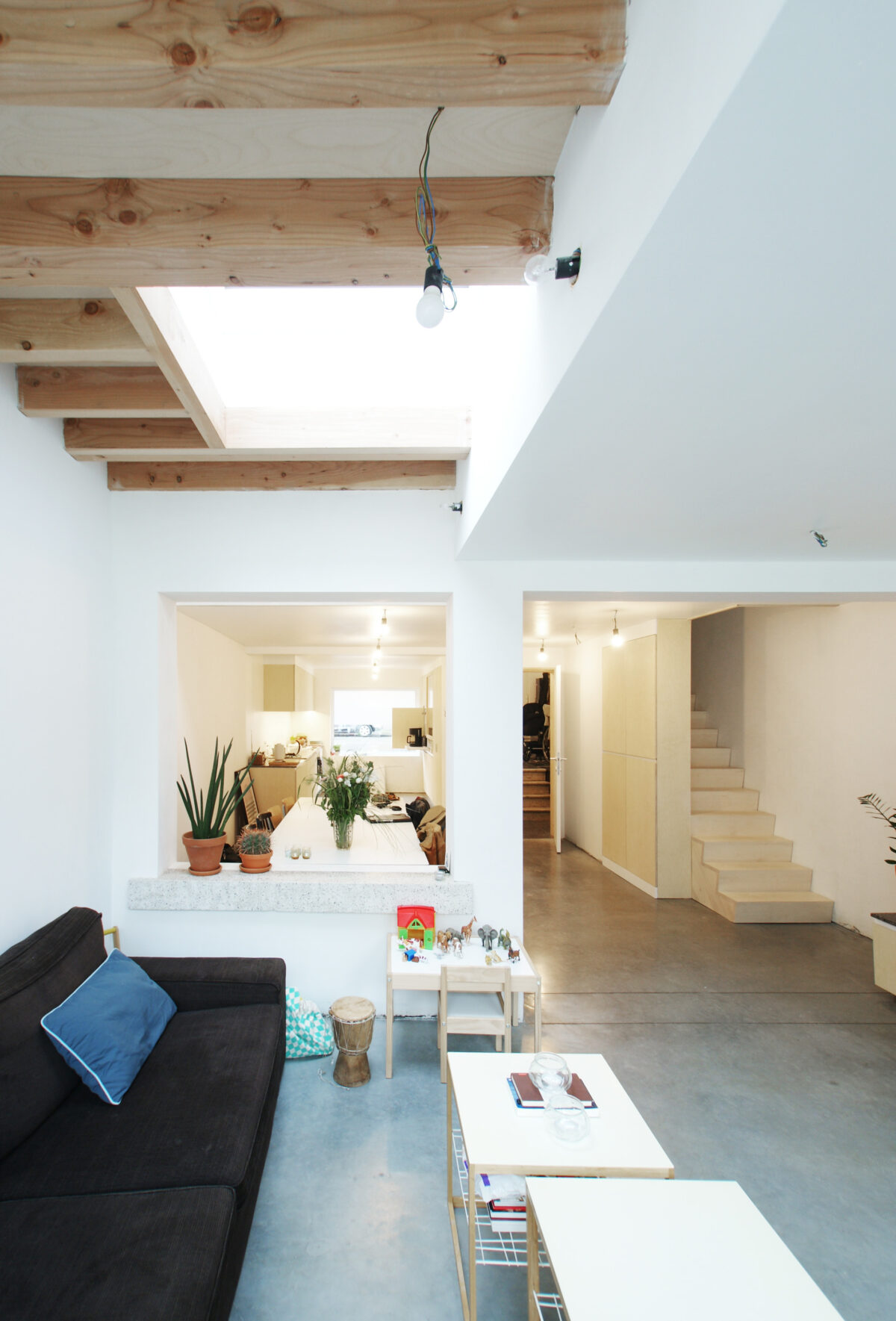
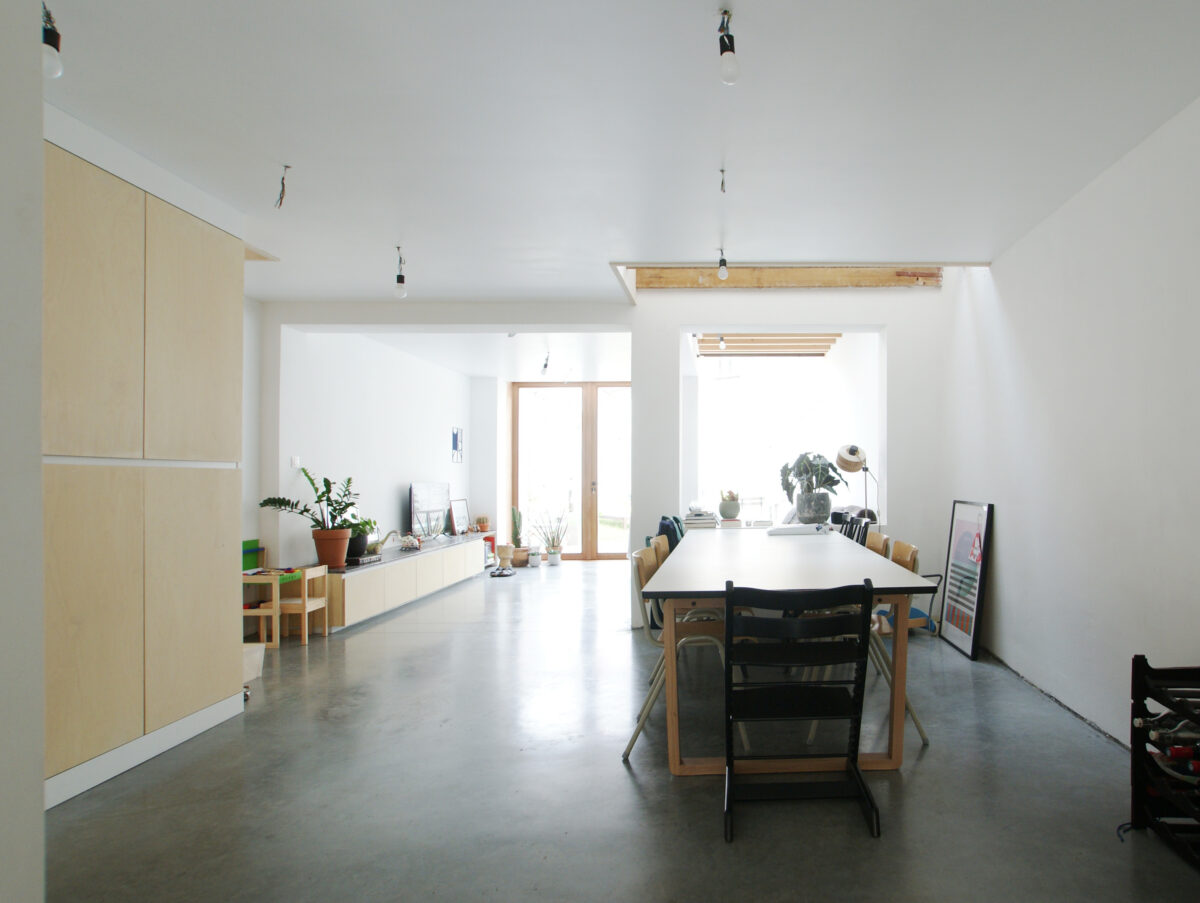
The ceiling height beneath the renovated bathroom is a fixed condition—it cannot be changed. However, the ceiling height directly next to it can be raised as much as possible. All the existing extensions and walls beneath the bathroom are removed and replaced by a full-width, open extension. The eaves height is maximized, and the supporting structure is left exposed. This way, the space appears to continue visually all the way up to the tops of the beams.
Light and Sightlines Everywhere
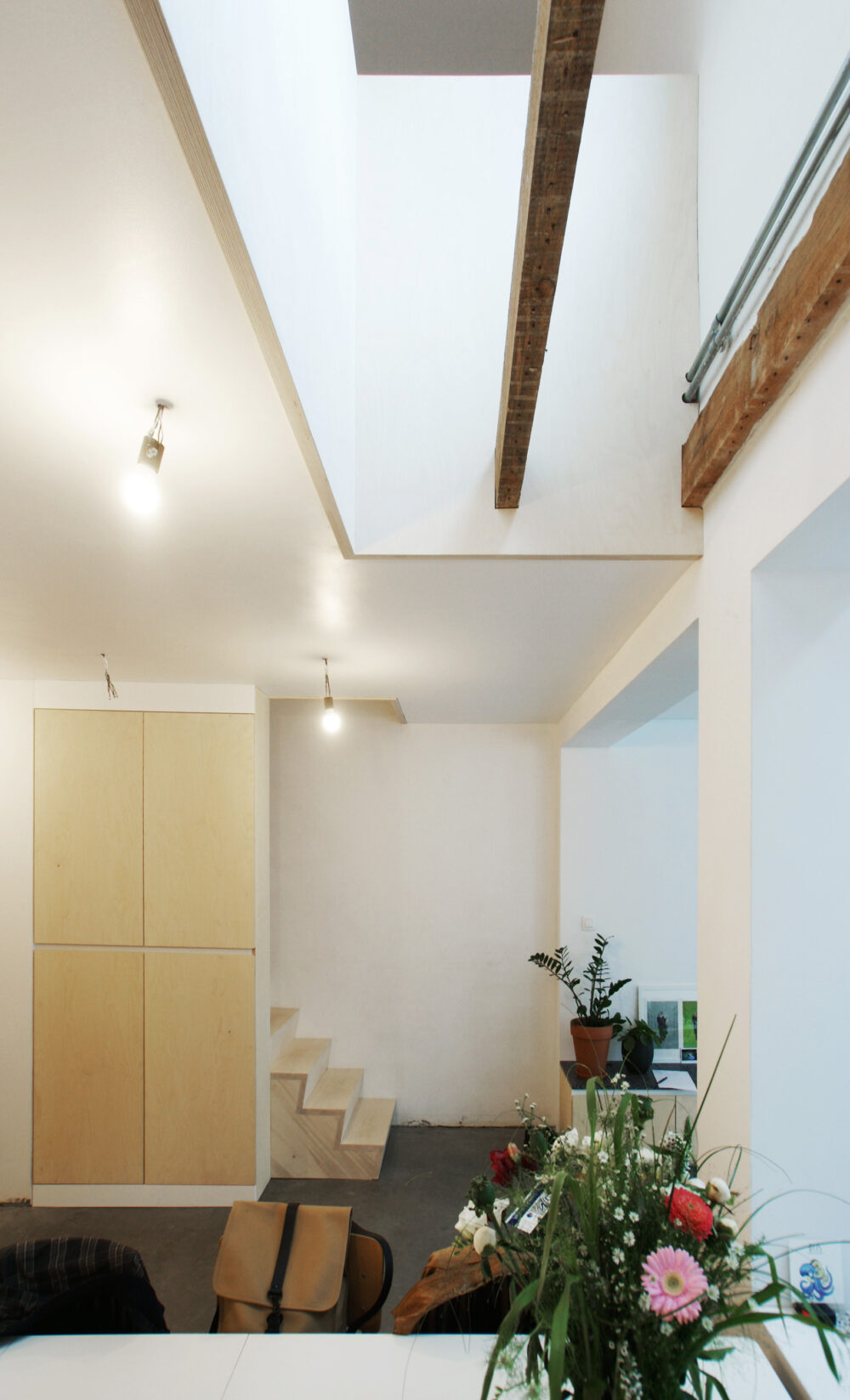
A double-height void is introduced just behind the historic rear wall. Through a higher-level window, daylight can now fall directly onto the dining table.
A New Entrance Hall
The existing staircase is removed to create more space in the entrance hall. A logical circulation path is rethought. The new staircase is centrally placed and gives access from the ground floor to the office space above. The office and ground floor can be separated from the rest of the house using a sliding door.
Custom-Made Furniture
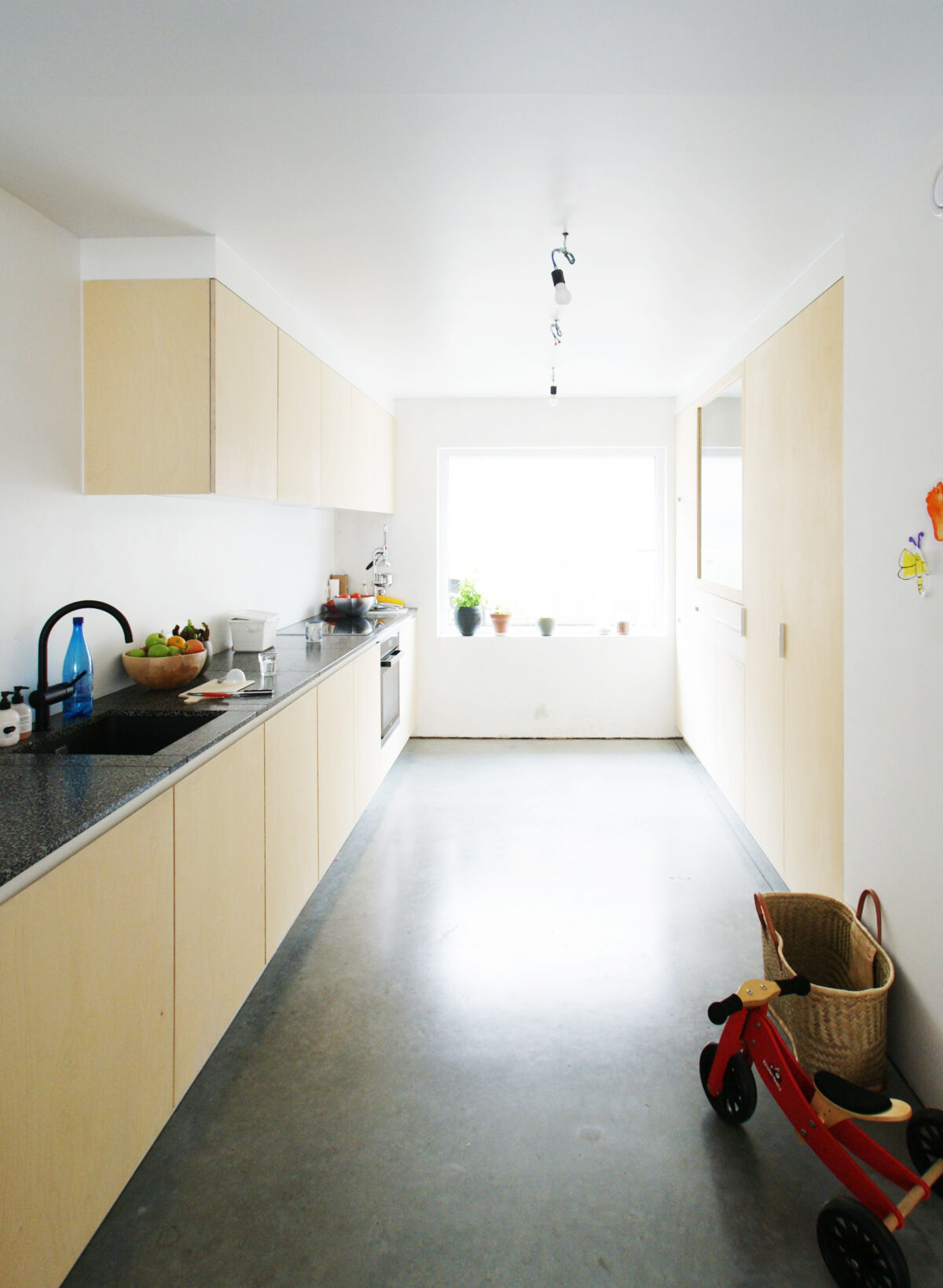
From the kitchen, you can see the entrance through the window. On the kitchen side, drawers and tall cabinets are built around the window. Custom-built furniture is used throughout the house to provide ample storage in a compact footprint.
Affordable Detailing
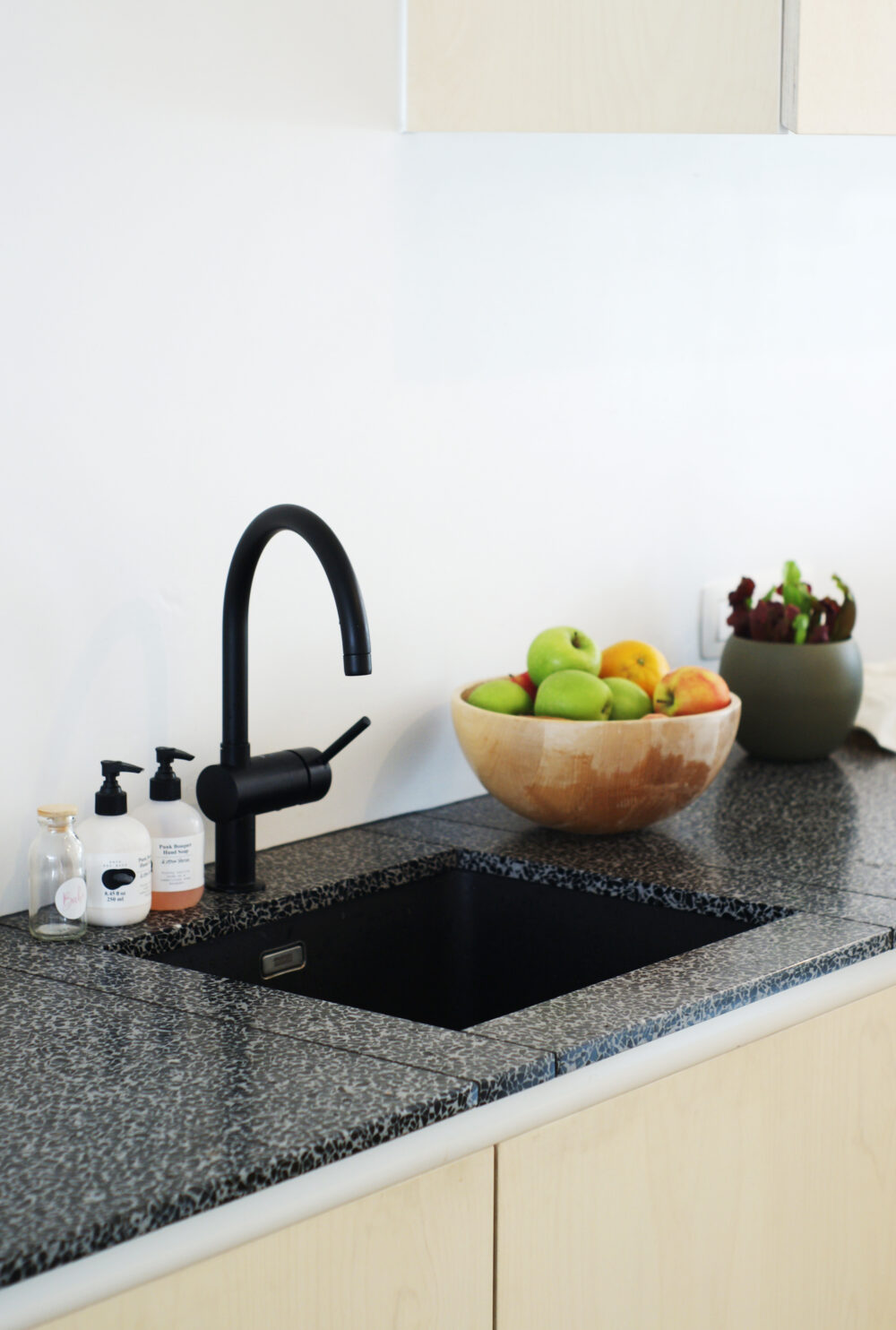
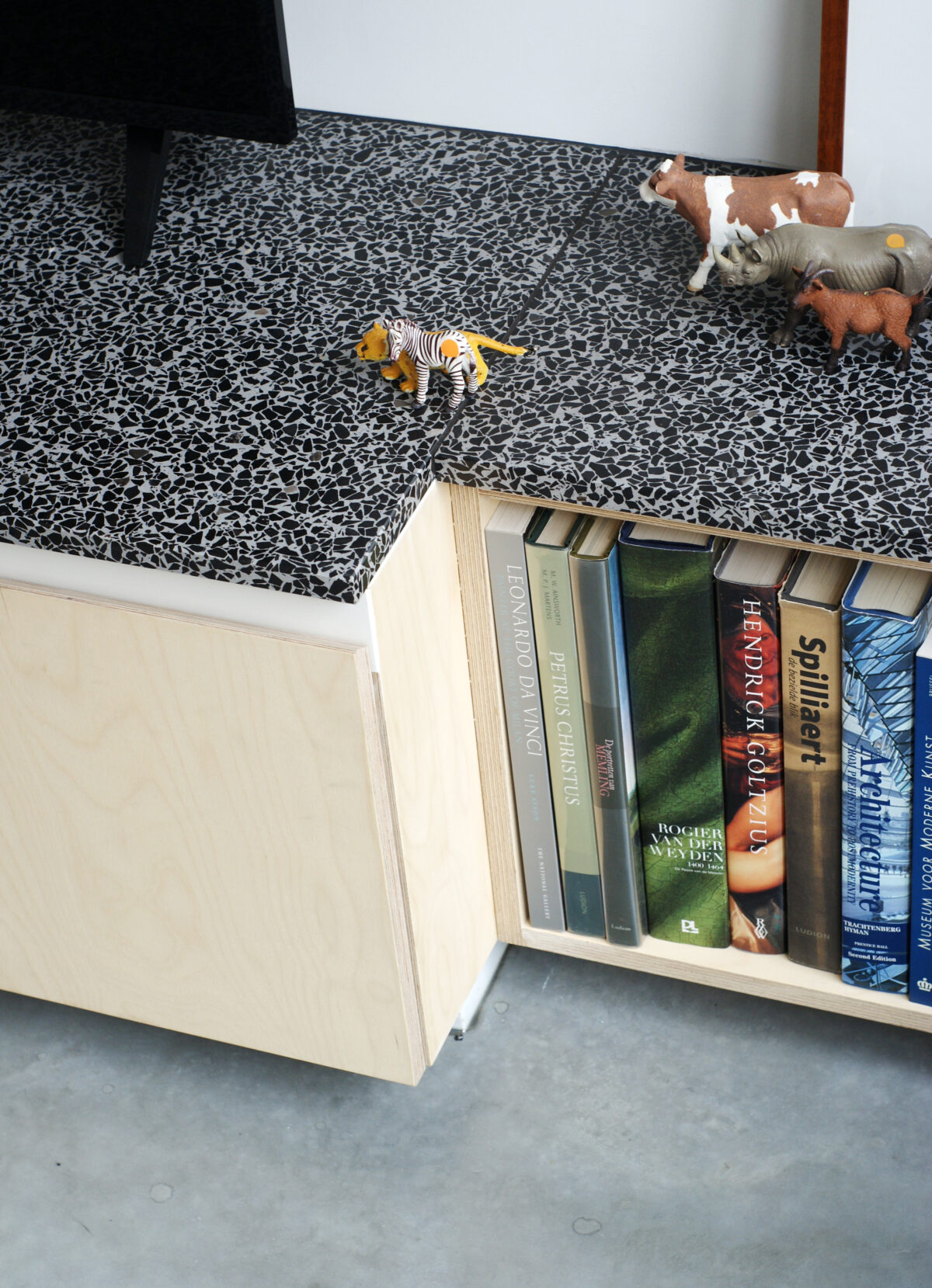
All furniture is made from a consistent palette of materials, with affordability in mind. A solid granite worktop was too expensive—so we used granite tiles with black grout lines instead. The cabinet fronts are made of birch plywood.
Cellar Hatch
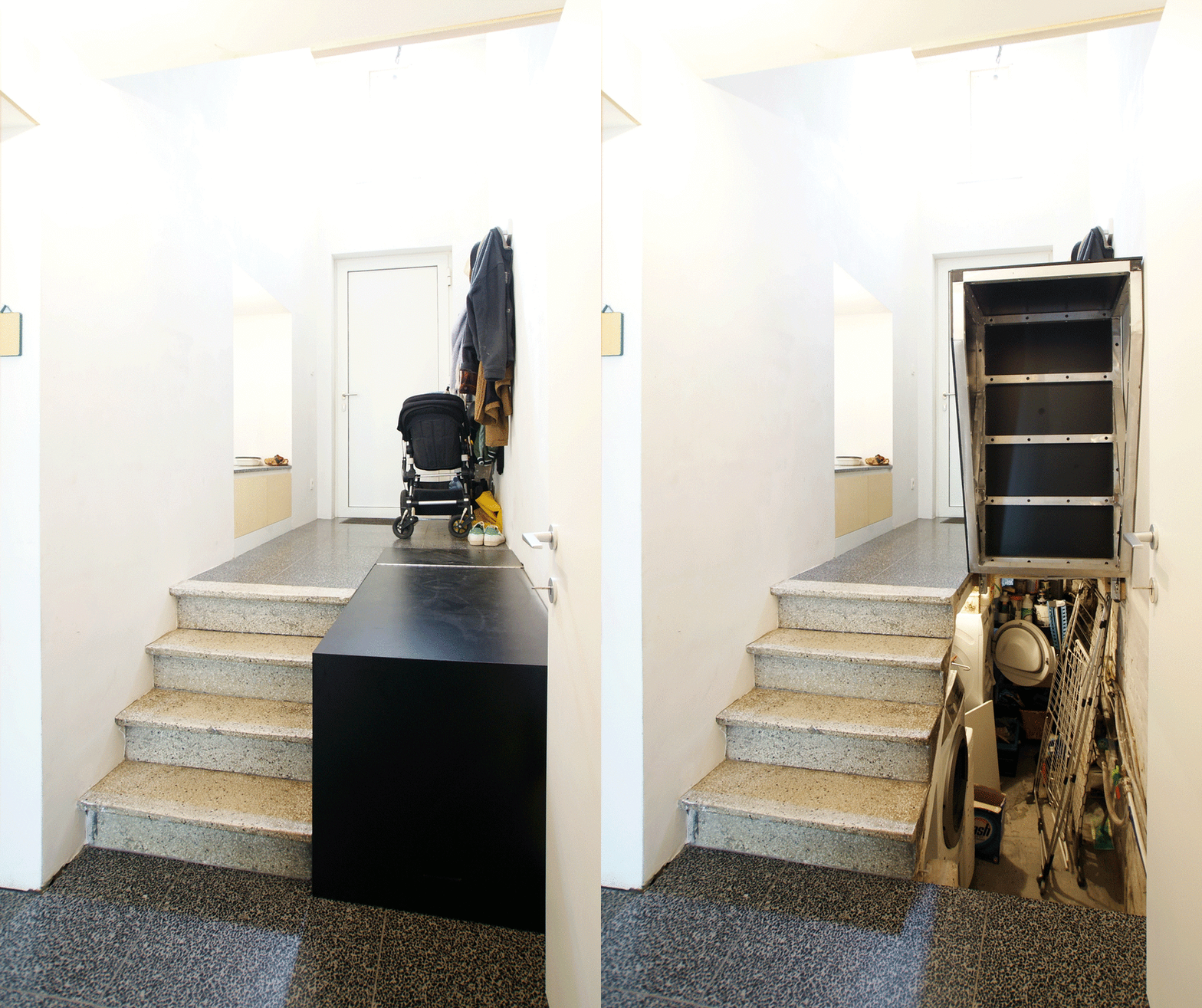
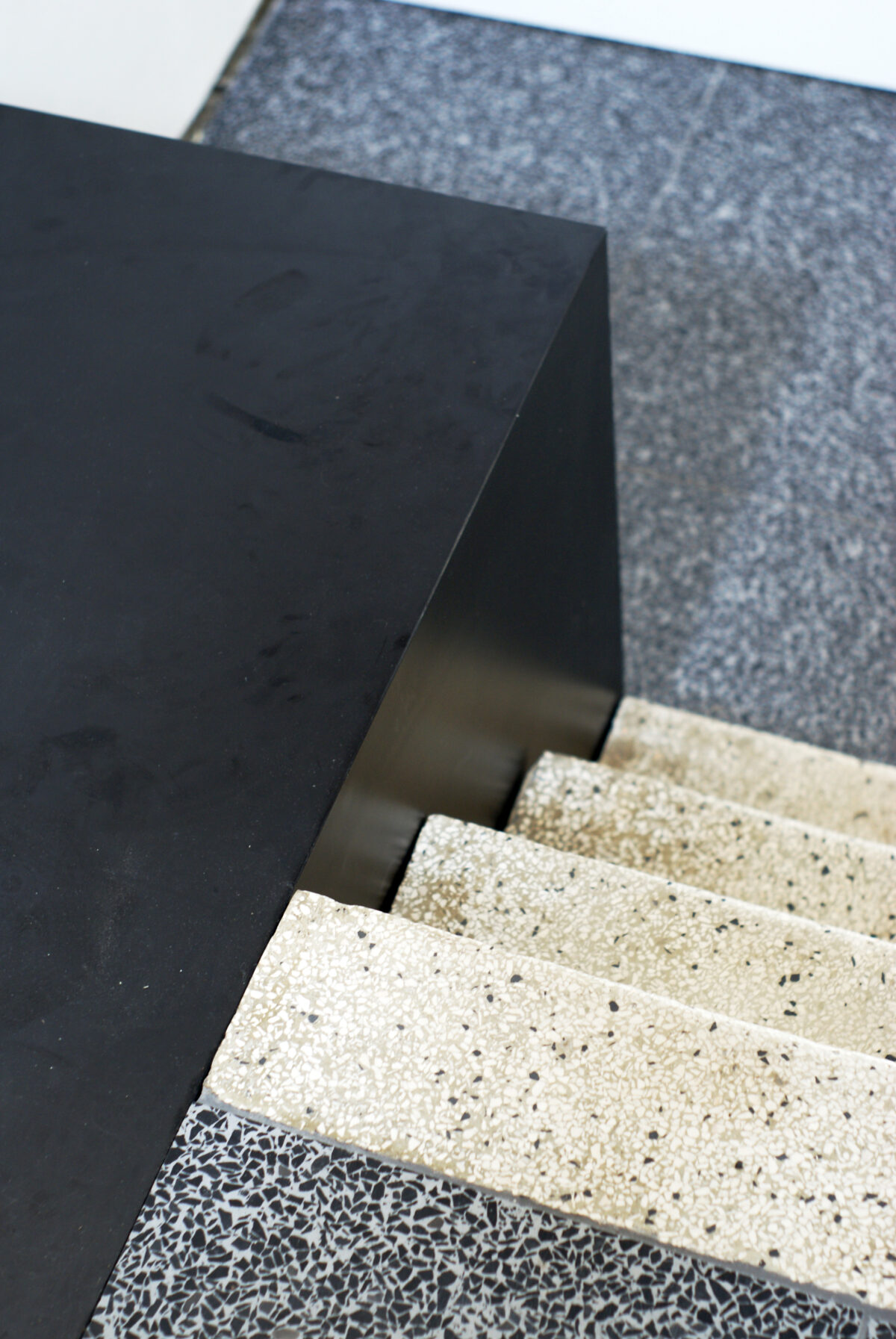
Where the staircase used to be, a hatch to the cellar is installed. When closed, it becomes a black stage. When open, it’s like the lid of a trunk you step into.