Technical sheet
Read moreRead less- location
- Antwerp
- date
- 2016-2023
- design
- On the instructions of: Origin architecture & engineering
- client
- Regie Der Gebouwen
- budget
- 250.000,00€
- studiepartners
- RCR (techniques), FPC (fire safety), NEY (stability)
- executors
- Artes Woudenberg
- Status
- in execution
- Photos
- Cynthia Scheire
Hall of Assize Court Old Courthouse Antwerp
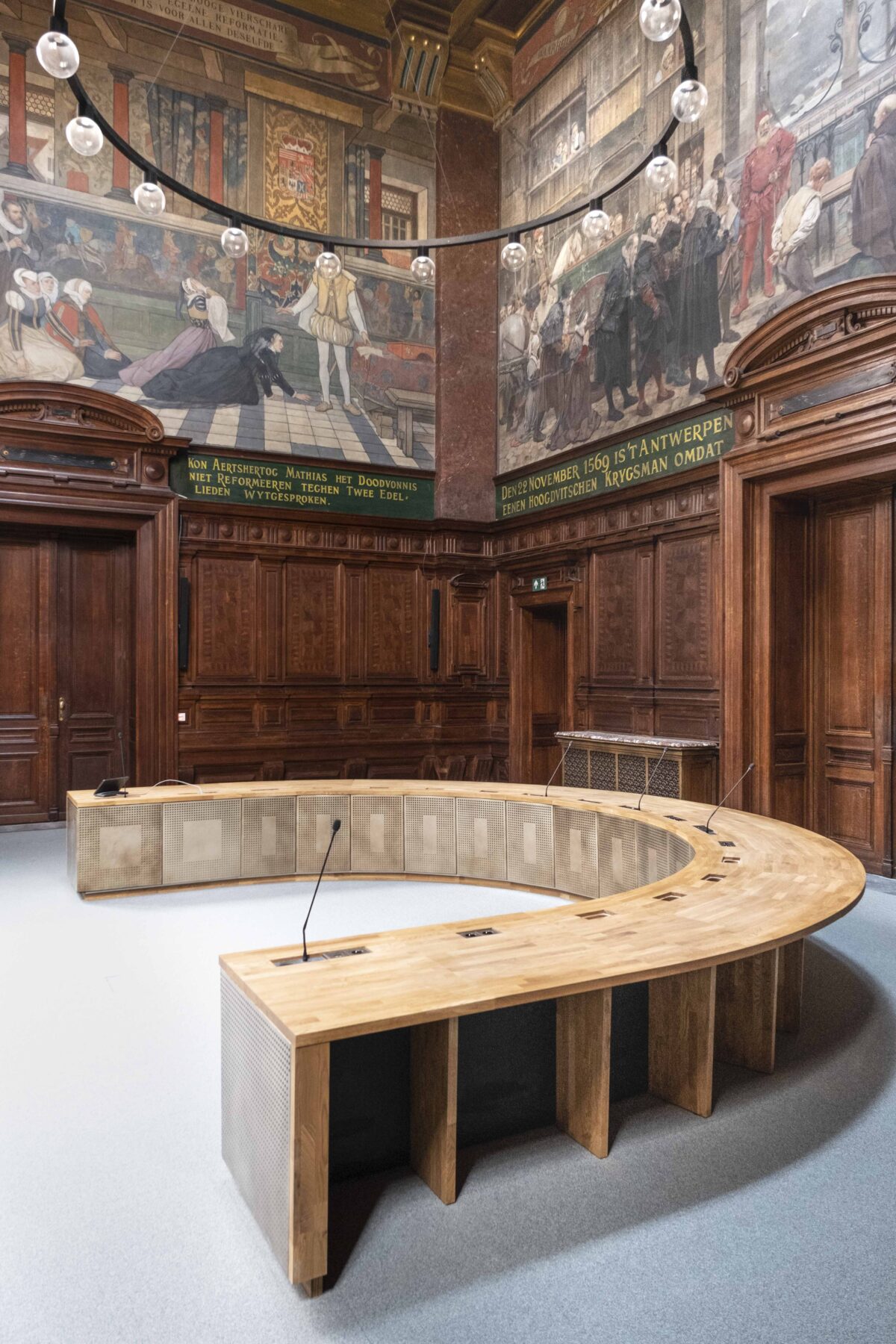
Reconversion of the Hall of Assize Court in the Old Courthouse in Antwerp, where new ceremonial tribunes make up a precise addition in the highly decorative, historical hall.
The hall for the Assize Court in the old Courthouse in Antwerp is highly decorated, theatrical and ceremonial. It’s the physical residue of the hierarchy within the Belgian judicial system around the nineteenth century. The entire Courthouse is built up around two separate systems of human circulation: corridors and parts of the halls for the public and raised corridors and raised parts of the halls for the members of the law.
Through different doors at different heights, different people enter and go and sit in different spots. The events taking place there develop themselves for a big part from the meaning of the specific seating spots. The role of a person is identified with his or her piece of furniture: the bench of the accused, the tribune of the jury, the table of the judges, the benches of the press, the benches for the audience. Fixed furniture up on raised platforms for those who decide and moveable furniture on the floor for everybody else, including the accused. Very serious furniture in a very serious building.
Then one ceremony replaces the other: a Assize Court becomes the exception. Now intern-lawyers will take the oath in that big hall, with the occasional lecture. A new system of those who speak and those who watch. The furniture needs to be adjusted and supplemented. The tribune of the jury is preserved and acts as a clone stamp for more ceremonial tribunes. More people. More tech. Less resonance. Nobleness, sustainability and the equality of status are important. The system of the raised platform with the fixed furniture and the lowered levels with moveable furniture still applies. All members sitting on the raised levels should feel equal to each other, whether one is sitting on a piece of furniture over a hundred years old or a new one.
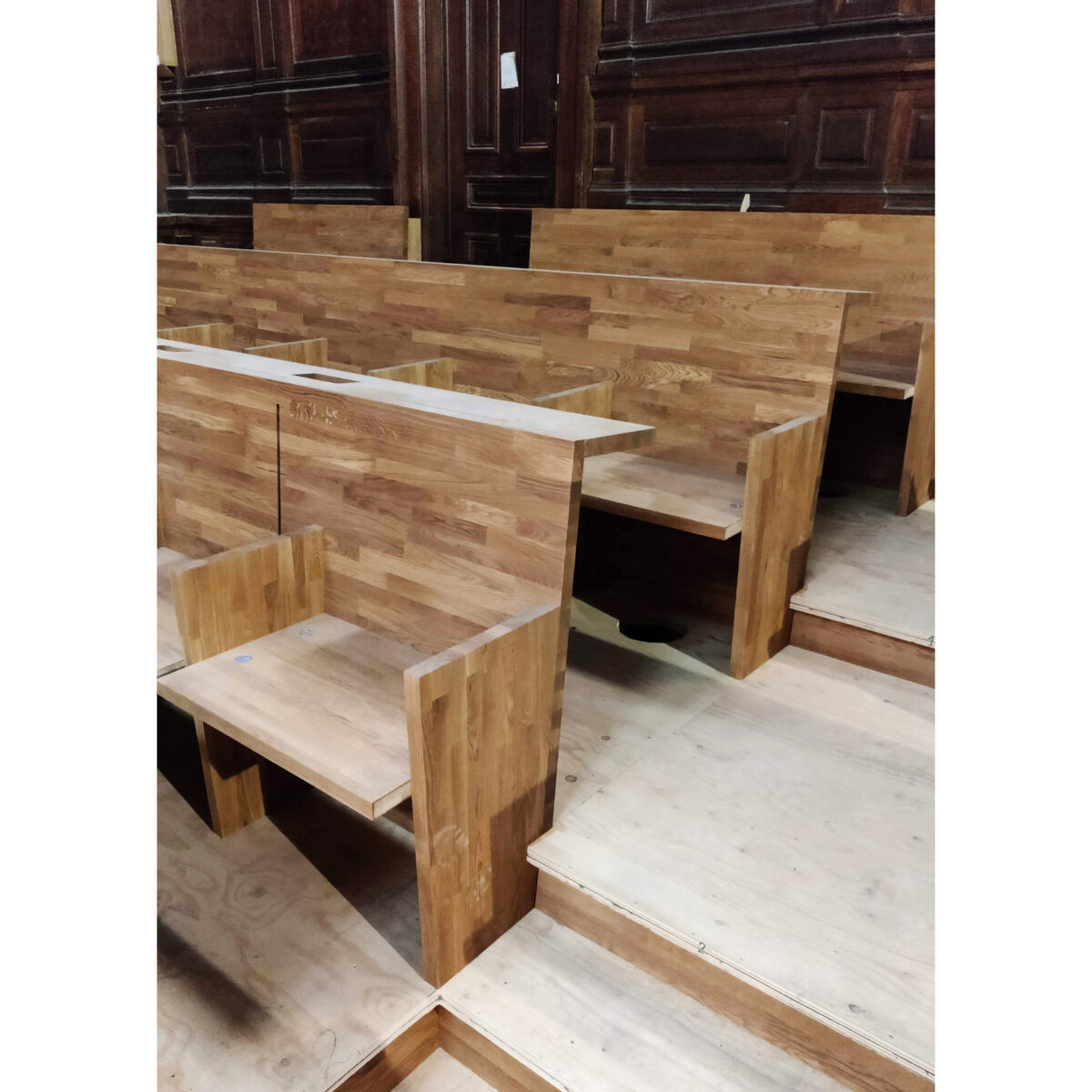
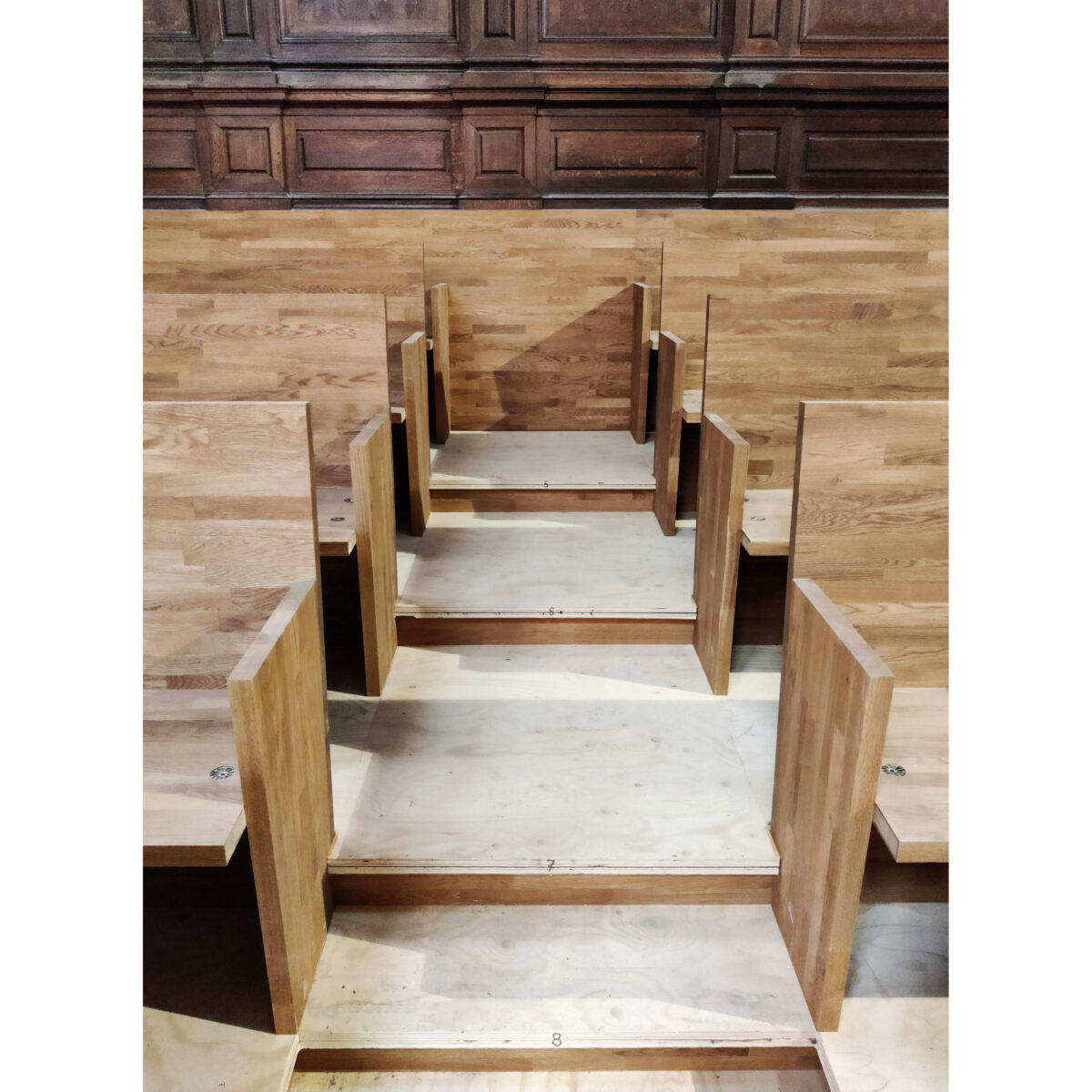
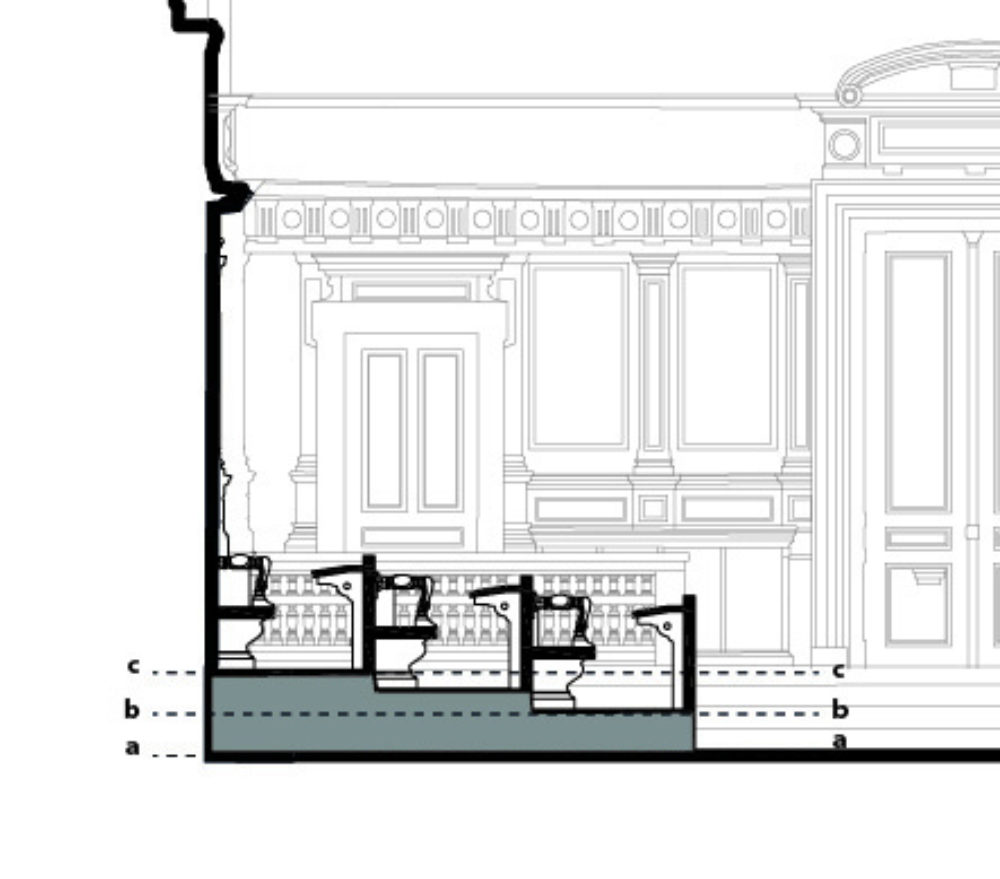
The existing tribune of the jury is being deciphered in all its components and specifics. Looking and understanding. And after that manipulating. All levels of the tribunes are tuned and locked to each other. Coherent groups of people get coherent groups of furniture. Everything is aligned, symmetrical, just like the hall itself. The backrest is continuous, but the seats are intersected by the armrests. A hierarchy in the supporting structure, identifying the separate seats. Because on the raised levels there are no benches.
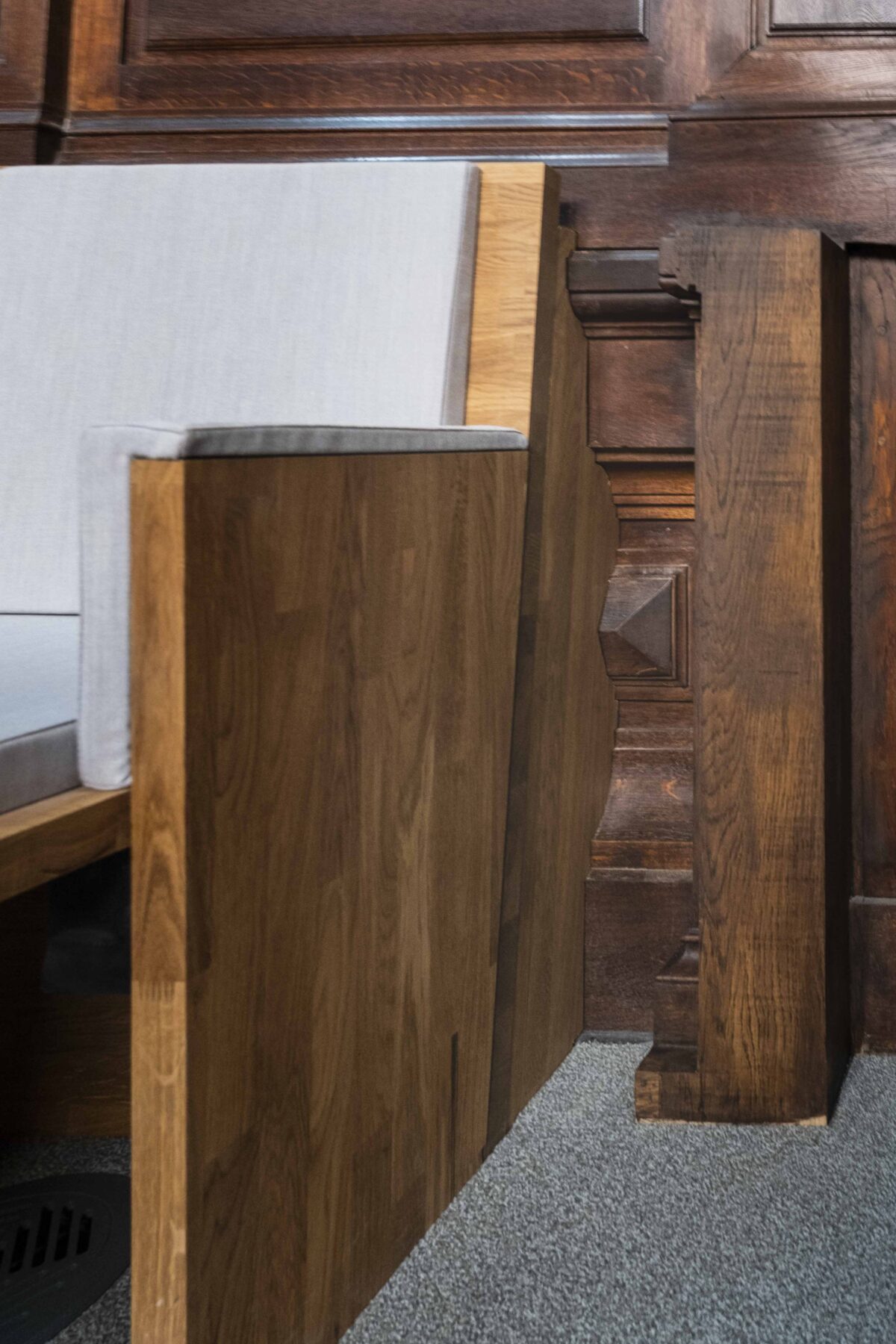
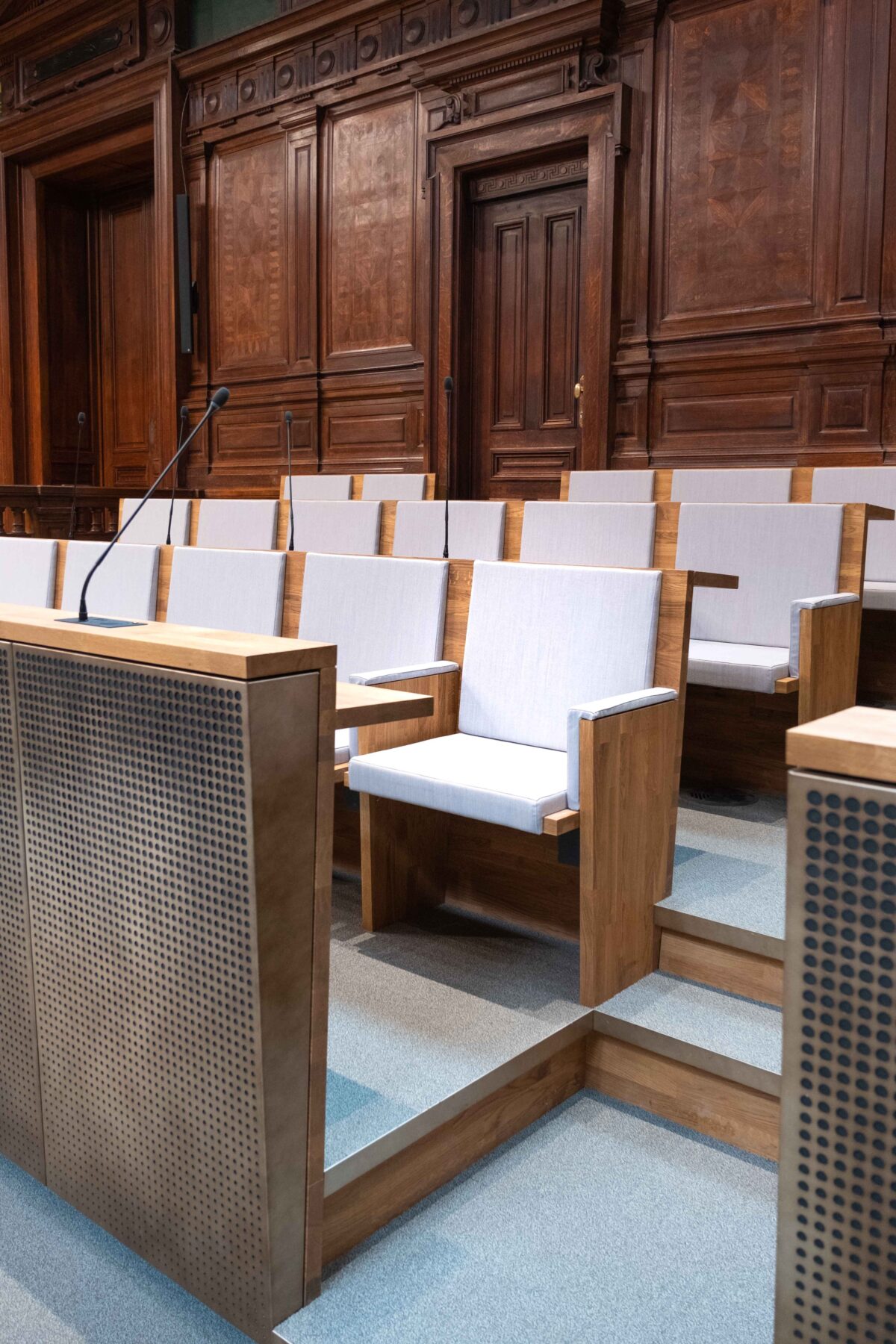
Oak again, much like everything else in the room, but contemporary this time, as a laminated solid panel. The decoration is in the fabrication of the panel itself and is not added later on. An asymmetrical upholstery, which crawls up the armrest at only one side. A new flooring in the whole room, expanding even over the tribunes. Wrapped around: a perforated steel panel. The holes get bigger where they are needed the most for acoustics or ventilation. Now and then the holes disappear to indicate a specific seating spot. One for each tribune, for the one that gets to speak and will lead the ceremony.
Concept & design
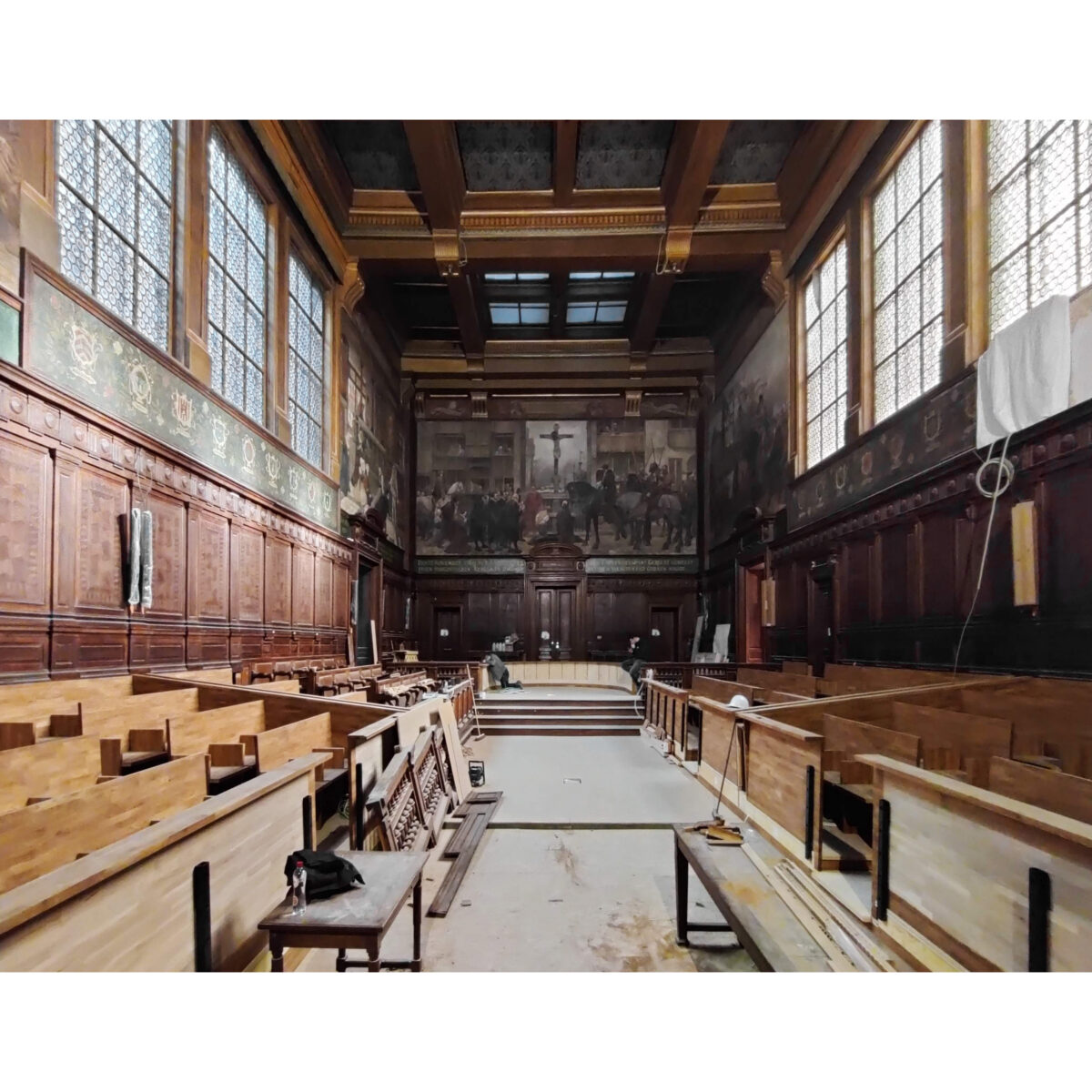
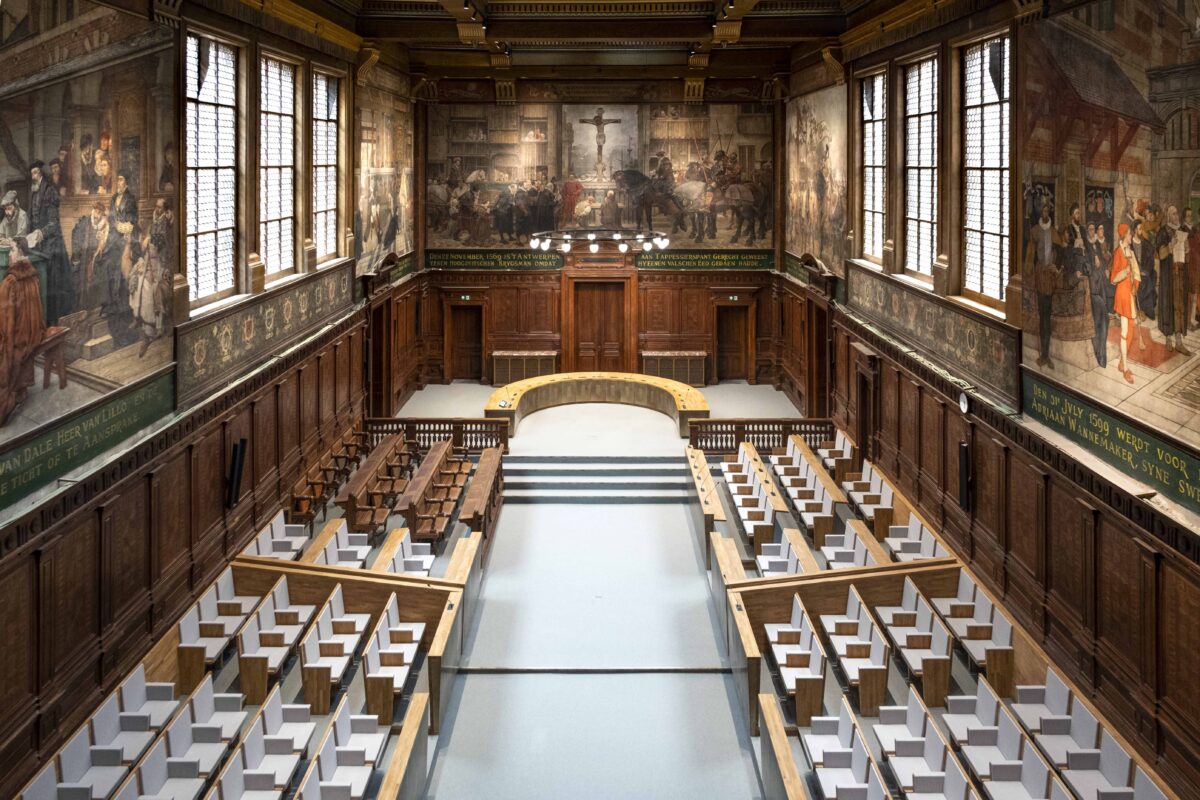
The Assize Hall is a highly ornate room in the old Courthouse of Antwerp, featuring marouflages (murals on canvas), richly decorated oak panelling, and a layout of seating, balustrades, and level differences, all carefully orchestrated to support the formal procedure of an assize trial. (Photo from before restoration by Georges De Kinder)
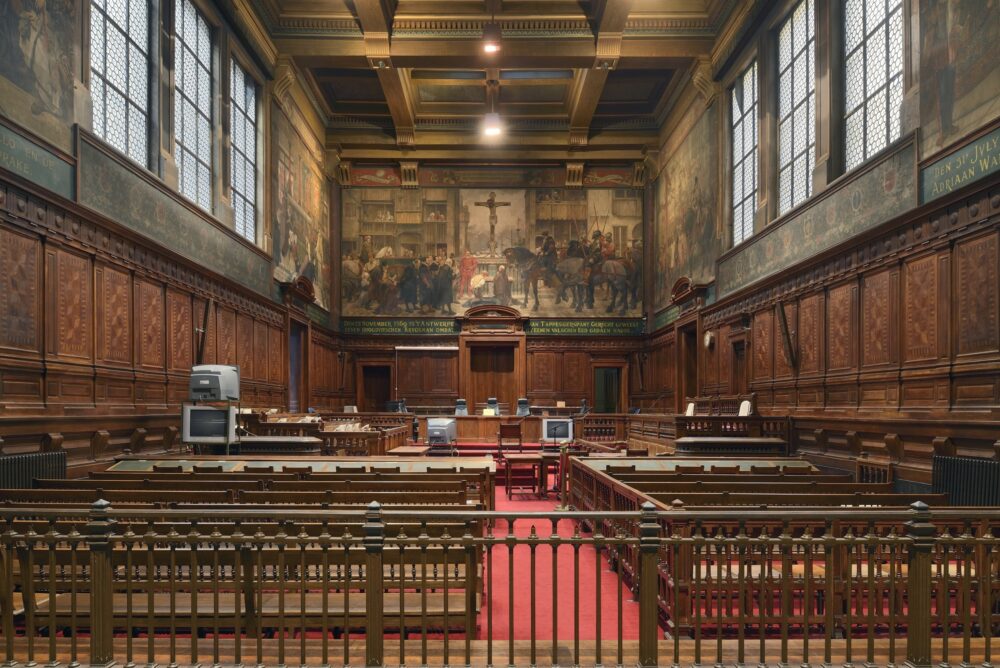
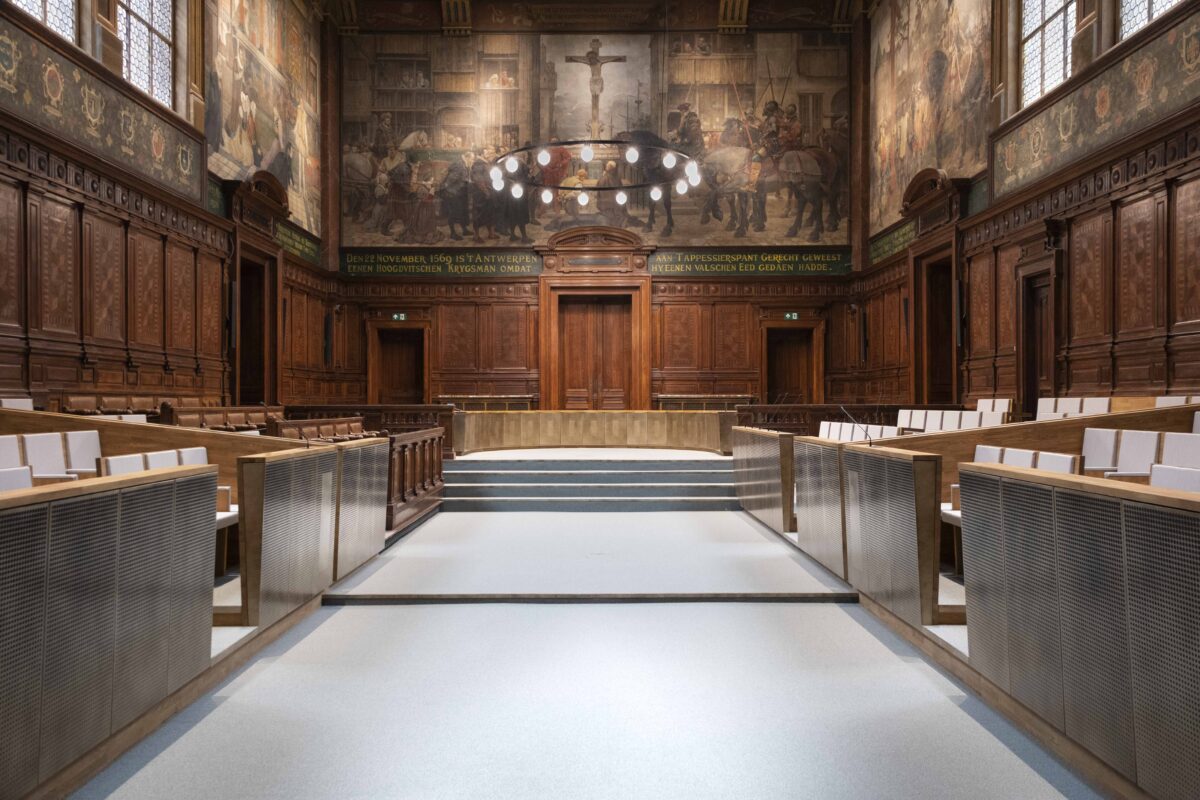
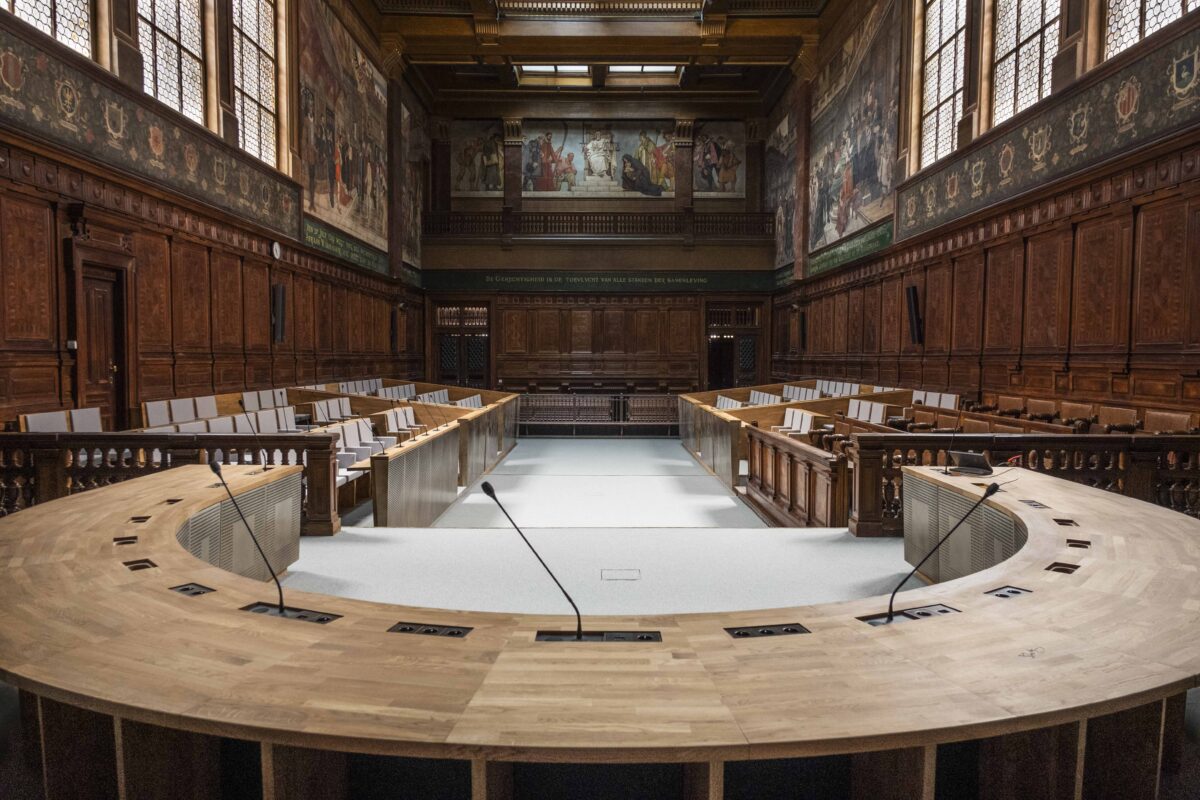
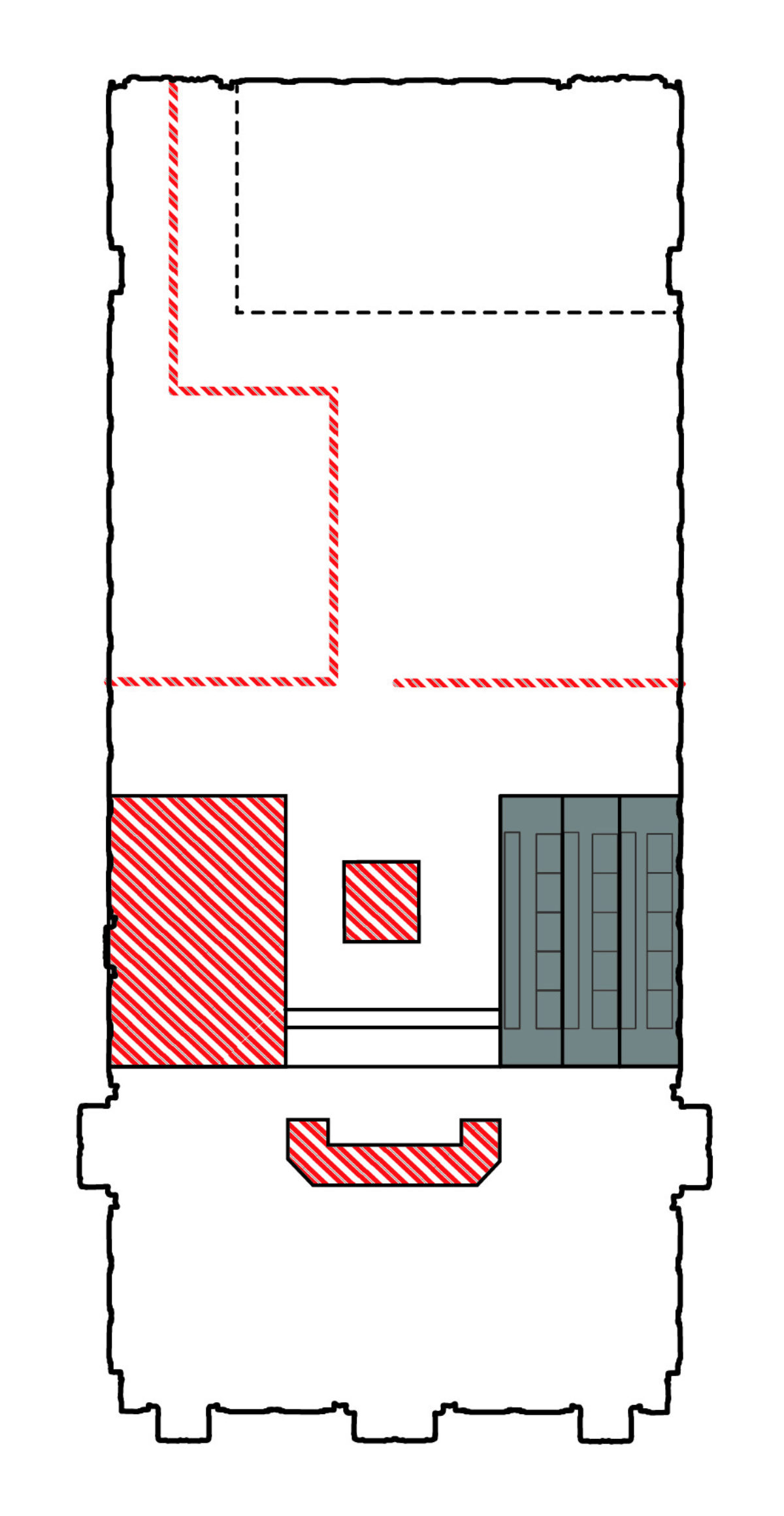
In consultation with the Flemish heritage agency Onroerend Erfgoed, partitions and furniture that obstructed the new use of the space were disassembled. All new additions had to be entirely reversible; meaning they could later be removed without leaving a permanent trace on the historical panelling.
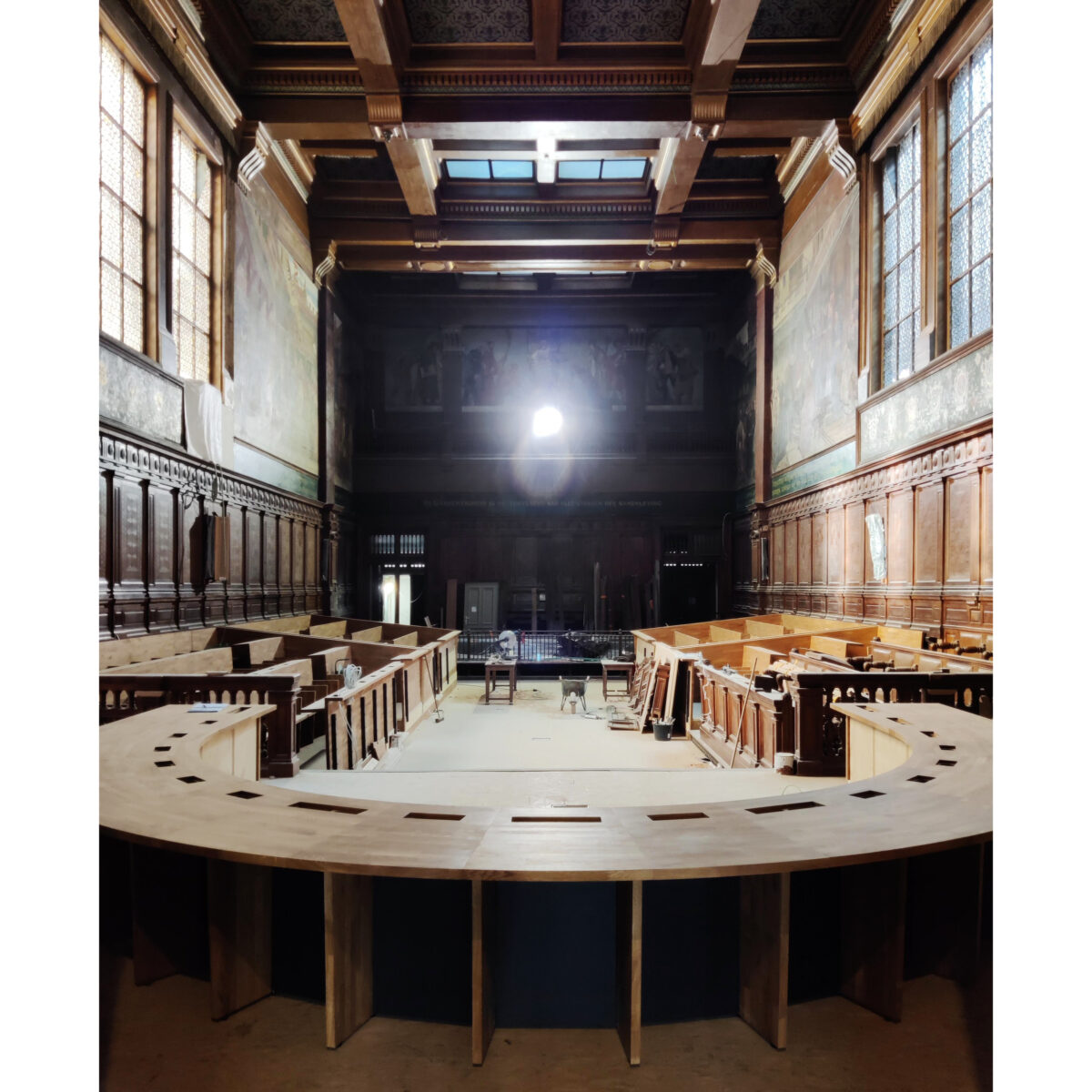
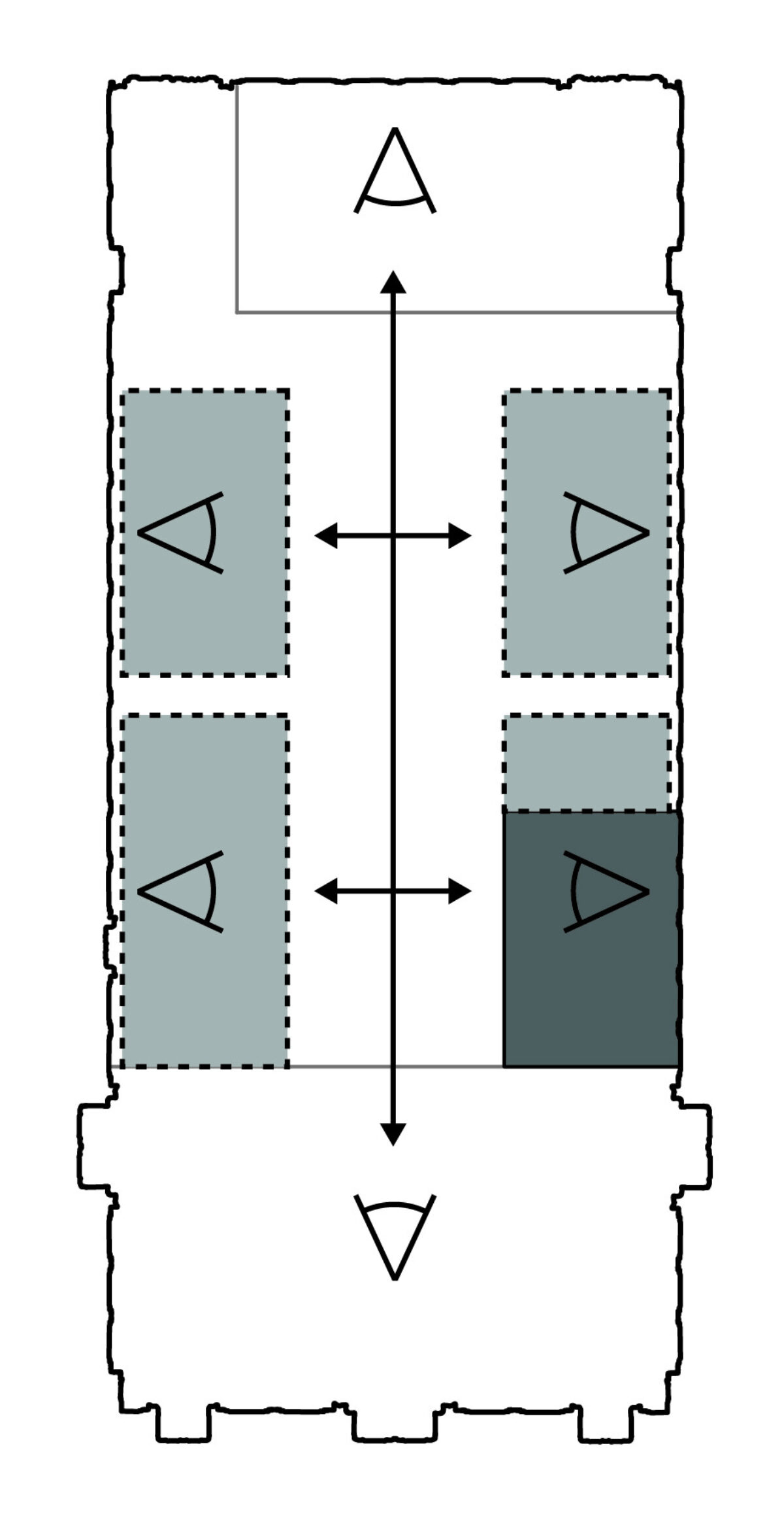
A ceremony is about looking at one another. The masters don’t just observe the candidates, they observe each other. Along the longitudinal axis, a visual connection is created between the master of ceremonies, the candidates, and the additional audience seated in the rear. These sightlines are deliberately symmetrical, just as they always were in the hall. The same, yet different.
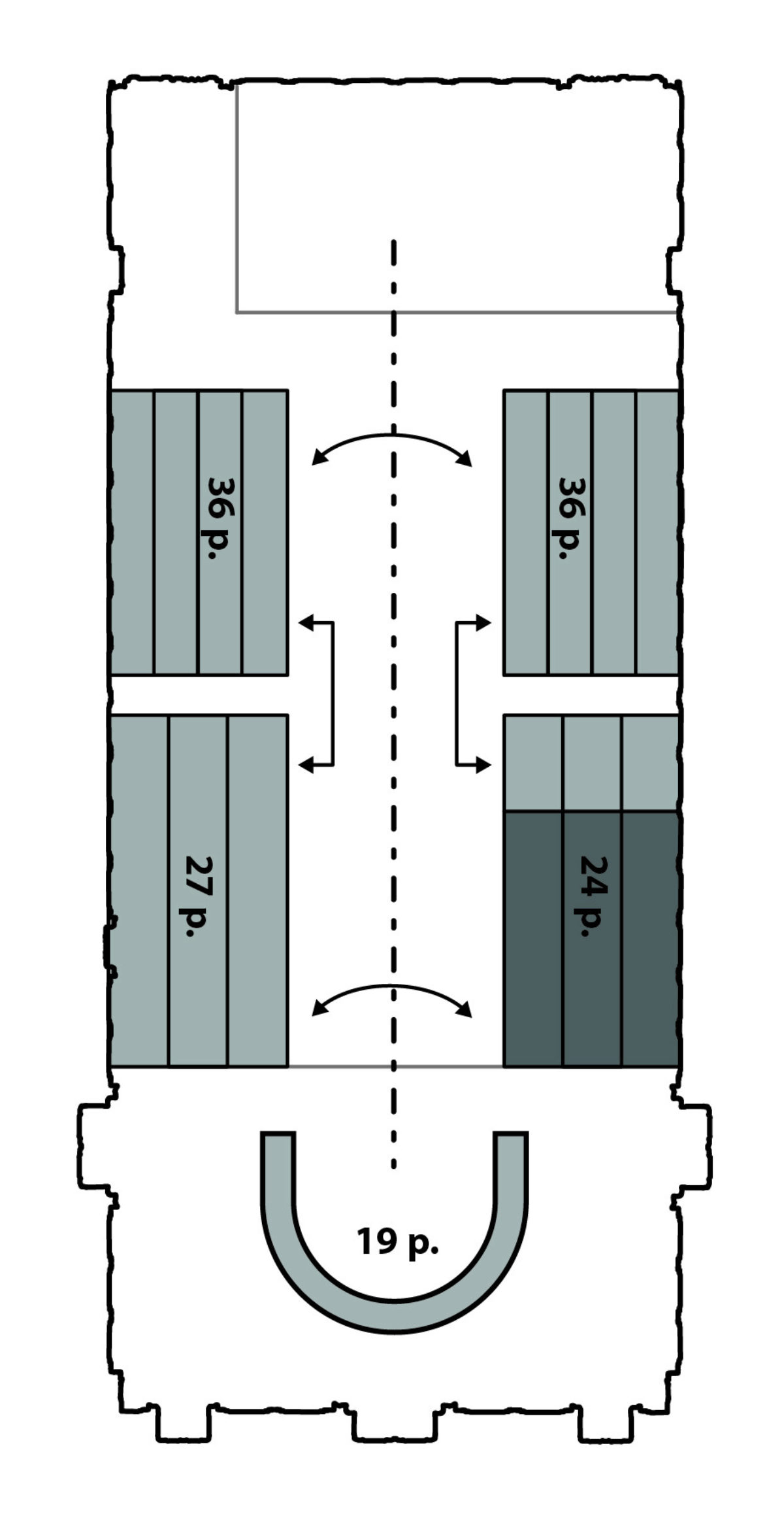
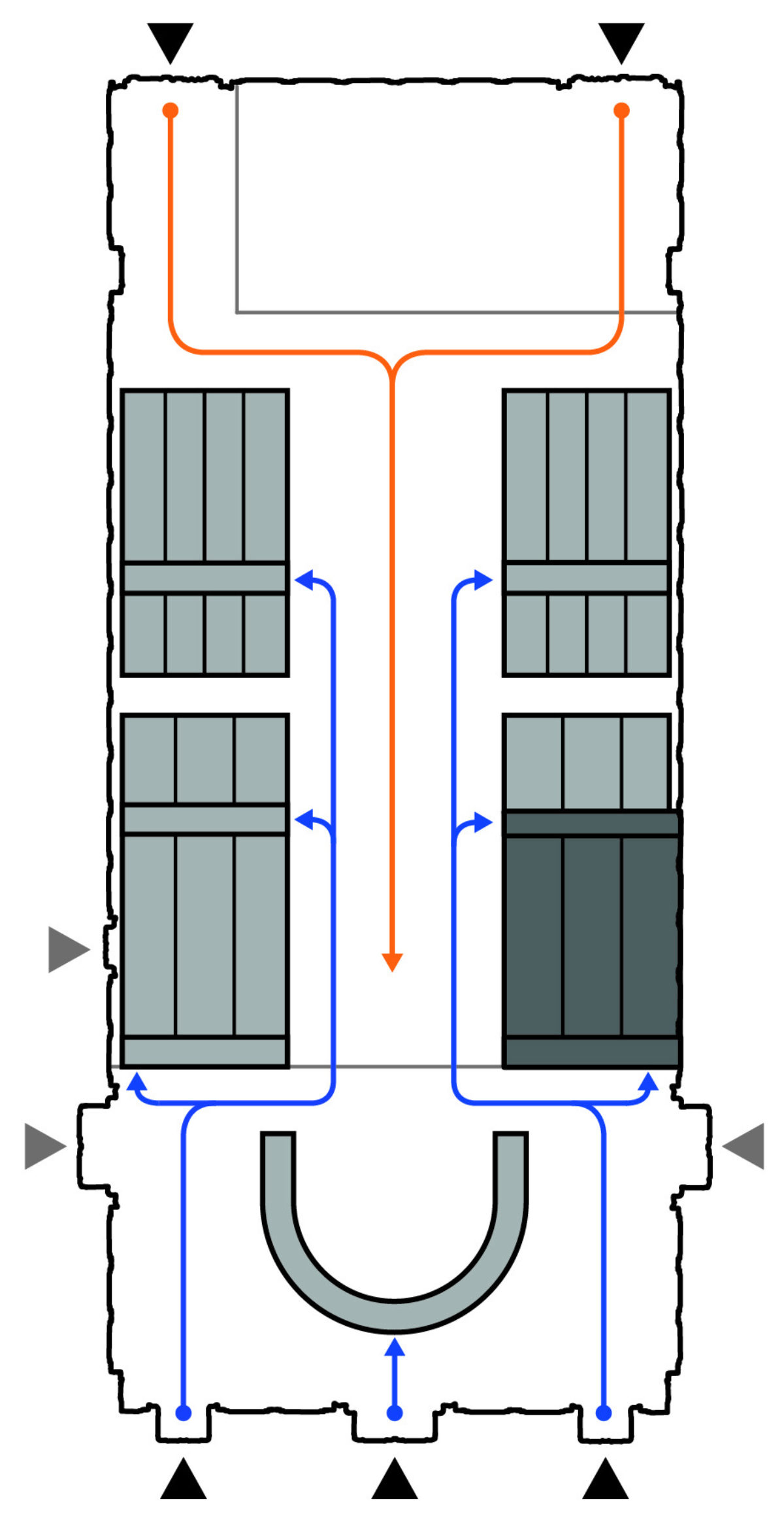
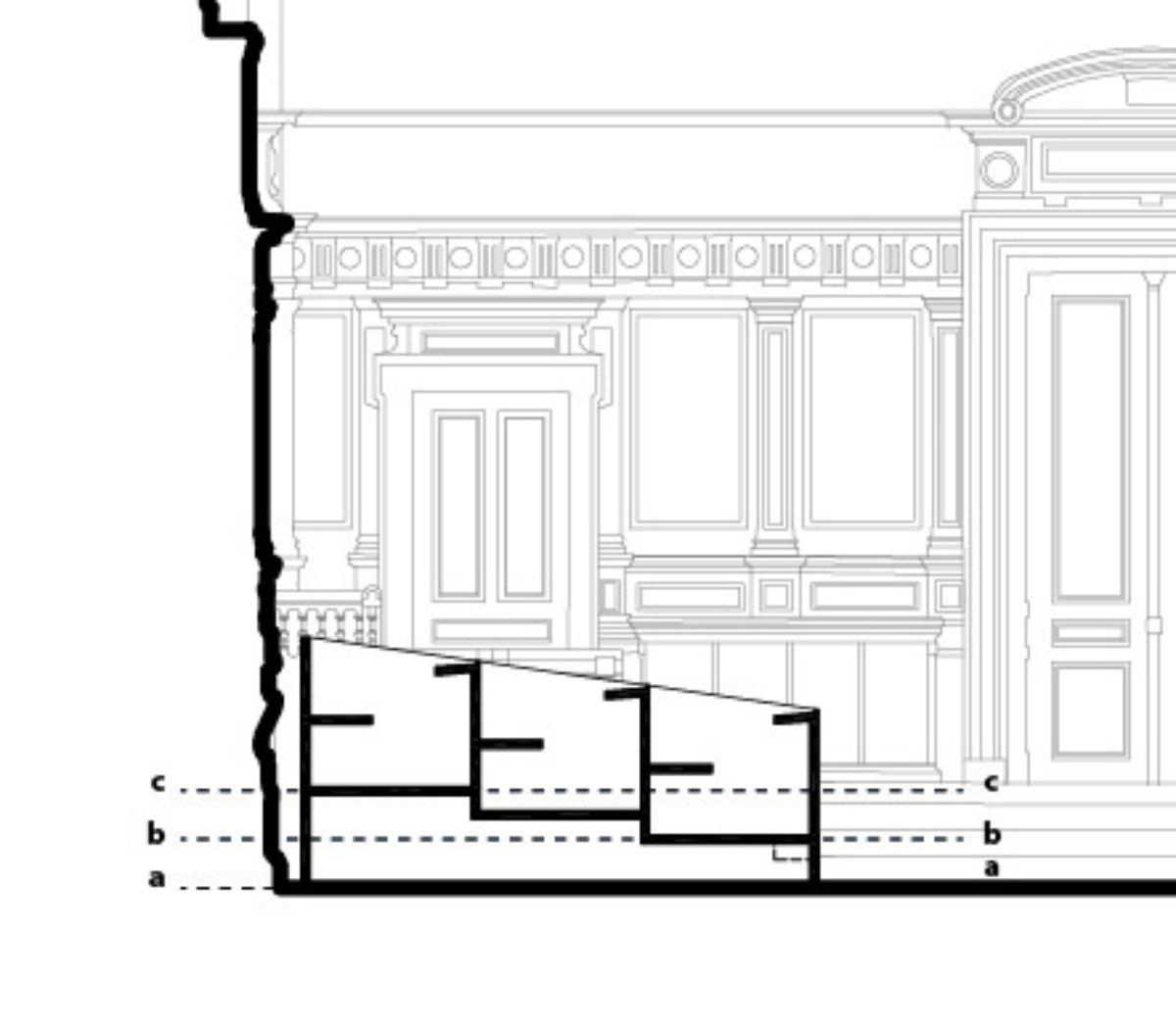
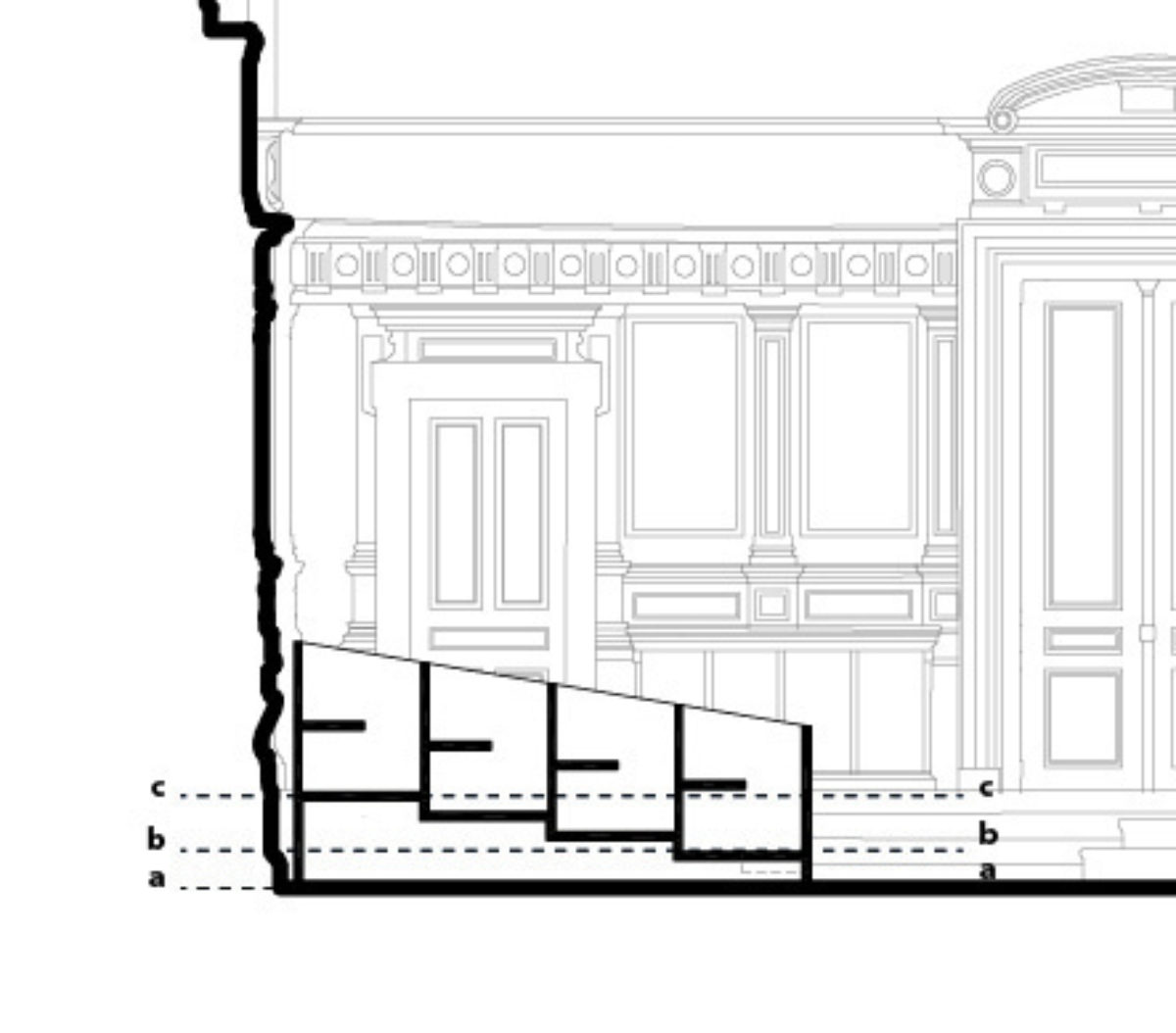
The precisely defined program is spatially embedded in the hall. A distinction is made between various legal roles and visitors, each seated in clearly legible clusters, yet with an equal sense of dignity. The seating layout includes: 19 seats for the magistracy (First President and Presidents of Chambers), 51 for Councillors, 36 for Clerks and Chief Clerk, 35 for the Public Prosecutor and their team, 119 seats for trainee lawyers, positioned centrally within the space. Circulation patterns are deeply symbolic. Different roles follow different paths, occupy different levels, and enter through different doors. Unintended overlaps are to be avoided. Just as judges, juries, defendants, and the press each once followed their own prescribed routes, this principle is reinterpreted here for the ceremony.
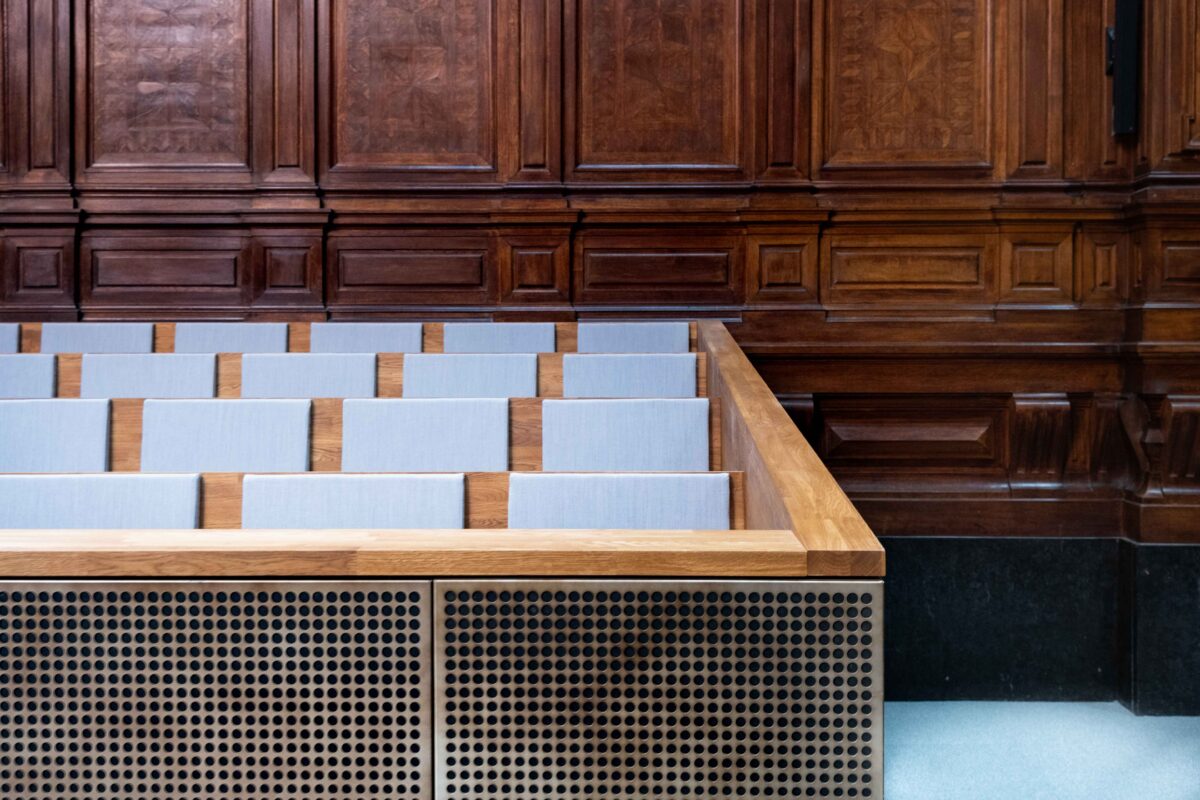
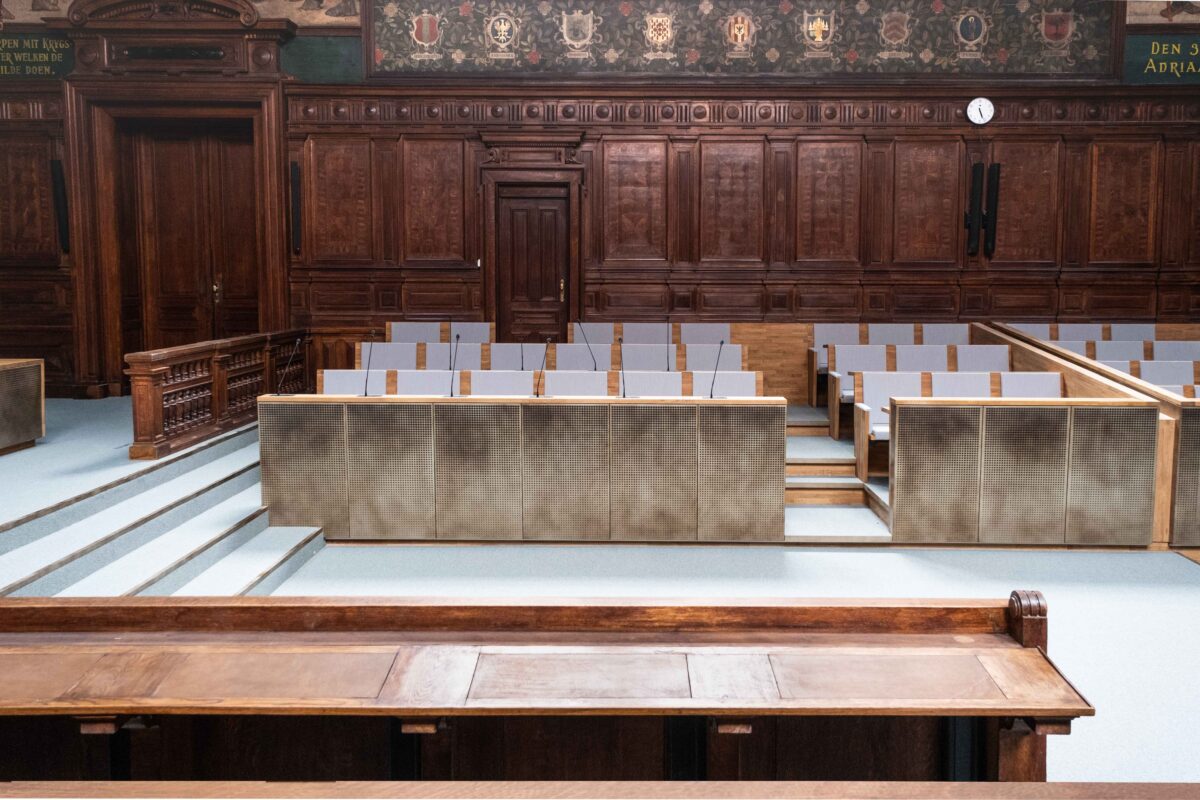
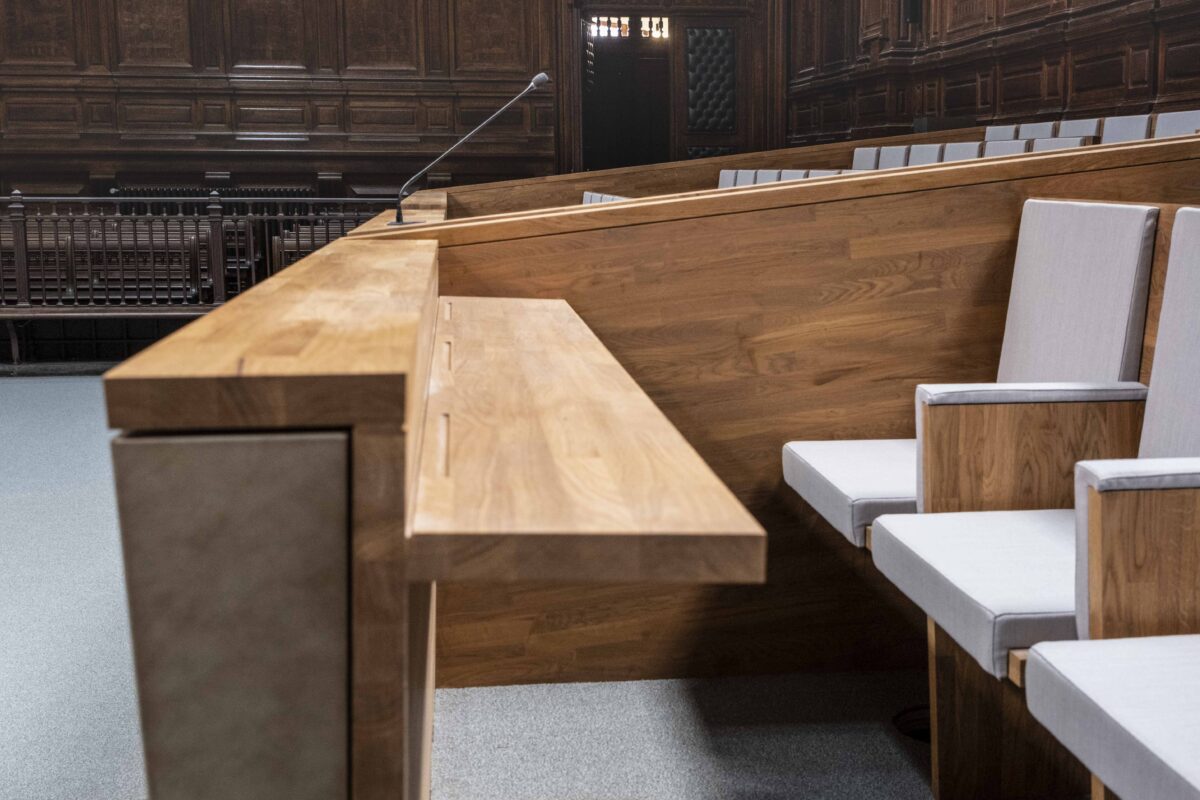
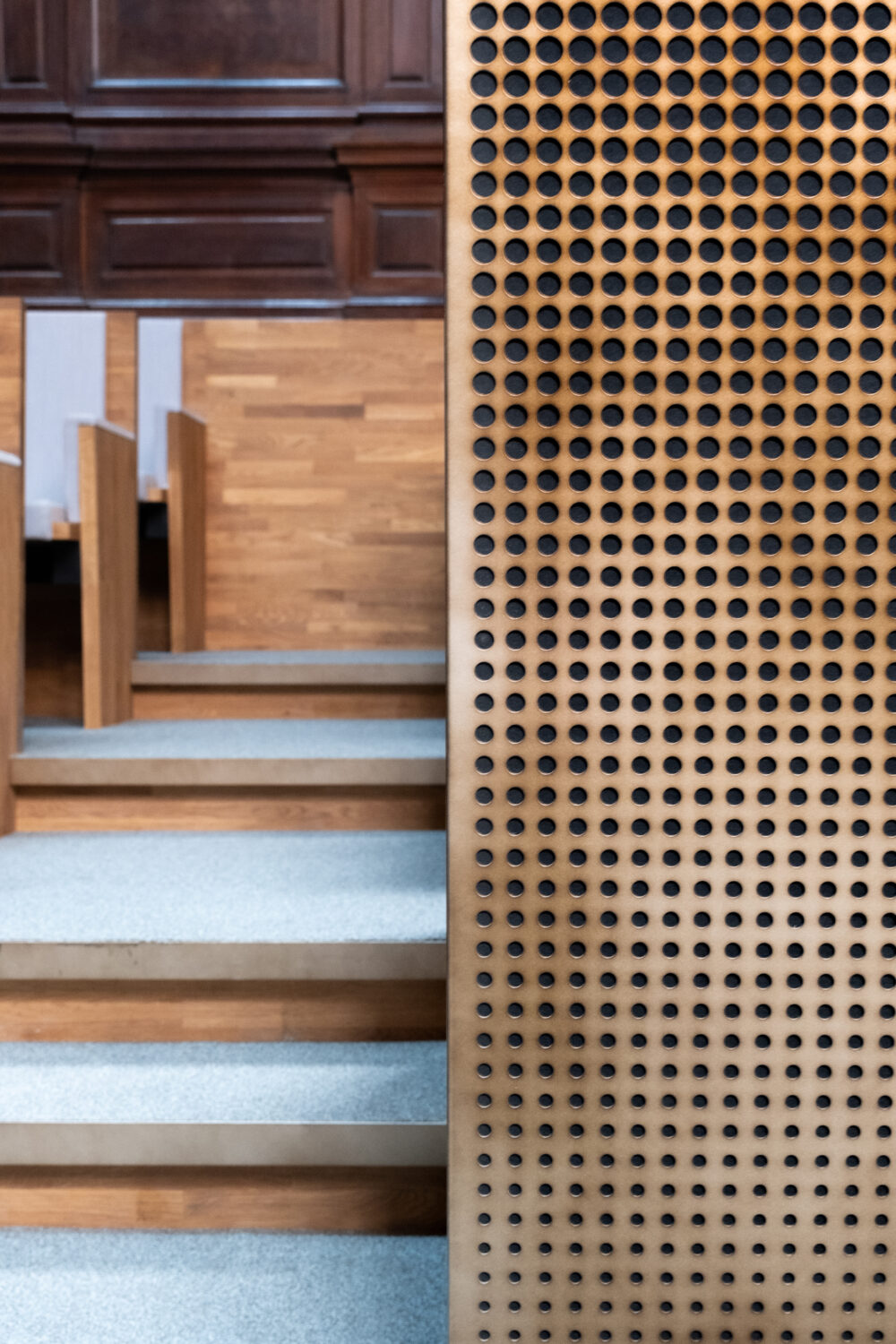
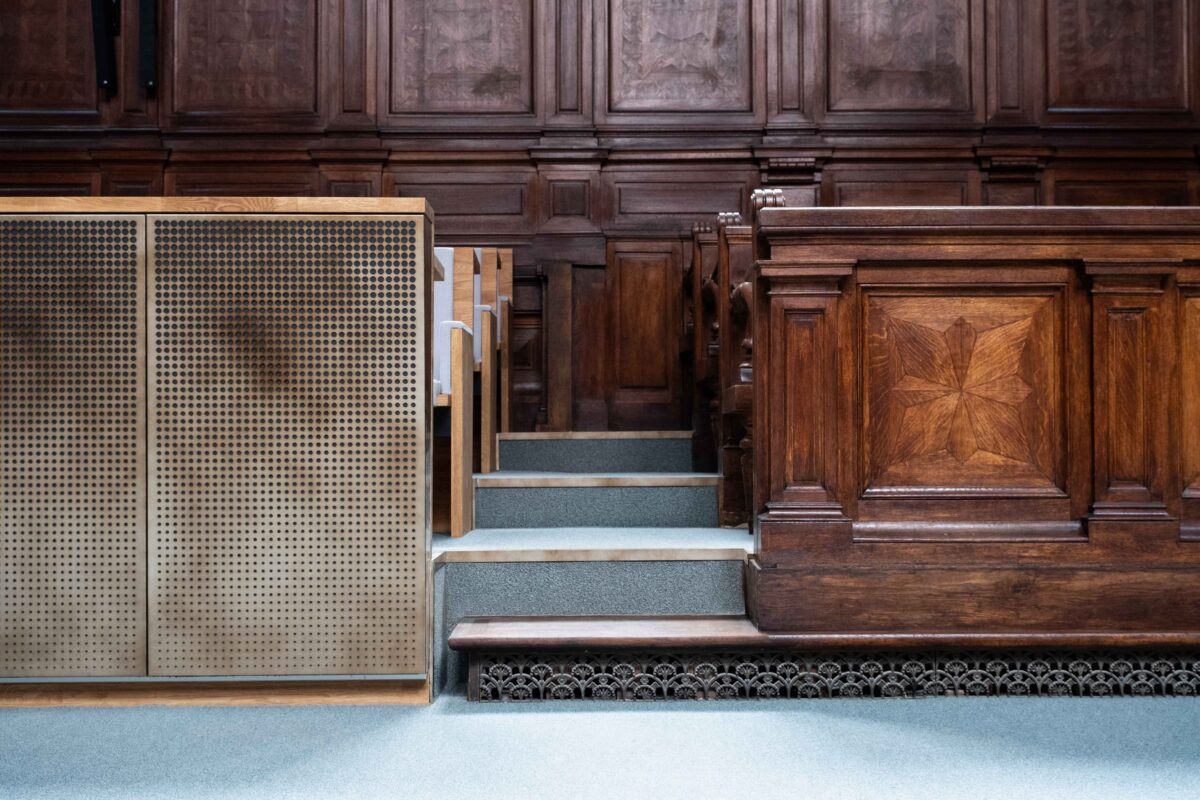
Bronze-finished metal panels delineate the tribunes. These are perforated in a gradient: more openings where the balustrade is thick, fewer where it is thinner. Within the thickness lies acoustic insulation that ensures sound absorption for the hall. A smooth, unperforated cut-out marks the position of the speaker.
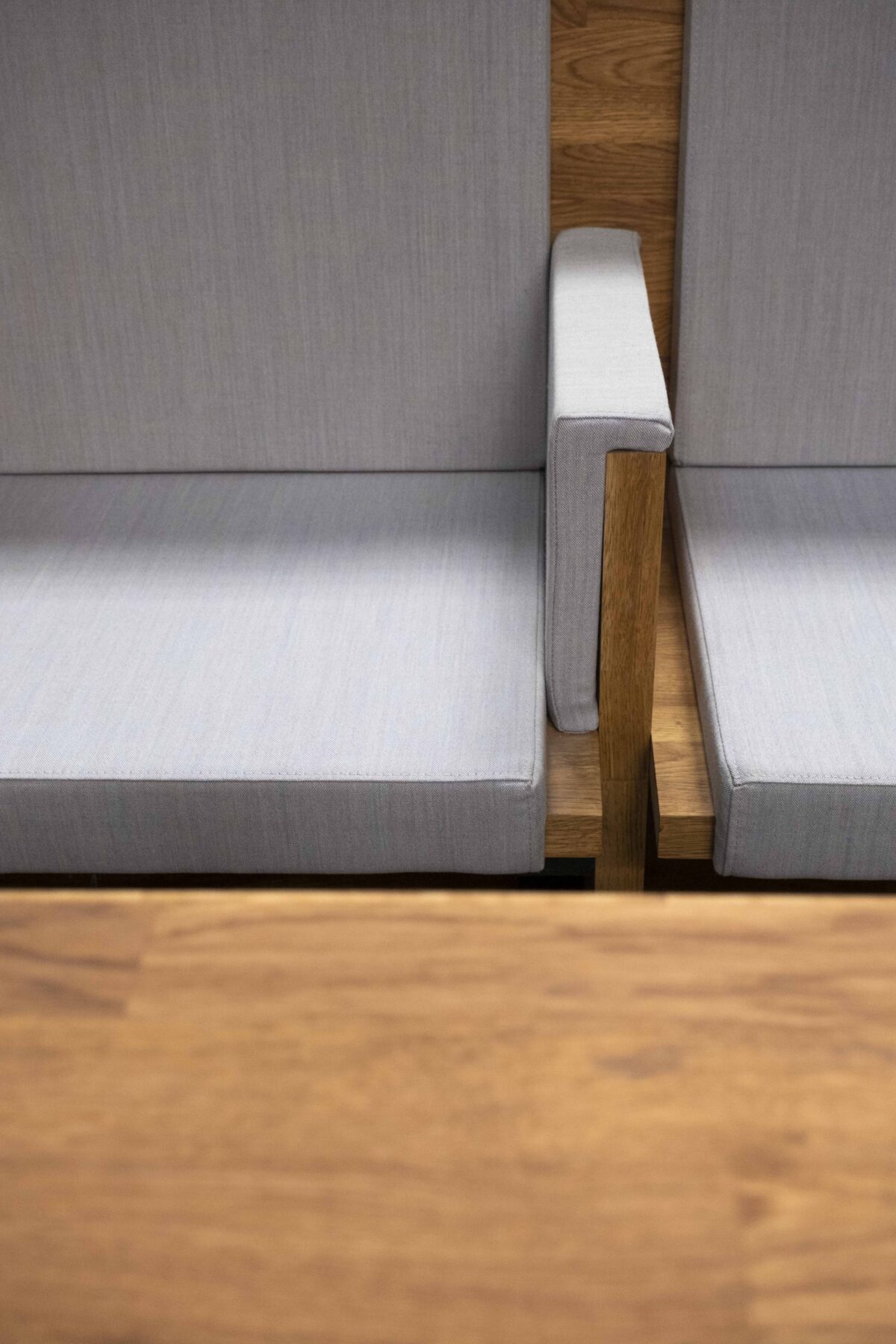
The seating is crafted from laminated oak panels, oiled to lend the modern material a noble appearance. Each seat includes a cushion and is asymmetrical: the desired capacity could only be achieved if each seat was equipped with a single armrest. Necessity becomes a virtue, asymmetry becomes a game.
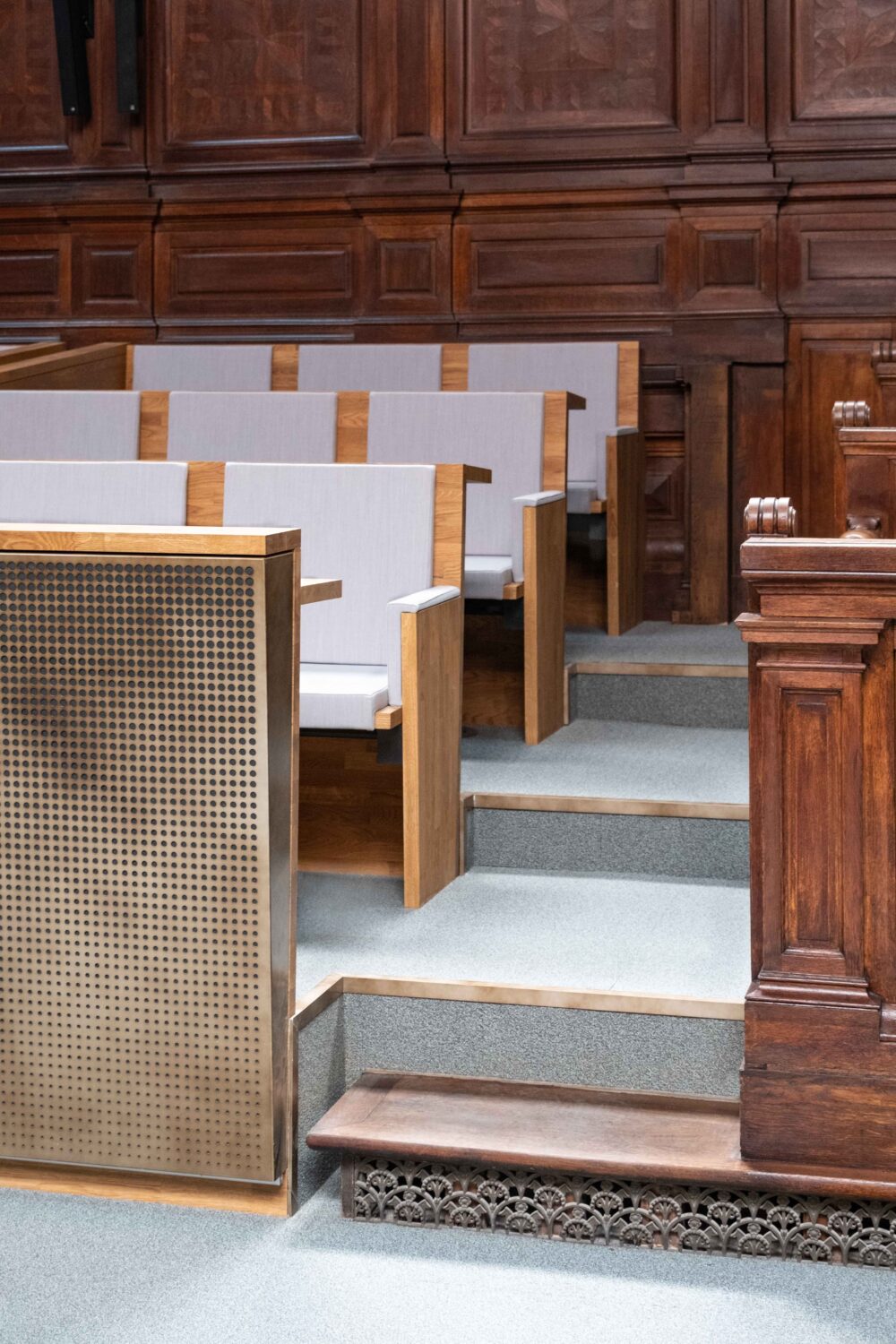
It is essential that all seating feels equally dignified, whether one is seated on a newly built bench or in the historic jury box. The top and bottom levels serve as benchmarks, ensuring everyone is seated within the same vertical range. The spatial logic and ergonomics of the jury box were translated into the new design, while adapting to contemporary requirements.
Construction phase
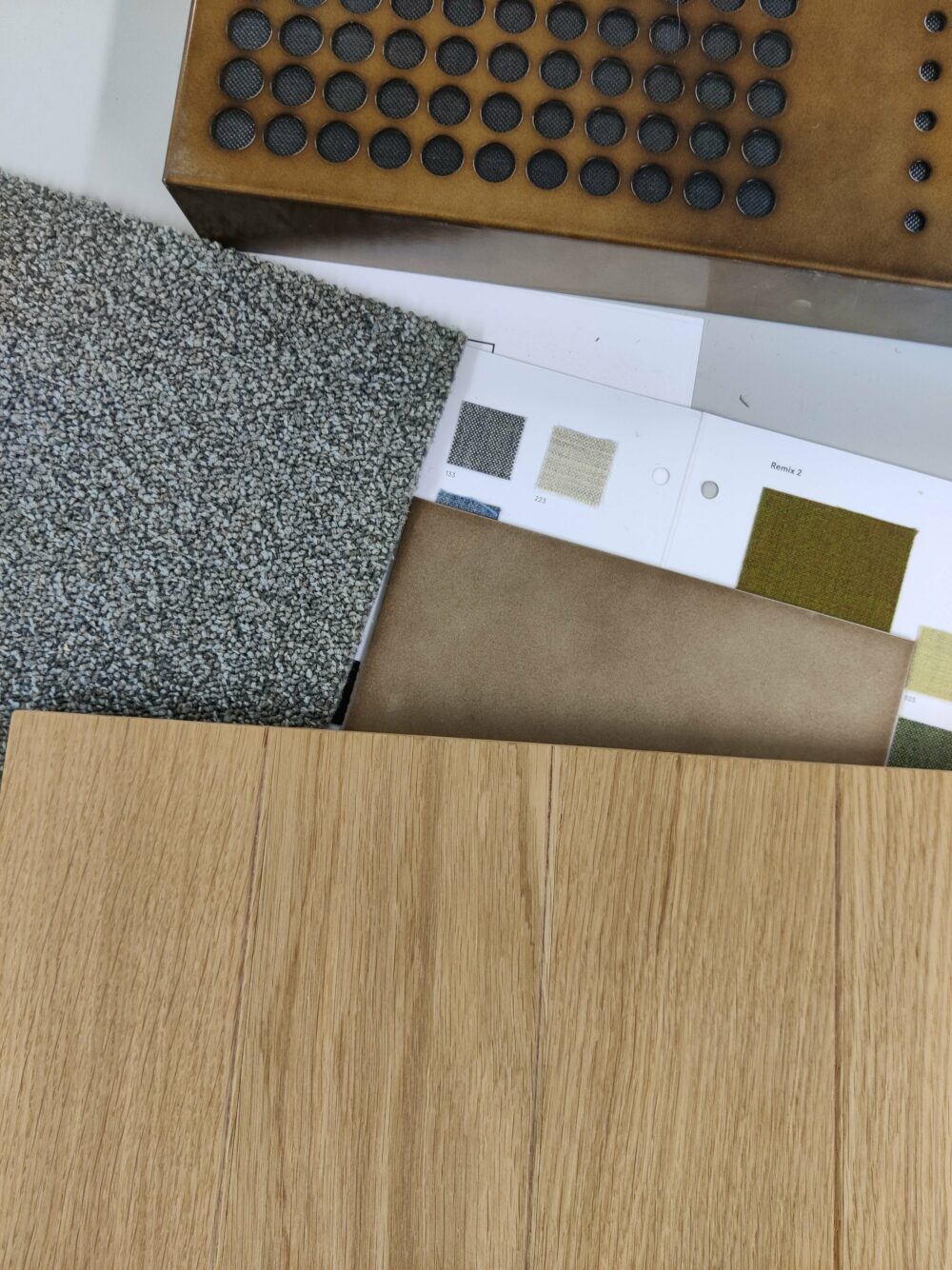
Material samples were selected collaboratively and compared against the existing finishes of the hall. New materials are clearly contemporary, but intentionally respectful, avoiding stark contrasts with the historical colour palette.
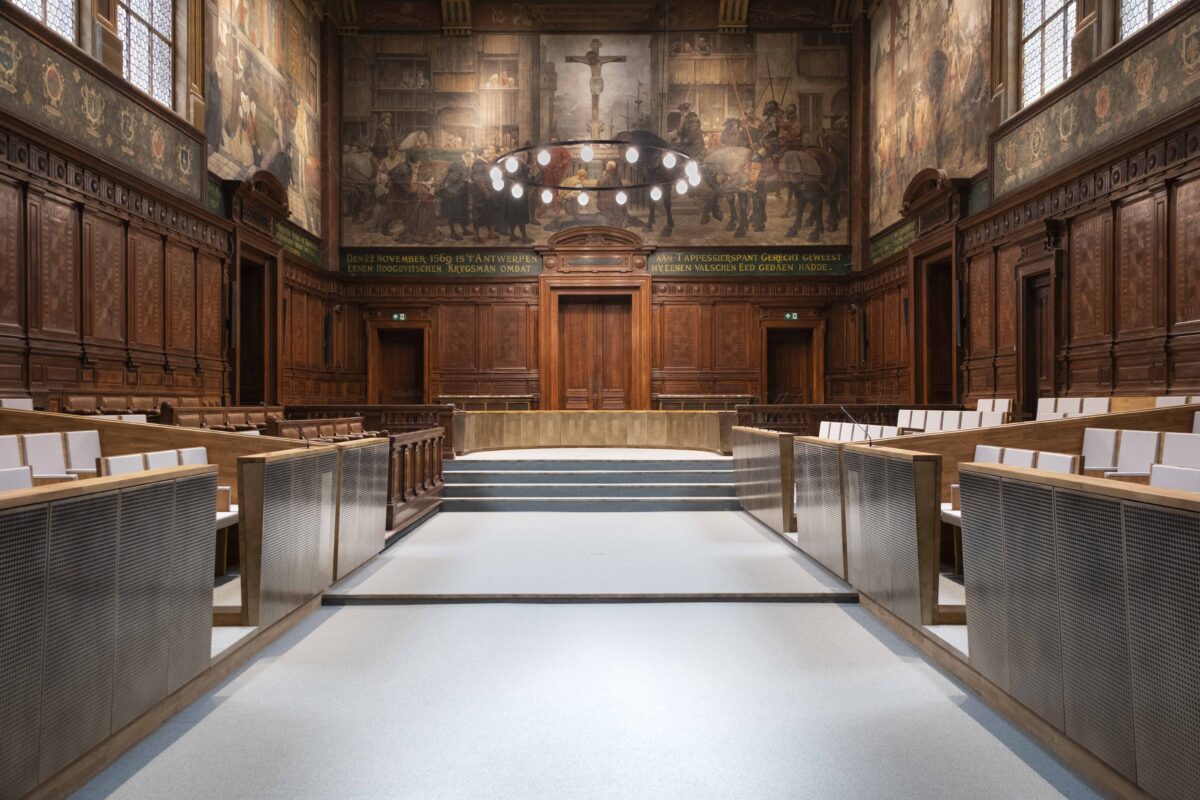
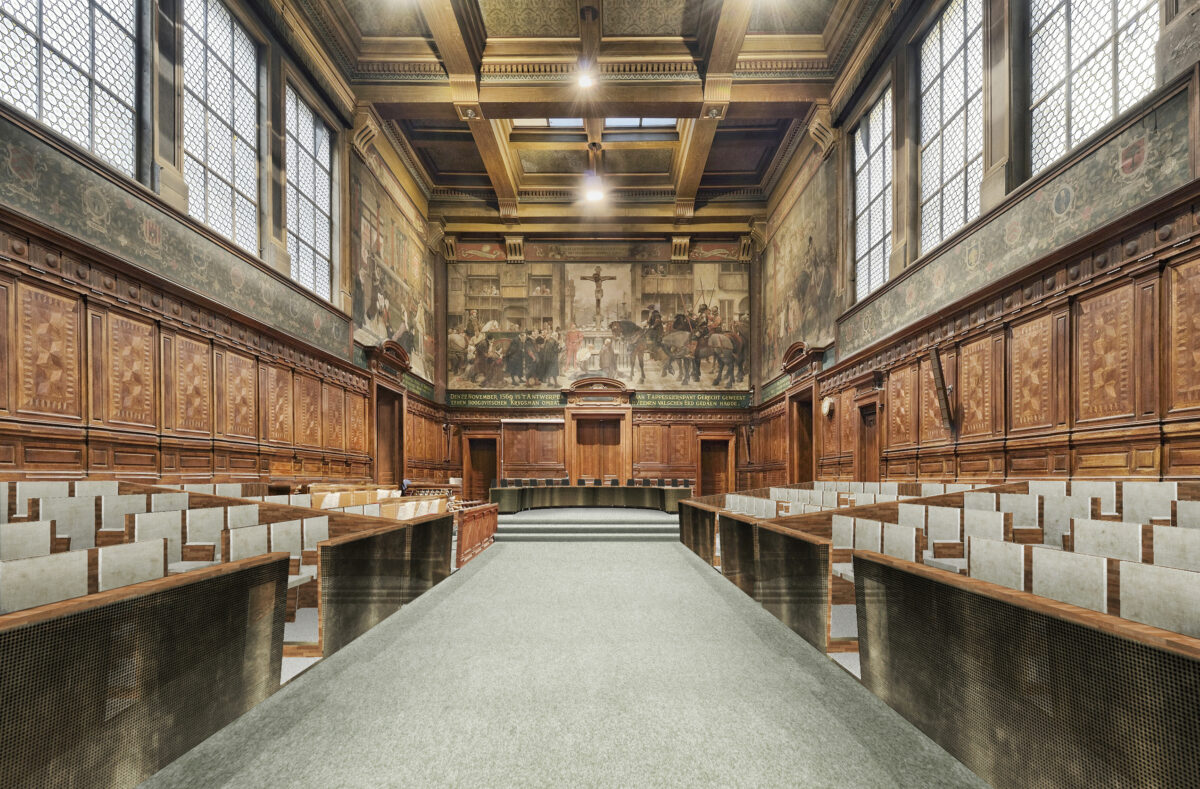
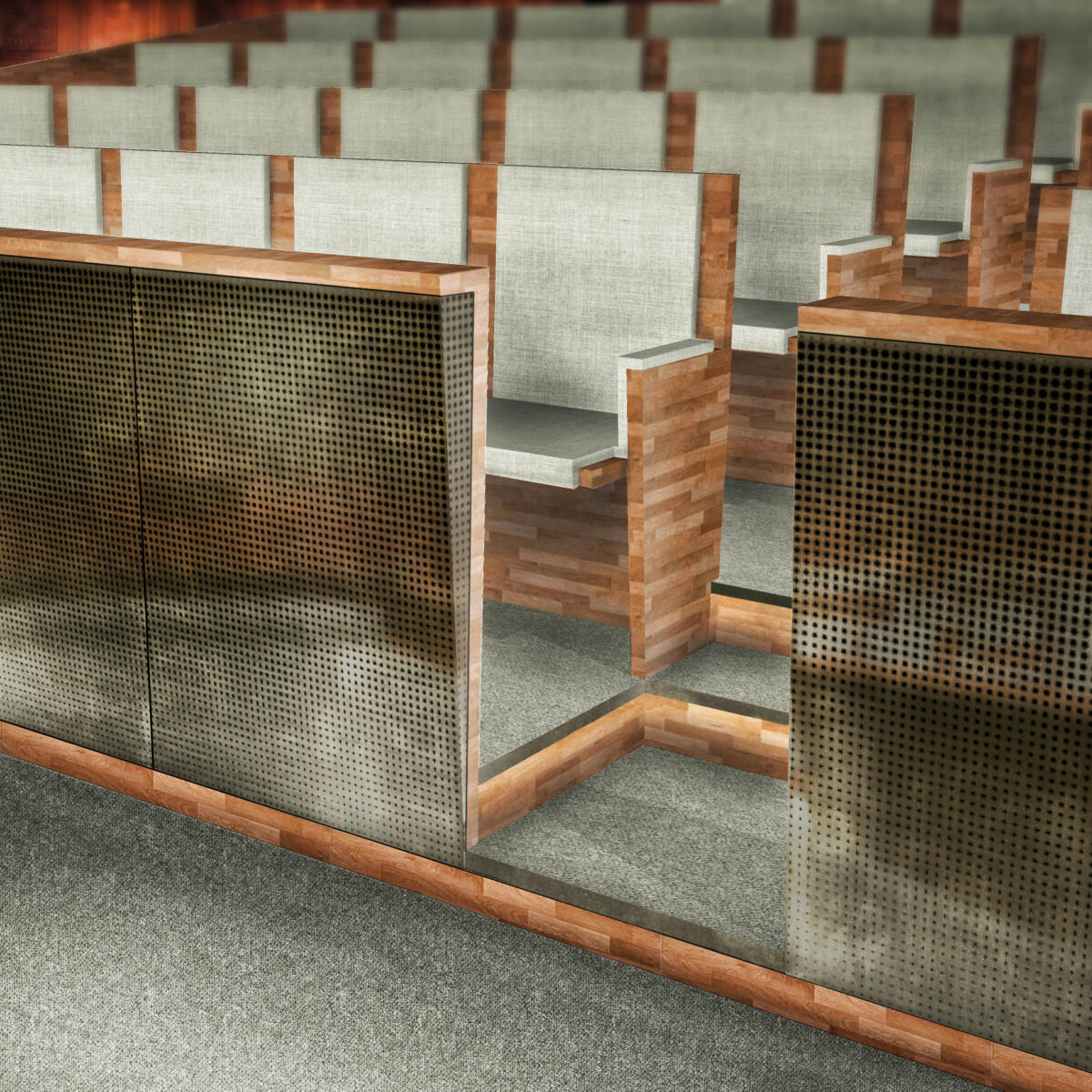
Left: the final result — Right: earlier material visualization
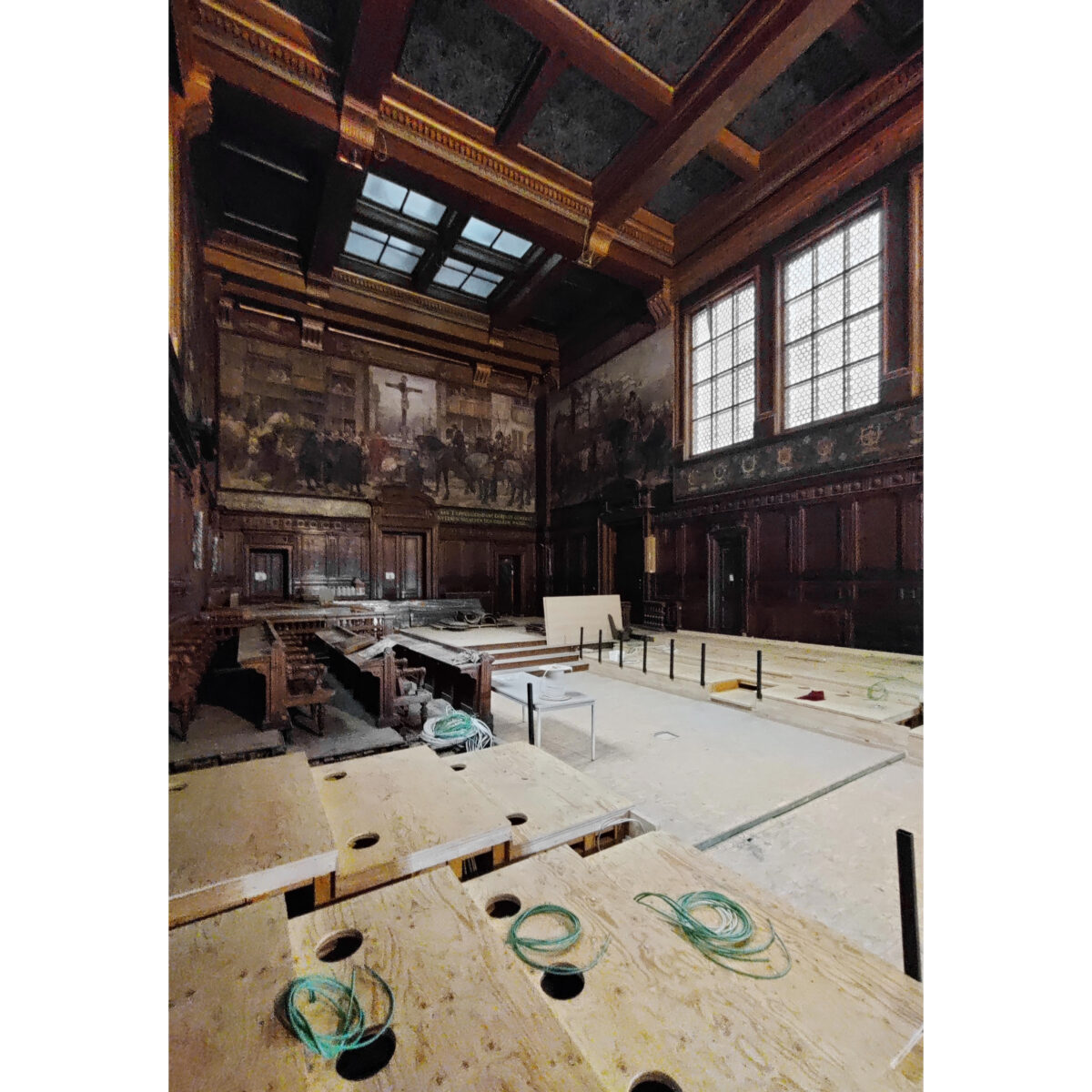
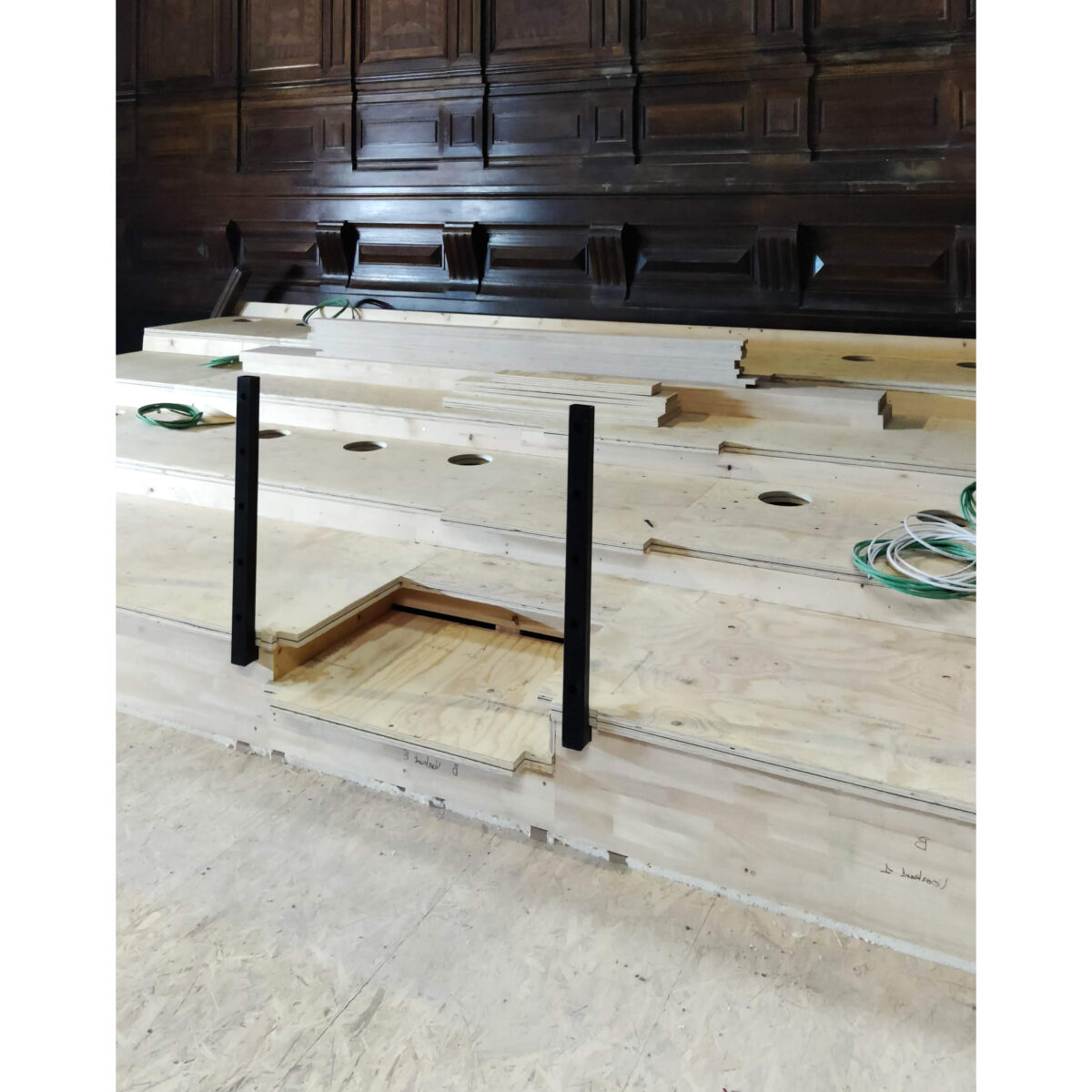
The substructures are engineered to support fully occupied tribunes, while also meeting technical requirements: constructed from fire-retardant (treated) materials, fitted with acoustically decoupled subfloor plates, functioning as plenums for both ventilation and heating, serving as technical voids to route all necessary cabling.