Technical sheet
Read moreRead less- Location
- Sint-Michiels
- Date
- 2024 - 2026
- Client
- Private
- Executor
- Mobble
- Photographer
- Melanie Boeckxstaens
Loo IV
Debunking myths by building their exact opposite. It may sound cryptic, but it unfolds on an ordinary vacant plot in Sint-Michiels. The construction of a new single-family home becomes the occasion to explore the extreme boundaries of prefab and modular building. A quest that not only enhances the quality of life for its inhabitants, but also reveals a broader societal path toward affordable housing.
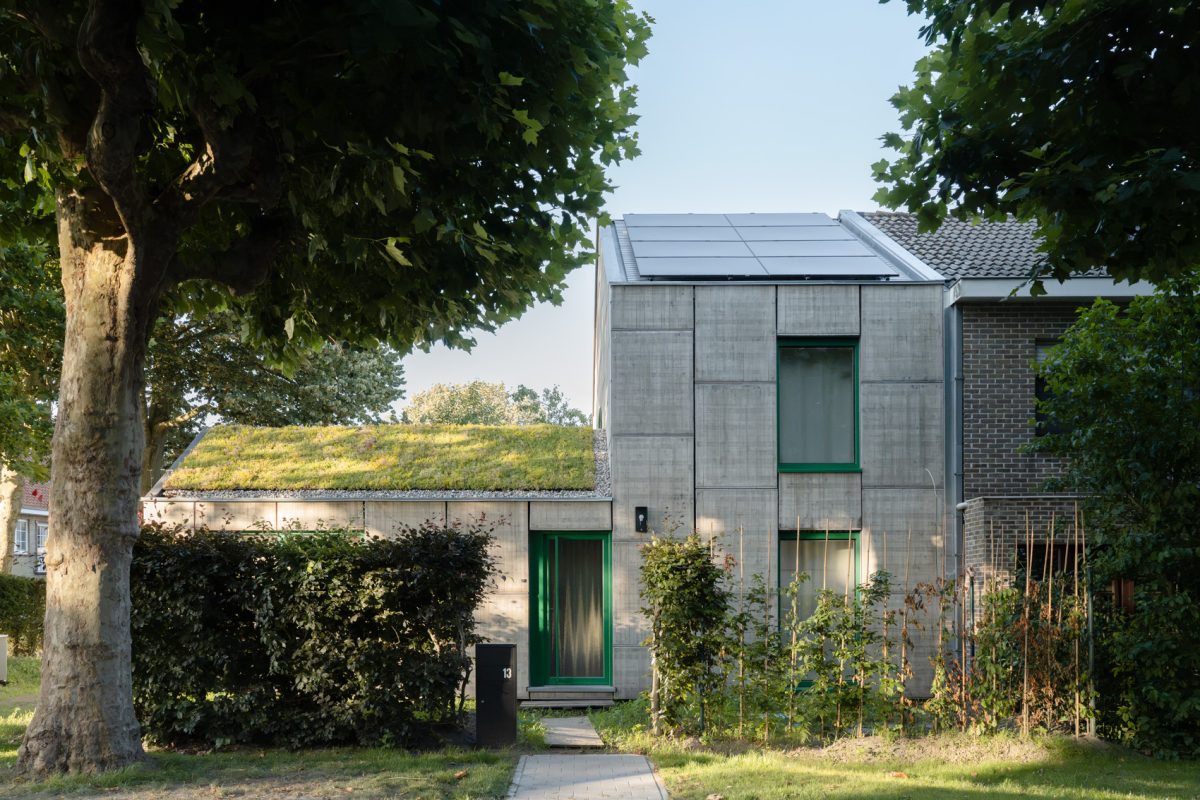
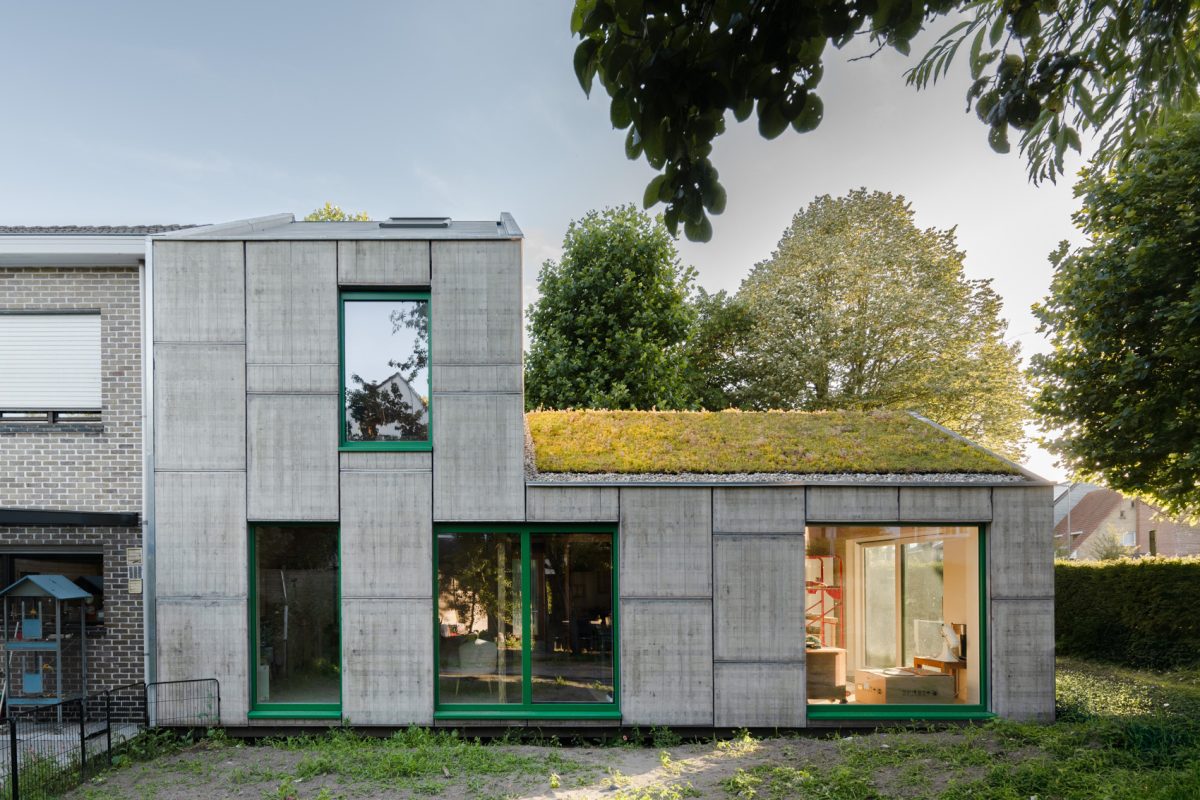
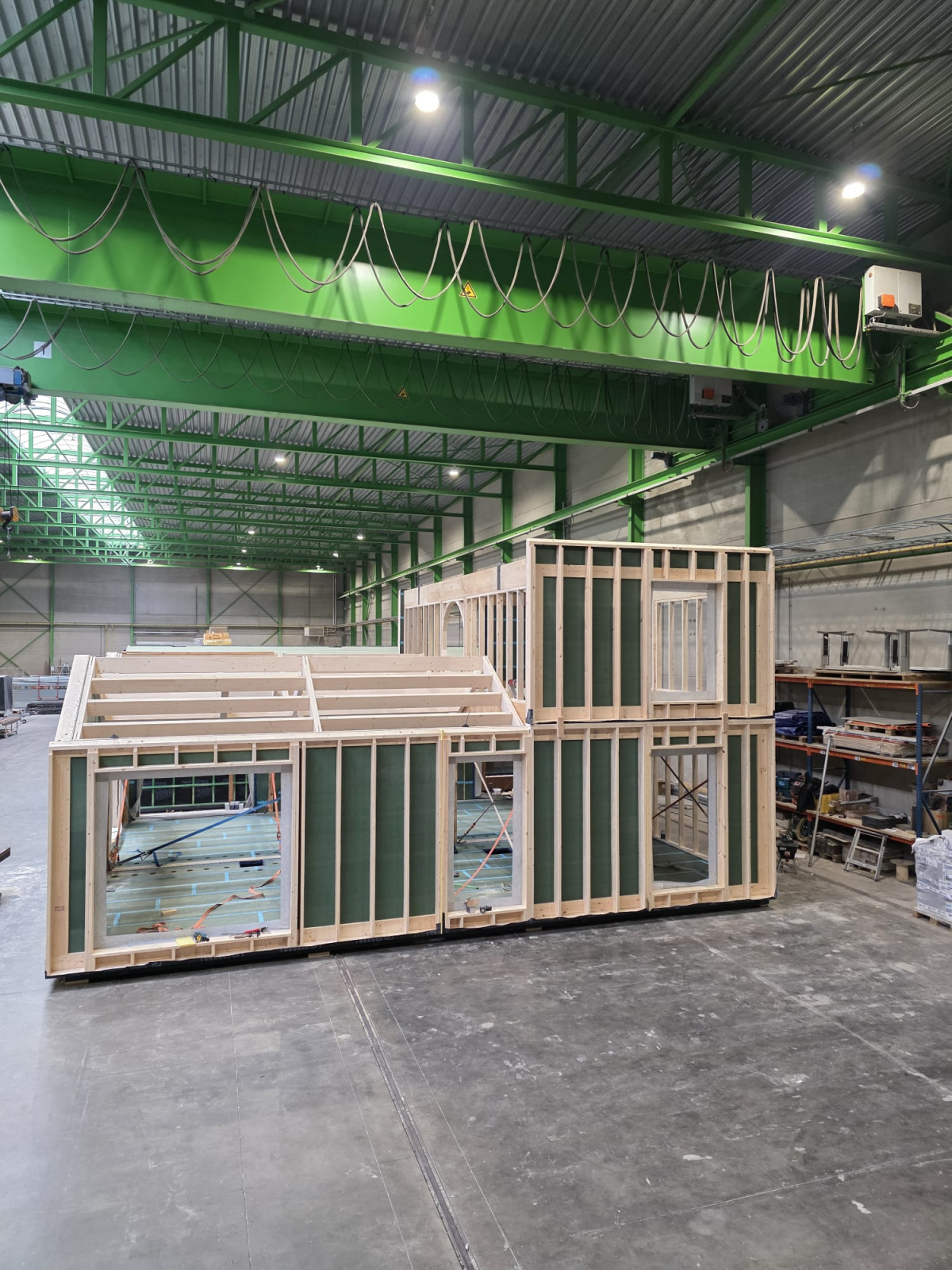
A semi-detached house, entirely constructed in the contractor’s workshop, then transported to site. The dwelling consists of two ground-floor modules placed perpendicular to the party wall. Above them, a third module is positioned parallel to it. Finally, a fourth roof volume completes the composition. The form of each module is dictated by the practical constraints of production and transport: the roof pitch of the ground-floor units is precisely calculated to fit through the contractor’s workshop gate.
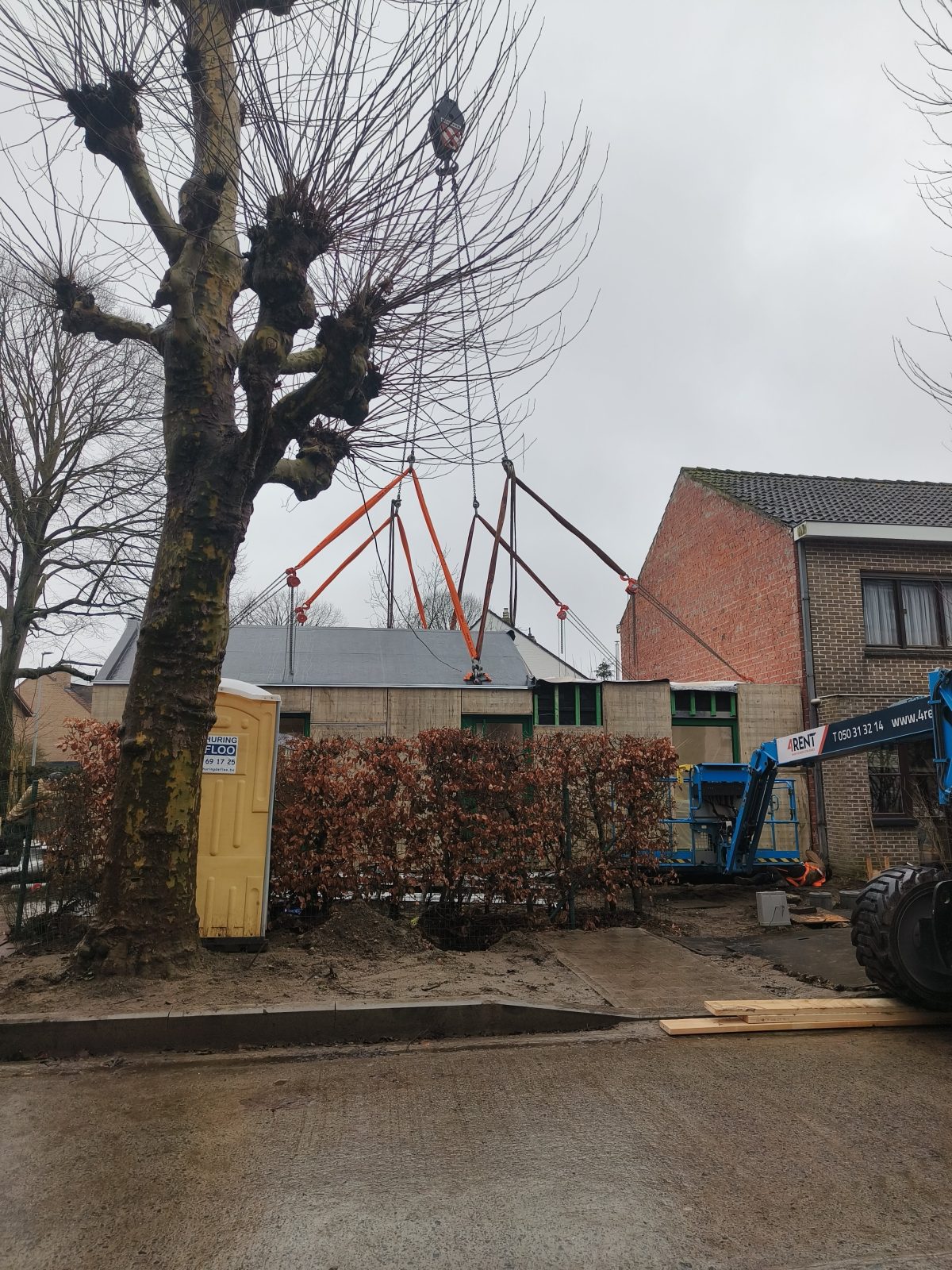
Each modular unit is fully finished—interior and exterior finishes, vapour barriers, technical systems, appliances and electrical installations included—and can be assembled on site within a matter of days using trucks and a telescopic crane. On site, only the connection of the seams remains.
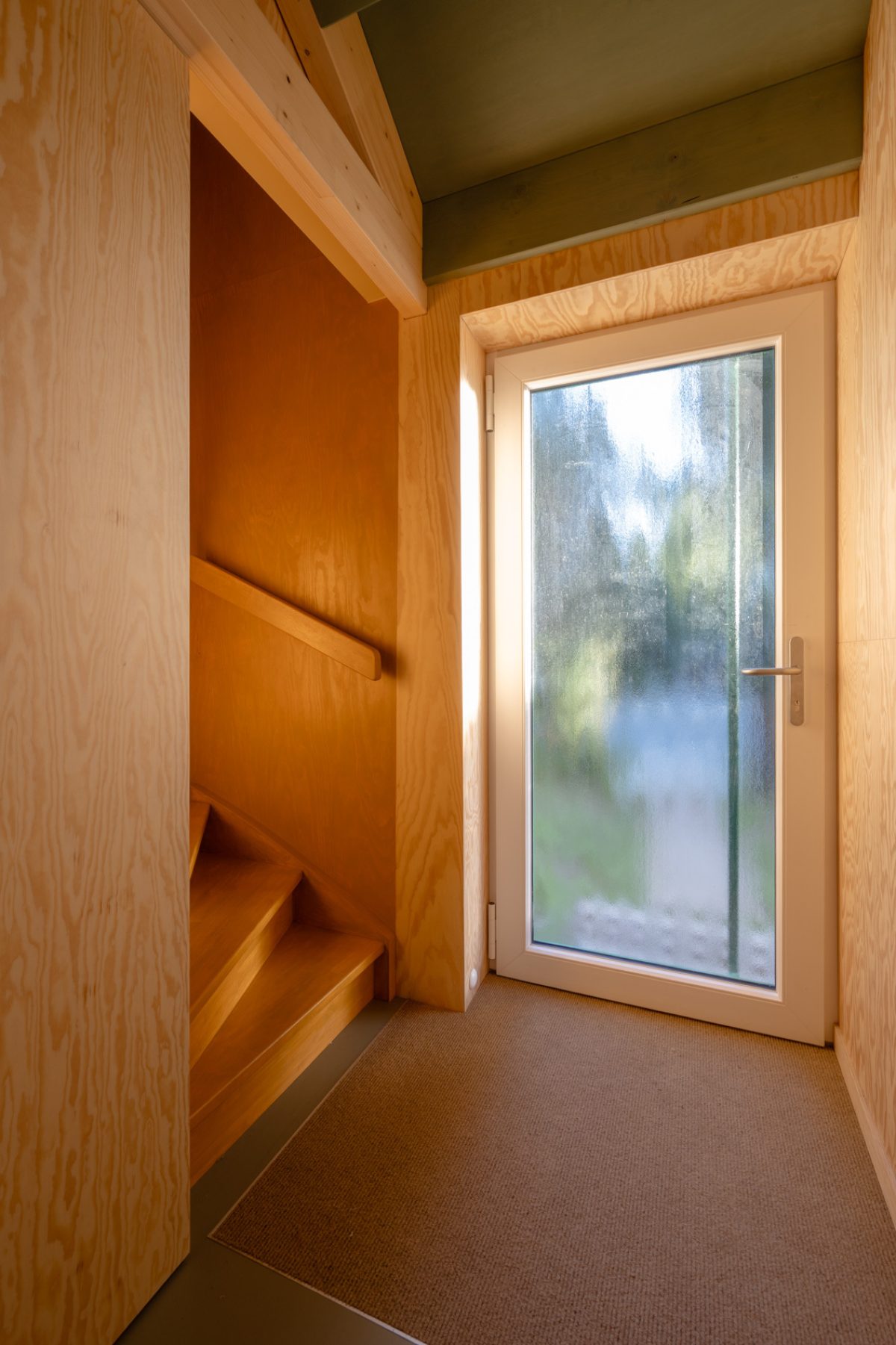
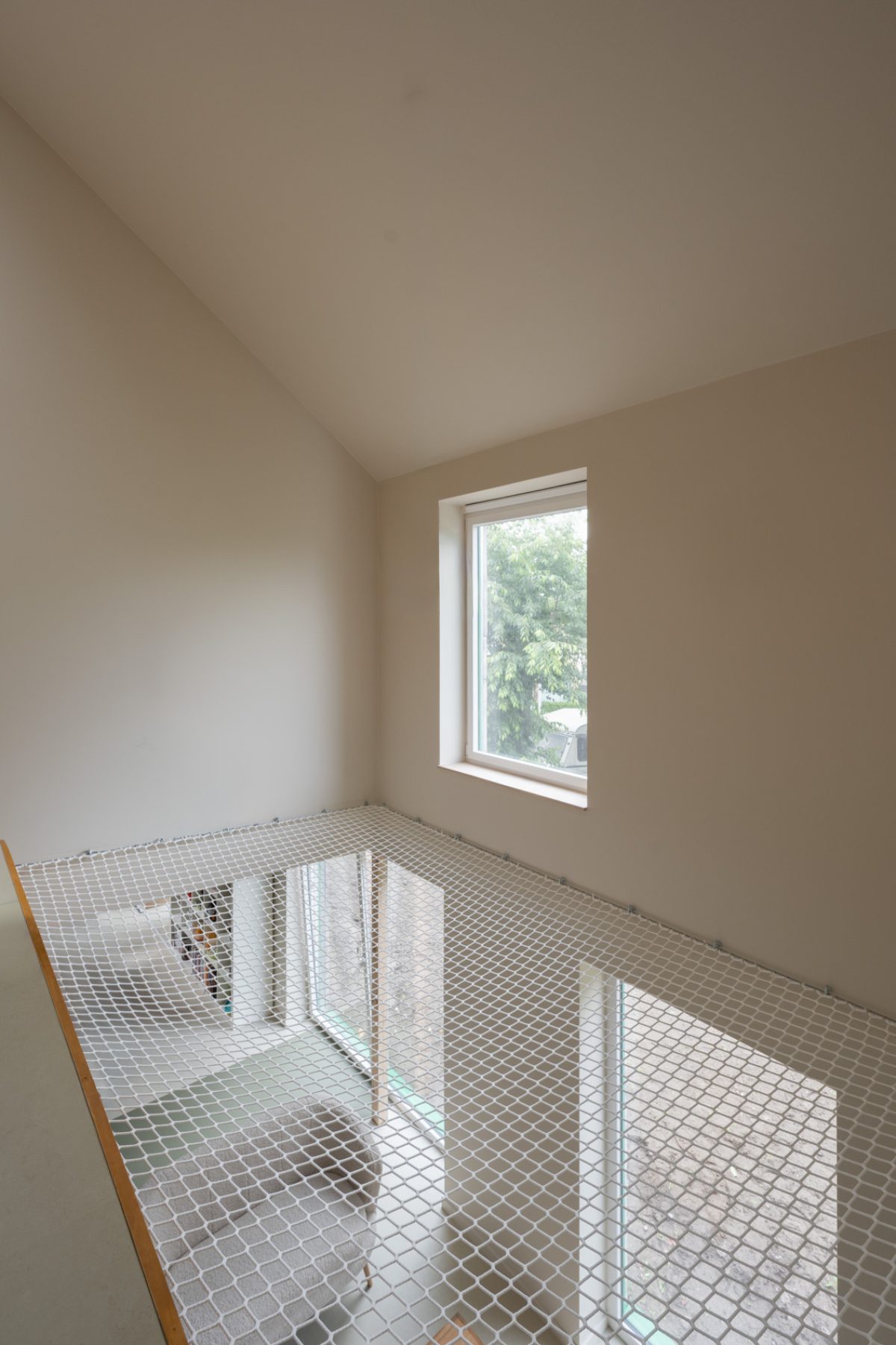
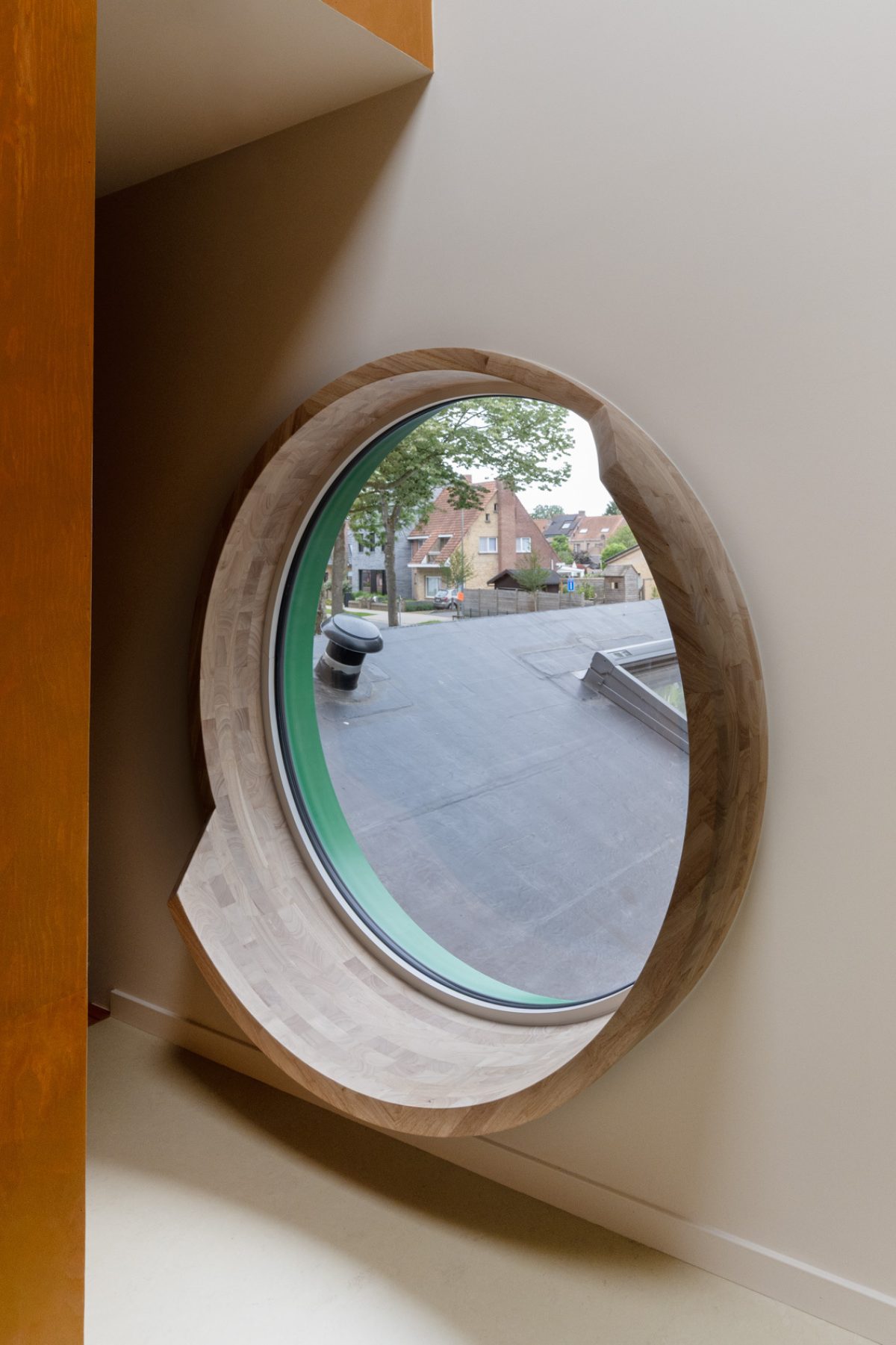
These rational and logistical constraints do not limit the openness of the design. A central void between the stacked modules and a series of perforations between rooms create a generous spatial experience, with visual connections and layered views that are not typically associated with modular systems. Interior finishes are deliberately simple and robust, yet playful: restrained materials are used to compose an affordable yet vibrant whole.
The modular system is conceived so that exterior walls are mounted onto the structural frame of the units. This allows walls to be easily dismantled without structural intervention, enabling future extensions or adaptations. The units are also equipped with lifting hooks, concealed beneath the roof membrane, allowing them to be detached, lifted and relocated if needed.
The entire structure is built in NCS timber, with cellulose flake insulation. For every component, ecological impact has been carefully weighed against construction cost. Circularity also informs the choice of joinery: the windows are made of fully recyclable PVC profiles, each component individually reprocessable. To protect them from weathering, lacquered aluminium caps are clipped onto the exterior.
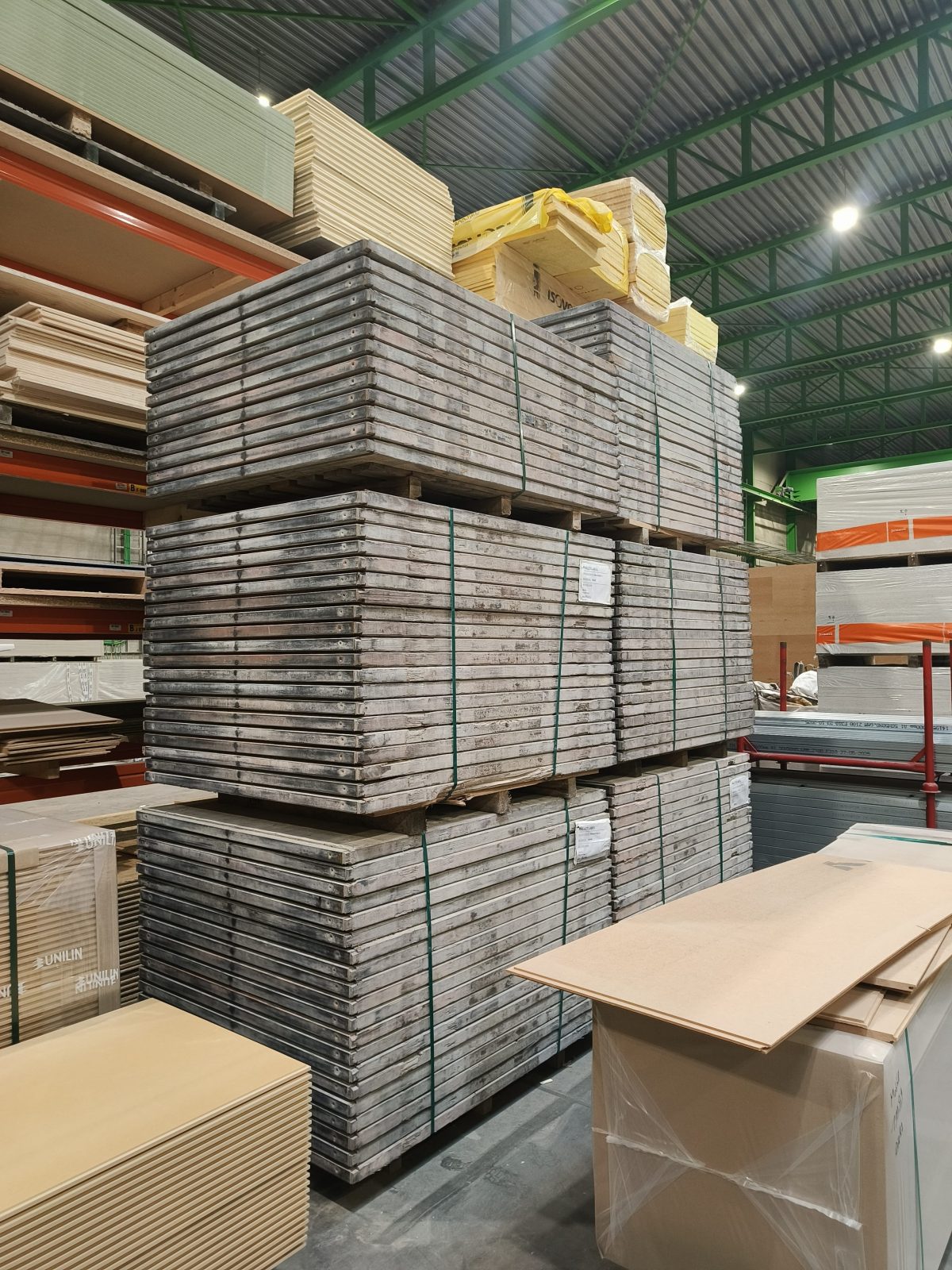
For the façade, an experimental solution was chosen that aligns with the modular and circular nature of the project: reclaimed brick-setting boards—wooden panels used in the brick industry. Made from European larch, these panels have a fixed format and define the façade rhythm. As they are only temporarily usable in brick production—passing through kilns hundreds to thousands of times—they form a continuous residual stream. This ensures long-term availability of replacement elements and supports a circular and repeatable façade strategy.
Project Loo IV is a house that radically embraces prefab, mobility and reusability, while demonstrating that these principles do not stand in the way of architectural quality. It explores the design potential of modular construction and challenges the cliché that such systems result only in small, rectangular spaces. It proposes a forward-looking model of living: affordable, sustainable, adaptable and relocatable, with a keen awareness of material flows, evolving housing needs, and a different understanding of what a home can be.