Technical sheet
Read moreRead less- Location
- Duffel
- Date
- 2018 - 2021
- Client
- Private
- Surface
- 101 m2
- Budget
- middle budget
- Partners
- Stabimi (stability), 2BSafe (energy and safety)
- Uitvoerders
- Masset (general contracting), Peter Hillen Interieur (fixed furniture), builder
- Protection
- Streetscape listed as heritage
- Status
- Executed
- Photos
- Katoo Peeters
Dwarsligger
Renovation of a listed workers’ house where compact living, spatial quality and organic flow come together in transverse frameworks with multiple roles
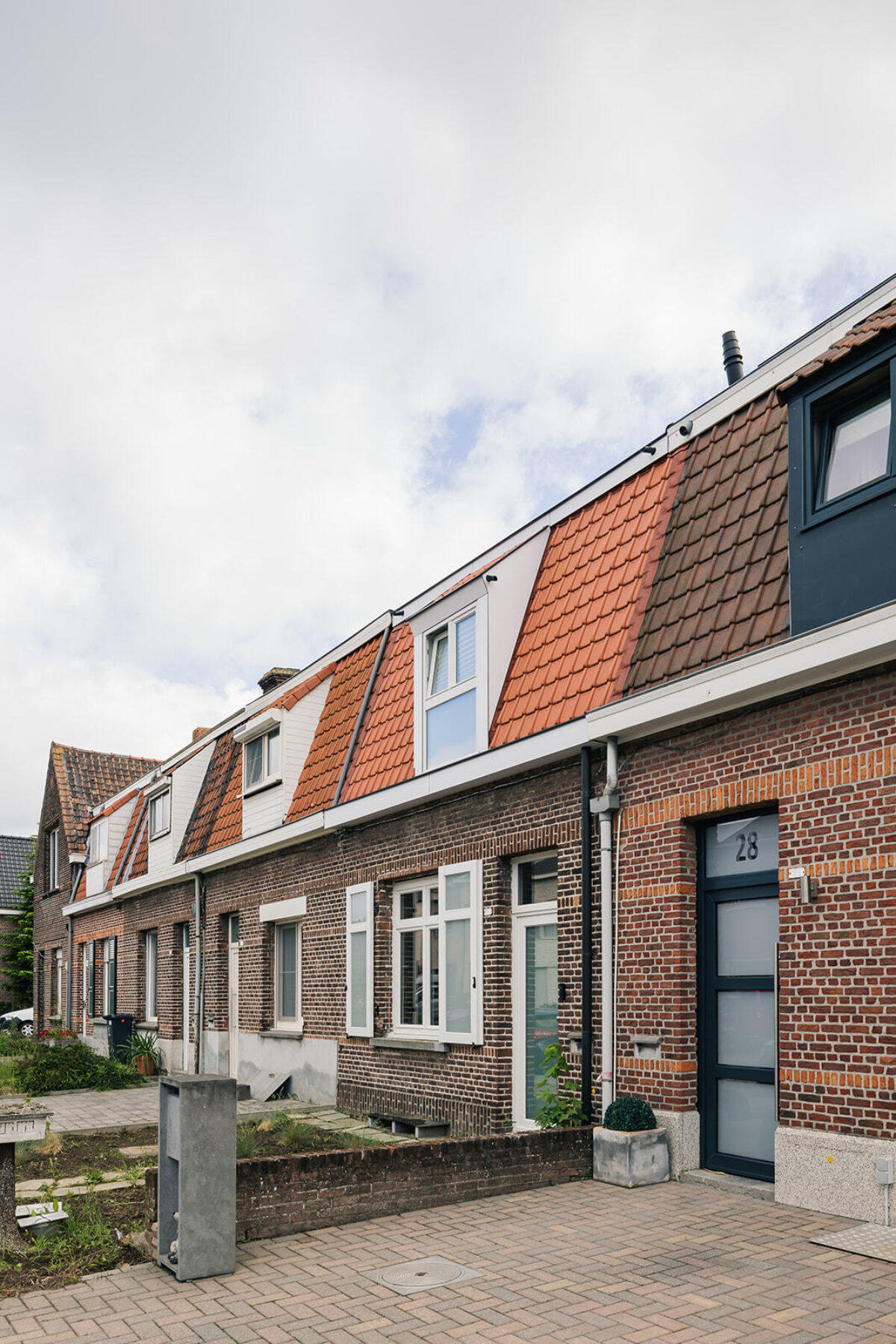
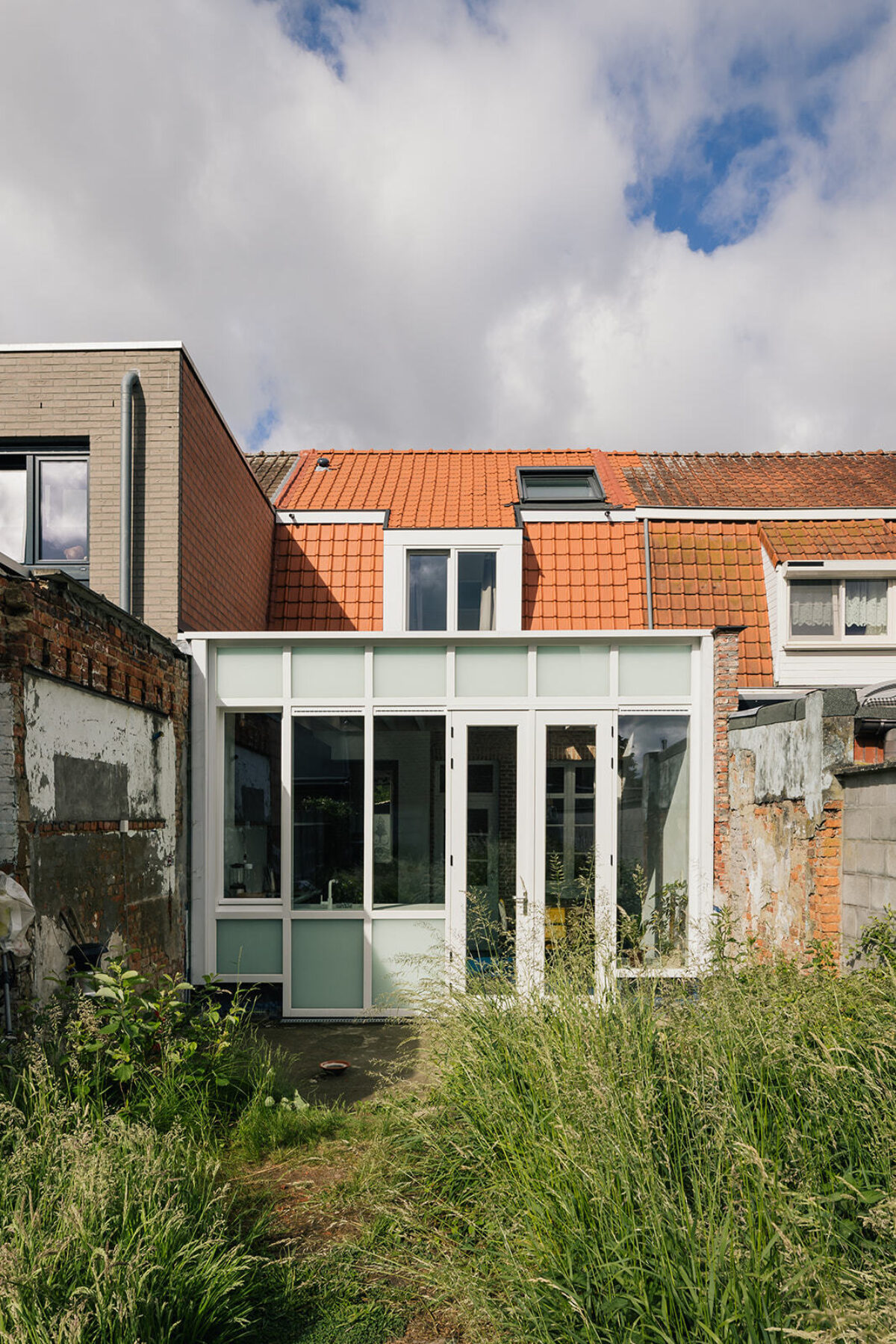
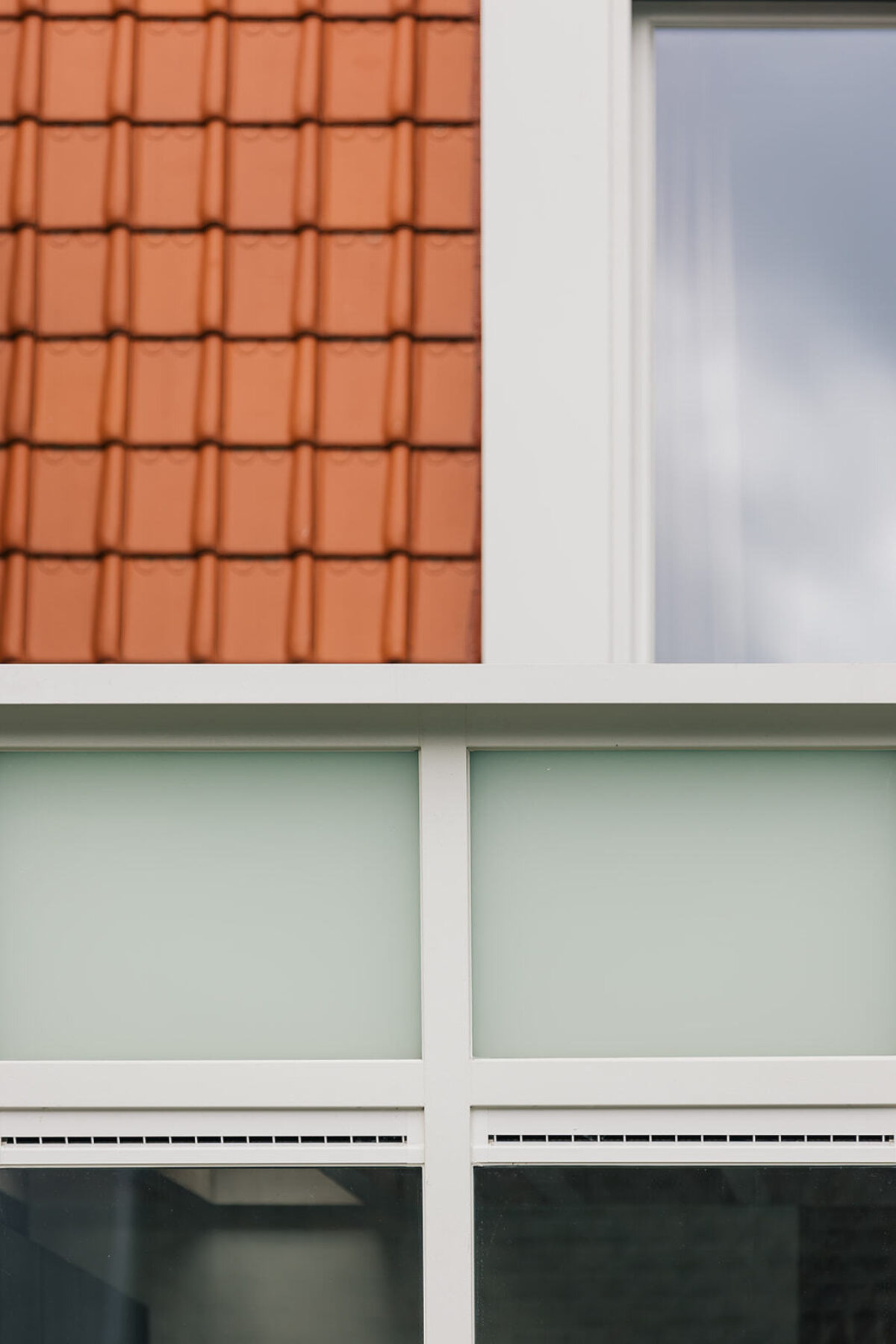
They were all built at once, the workers’ houses, each identical with their brick lintels, wooden shutters, and, centred on the mansard roof, a dormer window. At the corners of the block, the houses grow slightly larger, a little different. Over time, the once-coherent ensemble has grown muddled, blurred by careless renovations. Once conceived as a whole, the houses have drifted apart, each living its own life. Still, the streetscape remains listed as heritage. This renovation touches just one of the homes. It used to be a butcher’s shop, by the way. We’re trying to do better than the neighbours.
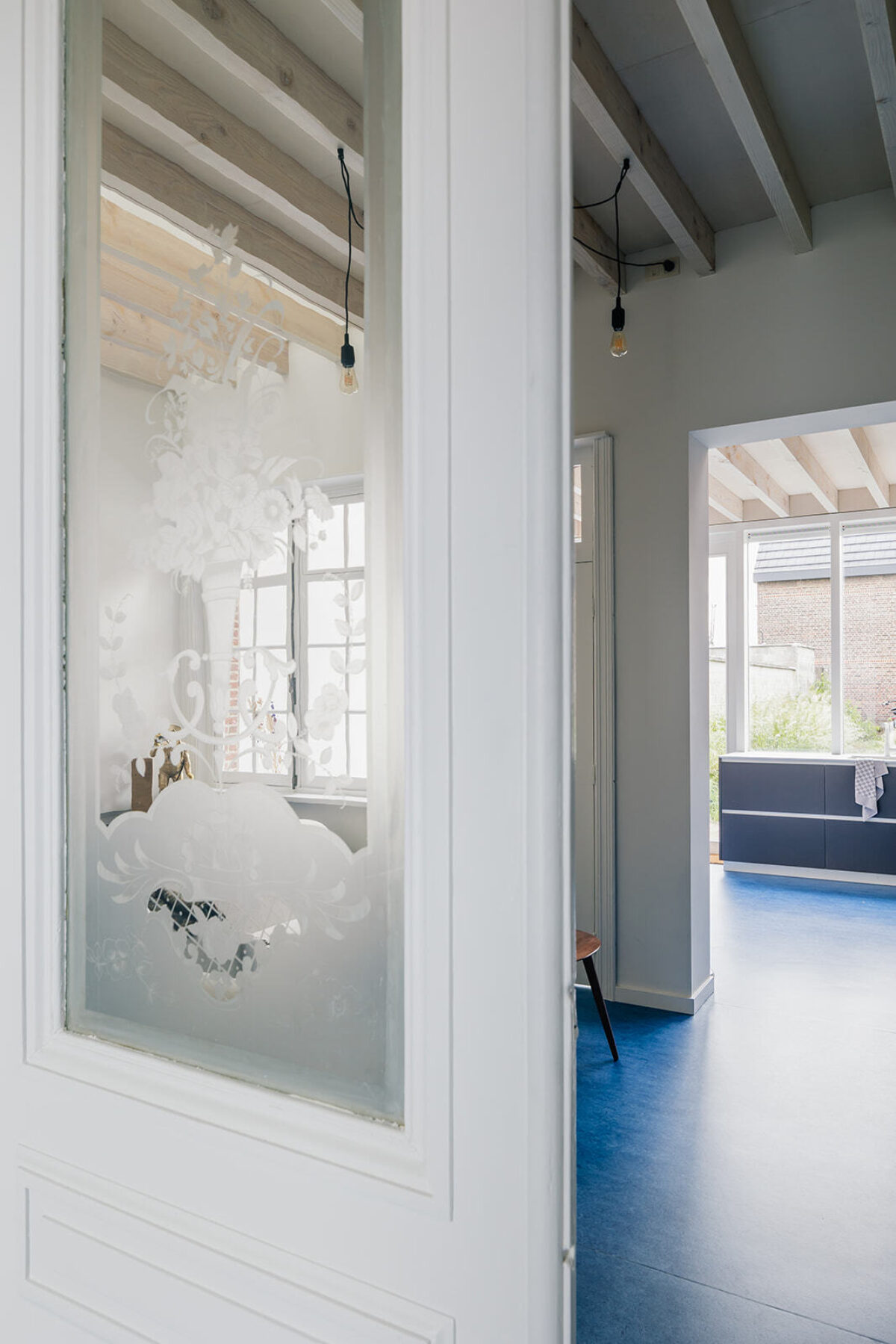
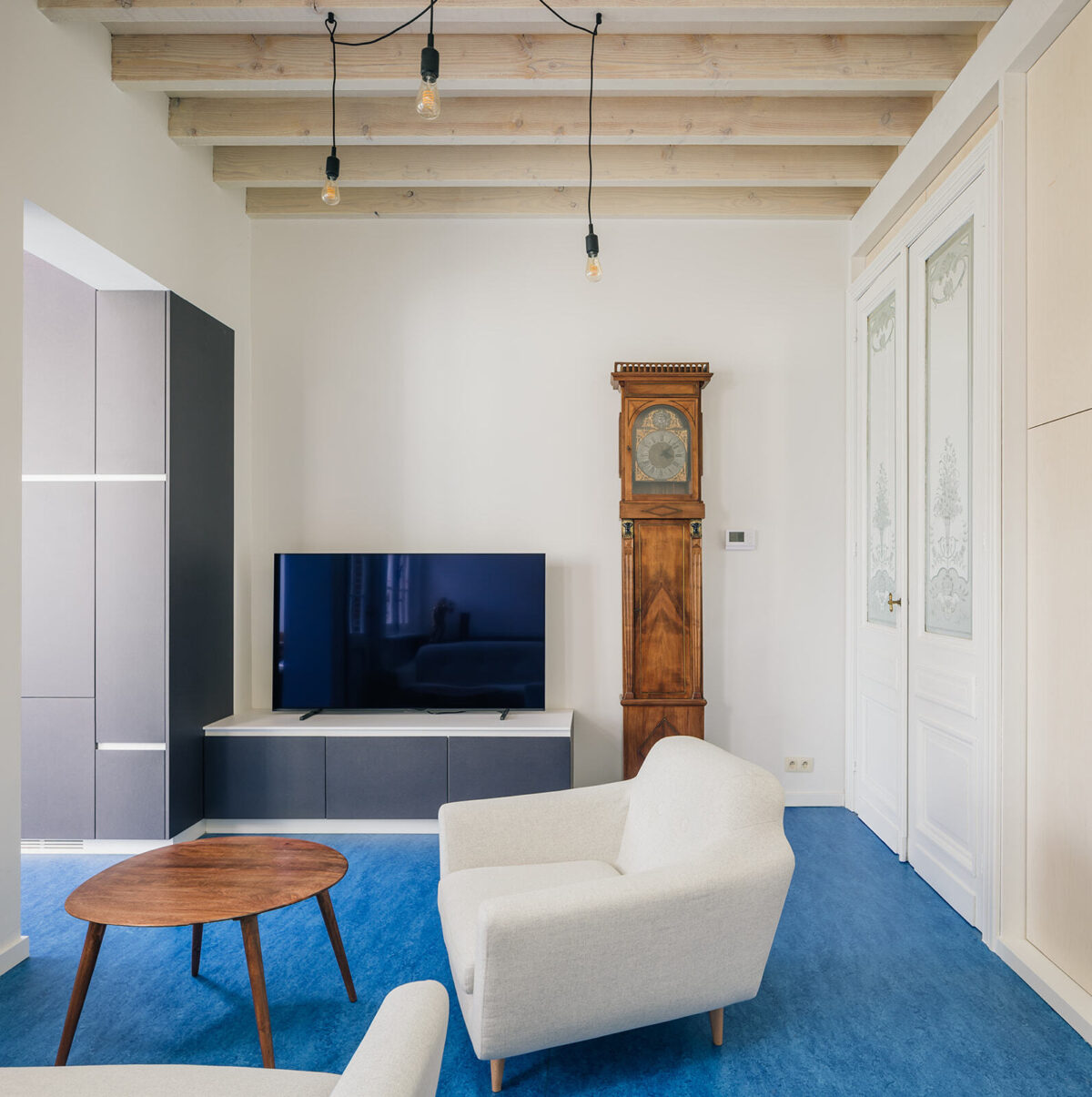
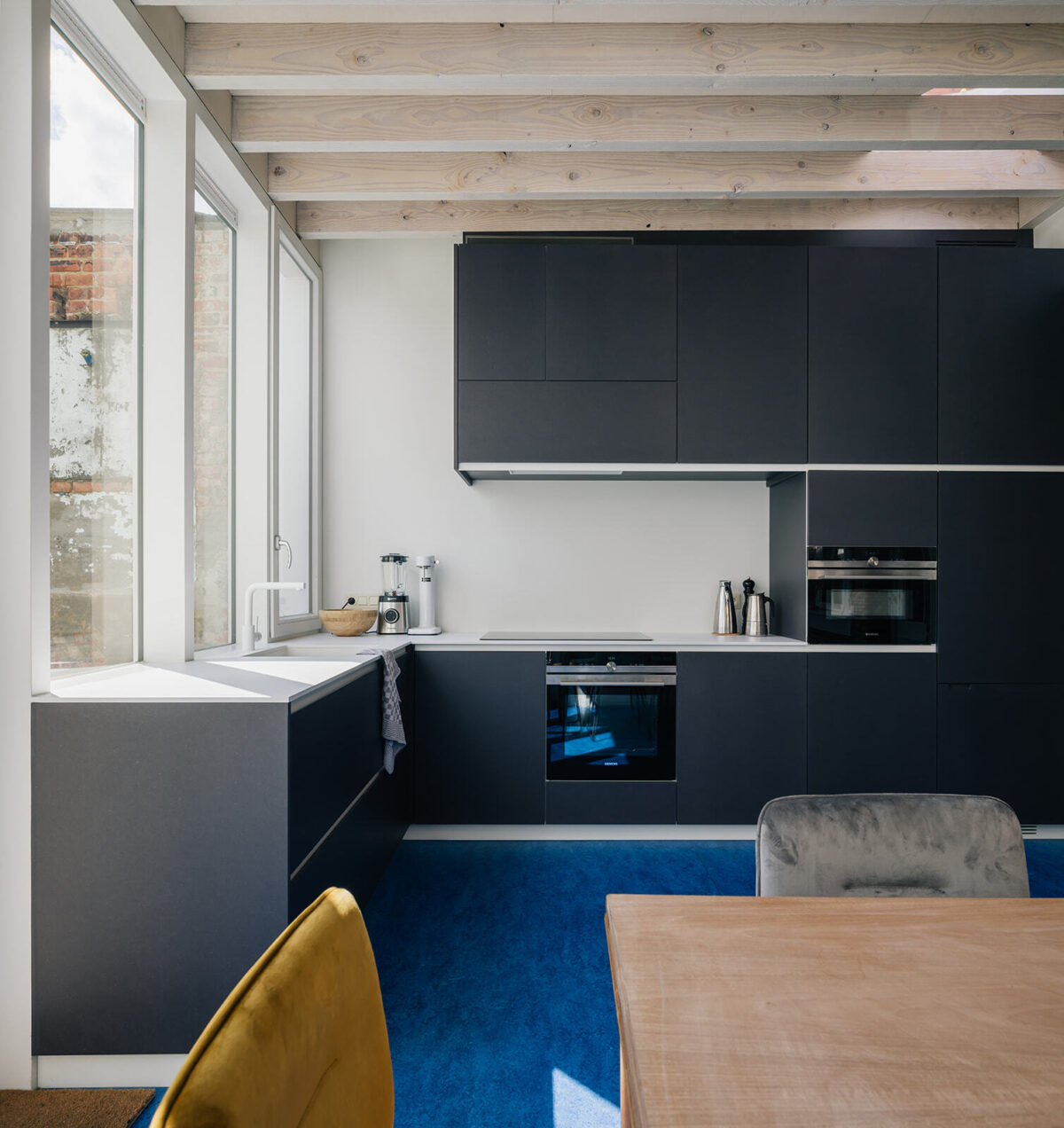
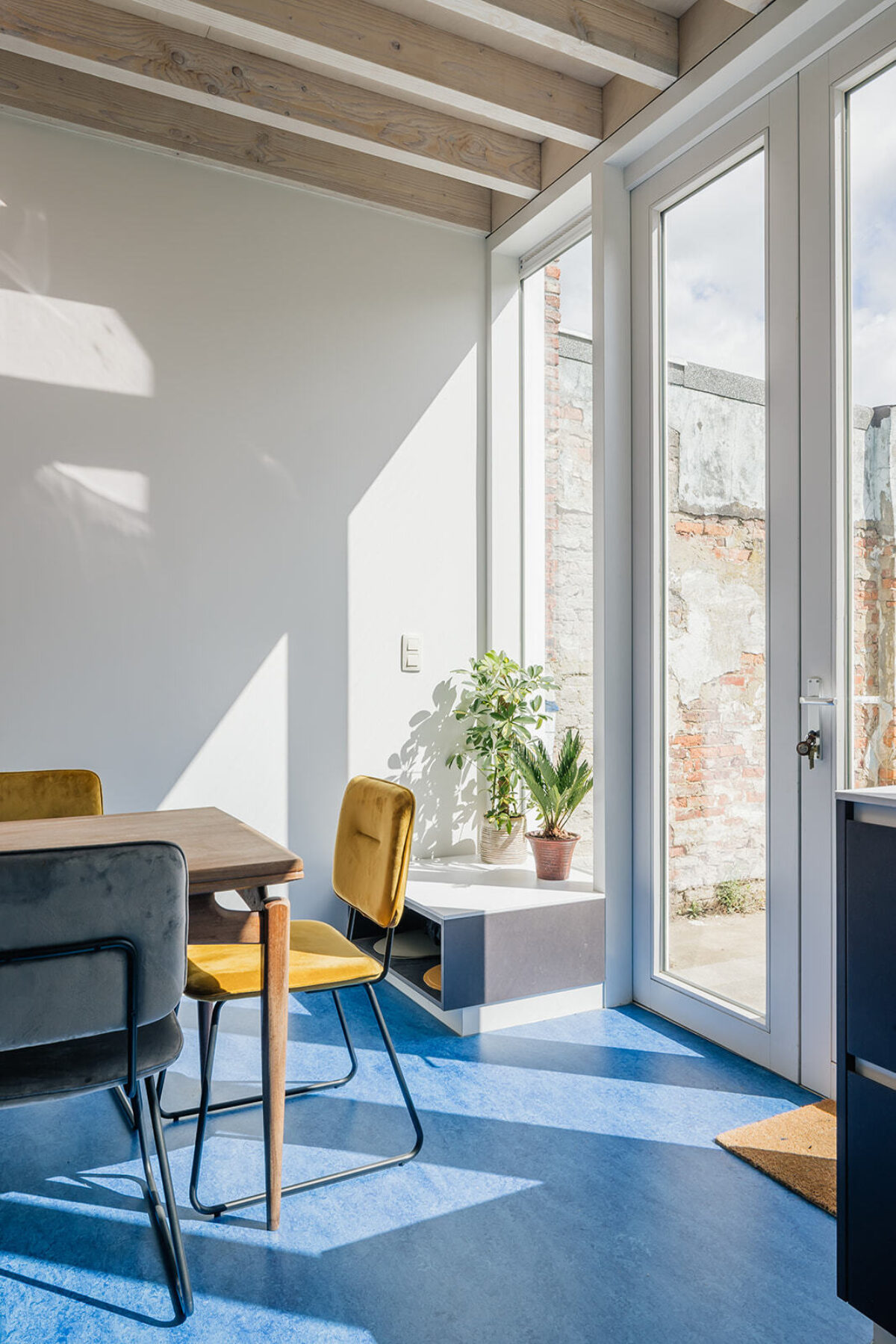
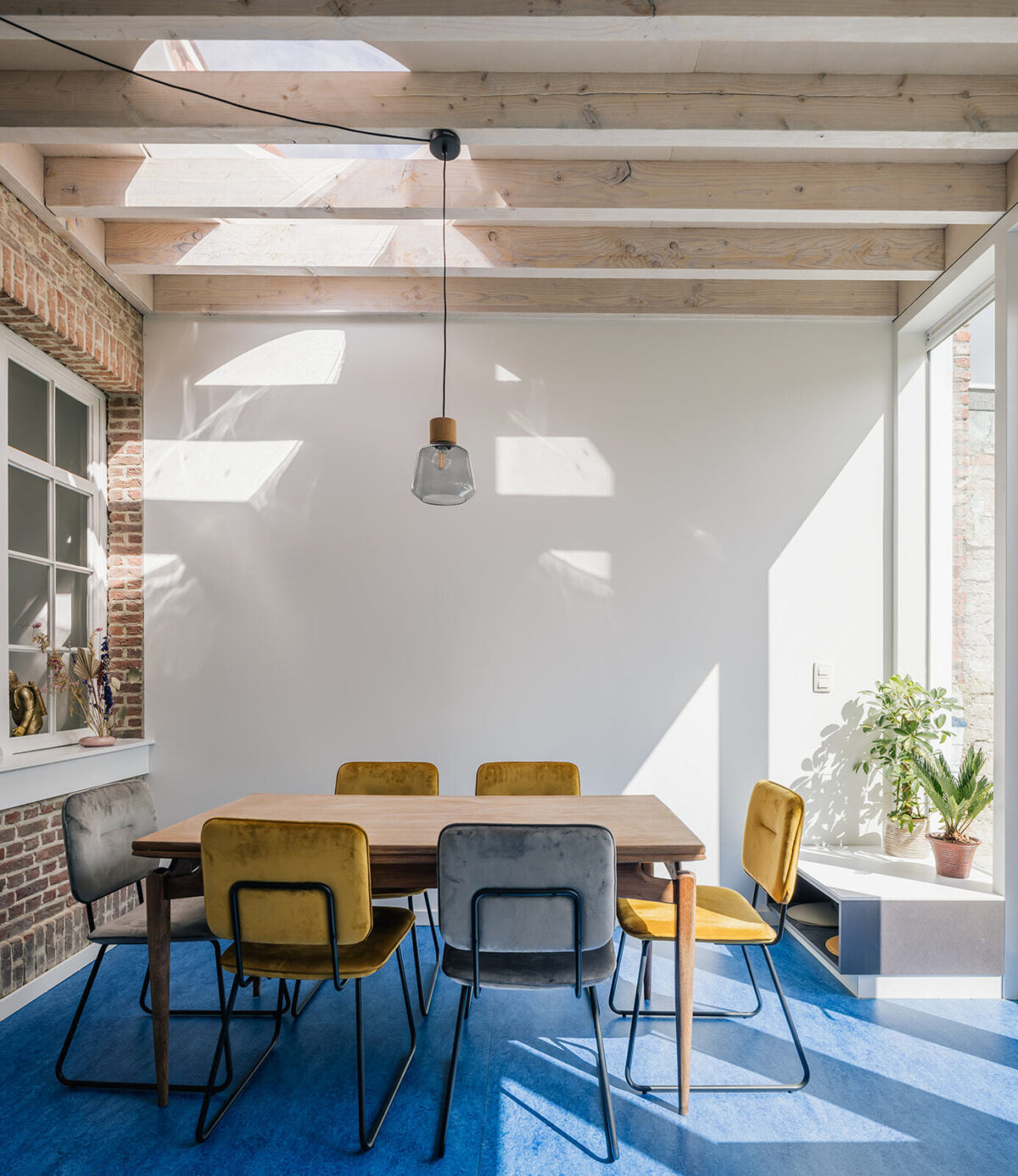
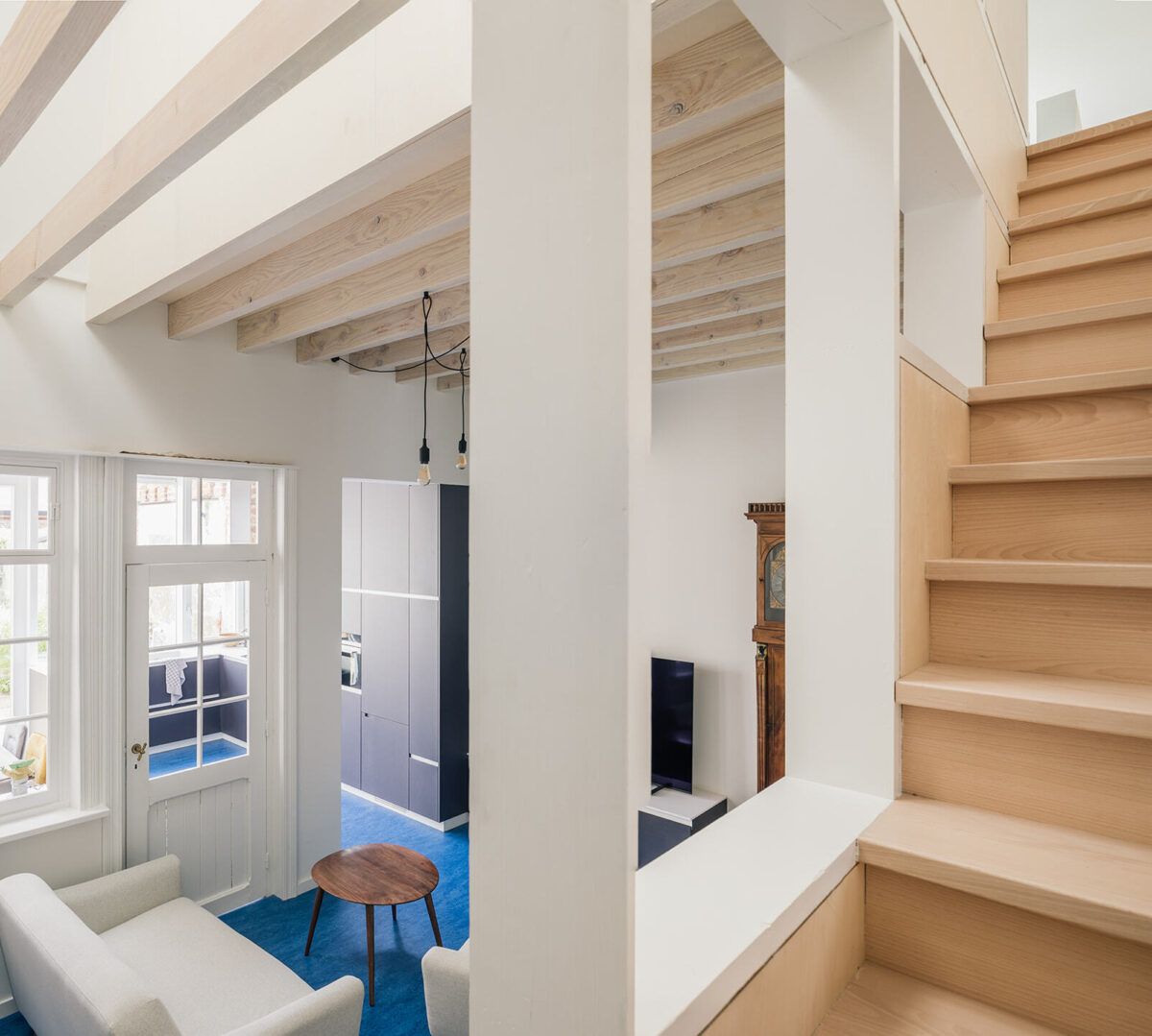
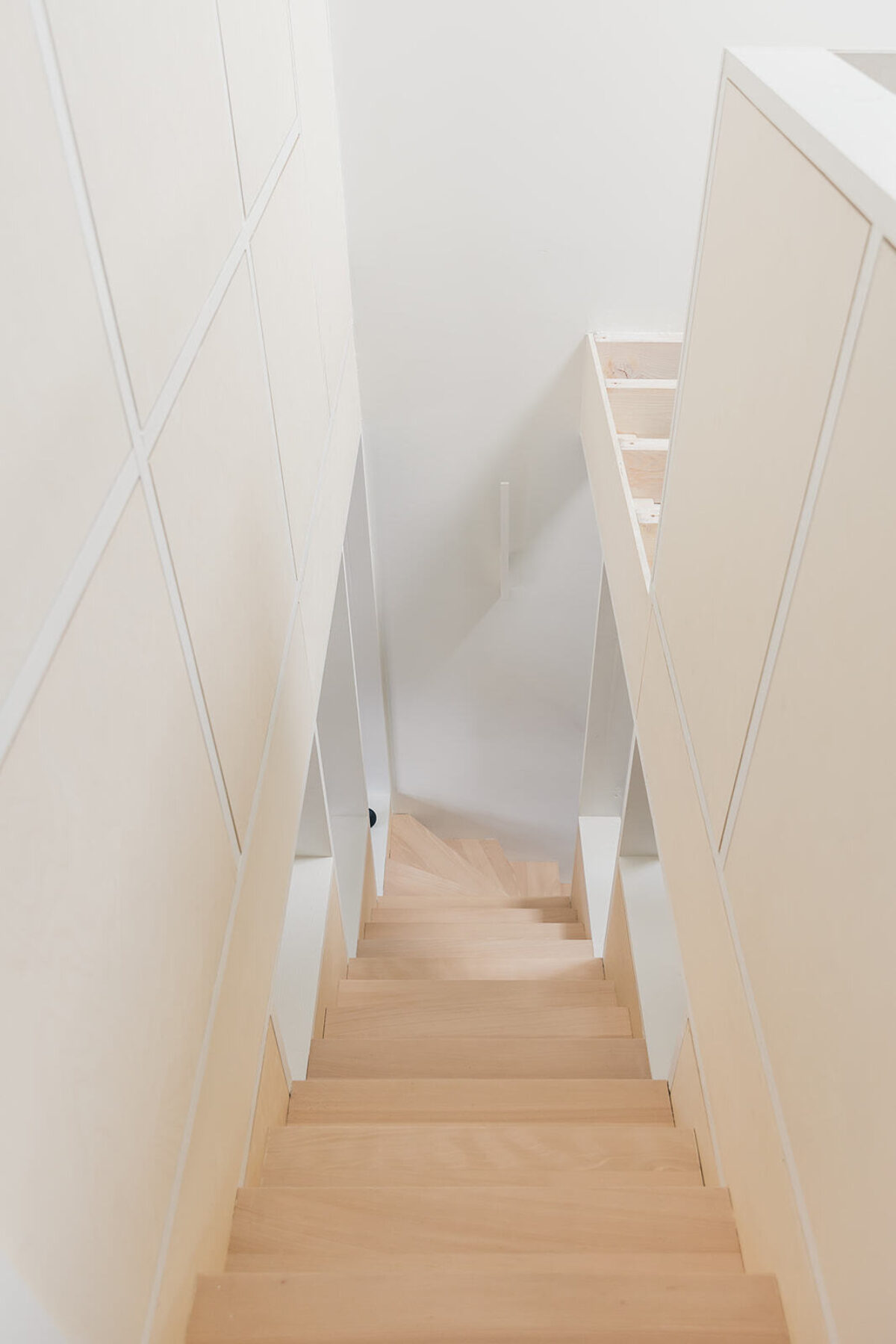
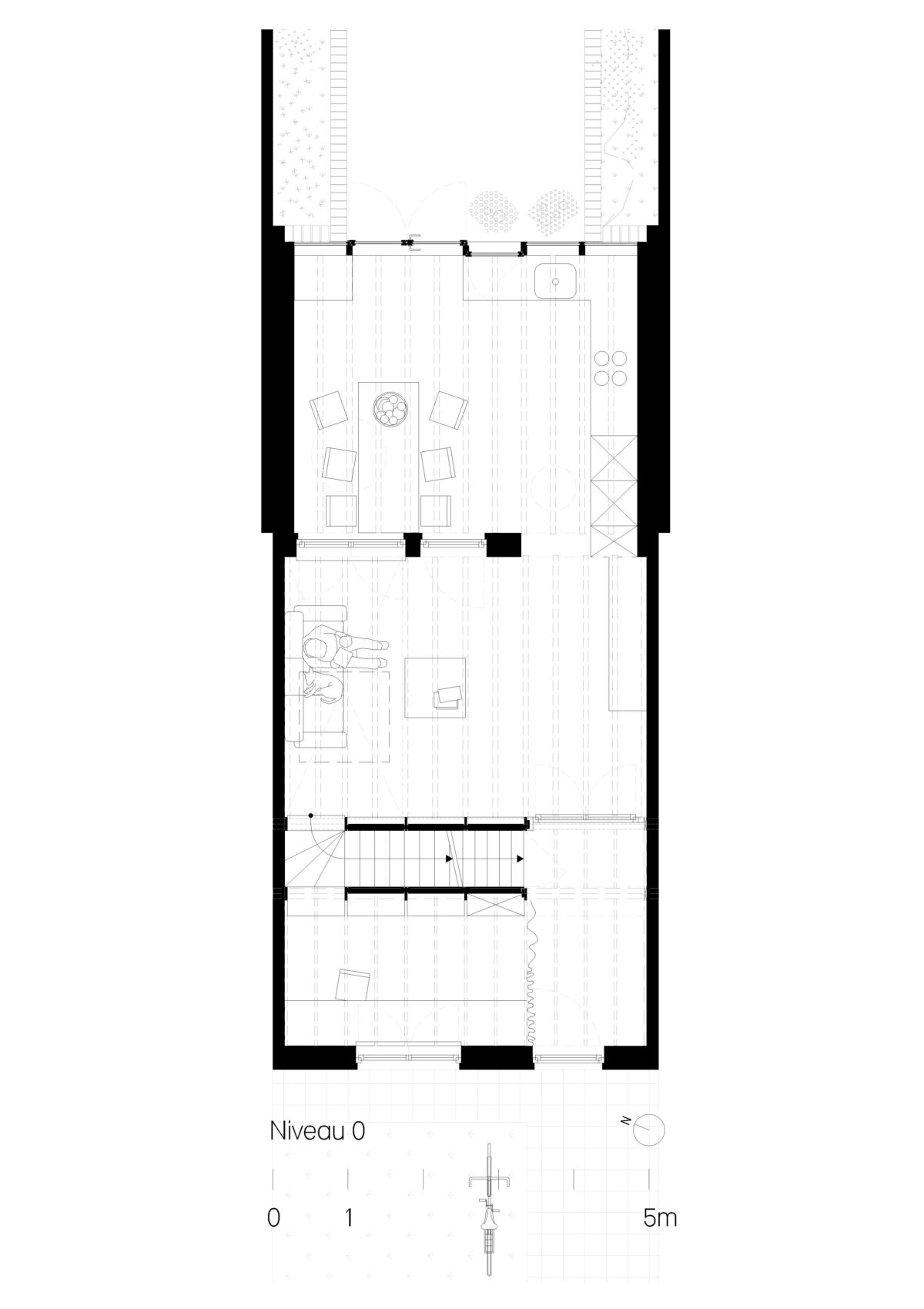
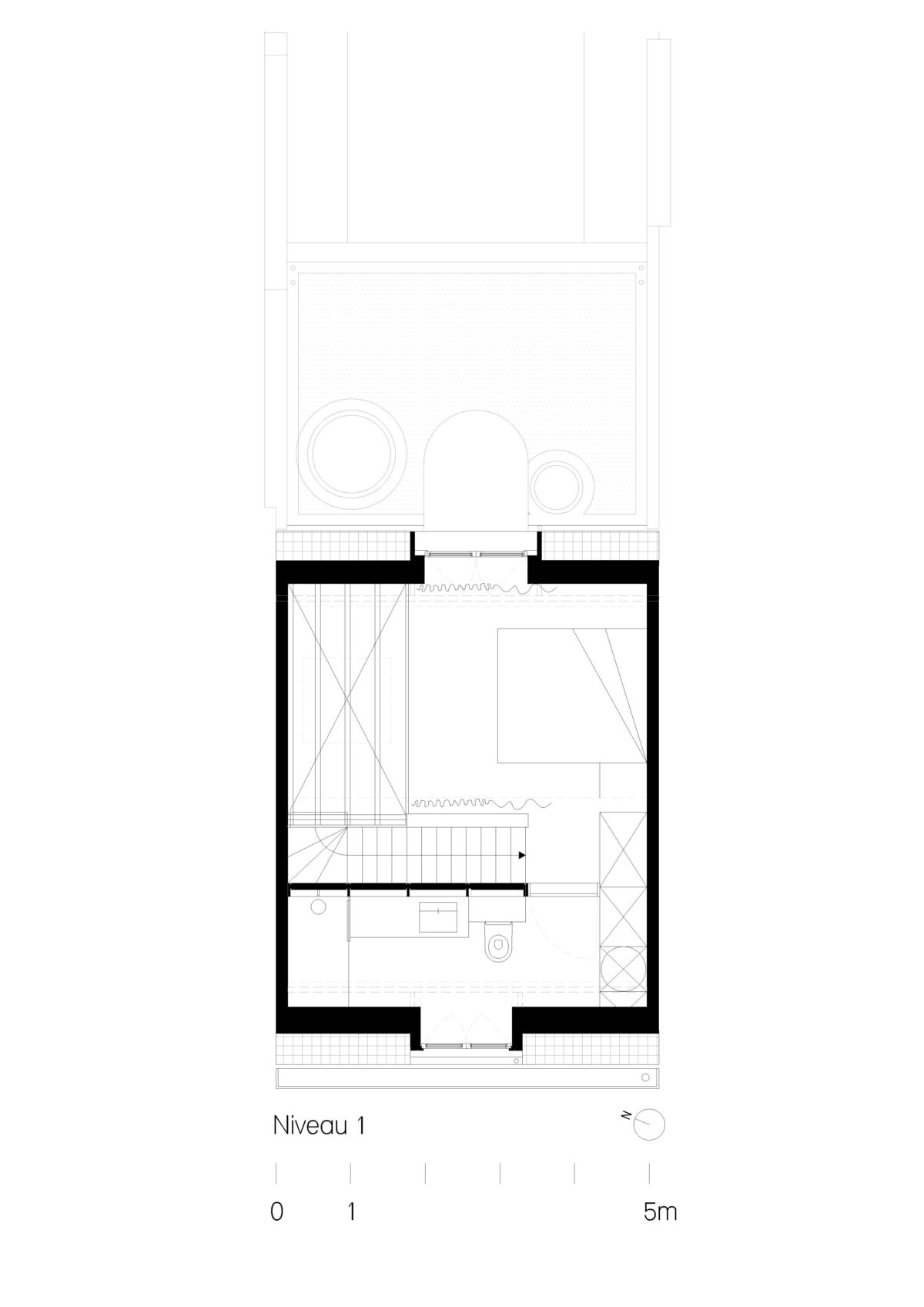
The house retains a largely intact outer shell. Little has been lost; even when a new rear extension was added, the original back door and window were preserved, now inside the interior. We’ve been lucky, even the single-glazed sash windows with glazing bars survived. Inside that shell, the situation is more fragmented. On the ground floor, only two tall doors remain. Upstairs, the small footprint has been chopped up further with partition walls, doorways and a steep stair. There are more obstacles than advantages. The client dreams of a house that allows for an organic, adaptable life with enough generosity to balance out compactness.
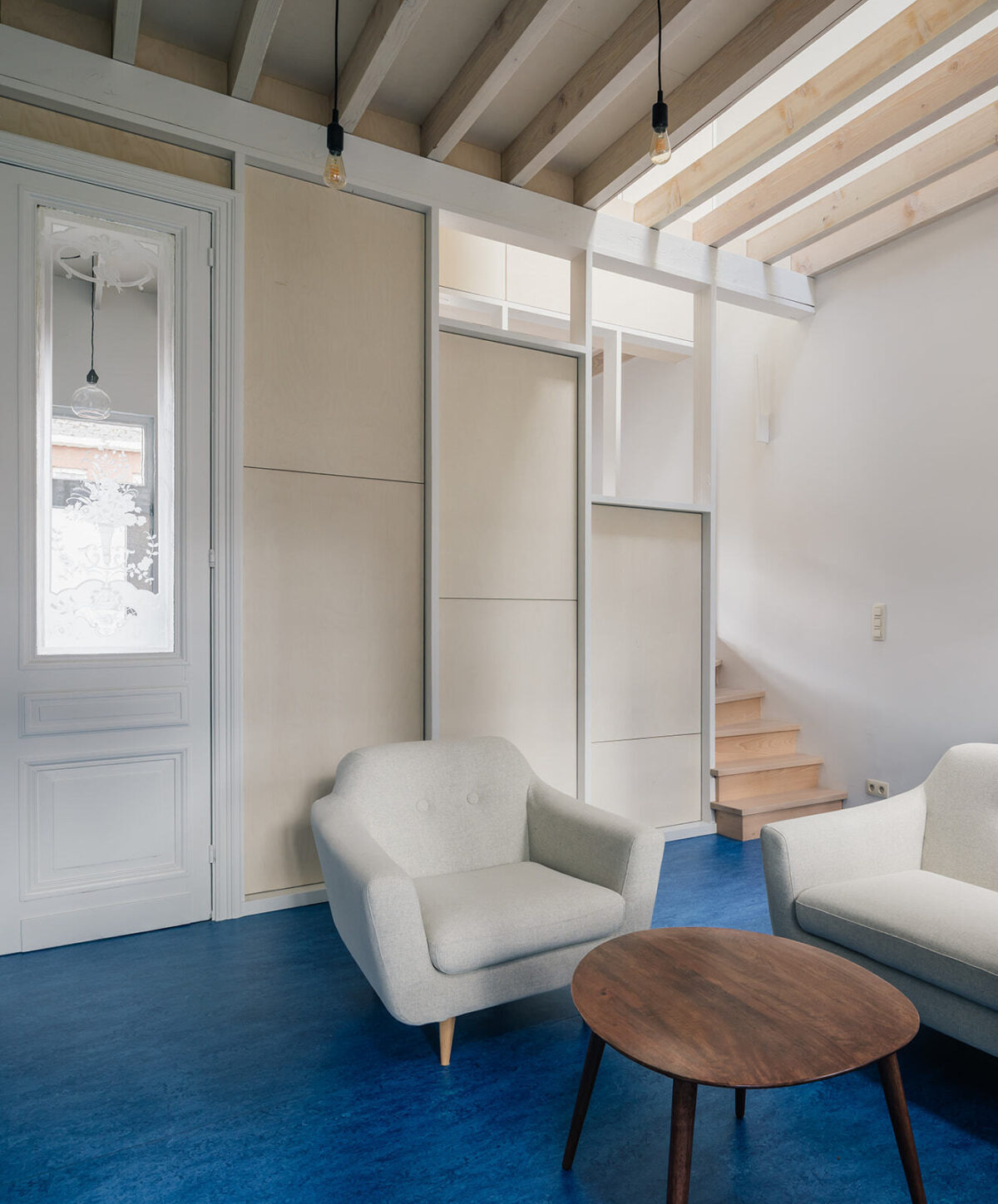
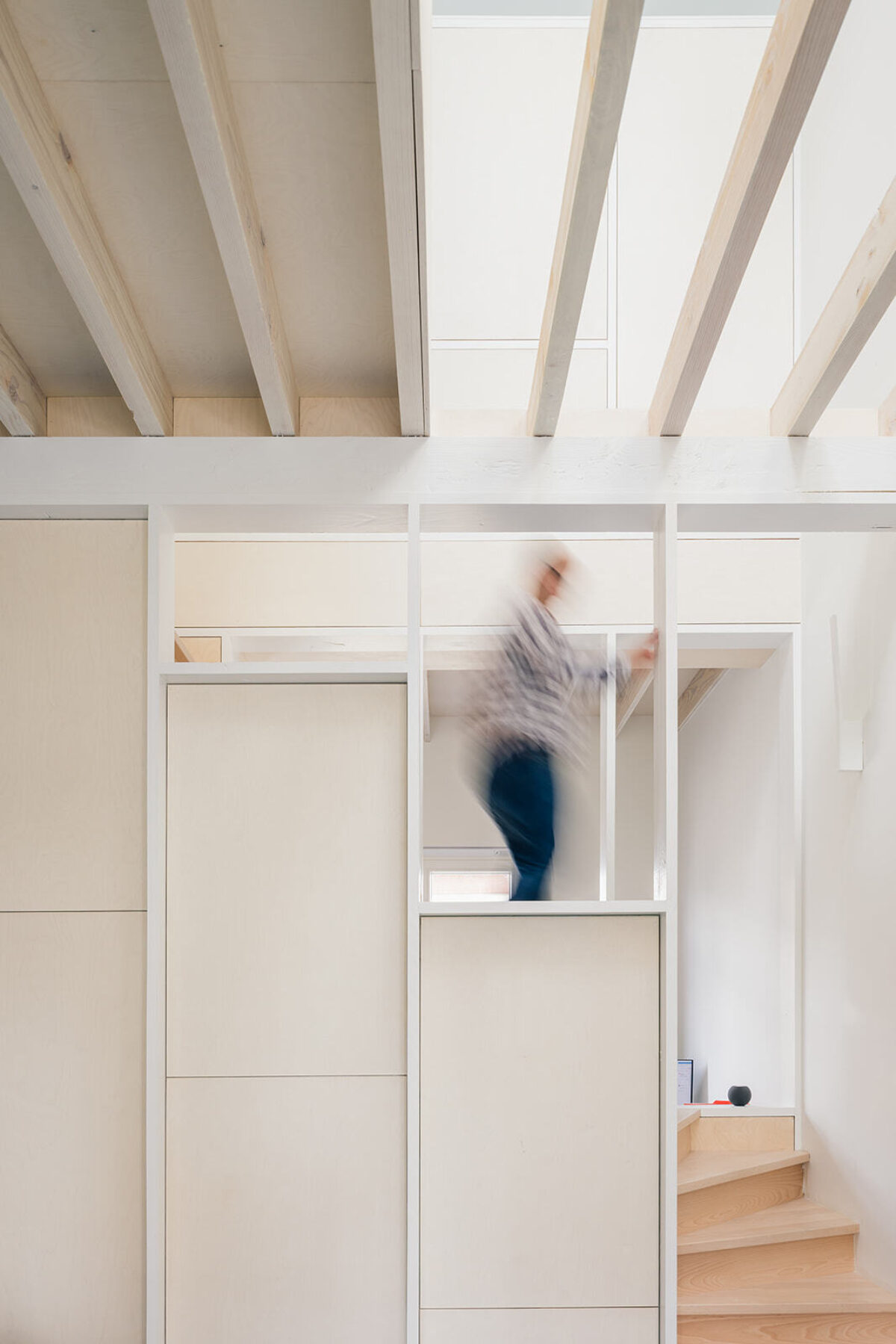
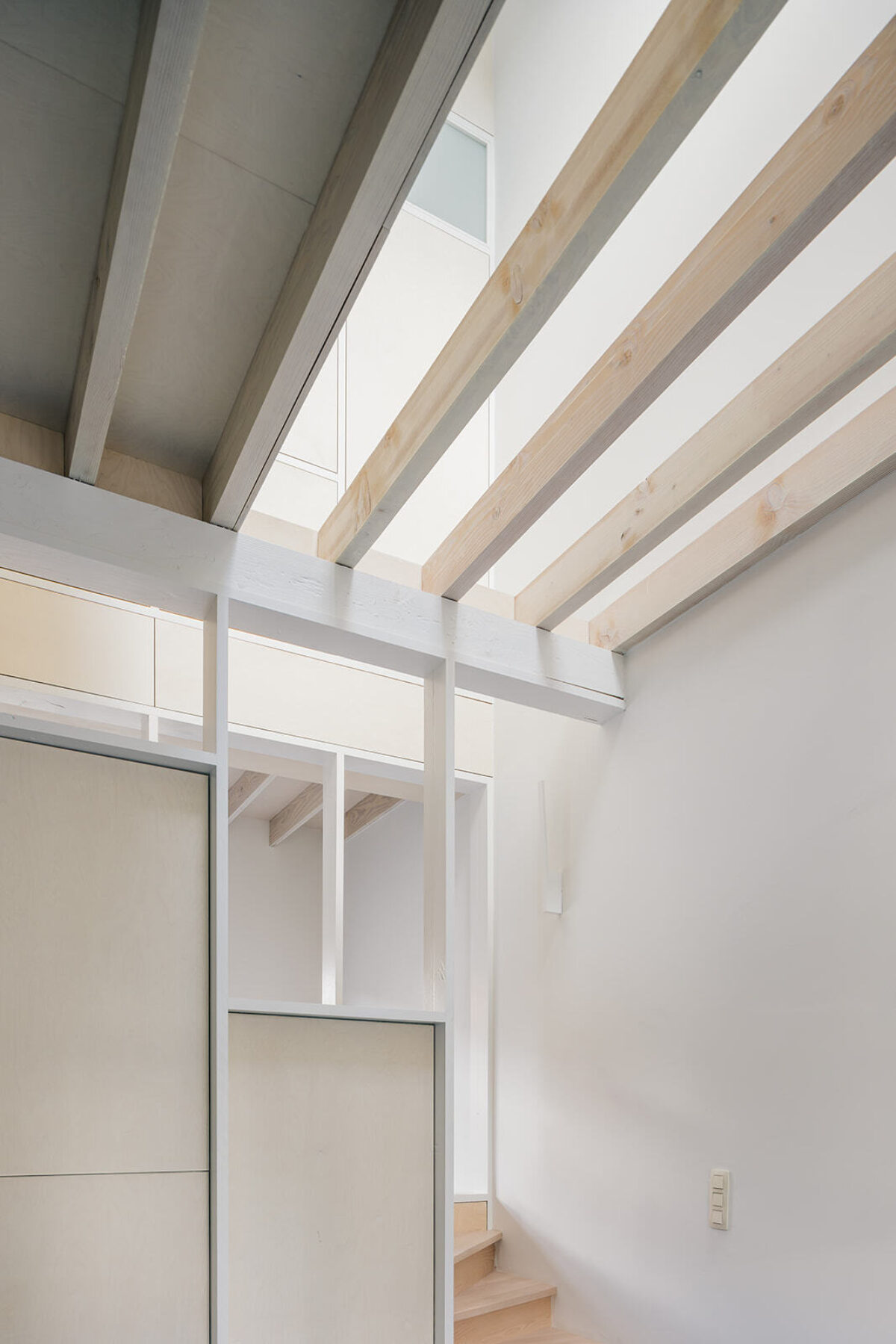
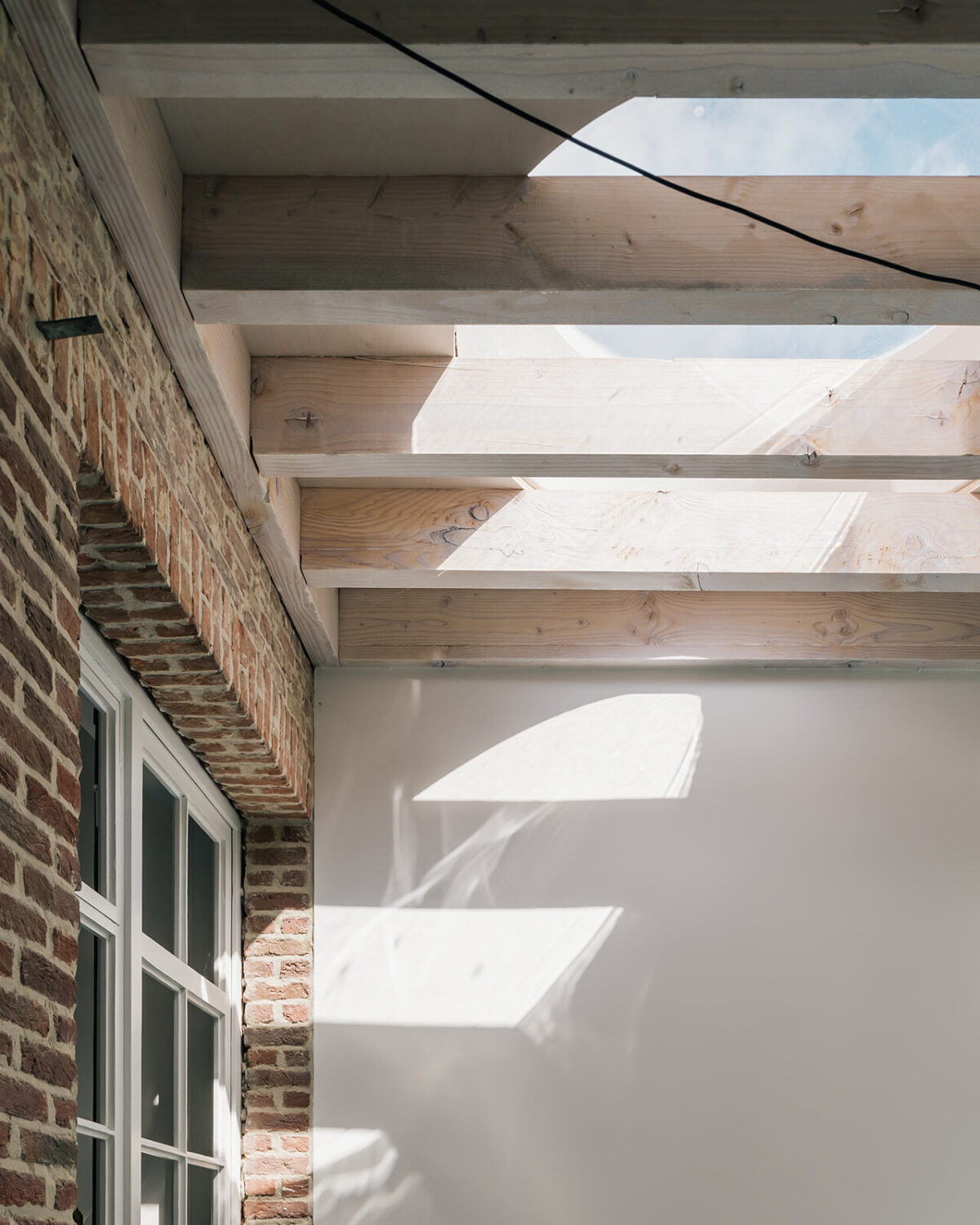
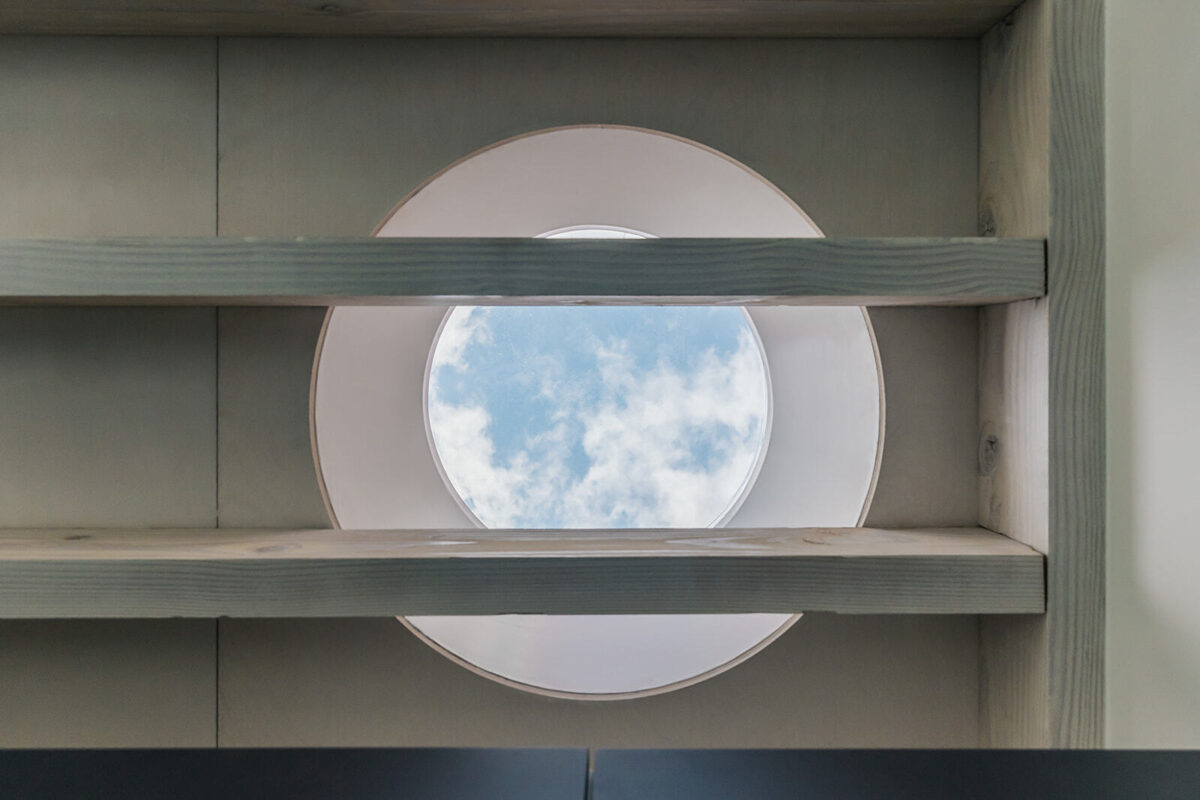
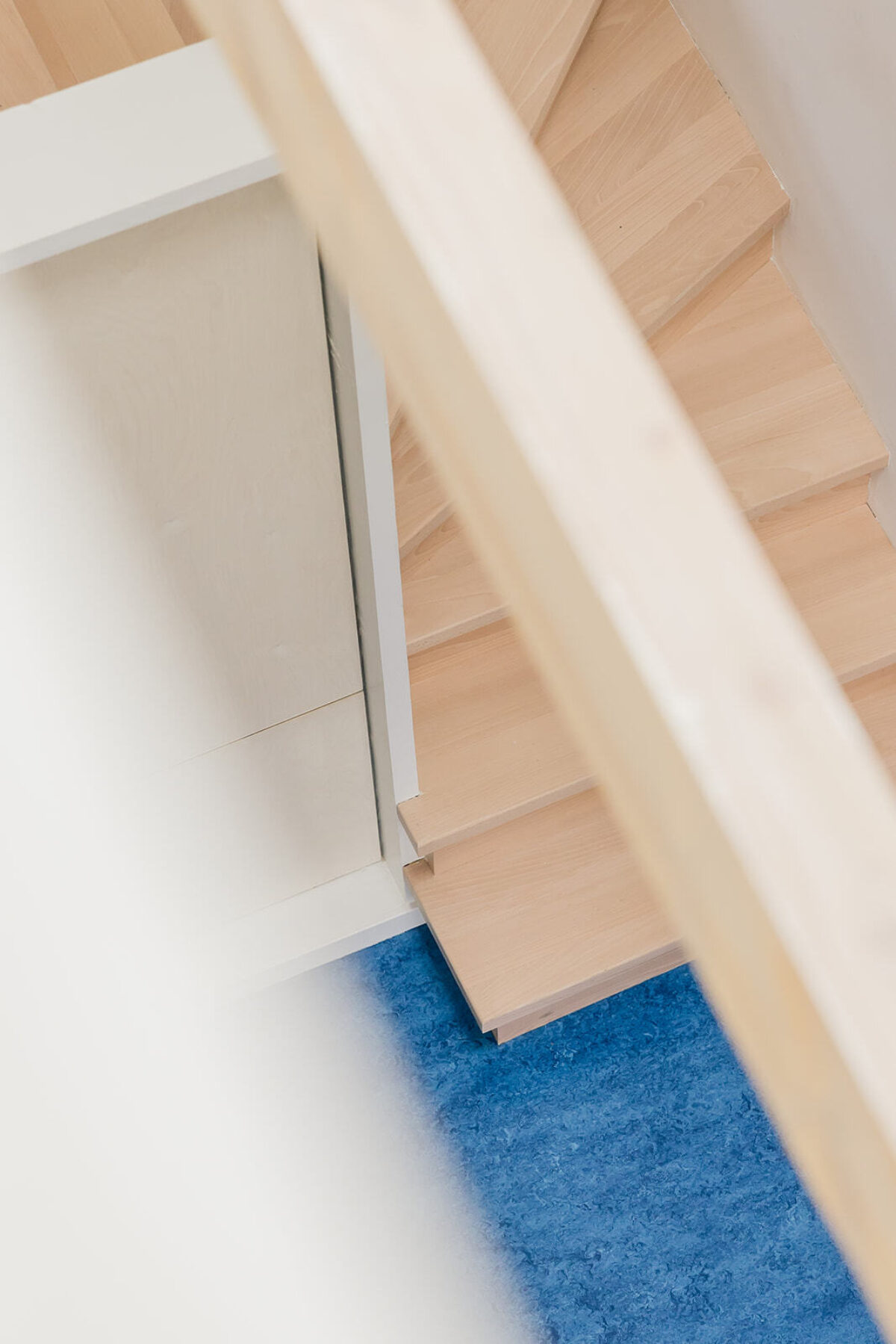
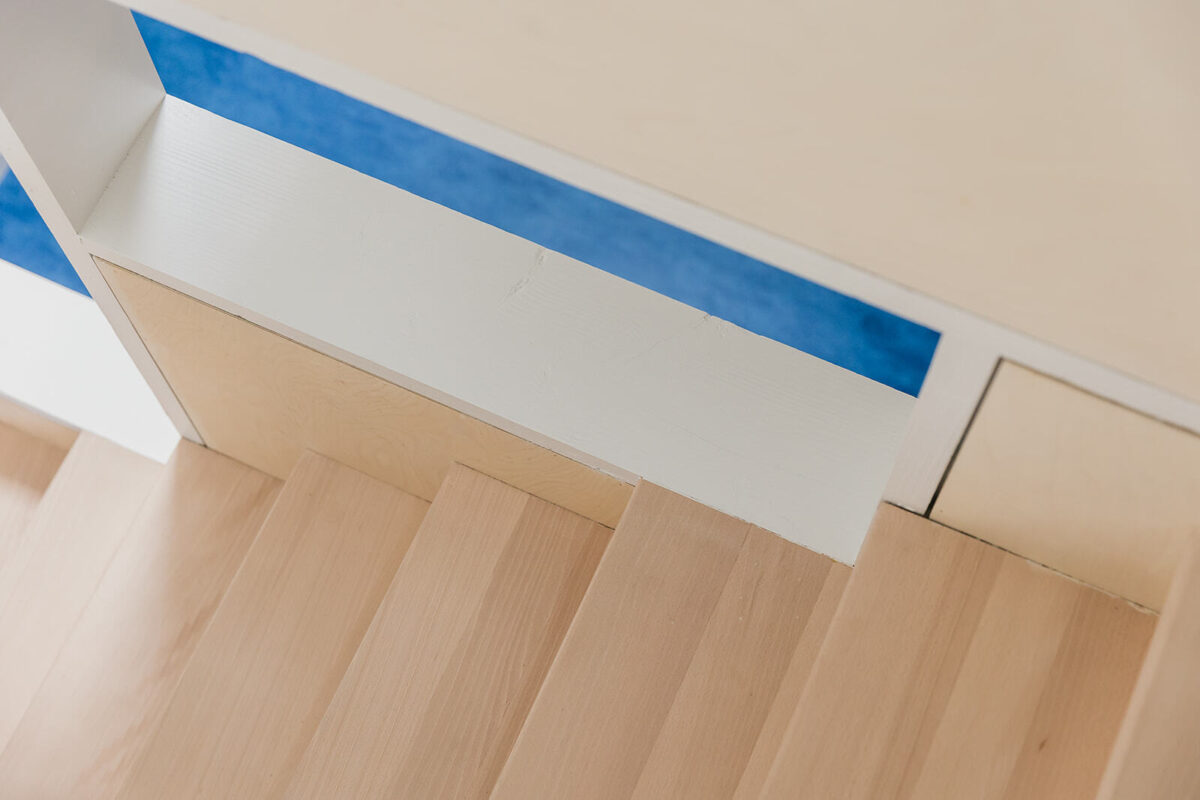
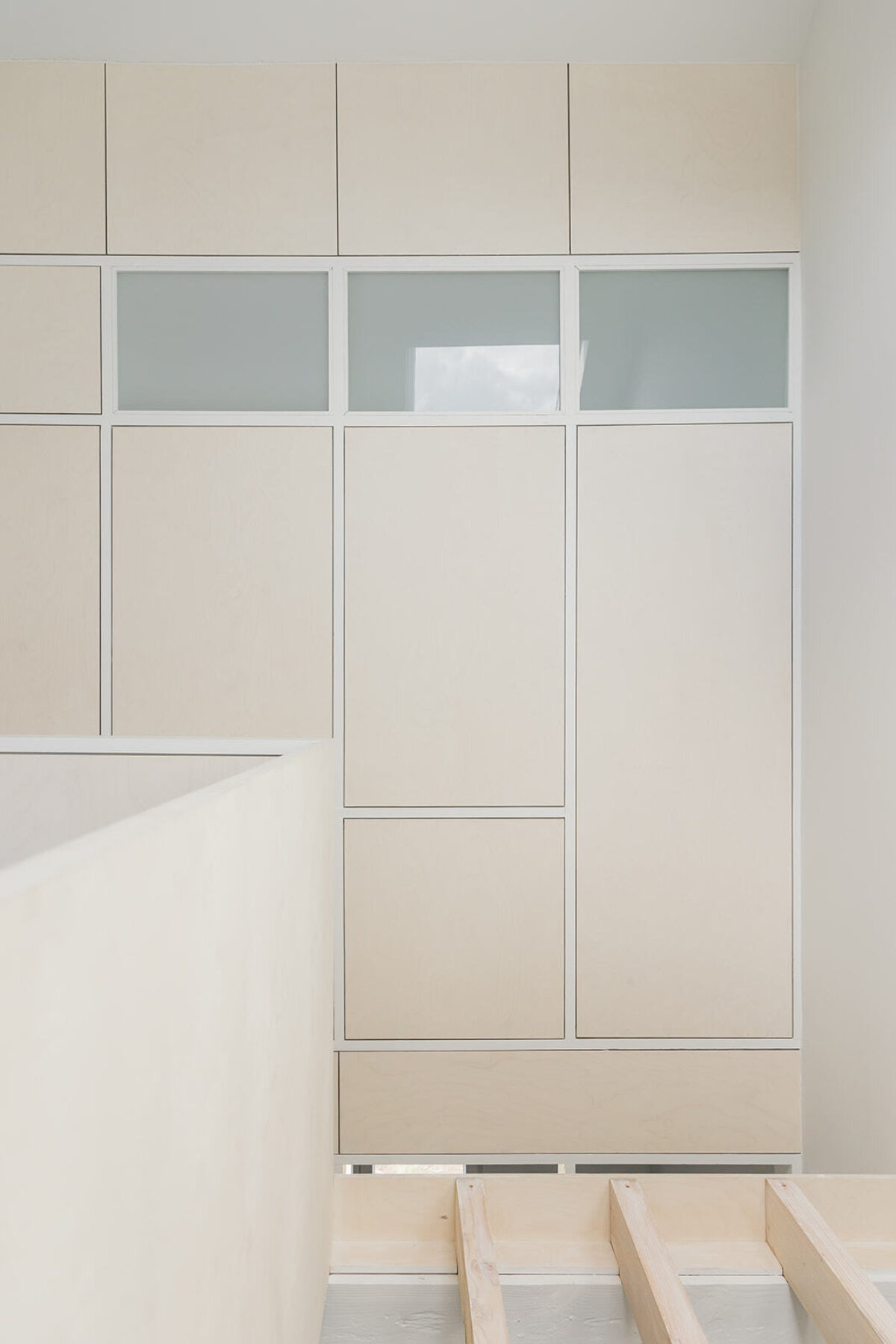
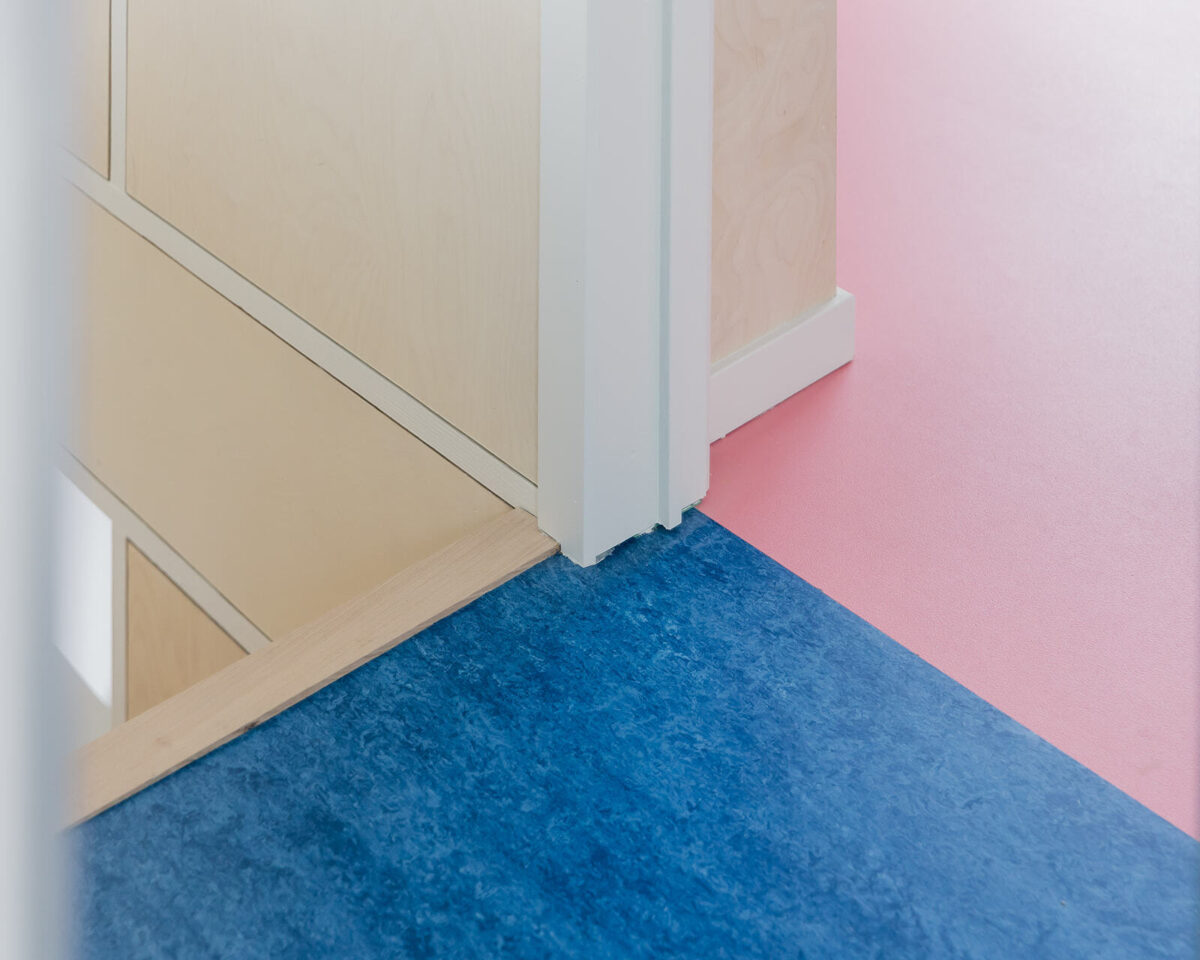
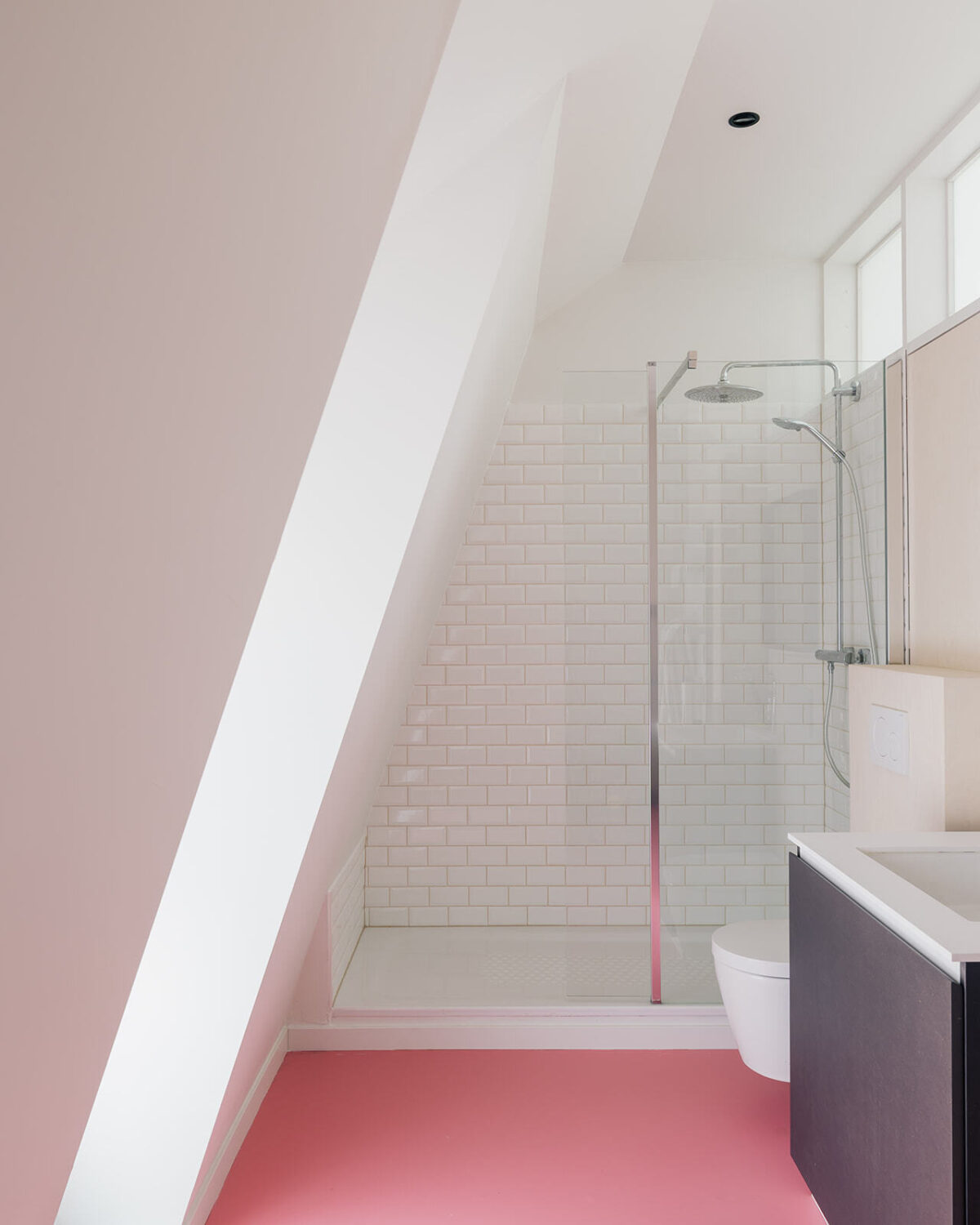
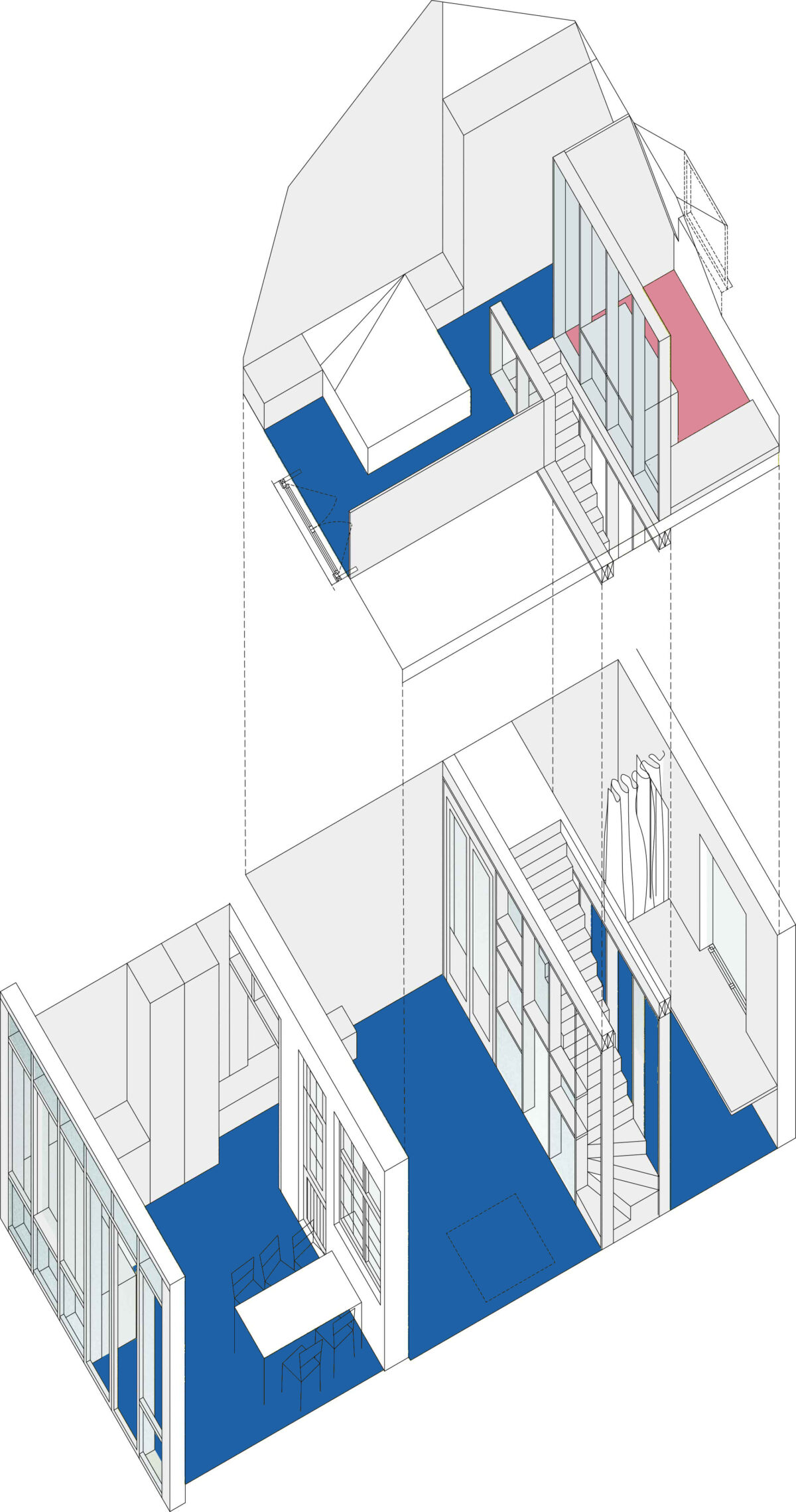
A small rear extension is added at ground level. The architecture strikes a balance between an open plan and room-based logic. The shared party walls remain as they are, so subtle, crosswise boundaries are introduced. Both vertically and horizontally. Timber between brick. These boundaries form a measured framework, structuring the house and giving meaning to a variety of elements: external windows, cupboards, door frames, staircases, vertical ducts. Some of these elements are new, others old. The older ones have been adapted; subtly reinterpreted to add a new logic to their historical presence. They’ve got stories to tell. This timber framework organises the house. It’s not entirely clear whether it’s architecture or furniture. You can peer through it. Light seeps through from all directions, orange at this hour. It’s not quite clear whether it’s from the western sun or the fire pit on the terrace.